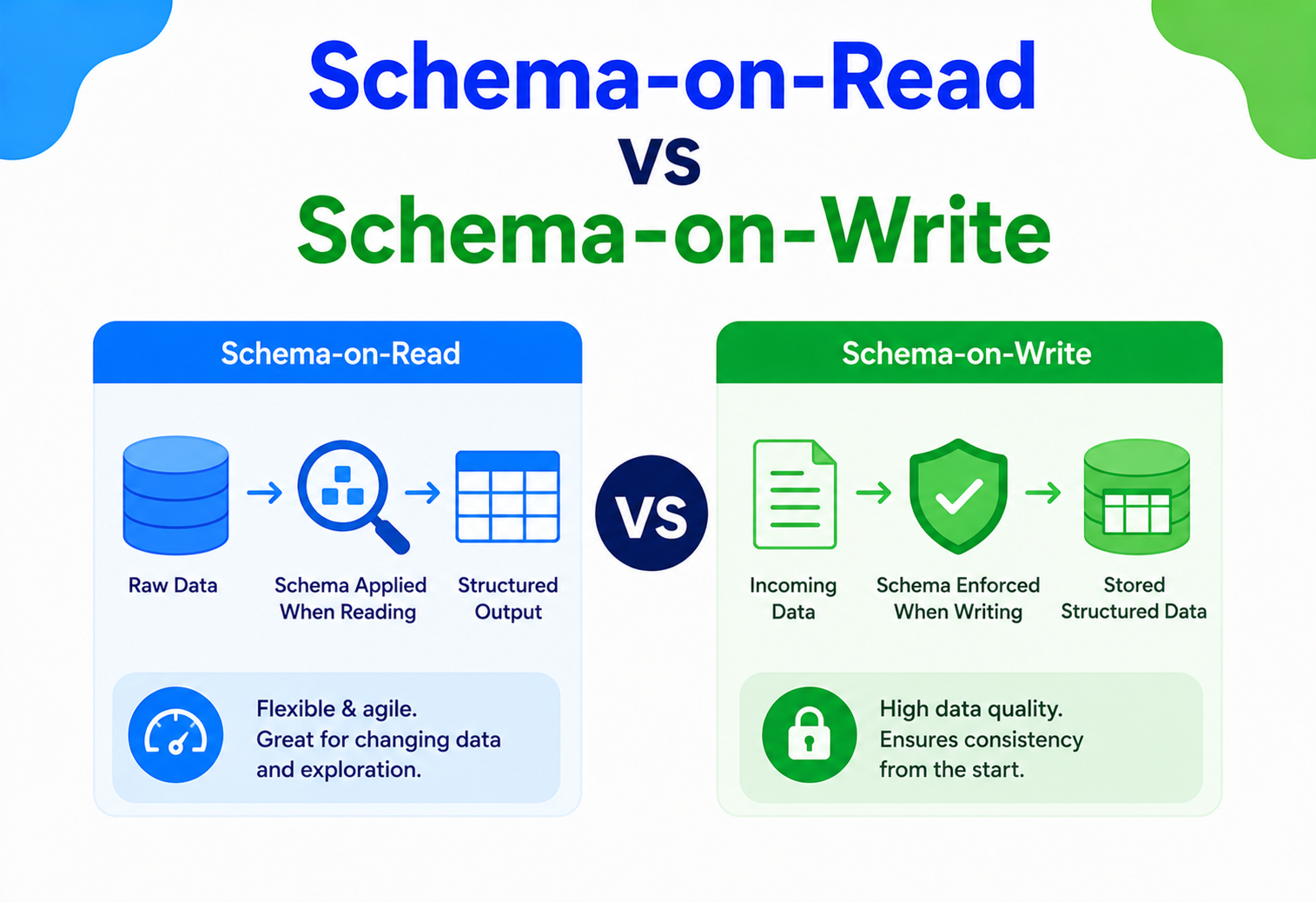
Schema-on-Read vs Schema-on-Write
Two different philosophies about one simple question: when should a computer decide what your data means? Answer that question well, and you can design databases, data lakes, and APIs that scale for years. Answer it badly, and you get slow queries, broken reports, or a swamp of unusable files.
When Should Data Get Its Shape?
Imagine two friends organising photos. One labels and sorts every picture the moment it is taken. The other tosses every photo into a shoebox and only sorts them when someone actually asks to see something. Same photos — two very different choices about when to do the organising work.
That is the entire idea behind schema-on-write and schema-on-read. A “schema” is simply a plan for how data is organised — its structure, its data types, its rules. The only real question is: do you enforce that plan before you save the data, or after, when someone reads it?
What Is a “Schema” in the First Place?
A schema is a blueprint for data, the same way a blueprint for a house tells you where the kitchen is, how many bedrooms there are, and which walls are load-bearing. In a database, a schema defines things like:
- What columns (fields) exist — for example,
name,age,email. - What type each field must be — text, number, date, true/false.
- What rules apply — can a field be empty? Must an email be unique? Must age be a positive number?
Think of a schema like the printed form you fill out at a bank to open an account. The form has fixed boxes: “Name,” “Date of Birth,” “Signature.” You cannot write a poem in the “Date of Birth” box — the form itself enforces structure before the bank accepts it. That is schema-on-write. Now imagine instead you handed the bank a plain sheet of paper with your details written however you liked, and the clerk figured out what each piece of information meant only when they needed to process it later. That is schema-on-read.
A Short History
For most of computing history, storage was expensive and slow, so engineers designed data structures very carefully before writing a single row. This gave rise to the relational database in the 1970s, following Edgar F. Codd’s relational model published at IBM in 1970. Relational databases like Oracle, IBM DB2, and later MySQL and PostgreSQL made schema-on-write the default way of thinking about data for nearly three decades. You defined tables, columns, and constraints first, and only then could you insert data.
By the mid-2000s, the internet produced data at a scale and variety that rigid schemas struggled to handle — web logs, sensor readings, social media posts, images, video, and semi-structured JSON documents. Companies like Google, Amazon, and Yahoo needed to store enormous, messy, fast-changing data without stopping to redesign a table every time a new type of information appeared. This gave rise to the “NoSQL” movement and to distributed file systems like the Google File System and later Hadoop’s HDFS, where raw data was simply stored as-is, and structure was applied only when someone read and processed it. This is where the term schema-on-read became popular, especially in the context of data lakes.
Today, most serious systems use both philosophies together, choosing the right one for each part of the pipeline rather than picking a single winner. Understanding both, and knowing when to use which, is one of the most practical skills a software architect can have.
The Three Questions Every Data System Must Answer
Why does the choice between schema-on-write and schema-on-read matter at all? Because every piece of software that stores data eventually has to answer three uncomfortable questions.
- What happens when the shape of data changes? A new field gets added, an old one gets removed, a data type changes.
- What happens when data arrives faster than you can plan for it? Millions of events per second, from many different sources, in many different formats.
- Who pays the cost of organising the data — the writer or the reader? Someone always has to do the work of making sense of raw information. The question is only when.
The Problem With Rigid, Unplanned Structure
Picture a school that only accepts students who already know their exact class schedule, locker number, and teacher assignments on day one, with zero flexibility for changes. That is efficient once everything is in place, but painfully slow if the school grows, adds a new grade, or wants to admit a student mid-year with unusual needs. This is what happens to systems that rely purely on schema-on-write when the environment is unpredictable: every change to the data’s shape requires a formal, sometimes risky, “migration” before anything can be written again.
The Problem With Pure Chaos
Now picture a warehouse that accepts absolutely anything — boxes, loose items, liquids — with no labelling requirement at intake. It is very fast and cheap to accept goods. But when someone later needs to find “all boxes of size medium containing electronics,” they have to open and inspect everything by hand, every single time. This is the risk of pure schema-on-read: without governance, a data lake becomes what practitioners call a data swamp — technically stored, practically unusable.
Choosing schema-on-write vs schema-on-read is not a small technical detail — it is a foundational architecture decision that affects developer velocity, storage cost, query performance, data quality, and how quickly your organisation can react to new kinds of data. Getting it wrong is expensive to reverse once petabytes of data exist.
Real Motivation: Three Business Scenarios
| Scenario | Pressure | Natural Fit |
|---|---|---|
| Banking transaction ledger | Correctness and consistency matter more than flexibility. Every transaction must have amount, currency, timestamp. | Schema-on-write |
| IoT sensor fleet with 40 different device models | New sensor types are added monthly, each with different fields. Ingestion must never stop. | Schema-on-read |
| E-commerce clickstream for analytics | Raw events are stored cheaply now, but analysts will decide later exactly which fields matter. | Schema-on-read, then transformed into schema-on-write marts |
The pattern across all three scenarios is the same: the moment you can name the exact fields you care about and every consumer agrees on them, schema-on-write earns its keep. The moment you cannot — because the sources are diverse, the questions are still being formed, or the volume simply outruns your ability to model in advance — schema-on-read buys you the time to figure it out without dropping records on the floor.
Two Philosophies, Plainly Stated
Before comparing them, we need clean definitions. Each philosophy answers the same underlying question — how and when data becomes trustworthy — with an opposite bet about timing.
Schema-on-Write, Explained Simply
Schema-on-write means: you define the structure of the data before any data is stored, and the storage system enforces that structure on every single write. If a piece of data does not match the defined shape, it is rejected immediately — it never even makes it into storage.
Relational databases (MySQL, PostgreSQL, Oracle, SQL Server), most traditional data warehouses (Snowflake tables, Amazon Redshift), and any system using strict typed classes such as Java entities mapped through JPA/Hibernate.
Schema-on-Read, Explained Simply
Schema-on-read means: you store the data in its raw form first, and only decide how to interpret its structure at the moment someone reads or queries it. The storage layer itself does not care what shape the data is; interpretation is the reader’s job.
Data lakes (Amazon S3, Azure Data Lake Storage, Google Cloud Storage) storing files like JSON, Parquet, or Avro; big data query engines like Apache Hive, Presto/Trino, and Spark SQL; log aggregation systems like Elasticsearch (to a degree) and Splunk.
Schema-on-Write in one sentence
- Structure is a gatekeeper.
- Invalid data is rejected at write time.
- Reads are fast because structure is already known.
- Changing structure later is a formal, sometimes costly “migration.”
Schema-on-Read in one sentence
- Structure is a lens applied later.
- Almost any data can be written instantly.
- Reads must parse and interpret data every time (unless cached).
- New data shapes can appear at any time without breaking ingestion.
A well-run library is schema-on-write: every book is catalogued, given a Dewey Decimal number, and placed on a specific shelf the moment it arrives. Finding a book later is instant because the structure was built in advance. Your grandmother’s attic is schema-on-read: things go in as they are, no sorting, no rules. Finding anything later requires digging, but you never had to stop and file anything at the door, so items could be stored quickly, in bulk, regardless of shape.
A Beginner Example
Suppose we want to store information about a “Person.” In schema-on-write, we would first decide the table structure:
CREATE TABLE person (
    id         BIGINT PRIMARY KEY,
    full_name  VARCHAR(120) NOT NULL,
    age        INT CHECK (age >= 0),
    email      VARCHAR(255) UNIQUE
);

-- This insert will FAIL because age is negative:
INSERT INTO person (id, full_name, age, email)
VALUES (1, 'Aditi Sharma', -5, 'aditi@example.com');
The database itself refuses bad data. It never even gets stored. Compare that with schema-on-read, where we simply drop a JSON file into storage with no upfront rules:
{"id": 1, "full_name": "Aditi Sharma", "age": -5, "email": "aditi@example.com"}
{"id": 2, "name": "Rohit Verma", "yrs": "twenty-eight"}
{"id": 3, "full_name": "Meera Nair", "age": 31, "email": "meera@example.com", "city": "Delhi"}
Notice something important: record 2 uses completely different field names (name instead of full_name, yrs instead of age, and yrs is even stored as text, not a number). None of this was rejected, because nothing was checking. The responsibility to make sense of these inconsistencies is pushed entirely to whoever reads this data later.
A Software Example: Java
In application code, schema-on-write shows up as strongly typed classes validated before persistence:
public class Person {
    private final long id;
    private final String fullName;
    private final int age;
    private final String email;

    public Person(long id, String fullName, int age, String email) {
        if (age < 0) {
            throw new IllegalArgumentException("age cannot be negative");
        }
        if (fullName == null || fullName.isBlank()) {
            throw new IllegalArgumentException("fullName is required");
        }
        this.id = id;
        this.fullName = fullName;
        this.age = age;
        this.email = email;
    }
    // getters omitted for brevity
}
Compare this with reading a schema-on-read style record, where the code has to defensively check for the presence and type of every field, because nothing was guaranteed in advance:
import com.fasterxml.jackson.databind.JsonNode;

public int extractAge(JsonNode record) {
    if (record.has("age") && record.get("age").isInt()) {
        return record.get("age").asInt();
    }
    if (record.has("yrs")) {
        // Someone stored age as text ("twenty-eight"); parse it defensively
        try {
            return Integer.parseInt(record.get("yrs").asText());
        } catch (NumberFormatException e) {
            return -1; // sentinel: unknown age
        }
    }
    return -1; // field missing entirely
}
This single code snippet captures the whole trade-off: schema-on-write pushes complexity to write-time (once), while schema-on-read pushes complexity to read-time (every single time, for every reader).
Where the Structure Lives
Both approaches are made up of the same handful of building blocks — just arranged, and timed, very differently. Zooming out from code to platform makes the difference obvious.
Components of a Schema-on-Write System
- Schema registry / DDL (Data Definition Language): the formal definition of tables, columns, and types, usually written in SQL
CREATE TABLEstatements or an ORM’s entity classes. - Constraint engine: the database’s internal logic that checks types, nullability, foreign keys, and uniqueness on every write.
- Migration tooling: tools like Flyway or Liquibase that apply controlled, versioned changes to the schema over time.
- Storage engine: highly optimised to store fixed-width rows or well-typed columns (for example, InnoDB in MySQL, or a columnar engine in a warehouse).
Components of a Schema-on-Read System
- Raw storage layer: cheap, durable, format-agnostic storage such as Amazon S3, HDFS, or Azure Data Lake Storage.
- File formats: semi-structured or self-describing formats like JSON, CSV, Avro, ORC, or Parquet, which carry some structural hints but are not enforced by the storage system itself.
- Metadata / catalog layer: a separate system, like the Hive Metastore or AWS Glue Data Catalog, that maps raw files to a “logical” schema that queries can use.
- Query engine: the component that actually applies structure at read time — Apache Spark, Presto/Trino, Hive, or Athena.
The Metadata Catalog: The Unsung Hero of Schema-on-Read
A common beginner mistake is to think schema-on-read means “no schema at all.” That is not accurate. It means the schema is not enforced by the storage engine, but it usually still exists as metadata, kept in a catalog, and applied only when a query runs. Tools like the Hive Metastore or AWS Glue Data Catalog store the “expected” columns and types for a set of files, so that a query engine like Presto knows how to interpret them — but if an actual file does not match, the query engine has to handle that gracefully (or fail at read time, which is much later and much more painful than failing at write time).
Schema-on-read does not remove the schema. It just delays when the schema is checked, and shifts the responsibility for handling mismatches from the storage engine to the application or query engine.
How Each Approach Validates Data
Under the hood, the two approaches take very different paths from “bytes arrive” to “bytes are trusted.” Understanding the mechanics also explains their performance profiles.
How Schema-on-Write Actually Validates a Row Internally
When you run an INSERT in a relational database, several internal steps happen before a single byte is written to disk:
- Parse: the SQL statement is parsed into an internal representation.
- Type-check: each value is checked against the column’s declared data type (for example, is “twenty-eight” a valid INT? No — reject).
- Constraint check: NOT NULL, UNIQUE, CHECK, and FOREIGN KEY constraints are evaluated.
- Storage encoding: the row is encoded into the storage engine’s fixed internal binary layout (for example, InnoDB’s row format), which is only possible because the exact structure is already known.
- Write-ahead log: the change is first written to a durability log before being applied, to protect against crashes.
Because step 4 knows exactly how many bytes each column needs, the storage engine can pack data very efficiently, and reading it back later is a matter of jumping directly to known byte offsets — extremely fast.
How Schema-on-Read Actually Resolves Structure Internally
When a query engine like Presto or Spark reads schema-on-read data, the sequence looks very different:
- Locate files: the catalog tells the engine which files (in S3, HDFS, etc.) belong to the logical “table” being queried.
- Fetch and decode: each file is opened and its raw bytes are decoded according to its format (parsing JSON text, or reading a Parquet column chunk).
- Schema mapping: the decoded fields are mapped onto the expected logical schema from the catalog. Missing fields are filled with nulls; extra fields may be ignored or exposed depending on configuration.
- Type coercion: if a field’s actual type does not match the expected type (a string where a number was expected), the engine tries to coerce it, or marks it invalid/null.
- Execution: only after all of this does the actual filtering, joining, and aggregating happen.
This is inherently more work per read, which is why schema-on-read systems lean heavily on columnar formats like Parquet and ORC — formats that store type and structure hints inside the file itself, dramatically cutting down the guesswork compared to raw JSON or CSV.
Parquet and Avro: The Middle-Ground Formats
Modern schema-on-read systems rarely use plain JSON or CSV for serious workloads. Instead, they use self-describing binary formats:
- Apache Avro: stores the schema alongside the data (often as a header), and is popular for streaming pipelines like Apache Kafka, because both producer and consumer can evolve schemas over time using a schema registry.
- Apache Parquet: a columnar format that stores data type information per column, and organises data column-by-column rather than row-by-row, which is extremely efficient for analytical queries that only need a few columns out of many.
These formats give schema-on-read systems some of the type safety of schema-on-write, without fully giving up the flexibility of “store first, interpret later.”
Schema Evolution: Backward, Forward, and Full Compatibility
Because schema-on-read (and streaming) systems expect the shape of data to change over time, engineers use precise vocabulary to describe how safely a schema can change without breaking things. Understanding these three terms is genuinely interview-relevant, because they show up whenever a team discusses adding or removing a field.
- Backward compatibility: a new schema can read data written with an older schema. This is what lets you upgrade a consumer safely, because it can still understand old records.
- Forward compatibility: an old schema can read data written with a newer schema. This is what lets a producer roll out a new field before every consumer has upgraded.
- Full compatibility: both directions hold at once — the safest, but the most restrictive, since only certain kinds of changes qualify (typically: adding an optional field with a default value, or removing a field that already had a default).
A USB-C charger that can still charge an older phone using a USB-C-to-Micro-USB adapter is backward compatible. A phone case designed to also fit next year’s slightly larger phone model is forward compatible. Schema registries essentially check “does this new plug shape still fit the old sockets, and vice versa?” before allowing a schema change to be published.
Schema registries like the Confluent Schema Registry enforce these compatibility rules automatically: if a producer tries to publish a schema change that would break backward compatibility (for example, removing a required field with no default), the registry rejects the change before it ever reaches production — effectively bringing schema-on-write-style discipline to what would otherwise be a purely schema-on-read stream.
One Record, Two Very Different Journeys
Let’s trace one piece of data — a single customer order — through its entire life in both worlds, and then see how modern platforms deliberately combine the two.
Lifecycle Under Schema-on-Write
Once the order passes validation and lands in the table, every future reader can trust its shape completely. No reader needs to re-check whether “amount” is really a number — the database already guaranteed it.
Lifecycle Under Schema-on-Read
In schema-on-read systems, two different analysts running two different queries against the same raw files can apply two different interpretations of “missing field” (one treats it as zero, another as null), producing two different answers from the same underlying data. This is a real and common source of “our numbers don’t match” incidents in data teams.
The Hybrid Lifecycle Used in Production (Medallion Architecture)
Most modern data platforms don’t pick one lifecycle exclusively — they chain both together, a pattern often called the medallion architecture (bronze, silver, gold layers), popularised by data lakehouse platforms like Databricks:
This gives the best of both: nothing is ever lost or rejected at ingestion (bronze), but downstream business users still get the safety and speed of a strict schema (gold).
Costs and Benefits, Side by Side
Every design choice has a bill attached. Here is what each approach gives you — and what it charges in exchange.
Schema-on-Write: Advantages
- Data quality guaranteed at the source. Bad data literally cannot enter the system.
- Fast, predictable reads. Since structure is fixed, indexes and query planners can be highly optimised.
- Strong tooling support. Decades of mature tools: ORMs, query optimisers, transaction managers.
- Easier to reason about for teams. Everyone agrees on what a “row” looks like.
Schema-on-Write: Disadvantages
- Slower to adapt. Adding a column to a huge production table can require careful, sometimes downtime-inducing migrations.
- Rejects data that doesn’t fit yet. If a new type of event arrives before the schema is updated, it is simply lost or blocked.
- Upfront design cost. You must understand your data reasonably well before you can even start storing it.
Schema-on-Read: Advantages
- Extremely fast, flexible ingestion. Any data, in any shape, can be captured immediately — nothing is lost while a schema is being designed.
- Great for evolving or unknown data. Perfect when you don’t yet know exactly what questions you’ll ask of the data.
- Cheap storage. Object storage (like S3) is inexpensive, and you don’t pay the cost of structuring data you may never use.
Schema-on-Read: Disadvantages
- Slower reads. Every query pays the cost of parsing and interpreting structure.
- Risk of a “data swamp.” Without discipline and a good catalog, nobody can find or trust anything.
- Inconsistent interpretation. Different consumers may apply different rules to the same ambiguous data.
- Errors discovered late. A malformed field might not be noticed until months later, when a report suddenly looks wrong.
Optimising for Schema-on-Write
Wins: guaranteed data quality, predictable fast reads, mature tooling.
Bills: upfront modelling work, migrations for change, rejects mismatched inputs.
Optimising for Schema-on-Read
Wins: ingest anything, cheap storage, adapt to unknown shapes without redesigns.
Bills: slower reads, easy to become a swamp, inconsistent interpretation, late error discovery.
Dimension-by-Dimension Comparison
| Dimension | Schema-on-Write | Schema-on-Read |
|---|---|---|
| When structure is enforced | Before storage (at write time) | After storage (at read/query time) |
| Write speed | Slower (validation cost per write) | Very fast (no validation) |
| Read speed | Very fast (structure known in advance) | Slower (structure parsed each time) |
| Flexibility to new data shapes | Low — requires migration | High — accepts anything immediately |
| Data quality guarantee | Strong, enforced centrally | Weak unless governed separately |
| Best for | Transactional systems, OLTP, financial records | Data lakes, logs, exploratory analytics, IoT |
| Typical technology | MySQL, PostgreSQL, Oracle | S3 + Spark/Presto, Hive, Splunk |
| Failure discovered | Immediately, at insert time | Later, at query time — sometimes much later |
Ask: “Do I know exactly what this data will look like, and do I need every reader to trust its shape completely?” If yes, lean schema-on-write. “Am I unsure what shapes will arrive, and is losing even one record unacceptable?” If yes, lean schema-on-read, and add validation as a later, separate step.
Where Each Approach Pays the Price
Performance behaves almost like a mirror image between the two approaches: schema-on-write pays its cost once, up front; schema-on-read pays a smaller cost repeatedly, on every read.
Write Throughput
Schema-on-write systems typically top out lower on raw write throughput because every insert must pass through validation, indexing, and often transactional locking. A well-tuned relational database might handle tens of thousands of writes per second on solid hardware. Schema-on-read systems (writing raw files to object storage) can absorb millions of events per second because there is nothing to check — it’s closer to “just append this blob.”
Read Latency
This flips completely. A schema-on-write table with proper indexes can answer a targeted query (like “find order #4521”) in single-digit milliseconds. A schema-on-read query over raw files might need to scan gigabytes of data, decode formats, and apply schema mapping — taking seconds or minutes, unless heavily optimised with partitioning, columnar formats, and caching.
Techniques Used to Scale Each Approach
Scaling Schema-on-Write
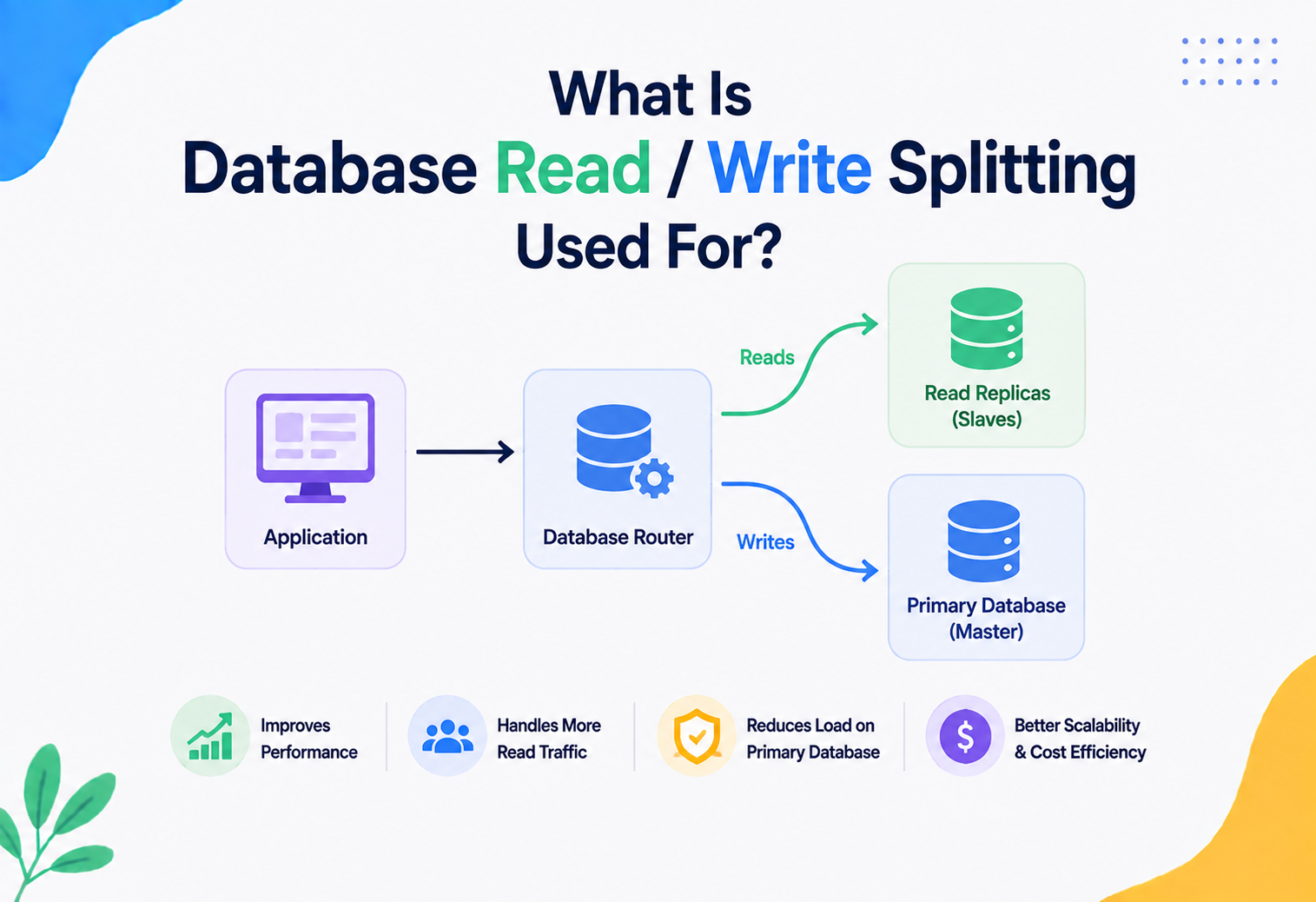
- Read replicas to spread read load
- Sharding / partitioning by key
- Connection pooling
- Query result caching (Redis)
- Denormalisation for read-heavy paths
Scaling Schema-on-Read
- Columnar formats (Parquet, ORC) to skip unneeded columns
- Partitioning files by date/region for “partition pruning”
- Distributed query engines (Spark, Presto) parallelising across nodes
- Materialised views / pre-aggregated tables for common queries
- Caching layers (e.g., Alluxio) between storage and compute
At Netflix, viewing-event data (billions of events per day) is first written using a schema-on-read approach into cheap, durable storage, so ingestion never falls behind. Later, that raw data is processed into curated, strongly typed Parquet tables that power dashboards — effectively converting schema-on-read data into schema-on-write style tables downstream, combining fast ingestion with fast analytical reads.
The CAP Theorem Angle
The CAP theorem states that a distributed system can only fully guarantee two of three properties at the same time: Consistency (every read sees the latest write), Availability (every request gets a response), and Partition tolerance (the system keeps working despite network splits). Schema-on-write systems, especially traditional relational databases, usually favour Consistency and Partition tolerance (CP) — they would rather reject a write than store inconsistent data. Schema-on-read systems, being built on eventually-consistent object storage, often favour Availability and Partition tolerance (AP) — they accept the write now and let consumers reconcile inconsistencies later. This is not a strict rule, but it explains why schema-on-read pairs so naturally with distributed, internet-scale ingestion.
Different Ways to Stay Up
Both worlds have to survive crashes, network partitions, and human error — but the machinery is different. In schema-on-write, reliability effort focuses on keeping the schema and constraints correct. In schema-on-read, it focuses on keeping the metadata catalog accurate and files uncorrupted.
Replication
Schema-on-write databases typically use synchronous or semi-synchronous replication (leader-follower) to ensure a copy of every validated row exists on multiple nodes. Because the schema is strict, replicas can be byte-for-byte structurally identical, making failover simple: promote a replica, and it behaves exactly like the original.
Schema-on-read storage (like S3) achieves durability differently — through erasure coding or multi-copy replication across data centres, at the level of raw bytes/files rather than rows. Since there’s no schema to keep synchronised, replication is actually simpler at the storage layer; the complexity moves instead to keeping the metadata catalog consistent with what files actually exist.
Failure Recovery
- Schema-on-write: Uses write-ahead logs (WAL) and point-in-time recovery. If a crash happens mid-write, the WAL lets the database replay or roll back to a known-good, structurally valid state.
- Schema-on-read: Recovery is about file integrity, not row integrity. If a file is partially written during a crash, downstream readers must be resilient to a truncated or corrupt file — often solved with atomic file commits (write to a temp location, then atomically rename) so that a query never sees a half-written file.
Disaster Recovery & Backup
Schema-on-write systems back up using database-specific tools (mysqldump, pg_basebackup, snapshot + WAL shipping) that preserve exact structure and constraints. Schema-on-read systems back up more simply — since data is just files, versioned object storage with lifecycle policies (like S3 versioning and cross-region replication) is often enough, because there’s no complex internal structure to preserve.
Schema-on-write pushes reliability effort into keeping the schema and constraints correct over time (migrations must be tested carefully). Schema-on-read pushes reliability effort into keeping the metadata catalog accurate and the raw files well-partitioned and uncorrupted. Neither is “more reliable” in absolute terms — the risk simply moves to a different layer.
Access, Leakage, and Compliance
Every security decision changes when structure is enforced late instead of early. Fine-grained controls that databases give you for free must be added deliberately to a data lake — and sensitive data can easily slip past when nothing inspects it on the way in.
Access Control
Schema-on-write databases offer fine-grained, column-level and row-level security natively (GRANT/REVOKE in SQL, row-level security policies in PostgreSQL). Because the database understands the structure, it can say “this user may see the salary column, but not the SSN column.”
Schema-on-read systems typically only control access at the file or bucket level (IAM policies on S3 buckets, for example), unless a governance layer like AWS Lake Formation or Apache Ranger is added on top to provide column-level permissions over raw files — an extra piece of infrastructure that schema-on-write gets “for free” from the database engine.
Data Leakage Risk
Because schema-on-read stores raw, unstructured data, sensitive fields (like a customer’s national ID number or password) can accidentally end up inside a raw JSON blob without anyone noticing, since nothing inspected the data on the way in. In schema-on-write systems, sensitive fields are usually deliberately modelled as their own columns, making them easier to find, mask, and audit.
Encryption and Compliance
Both approaches support encryption at rest and in transit, but the implementation differs: schema-on-write databases often support transparent data encryption (TDE) at the column level, letting you encrypt just the sensitive fields. Schema-on-read systems typically encrypt at the file or bucket level (S3 server-side encryption), which is simpler but coarser — you can’t easily encrypt “just the email field” inside a raw file without first extracting and re-storing it.
For regulations like GDPR’s “right to be forgotten,” schema-on-write systems make targeted deletion straightforward (DELETE FROM users WHERE id = ?). Schema-on-read systems make this much harder — the same user’s data might be scattered across thousands of raw files, requiring a rewrite of every affected file, which is why serious data lakes increasingly adopt table formats like Apache Iceberg or Delta Lake that add row-level delete capability on top of raw files.
Two Very Different Dashboards
You cannot manage what you do not measure — and the interesting numbers on each side of this divide barely overlap. Different signals, different alerts, often different specialists watching them.
What to monitor in schema-on-write systems
- Constraint violation rate (how often writes are rejected, and why)
- Query latency percentiles (p50/p95/p99)
- Replication lag between primary and replicas
- Lock wait time and deadlock counts
- Migration success/failure and duration
What to monitor in schema-on-read systems
- Schema drift — how often actual file structure diverges from the catalog’s expected schema
- Percentage of null/coerced fields per query (a proxy for data quality)
- Small-file counts (millions of tiny files badly hurt query engine performance)
- Catalog freshness (are new files registered promptly?)
- Query engine resource usage (Spark executor memory, task failures)
Data platforms commonly run automated “schema drift detectors” as a scheduled job — comparing a sample of newly landed files in the bronze layer against the expected schema, and alerting the data engineering team via tools like Slack/PagerDuty if a new, unexpected field appears in more than a set percentage of records. This effectively adds a lightweight, delayed version of schema-on-write validation on top of a schema-on-read system.
Tracing and Debugging
In schema-on-write systems, tracing a bad record is usually straightforward: look at the row, check its constraints, check application logs around the insert. In schema-on-read systems, tracing a bad record can mean walking back through several stages: which raw file did it come from, which producer wrote it, what version of the schema was assumed at each stage of the bronze→silver→gold pipeline. This is why lineage tools (like Apache Atlas, OpenLineage, or Databricks Unity Catalog) have become essential in modern data platforms — they answer “where did this weird number come from?” across many transformation steps.
Managed Services on Both Sides
Cloud platforms have made both worlds enormously easier to operate. The interesting difference now is not availability of tooling — it is the cost model.
Cloud-Managed Schema-on-Write
- Amazon RDS / Aurora, Azure SQL Database, Google Cloud SQL — fully managed relational databases with automated backups, patching, and failover.
- Snowflake, Google BigQuery, Amazon Redshift — cloud data warehouses that enforce strict, strongly typed schemas for analytical (OLAP) workloads.
Cloud-Managed Schema-on-Read
- Amazon S3 + AWS Glue + Athena — a classic serverless data lake stack: store raw files in S3, catalog them with Glue, and query with Athena (built on Presto/Trino) without ever loading data into a database.
- Azure Data Lake Storage + Azure Synapse and Google Cloud Storage + BigQuery external tables — equivalent stacks on other clouds.
- Databricks Lakehouse (Delta Lake) — combines schema-on-read style raw storage with schema enforcement options layered on top, blurring the line between the two approaches.
Cost Model Differences
Schema-on-write cloud databases typically charge for provisioned compute (instance size) plus storage, and cost scales with how much data you keep structured and indexed. Schema-on-read cloud stacks (like S3 + Athena) often charge separately for storage (very cheap) and for compute per query (pay-per-scan), which means cost is directly tied to how much data each query has to read — making partitioning and columnar formats not just a performance optimisation but a direct cost optimisation too.
In pay-per-scan query engines like Amazon Athena, converting raw JSON logs into partitioned Parquet files has been shown in real deployments to cut both query cost and query time by roughly 90%, simply because the engine can skip irrelevant partitions and read only needed columns instead of scanning entire raw files.
Where Each Database Type Fits
Most modern database categories can be placed somewhere on a spectrum between strictly schema-on-write and strictly schema-on-read. Knowing where each fits saves a lot of debate.
Where Each Database Type Fits
| Category | Examples | Schema philosophy |
|---|---|---|
| Relational (RDBMS) | PostgreSQL, MySQL, Oracle | Schema-on-write (strict) |
| Document databases | MongoDB, Couchbase | Mostly schema-on-read, with optional schema validation rules |
| Wide-column stores | Cassandra, HBase | Flexible — schema-on-write per defined columns, but new columns can be added freely per row |
| Data lake / object storage | Amazon S3, HDFS, ADLS | Pure schema-on-read |
| Data warehouse (cloud OLAP) | Snowflake, BigQuery, Redshift | Schema-on-write, optimised for analytics |
| Lakehouse table formats | Delta Lake, Apache Iceberg, Apache Hudi | Hybrid — raw storage with enforced, evolvable schemas on top |
| Search / log platforms | Elasticsearch, Splunk | Schema-on-read at ingestion, with dynamic mapping applied automatically |
Caching Considerations
Caching plays very different roles in each world. In schema-on-write systems, caches like Redis or Memcached typically store the result of a query (for example, a user’s profile) because the underlying structure is already known and stable — the cache just avoids repeating a database round trip. In schema-on-read systems, caching often happens one layer earlier: caching the decoded, schema-applied version of raw files (for example, Alluxio caching Parquet data in memory) so that the expensive “parse and apply schema” work doesn’t need to be repeated on every query.
Load Balancing
Schema-on-write systems typically balance load using read replicas behind a load balancer or a connection-pool-aware proxy (like PgBouncer for PostgreSQL), directing read-only queries away from the primary node. Schema-on-read systems balance load at the compute layer of the query engine — distributed engines like Spark or Presto automatically split work into many small tasks spread across a cluster of worker nodes, so “load balancing” is really about splitting file reads evenly across workers, sized by data volume (data locality and partition size) rather than by simple round-robin.
The Small-File Problem
One operational headache that is unique to schema-on-read storage deserves special attention because it surprises so many teams: the “small-file problem.” Object storage systems like S3 or HDFS technically allow you to write millions of tiny files (a few kilobytes each), but distributed query engines pay a fixed overhead cost — opening a connection, reading a file header, scheduling a task — for every single file, regardless of how small it is. A data lake with ten million tiny files can be dramatically slower to query than the same total data volume stored as a few thousand well-sized files.
Streaming pipelines that write one file per micro-batch every few seconds are a classic source of the small-file problem. The usual fix is a periodic “compaction” job that merges many small files into fewer, larger ones (typically targeting a few hundred megabytes per file), which is exactly the kind of maintenance work schema-on-write systems never need, since their storage engine manages file layout internally.
Tolerant Readers and Strict Contracts
The same tension between rigid structure and tolerant flexibility plays out at the API and messaging layer, not just at the database. Recognising it there saves whole classes of integration bugs.
Schema-on-Write in API Design
Modern APIs frequently enforce strict schemas using specifications like OpenAPI/JSON Schema for REST, or Protocol Buffers for gRPC. A request that doesn’t match the schema is rejected with a 400 error before it ever reaches business logic — the API contract itself behaves like schema-on-write.
public class CreateOrderRequest {

    @NotNull
    private Long customerId;

    @NotNull
    @DecimalMin(value = "0.01")
    private BigDecimal amount;

    @NotBlank
    private String currency;

    // Spring's Bean Validation rejects the request automatically
    // before the controller method body even runs.
}
Schema-on-Read in Event-Driven Microservices
In event-driven architectures using Apache Kafka, producers often publish events as loosely structured JSON or Avro without every consumer agreeing on a rigid, shared schema upfront. Each consuming microservice reads only the fields it cares about and ignores the rest — a schema-on-read pattern at the messaging layer, sometimes called the “tolerant reader” pattern.
@KafkaListener(topics = "order-events")
public void handleOrderEvent(String rawJson) {
    JsonNode node = objectMapper.readTree(rawJson);

    // Only reads the fields it needs; ignores anything unexpected;
    // tolerates missing optional fields instead of failing.
    long orderId = node.path("orderId").asLong(-1);
    String status = node.path("status").asText("UNKNOWN");

    if (orderId == -1) {
        log.warn("Received event missing orderId, skipping: {}", rawJson);
        return;
    }
    process(orderId, status);
}
This tolerant approach lets producing teams add new fields to events without breaking every consumer — a huge advantage in large organisations with many independently deployed microservices, and a direct application of schema-on-read thinking to service-to-service communication.
Schema Registries: Bringing Write-Time Discipline to Read-Time Flexibility
Because pure tolerant-reader Kafka pipelines can still drift into chaos, many companies add a Confluent Schema Registry (using Avro or Protobuf) in front of Kafka topics. Producers must register a compatible schema before publishing, giving some of the safety of schema-on-write, while consumers still benefit from controlled, versioned schema evolution rather than a hard breaking change — a genuinely hybrid approach.
Names for the Recurring Shapes
A handful of patterns show up over and over across schema decisions — and a handful of anti-patterns lie in wait for anyone who hasn’t seen them named before.
Useful Design Patterns
- Medallion / bronze-silver-gold architecture: schema-on-read at ingestion, progressively adding schema-on-write discipline as data moves toward business consumption.
- Schema registry with compatibility rules: allow schema evolution (adding optional fields) while still validating structure, blending both philosophies for event streams.
- Tolerant reader pattern: consumers read only fields they need and ignore unknown ones, making schema-on-read data safe to evolve.
- Strangler-fig migration: when migrating a legacy schema-on-write system, gradually route new data through a schema-on-read staging layer before formalising a new strict schema, reducing risk.
- Data contracts: a modern practice where producing teams publish a formal, versioned agreement about the shape of data they emit — essentially applying schema-on-write discipline to a schema-on-read pipeline, at the organisational level rather than the database level.
Anti-patterns to Avoid
Dumping raw files into a data lake with no catalog, no naming convention, and no ownership. Within months, nobody can tell what a file contains or whether it’s still needed. Fix: enforce a metadata catalog and lightweight schema validation at ingestion, even in a schema-on-read system.
Trying to make a relational database infinitely flexible by storing every field as generic rows of (entity_id, attribute_name, value) instead of real columns. This looks like schema-on-read, but inside a schema-on-write engine, and it destroys query performance, type safety, and indexing — usually the worst of both worlds. Fix: use a genuinely schema-flexible store (document DB or data lake) instead of faking flexibility inside a relational table.
Letting producers change event shapes without any registry or contract, so consumers silently misinterpret fields (a boolean becomes a string “true”/“false” without warning) and produce subtly wrong results with no error at all. Fix: adopt a schema registry with compatibility checks, even for otherwise flexible systems.
Locking a brand-new product’s database into a fully normalised, strict schema before the product’s real data shape is understood, causing painful migrations every sprint. Fix: for genuinely exploratory, early-stage data, start closer to schema-on-read (a flexible JSON/document store) and formalise into strict schemas once patterns stabilise.
Habits That Keep Data Trustworthy
Very few schema decisions are pure best practice — almost all are trade-offs. The habits that separate calm data teams from firefighting ones are surprisingly small in number.
Best Practices
- Match the approach to the data’s certainty, not to fashion. Well-understood, mission-critical data (payments, inventory counts) belongs in schema-on-write. Exploratory or highly variable data belongs in schema-on-read, at least initially.
- Never let schema-on-read mean “no governance.” Always maintain a metadata catalog, naming conventions, and ownership, even for raw data lakes.
- Use self-describing, columnar formats (Parquet/Avro) instead of raw JSON/CSV for any schema-on-read data expected to be queried repeatedly or at scale.
- Validate as early as is practical, even in schema-on-read pipelines. A lightweight validation step right after ingestion (checking for obviously malformed records) catches problems before they propagate downstream.
- Version your schemas explicitly in both worlds — use migration tools (Flyway/Liquibase) for databases, and schema registries (Confluent, Glue Schema Registry) for streaming/lake data.
- Design APIs to be tolerant readers when consuming events from other teams, so you’re not broken by every upstream change.
Common Mistakes
- Treating schema-on-read as an excuse to skip data quality work entirely, rather than just delaying it.
- Storing millions of tiny files in a data lake instead of batching them, which cripples query engine performance (the “small file problem”).
- Forgetting that changing a “logical” schema in the catalog does not retroactively fix already-written files — old files still have the old shape.
- Over-normalising a schema-on-write database too early, before understanding real access patterns, leading to excessive joins and poor performance.
- Not documenting which fields are optional vs required in schema-on-read pipelines, leaving every downstream team to guess.
Push schema enforcement as early as you reasonably can, and no earlier. Enforcing too early (before you understand the data) causes painful redesigns. Enforcing too late (or never) causes silent data quality decay. The medallion/bronze-silver-gold pattern exists precisely to let you push the enforcement point later in the pipeline, deliberately, rather than by accident.
A Quick Pre-Design Checklist
Before choosing an approach for a new dataset, it helps to walk through a short set of questions with your team:
Answering these honestly, as a team, usually points clearly toward one starting approach — and toward exactly where in the pipeline you should later introduce the other.
How the Giants Blend Both Approaches
Every large-scale operator uses both philosophies deliberately — typically schema-on-read at the edge, schema-on-write closer to the business. A quick tour of five well-known companies.
Netflix
Netflix’s data platform ingests enormous volumes of viewing and interaction events. These are first captured using schema-on-read principles into a data lake (historically built on Amazon S3 with Hive-style tables), because the sheer event volume and diversity of client platforms (TVs, phones, browsers, game consoles) makes strict upfront validation impractical at ingestion. Downstream, these raw events are transformed into curated, strongly typed tables that power recommendation systems and business dashboards — a textbook bronze-to-gold pipeline.
Amazon
Amazon’s order and payment systems, where correctness is non-negotiable, run on strict, schema-on-write relational and NewSQL-style databases (transactional stores that enforce ACID guarantees). At the same time, Amazon’s internal analytics and machine-learning teams rely heavily on S3-based data lakes with schema-on-read query engines like Athena and EMR (Spark) for exploratory analysis, product recommendations training data, and log analysis — showing the two philosophies coexisting deliberately within one company, chosen per use case.
Uber
Uber’s trip and pricing data pipelines process a very high volume of location and event data from mobile apps. Uber developed and open-sourced Apache Hudi, a table format that adds incremental, near-real-time schema-on-write-style updates and deletes on top of an otherwise schema-on-read data lake — directly motivated by the need to combine data lake flexibility and scale with the correctness guarantees typically associated with schema-on-write databases.
Google’s internal data infrastructure, and its public product BigQuery, popularised a middle path: a schema-on-write query engine that operates directly over data that may still live in flexible, semi-structured form. BigQuery lets a table column hold a nested, repeated JSON-like structure (using its native RECORD and ARRAY types), so teams get the query speed and type safety of schema-on-write while still tolerating a good amount of internal structural variation, without needing to fully flatten every field into its own rigid column ahead of time.
Banking & Financial Services
Core banking ledgers almost universally use strict schema-on-write relational databases, because a single misinterpreted field in a financial transaction can have real monetary and regulatory consequences. However, fraud detection and risk modelling teams within the same banks often build schema-on-read data lakes on top of transaction logs, to run flexible, exploratory machine learning without waiting for a formal schema change every time a new signal is added.
Common Questions, and What to Remember
A short round of the questions people ask most often about schema-on-read and schema-on-write — followed by a portable summary you can carry into any design review.
Is Schema-on-Read the Same as “NoSQL”?
Not exactly. Schema-on-read is a broader concept about when structure is applied. Many NoSQL databases (like MongoDB) lean schema-on-read by default, but some (like Cassandra) still require you to define column families up front, and increasingly offer optional schema validation. NoSQL is a category of database technology; schema-on-read is a design philosophy that some NoSQL systems follow.
Can a Single System Use Both Approaches?
Yes, and in production this is the norm rather than the exception. The medallion architecture (bronze/silver/gold) is a direct, deliberate combination of both, and lakehouse table formats like Delta Lake and Apache Iceberg were specifically built to blend the two.
Does Schema-on-Read Mean “No Validation Ever Happens”?
No. It means validation is delayed until read time instead of happening at write time. Good schema-on-read systems still validate — just later, and usually as an explicit, separate processing stage rather than as an automatic gatekeeper.
Which Approach Is “Better”?
Neither, universally. The right choice depends on how well you understand your data’s shape today, how fast that shape is likely to change, and how costly a rejected or a wrong record would be. Mission-critical, well-understood data favours schema-on-write. Exploratory, high-volume, fast-changing data favours schema-on-read, usually followed by a schema-on-write stage downstream.
How Does This Relate to “Data Lake” vs “Data Warehouse”?
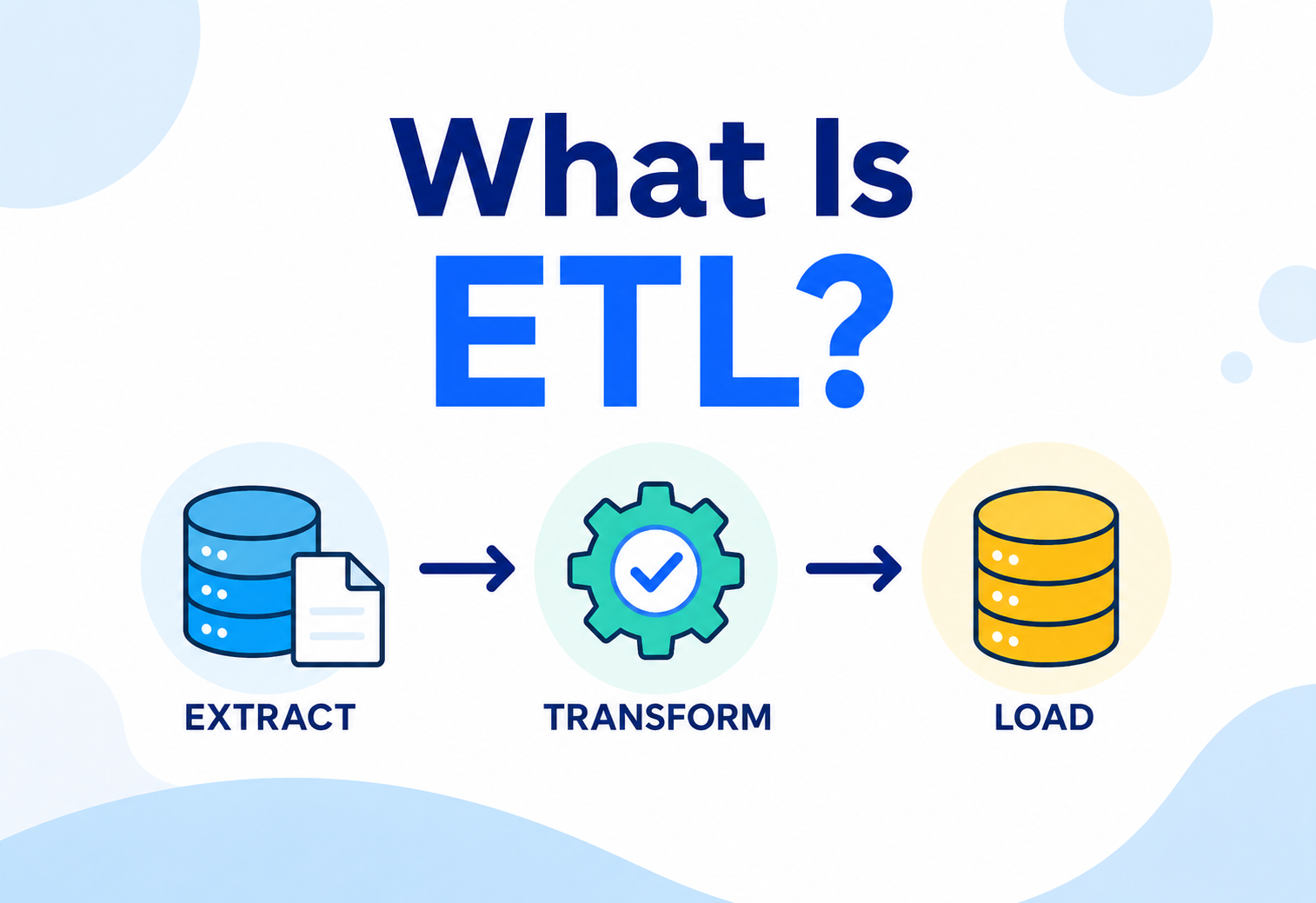
A data warehouse (like Snowflake or Redshift) is built around schema-on-write: data is transformed and loaded into strict tables before use (the classic ETL — Extract, Transform, Load — order). A data lake stores raw data first and applies structure only when read (the newer ELT — Extract, Load, Transform — order), which is schema-on-read in practice.
Key Takeaways
- Schema-on-write enforces structure before storage; schema-on-read applies structure at query time, after storage.
- Schema-on-write favours data quality and read speed; schema-on-read favours ingestion speed and flexibility.
- Neither approach removes the need for a schema — schema-on-read just delays and relocates where it’s checked, usually to a metadata catalog and the reading application.
- Modern production systems combine both, most commonly through a layered pipeline (raw → cleaned → curated), rather than picking one exclusively.
- Table formats like Delta Lake, Apache Iceberg, and Apache Hudi exist specifically to bring schema-on-write-style guarantees on top of schema-on-read-style storage.
- The right choice for any given dataset depends on how well-understood and how critical that data is — not on which approach is newer or more fashionable.
Schema-on-write bets that you understand your data well enough to define its shape up front; schema-on-read bets that flexibility now matters more than correctness later — and the best modern architectures deliberately use both, chosen per stage of the pipeline.
“The question is never whether your data has a schema. It’s only a question of when someone pays the price of finding out what that schema is.”