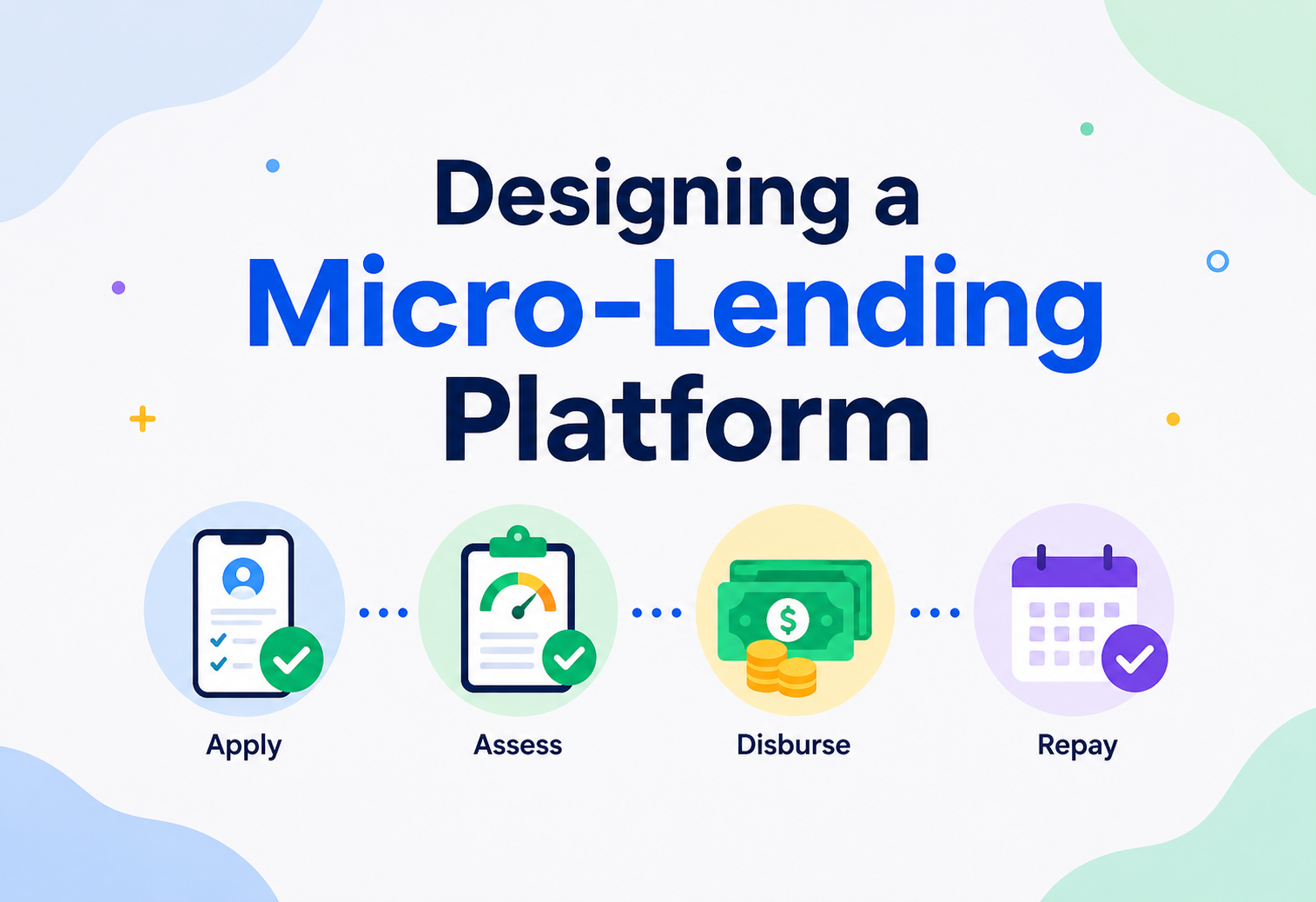
Designing a Micro-Lending Platform
A complete, production-grade system design walkthrough for issuing very small, short-term loans to a very large population of borrowers, with fully automated, real-time underwriting decisions — the alternative-data pipelines, tiered risk models, event-driven lifecycle, idempotent disbursement, and cost-per-transaction discipline that make micro-lending economically possible where traditional banking never was.
Introduction & History
Micro-lending is the practice of extending very small loans — sometimes as little as a few dollars, more commonly in the range of tens to a few hundred dollars — to borrowers who often have little or no access to traditional banking credit. The idea did not start with technology at all. It began in the 1970s in Bangladesh, where economist Muhammad Yunus began lending tiny amounts of his own money to poor villagers, mostly women, who used it to buy the raw materials needed to run a small business, like bamboo for a stool-maker. This experiment grew into Grameen Bank, an institution built entirely around the idea that even people with no collateral and no formal credit history could be trustworthy borrowers if the loan was small enough and the lending relationship was structured around their real life circumstances, such as group lending and weekly repayment meetings.
For decades, micro-lending remained a largely manual, human-intensive process. A loan officer would physically visit a village, get to know the borrower and their community, assess character and reputation through conversation and observation, and make a lending decision based on judgment built over years of local relationships. This worked, but it did not scale. A single loan officer could realistically manage a few hundred borrowers at most, and the model depended heavily on the officer’s personal skill and integrity.
1.1 Two shifts that reshaped micro-lending
Two changes reshaped micro-lending into what it is today. The first was the explosion of mobile phones across regions that had historically been underserved by traditional banks — much of the developing world skipped landline banking entirely and went straight to mobile money. The second was the availability of new sources of data beyond a formal credit bureau file: mobile phone usage patterns, mobile money transaction history, e-commerce activity, and even smartphone metadata, all of which turned out to carry meaningful signal about a person’s likelihood of repaying a small loan, even when that person had never held a bank account or a credit card.
These two shifts made it possible to do something that would have been unthinkable to a 1970s loan officer: evaluate and approve a loan for a total stranger, with no human involvement at all, in under a minute, based purely on data and an automated decision model. This is the foundation of the modern micro-lending platform — companies and mobile money operators across Africa, South Asia, and Latin America now issue tens of millions of tiny loans every month through exactly this kind of automated system, reaching populations that traditional banks have never been able to serve profitably, because the cost of manually underwriting a fifteen-dollar loan the old way would exceed the loan itself.
This tutorial designs, from the ground up, a real-time micro-lending platform capable of accepting a loan request, making a fully automated underwriting decision, disbursing funds, and managing repayment, at a scale of millions of borrowers and an even larger number of individual loan transactions.
Think of it like the difference between a small-town shopkeeper who extends store credit based on personally knowing every customer, and a modern vending machine at a train station: no one asks who you are, but rules, sensors, and past patterns decide instantly whether the transaction goes through. Micro-lending had to make exactly that jump — from the shopkeeper’s memory to the vending machine’s decision loop — to reach the scale it operates at today.
“Why can’t a micro-lending platform simply reuse a traditional bank’s loan underwriting system?” A strong answer explains that traditional underwriting is built around loans large enough to justify a slower, more manual process and around borrowers who already have an established credit bureau file, while micro-lending must make a profitable decision on a loan of a few dollars in under a few seconds, for borrowers who very often have no formal credit history at all — this forces a fundamentally different architecture built around alternative data, fully automated decisioning, and extreme cost efficiency per transaction.
Problem & Motivation
To understand the engineering challenge, picture a platform operating across several countries where, at any moment, hundreds of thousands of people are requesting a small loan through a mobile app or a basic feature phone menu. Some need money for an emergency medical bill, some to restock inventory for a small shop, some simply to cover a gap until their next payday. The platform has to say yes or no almost instantly, and it has to be right often enough to stay in business.
2.1 The economics of a tiny loan
A traditional loan officer’s time and a manual underwriting process might cost tens of dollars per application in labor alone. If the average loan is only twenty dollars, that manual cost structure makes the entire business impossible — the interest earned on the loan would never cover the cost of evaluating it. The system must therefore make each underwriting decision at a cost measured in fractions of a cent, which is only achievable through full automation running on cheap, horizontally scalable infrastructure.
2.2 Thin or absent credit history
Many micro-lending borrowers have never held a formal bank loan, a credit card, or any product that reports to a traditional credit bureau. A system that only knows how to read a bureau file has nothing to work with for a large share of its addressable market. The core technical problem is building a reliable risk model from alternative data sources — mobile money transaction history, airtime top-up patterns, mobile phone usage, and repayment history within the platform’s own past loans — that can predict repayment likelihood nearly as well as a traditional credit score does for a formally banked population.
2.3 Extreme volume, small individual value
Where a traditional bank might process a few thousand loan applications a day, a micro-lending platform at scale can process millions of loan requests a day, each one individually worth very little. This inverts a lot of normal system design intuition: the system must be exceptionally cheap per-transaction and extremely horizontally scalable, because the aggregate volume, not the size of any single transaction, is what drives infrastructure requirements.
2.4 High portfolio-level risk sensitivity
Because interest margins on small, short-term loans are thin in absolute currency terms even though they may be meaningful as a percentage rate, the lending business is extremely sensitive to default rate. A default rate that creeps up by even a couple of percentage points across a portfolio of millions of loans can turn a profitable operation unprofitable almost overnight. This makes the accuracy and continuous recalibration of the underwriting model a direct, first-order business survival concern, not just a nice-to-have.
2.5 Instant disbursement expectations
Borrowers using micro-lending are frequently in a moment of real, immediate need — the whole value proposition is speed. A borrower who has to wait a day for a decision will often go to a competitor or an informal, higher-cost lender instead. This places extremely tight latency requirements on the entire pipeline, from application through underwriting decision to actual funds disbursement into a mobile money wallet.
Think of traditional bank underwriting like a tailor who takes careful, individual measurements for one expensive custom suit at a time. Micro-lending underwriting has to work more like a vending machine: it never meets the customer, it has only a few seconds and a handful of quick signals to work with, and it has to be right often enough, millions of times a day, purely from patterns rather than personal judgment — a fundamentally different kind of engineering problem from the tailor’s approach.
Mobile lending products such as Safaricom’s M-Shwari and Fuliza in Kenya, and app-based lenders such as Tala and Branch operating across Africa, Asia, and Latin America, built exactly this kind of automated, alternative-data-driven micro-lending pipeline, issuing loans that are frequently approved and disbursed in under a minute using nothing but a smartphone or a basic mobile money account.
Core Concepts
Before designing the architecture, it is worth building a clear vocabulary, since several terms here carry specific meaning in the lending domain.
Micro-Loan
A very small, typically short-term loan, often repaid within days, weeks, or a few months, usually issued without traditional physical collateral. The small size and short duration are what make it economically viable to lend to a borrower whose repayment ability cannot be verified through conventional means, since the lender’s exposure to any single loan is limited.
Alternative Data
Any data source used to assess creditworthiness that falls outside a traditional credit bureau file — mobile money transaction history, airtime purchase frequency, phone contact list size and diversity (used carefully and with consent), device metadata, app usage patterns, and, for repeat borrowers, the platform’s own internal repayment history. Alternative data is the backbone of micro-lending underwriting precisely because so much of the addressable population has no traditional bureau file at all.
Automated Underwriting
The process of deciding whether to approve a loan, and on what terms (amount, interest rate, repayment period), entirely through an automated model rather than human review. In micro-lending this decision typically must complete in well under a few seconds, and for the overwhelming majority of applications there is no human in the loop at all.
Credit Scoring Model / Risk Score
A model that converts an applicant’s available data into a single numeric estimate of default probability. In micro-lending this score is typically retrained very frequently, since the borrower population and data sources evolve quickly, and since the platform accumulates its own outcome data (who actually repaid, who defaulted) far faster than a traditional bank would, given the short loan durations.
Loan Lifecycle States
A loan moves through a well-defined set of states: applied, underwriting, approved or declined, disbursed, active/repaying, delinquent, defaulted, or fully repaid and closed. Every part of the system is built around cleanly modeling and transitioning through these states, since business logic, risk exposure, and reporting all depend on knowing exactly which state every loan is in at any moment.
Delinquency and Default
Delinquency describes a loan that has missed a scheduled repayment but is still considered potentially recoverable, often with escalating reminder and collections activity. Default describes a loan that has been missed for long enough (a threshold defined by the business, often a fixed number of days past due) that it is written off as a loss for portfolio accounting and risk modeling purposes, though collections efforts may continue afterward.
Repeat Borrowing and Credit Building
A defining feature of successful micro-lending products is that a borrower who repays a small first loan responsibly is offered a larger loan next time, and this cycle repeats, gradually building both the borrower’s trust in the platform and the platform’s confidence in the borrower. This creates an extremely valuable internal data source — a borrower’s own repayment history on the platform itself — that often becomes the single strongest predictive signal available for repeat borrowers.
“For a completely new borrower with zero history on the platform and no bureau file, what would you actually score them on?” The expected answer is a first-time-borrower model built specifically on non-bureau alternative data — mobile money account age and transaction regularity, airtime top-up consistency, device and behavioral signals — deliberately kept to a small, conservative initial loan amount to limit exposure, with the platform’s own richer internal repayment data taking over as the dominant signal for that borrower’s second and later loans.
Requirements
4.1 Functional requirements
- Accept a loan application from a mobile app, USSD/feature-phone menu, or partner integration, and collect the minimal data needed for underwriting.
- Run a fully automated underwriting decision, returning an approve/decline outcome along with approved amount, interest rate, and repayment terms.
- Disburse approved funds instantly into the borrower’s mobile money wallet or linked account.
- Track the full loan lifecycle, including scheduled repayments, actual repayments, delinquency, and default.
- Support automated repayment reminders and collections workflows as a loan approaches or passes its due date.
- Continuously ingest new outcome data (repaid vs. defaulted) to retrain and recalibrate underwriting models.
- Provide reporting and portfolio risk dashboards for the lending business to monitor default rates, exposure, and profitability in near real time.
4.2 Non-functional requirements
- Very low latency: the underwriting decision and disbursement together should typically complete in a small number of seconds, since instant access to funds is the platform’s core value proposition.
- Extreme cost efficiency per transaction: given how small each loan is, infrastructure and third-party data costs per application must be kept to a small fraction of a cent to preserve any profit margin.
- Very high throughput: the system must sustain a very large number of applications per second across peak periods (such as month-end, when many borrowers face cash flow gaps before payday), without a corresponding linear increase in cost.
- High availability: disbursement is directly tied to revenue and, for many borrowers, urgent personal need, so the system should target availability in the range of 99.9% or higher with graceful degradation rather than outright failure.
- Model freshness: because default outcomes resolve quickly (loans are short-duration), the model retraining pipeline must be able to incorporate fresh outcome data frequently rather than on a slow, infrequent cadence.
- Fairness and regulatory compliance: automated credit decisions are subject to fair-lending regulation in most jurisdictions, requiring the system to avoid discriminatory outcomes and to be able to explain a decline.
- Data privacy: alternative data sources like phone usage and mobile money history are sensitive, and their use for credit decisions is regulated in most markets, requiring explicit consent management and strict data handling.
“Given that each individual transaction is worth so little, how does that change your infrastructure choices compared to a typical high-value financial system?” The expected answer highlights that per-transaction infrastructure and third-party data costs must be minimized aggressively — favoring cheaper, approximate techniques, batching where possible, and being deliberate about which paid data sources are actually worth their cost per lookup — since at extremely high volume with tiny margins, small per-transaction cost differences compound into the difference between a profitable and unprofitable business.
Architecture & Components
The platform is organized as an event-driven pipeline covering the full loan lifecycle, from application through underwriting, disbursement, repayment tracking, and collections, all built on horizontally scalable, low-cost-per-transaction services.
5.1 API Gateway
The single entry point for every borrower channel, whether a smartphone app, a USSD menu on a basic feature phone, or a partner integration such as an e-commerce checkout offering “buy now, pay in installments.” It authenticates the channel, applies per-channel rate limits, and forwards validated requests to the Loan Application Service.
5.2 Loan Application Service
Performs lightweight validation (is the requested amount within allowed bounds, is the borrower identifier well-formed), assigns a unique loan application ID, and publishes the application event onto the event bus, keeping this hot-path service as simple and fast as possible.
5.3 Data Aggregation Service
Gathers the alternative data needed for underwriting: mobile money transaction history from a telco or wallet provider, airtime top-up patterns, and — critically for repeat borrowers — the platform’s own internal loan history for this borrower. Calls to external providers run in parallel with strict timeouts, since these calls are the largest source of both latency and per-transaction cost in the entire pipeline.
5.4 Feature Store
Holds both freshly computed features for the current application and historical aggregates (for example, “average mobile money balance over the last thirty days” or “number of previous loans with this borrower and their repayment outcomes”), split into an online component for real-time scoring and an offline component for model training, kept consistent with each other.
5.5 Underwriting Rules Engine
Applies deterministic, auditable business rules — for example, a hard cap on loan amount for first-time borrowers, or an automatic decline for a borrower currently delinquent on an existing loan — before or alongside the statistical model, giving the business a fast, explainable, and easily adjustable layer of control.
5.6 Credit Risk Scoring Service
Runs the trained model against the gathered features and returns a calibrated default probability along with the recommended loan amount and terms, discussed in depth in the Underwriting section below.
5.7 Decision Orchestrator
Combines the rules engine and scoring service outputs, applies current business policy (which can vary by market, borrower segment, and risk appetite), and produces the final approve/decline decision along with approved terms.
5.8 Disbursement Service
Executes the actual transfer of funds to the borrower’s mobile money wallet or linked account through a payment provider integration, and records the disbursement as the loan moves into the active/repaying lifecycle state.
5.9 Loan Ledger, Repayment Scheduler & Collections Service
The Loan Ledger Service is the authoritative record of every loan’s balance and lifecycle state. The Repayment Scheduler tracks due dates and triggers reminders. The Collections Service manages escalating outreach for delinquent loans and ultimately marks loans as defaulted according to the business’s defined threshold.
“Why keep a separate deterministic rules engine when you already have a statistical credit risk model?” The expected answer parallels other regulated-lending designs: rules provide fast, guaranteed, auditable enforcement of hard business policy (like never approving a second loan while a borrower is currently delinquent) that must never depend on statistical uncertainty, they are cheap to evaluate and can reject or cap obviously risky applications before the more expensive scoring step runs, and they remain a safety net if the model is temporarily degraded or mis-deployed.
Internal Working
This section traces exactly what happens, step by step, from the moment a borrower requests a loan to the moment funds land in their wallet.
6.1 Step one: application intake and validation
The application service checks that the requested loan amount is within the platform’s allowed range and that the borrower identifier (typically a phone number, since this is the primary identifier in most micro-lending markets) is well-formed. This step is intentionally minimal and fast.
6.2 Step two: borrower identification and history lookup
The system checks whether this borrower has an existing profile and loan history on the platform. Returning borrowers immediately unlock a far richer, more predictive data source — their own past repayment behavior — while first-time borrowers are routed toward a more conservative underwriting path built on external alternative data alone.
6.3 Step three: alternative data aggregation
For the relevant data sources, the system pulls recent mobile money transaction history (deposit frequency, average balance, transaction volume), telco data where available and consented (airtime top-up regularity, account tenure), and, for returning borrowers, complete internal repayment history including any past late payments. All of this happens in parallel, each with a strict timeout budget appropriate to the overall latency target.
6.4 Step four: feature computation
Raw aggregated data is converted into model-ready features: balance stability measures, transaction regularity measures, account tenure, and, for repeat borrowers, features like “number of prior loans,” “percentage repaid on time,” and “days since last loan closed.”
6.5 Step five: rules and scoring
The rules engine checks hard policy conditions first — current delinquency, blacklist status, loan amount caps by borrower tier. In parallel, the scoring service computes a calibrated default probability from the assembled features. Both feed into the Decision Orchestrator.
6.6 Step six: decision, pricing, and terms
The orchestrator combines the rules verdict and the risk score against current business policy to produce not just an approve/decline decision, but also the specific approved amount, interest rate, and repayment period — since in micro-lending, a genuinely borderline applicant is very often approved anyway, just for a smaller amount or shorter term, rather than declined outright, which keeps acquisition high while managing risk exposure per loan.
6.7 Step seven: disbursement
On approval, the Disbursement Service immediately initiates a transfer to the borrower’s wallet through the relevant payment provider, and the Loan Ledger Service records the new loan as active with its repayment schedule.
“If the telco data provider is slow or unavailable, should the whole application fail?” No — the expected answer is graceful degradation: the missing data source is marked unavailable rather than blocking the pipeline, the scoring model is trained to handle missing features rather than assuming a fixed default, and if too many critical signals are missing for a confident decision, the system falls back to a conservative default — typically a smaller approved amount or an automatic decline for a first-time borrower — rather than either blocking indefinitely or guessing with an unsafe approval.
Data Flow & Lifecycle
7.1 Ingestion
A loan application event is durably written to the event streaming platform the moment it is received, before any processing begins, so no application can be silently lost if a downstream service is briefly unavailable.
7.2 Aggregation and feature computation
Consumers fan out to alternative data sources in parallel and write the combined result into the feature store, this being the most latency- and cost-sensitive stage because of the external network calls involved.
7.3 Underwriting
Rules and scoring run largely in parallel against the same feature set, converging at the Decision Orchestrator, which also applies current business policy thresholds that can vary by market and campaign.
7.4 Disbursement and activation
An approved decision triggers immediate fund transfer and moves the loan into the active lifecycle state, with a repayment schedule generated and stored in the Loan Ledger Service.
7.5 Repayment tracking
As repayments arrive (often automatically deducted from the same mobile money wallet, or paid manually by the borrower), the ledger updates the loan’s outstanding balance. Missed due dates move a loan into delinquency, triggering the Collections & Reminders Service.
7.6 Default and write-off
A loan that remains unpaid past the business’s defined threshold is marked defaulted for portfolio accounting and risk modeling purposes, though collections activity may continue. This final state is a critical labeled outcome for the next stage.
7.7 Feedback and retraining
Every closed loan’s final outcome — repaid on time, repaid late, or defaulted — flows back as labeled training data. Because micro-loans are short-duration, this feedback loop closes far faster than in traditional lending, allowing the model to be retrained and recalibrated much more frequently.
Digital lenders operating in markets like Kenya, Nigeria, and the Philippines commonly retrain their underwriting models on a cadence of days or weeks rather than months, precisely because short loan durations mean fresh, labeled repayment outcomes become available quickly, allowing the model to adapt rapidly to shifts in borrower behavior or economic conditions.
Underwriting & Credit Risk Engine
The underwriting engine is the heart of the platform, and it deserves a closer look at how it balances speed, accuracy, and fairness.
8.1 Tiered underwriting by borrower segment
Rather than a single one-size-fits-all model, the engine typically maintains separate model variants for distinct borrower segments: first-time borrowers with no platform history (scored almost entirely on external alternative data, with conservative loan caps), returning borrowers with a short history (blending external data with early internal repayment signals), and established repeat borrowers (scored predominantly on rich internal repayment history, unlocking larger loans and better terms).
8.2 Dynamic loan sizing
Rather than a strict binary approve/decline, the engine frequently uses the risk score to determine the maximum safe loan amount for a given applicant, allowing borderline applicants to still be served, just at a lower, safer exposure — this “graduated” approach both manages portfolio risk and preserves the growth loop where good repayment behavior unlocks larger future loans.
8.3 Fairness and explainability
Because automated credit decisions are subject to fair-lending regulation in most jurisdictions, the model must avoid using or acting as a proxy for legally protected characteristics, and the system must be able to generate a clear, specific reason for any decline. This requires deliberate feature selection review, ongoing fairness testing across borrower demographics where that data is available, and an explanation layer built directly into the scoring output.
8.4 Continuous recalibration
Given how quickly loan outcomes resolve, the risk engine includes an automated monitoring layer that compares the model’s predicted default rates against actual observed outcomes on a rolling basis, triggering an accelerated retraining cycle if the gap between predicted and actual grows beyond an acceptable bound — an early sign that borrower behavior or macroeconomic conditions have shifted.
“How would you prevent the model from unfairly penalizing a legitimate borrower just because they are new to the platform and lack history?” A strong answer describes the tiered segmentation approach: rather than declining every thin-history applicant, the engine offers a smaller, conservative first loan specifically designed to let a genuinely trustworthy new borrower build a track record with limited downside exposure to the lender, converting an information gap into a controlled, gradual trust-building process rather than an automatic penalty.
Algorithms, Data Structures & Machine Learning
9.1 Feature engineering
Key feature categories include account and behavioral stability (mobile money balance trends, transaction regularity), tenure features (account age, time since first observed activity), internal repayment history features for returning borrowers (on-time repayment rate, days-late distribution across past loans), and macro/contextual features (day of month relative to typical payday cycles, seasonal demand patterns).
9.2 Gradient boosted decision trees
As with most modern credit risk scoring, gradient boosted tree ensembles are a common core modeling choice, since they handle a mix of sparse alternative-data features and dense internal-history features well, train efficiently on the large volume of outcome data a high-volume micro-lending platform accumulates, and support feature-importance and per-prediction explanation techniques needed for fair-lending compliance.
9.3 Logistic regression for transparent baselines
Many micro-lending platforms maintain a simpler logistic regression model alongside the more complex ensemble, either as a transparent baseline that regulators and business stakeholders can fully understand, or as the primary production model in markets with stricter explainability requirements, accepting a modest accuracy trade-off for full transparency.
9.4 Behavioral time-series features
Because mobile money and repayment data are inherently sequential, features are often engineered from time-series patterns — trend and volatility of account balance over recent weeks, or the trajectory of repayment promptness across a borrower’s last several loans — since a borrower whose repayment promptness is improving over time carries different risk than one with an identical average but a worsening trend.
9.5 Key data structures
| Data Structure | Where It Is Used | Why |
|---|---|---|
| LSM-tree based key-value store | Online feature store | Handles the very high write throughput of continuously updated borrower features alongside fast point reads needed for real-time scoring. |
| Time-series optimized store | Behavioral and transaction history | Efficiently stores and queries sequential mobile money and repayment events for trend-based feature computation. |
| Sliding-window counters (approximate) | Transaction frequency and regularity features | Fast, memory-efficient counting of recent activity over rolling time windows at very high borrower volume. |
| Priority queue / time-ordered index | Repayment Scheduler | Efficiently retrieves the next batch of loans due for reminders or delinquency escalation without scanning the full loan ledger. |
| B-tree / LSM index on borrower ID | Loan Ledger Service | Fast lookup of a borrower’s full loan history and current outstanding balance during underwriting and servicing. |
9.6 Consistency considerations
The Loan Ledger Service, which tracks money owed, requires strong consistency and durability guarantees — a disbursement or repayment update must never be lost or double-applied. Feature computation and behavioral aggregates, by contrast, can tolerate eventual consistency, since a few seconds of staleness in a balance-trend feature does not materially change an underwriting decision, and relaxing consistency there significantly improves throughput and cost efficiency at scale.
“Why might a lender deliberately choose a simpler, less accurate model over a more accurate but less explainable one?” The expected answer is that fair-lending and consumer protection regulation in many markets requires lenders to give applicants a specific, meaningful reason for a credit decline, and a fully transparent model makes that obligation straightforward to satisfy reliably, while a highly complex model requires an additional, carefully validated explanation layer — some lenders judge the regulatory and reputational risk of getting that explanation layer wrong to outweigh the accuracy gain, particularly in their most heavily regulated markets.
Advantages, Disadvantages & Trade-offs
Advantages of this design
- Fully automated decisioning makes it economically possible to serve borrowers a traditional bank could never profitably reach.
- Tiered, segment-specific underwriting lets first-time borrowers in without excessive risk, while rewarding proven repeat borrowers with better terms.
- The short loan duration creates a fast feedback loop, allowing the risk model to adapt quickly to changing conditions.
- Event-driven architecture decouples the many lifecycle stages, letting each scale independently.
- Dynamic loan sizing manages portfolio risk gradually rather than through blunt approve/decline cutoffs.
Disadvantages and limitations
- Heavy reliance on third-party mobile money and telco data introduces external cost, latency, and availability dependency.
- Alternative data signals can be noisier and less stable than a traditional credit bureau file, especially across different regions and telco providers.
- Extremely thin margins per loan leave very little room for error in cost control or default rate before the business becomes unprofitable.
- Fully automated decisions without human review raise fairness and explainability challenges that require ongoing, deliberate engineering investment.
- Rapid model recalibration, while a strength, also creates operational complexity in validating and safely deploying frequent model updates.
10.1 Approval rate vs. default rate
A more permissive underwriting policy grows the borrower base and revenue faster but increases default losses; a stricter policy protects the portfolio but slows growth and can push genuinely creditworthy borrowers toward competitors or informal lenders. This trade-off is tuned continuously by the business, often varying dynamically by market conditions and even by day of month.
10.2 Cost of data vs. model accuracy
Richer alternative data sources generally improve model accuracy but cost more per lookup and add latency. Given how thin per-loan margins are, the system must carefully evaluate whether each additional data source’s accuracy improvement is worth its incremental cost, sometimes choosing to omit a data source entirely for the smallest loan tiers where the cost would exceed the added value.

10.3 Automation vs. manual review
Unlike some other lending products, micro-lending’s economics generally cannot support manual review at meaningful scale — the labor cost alone would exceed the loan value. This makes the automated system’s accuracy and fairness safeguards a permanent, load-bearing part of the business, rather than a fallback layer with a human safety net behind it.
Performance & Scalability
11.1 Horizontal scaling of stateless services
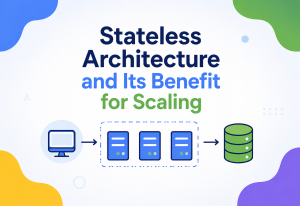
The API gateway, application service, data aggregation service, rules engine, and scoring service are all stateless and horizontally scalable behind load balancers, with autoscaling tied to request rate and latency, so the platform can absorb predictable peaks (such as end-of-month cash flow gaps) as well as unpredictable spikes.
11.2 Extreme cost-per-transaction optimization
Because each transaction is worth so little, the system aggressively caches recent third-party data lookups, batches non-urgent external calls where possible, and uses approximate, cheap-to-compute features over expensive exact computations wherever the accuracy trade-off is acceptable — every fraction of a cent saved per transaction compounds meaningfully across millions of daily loans.
11.3 Partitioned event streaming
The event bus is partitioned by borrower identifier, keeping a given borrower’s events processed in order relative to each other while spreading unrelated borrowers’ events across many partitions for parallel throughput, sized with headroom for peak demand.
11.4 Feature store scaling
The online feature store, the hottest read/write path in the system, uses a horizontally partitioned key-value store, with approximate, mergeable counters for high-frequency behavioral aggregates to avoid write hotspots under extreme borrower volume.
11.5 Batch processing for non-latency-sensitive work
Repayment scheduling, collections escalation, and portfolio risk reporting do not need sub-second latency and run as scheduled batch or streaming-aggregation jobs on cost-efficient compute, kept entirely separate from the latency-critical application-to-disbursement path.
11.6 Load shedding and graceful degradation
Under an extreme spike beyond auto-scaled capacity, the system can temporarily fall back to a lighter-weight, rules-heavy underwriting path with reduced external data enrichment, trading some accuracy for guaranteed availability and latency, rather than letting the whole pipeline slow down for every borrower.
“How would you design cost controls into the underwriting pipeline itself, not just the infrastructure around it?” A complete answer covers caching repeat data lookups, tiering data source usage by loan size (skipping the most expensive enrichment calls for the smallest loan amounts where the cost would not be justified by the loan’s own margin), using approximate computation for behavioral features, and building cost-per-decision as a first-class monitored metric alongside latency and accuracy, since in this domain cost efficiency is as core to the design as speed or correctness.
High Availability & Reliability
12.1 Multi-region deployment
Core services are deployed across multiple regions or availability zones aligned with the platform’s key markets, with data replicated between them, so a regional outage does not halt lending in unaffected markets, and traffic automatically fails over to a healthy region when needed.
12.2 Graceful degradation of external dependencies
Mobile money and telco data providers, being external and sometimes less reliable than core cloud infrastructure, are wrapped with strict timeouts and circuit breakers, with the pipeline falling back to a conservative, rules-heavy decision path rather than blocking or failing outright when a provider is degraded.
12.3 Durable event log
Every loan lifecycle event is durably written to the event streaming platform before processing, making service failures recoverable through simple restart-and-resume, and allowing replay for reprocessing if a bug affecting past decisions is discovered.
12.4 Idempotent disbursement
Disbursement is one of the most critical operations to protect against duplication — a retried or redelivered disbursement request must never result in sending funds twice. Every disbursement carries an idempotency key tied to the loan ID, checked against the ledger before any transfer is executed.
12.5 Disaster recovery
The Loan Ledger, being the authoritative financial record, is backed up on a strict schedule with tested, fast restore procedures and a tightly defined recovery point objective, given the direct financial and regulatory consequences of any data loss involving money owed to or by the platform.
“What is the single most important reliability guarantee in this entire system, and why?” The expected answer is idempotent, exactly-once-effect disbursement — because a duplicate disbursement is a direct, immediate financial loss with no natural detection mechanism until reconciliation, unlike most other failure modes in the pipeline which can be safely retried or degraded without permanent harm, making it the one operation that must be protected above all others through idempotency keys and ledger checks before every fund transfer.
Security
13.1 Protecting sensitive alternative data
Mobile money transaction history, phone usage patterns, and other alternative data sources are highly sensitive personal data. They are encrypted at rest and in transit, access is restricted through strict role-based controls, and raw data is retained only as long as necessary for underwriting and regulatory purposes, with most internal services operating on derived features rather than raw transaction detail wherever possible.
13.2 Consent management
Because much of the alternative data used for underwriting comes from sources like telco records or mobile money history, explicit borrower consent is required in most jurisdictions before that data can be accessed or used for a credit decision. The system maintains an auditable consent record per borrower and per data source, and the data aggregation service checks consent status before making any external data request.
13.3 Fraud prevention
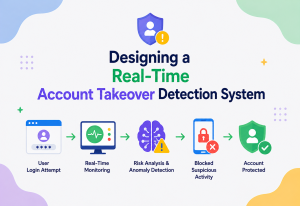
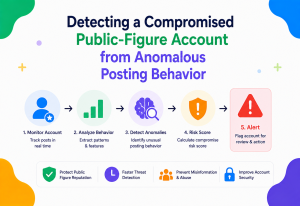
Because loans are small and disbursement is nearly instant, the platform is an attractive target for fraud rings applying for many small loans using fabricated or stolen identities. Velocity checks (many applications from the same device or SIM in a short window), device fingerprinting, and cross-checking against known fraud patterns are layered alongside the credit risk model itself, since credit risk and fraud risk are related but distinct problems requiring somewhat different detection techniques.
13.4 Access control for financial operations
Disbursement and ledger-adjustment operations require elevated, tightly scoped access, with every such action logged in an immutable audit trail, since these operations directly move real money and are the highest-value target for both external attackers and potential internal misuse.
13.5 Secure payment provider integration
Integrations with mobile money and payment providers use authenticated, encrypted channels with strict request signing, and disbursement confirmations are independently verified against the provider’s own transaction records during reconciliation, rather than trusting a single unconfirmed success response.
“How is fraud risk different from credit risk in this system, and why can’t one model handle both?” A strong answer explains that credit risk asks “will this real, honest borrower repay,” while fraud risk asks “is this even a real, honest borrower at all” — a fraud ring can look creditworthy on paper if it fabricates convincing data, so fraud detection relies more on velocity, device, and identity-consistency signals similar to those used in other fraud domains, layered as a separate check before or alongside credit scoring rather than folded into a single undifferentiated model.
Monitoring, Logging & Metrics
14.1 Operational metrics
Standard service health metrics apply across the pipeline: request latency percentiles at each stage, error rates, event bus queue depth, and third-party data provider latency and error rates, feeding dashboards and alerts.
14.2 Lending-specific metrics
Beyond system health, the business tracks approval rate, average loan size and term, portfolio-level default rate (tracked both overall and by borrower segment), cost per underwriting decision, disbursement success rate, and repayment collection rate, all monitored close to real time given how quickly outcomes resolve in this business.
14.3 Model performance monitoring
The gap between predicted default probability and actual observed default rate is tracked continuously, segmented by borrower tier and market, since a widening gap is the earliest warning that the model needs recalibration, and in micro-lending this gap can widen meaningfully within just weeks given the short loan cycle.
14.4 Reconciliation monitoring
Disbursement and repayment records are automatically reconciled against the payment provider’s own transaction records on a frequent schedule, with any mismatch immediately flagged, since undetected reconciliation gaps directly represent either lost revenue or unaccounted financial risk.
14.5 Distributed tracing
A shared correlation ID (the loan application ID) traces a single application’s full path through intake, aggregation, underwriting, and disbursement, essential for diagnosing latency issues that may only appear for specific borrower segments or specific external data providers.
“How would you know your default rate is drifting upward before it shows up in the quarterly financial results?” The expected answer covers near-real-time, segment-level default rate tracking rather than waiting for aggregate quarterly numbers, comparing predicted-versus-actual default rates on a rolling basis to catch model miscalibration early, and treating a widening predicted-versus-actual gap as an automatic trigger for accelerated model investigation and retraining rather than a scheduled, infrequent review.
Deployment & Cloud Architecture
15.1 Containerization and orchestration
Each service runs as an independently deployable container on a container orchestration platform, enabling rolling deployments, automatic recovery of unhealthy instances, and autoscaling tuned to each service’s own load pattern, since aggregation and scoring see very different traffic shapes than the ledger and collections services.
15.2 CI/CD pipeline
Changes go through automated regression testing (replaying a fixed set of historical applications to confirm decisions do not unexpectedly shift), canary rollout to a small slice of live traffic, and gradual traffic ramp-up, with automated rollback triggered by anomalies in approval rate, latency, or error rate.
15.3 Model deployment
New underwriting models go through offline validation against held-out historical outcomes, shadow deployment alongside the current production model to compare real-world scoring behavior without acting on it, and a controlled, gradual traffic ramp before full cutover, with instant rollback capability given how directly model quality affects both approval experience and default risk.
15.4 Infrastructure as code
All infrastructure is defined and version-controlled as code, enabling reproducible environments across markets and rapid, reliable disaster recovery, which matters particularly for a platform that may need to stand up new regional infrastructure quickly when expanding into a new market.
15.5 Market-by-market configuration
Because the platform typically operates across multiple countries with different currencies, regulations, and payment provider integrations, deployment is designed around per-market configuration layers on top of a shared core codebase, avoiding the cost and risk of maintaining fully separate codebases per market while still respecting each market’s specific regulatory and operational requirements.
“How would you deploy this platform into a brand-new country market without duplicating the entire codebase?” A strong answer describes a shared core service codebase parameterized by market-specific configuration — currency, payment provider integration, regulatory rule sets, and language — deployed as a new regional cluster with its own data residency and provider integrations, while reusing the same underlying application, aggregation, and orchestration logic, with only the underwriting model itself needing fresh, market-specific training data before launch.
Databases, Caching & Load Balancing
16.1 Loan ledger database
The Loan Ledger, being the authoritative financial record of every loan’s balance and state, uses a relational database with strong transactional guarantees, since financial correctness (no lost or duplicated balance updates) is non-negotiable and benefits from relational integrity constraints and mature transactional tooling.
16.2 Feature store database choice
The online feature store uses a distributed key-value store optimized for high write throughput and low-latency point reads, given how continuously borrower features are updated and how frequently they are read during underwriting. The offline feature store used for model training uses a columnar data warehouse suited to large-scale historical analysis.
16.3 Behavioral and transaction history storage
Mobile money and repayment transaction history is naturally time-series data and is stored in a database or storage layer optimized for time-ordered writes and range queries, supporting the trend-based features described earlier.
16.4 Caching layers
An in-memory cache sits in front of the data aggregation service, caching recent external data lookups for a short TTL, both reducing latency and — given how cost-sensitive this platform is — meaningfully reducing the number of billed third-party API calls.
16.5 Load balancing
Layer 7 load balancers distribute traffic across service instances with latency-aware routing and continuous health checks, ensuring a struggling instance is automatically routed around rather than continuing to receive new load.
16.6 Read replicas for reporting
Portfolio risk dashboards and reporting queries run against read replicas of the ledger and feature store rather than the primary write path, keeping heavy analytical queries from ever competing with the latency-critical live underwriting and disbursement flow.
“Why use a relational database for the ledger but a key-value store for the feature store, when both need to be fast?” The expected answer distinguishes the two workloads: the ledger needs strong transactional guarantees and relational integrity because it represents actual money owed, where correctness matters more than raw throughput, while the feature store serves an extremely high volume of simple point reads and writes where eventual consistency is an acceptable trade-off for the much higher throughput and lower cost a key-value store provides at this scale.
APIs & Microservices
17.1 Service boundaries
Application intake, data aggregation, rules, scoring, disbursement, ledger, and collections are each independent microservices, allowing the platform to scale the extremely high-volume, latency-critical services (application, aggregation, scoring) independently from the lower-volume, less latency-sensitive ones (collections, reporting).
17.2 Synchronous vs. asynchronous communication
The borrower-facing request from application through decision is synchronous, since the borrower is actively waiting. Internally, most services communicate asynchronously through the event bus, decoupling services from each other’s availability and allowing the disbursement, ledger, and collections stages to process independently of the request path’s own latency budget.
17.3 Partner and embedded lending APIs
Many micro-lending platforms expose their underwriting and disbursement capability as an API to partners — an e-commerce app offering “pay later” at checkout, for instance — requiring a stable, well-documented external API contract with its own authentication and rate limiting, versioned independently from internal service changes.
17.4 Idempotency
Every API call and event, especially disbursement and repayment recording, carries an idempotency key so that retries from network failures or event redelivery never result in duplicate fund transfers or duplicate ledger entries.
POST /v1/loans/applications
Idempotency-Key: pt_2026-08-11_ord_88231
{
  "borrower":   { "msisdn": "+2547XXXXXXXX", "consentToken": "cst_9fd…" },
  "requested":  { "currency": "KES", "amount": 2500, "termDays": 30 },
  "partner":    { "id": "acme-shop", "orderId": "ORD-88231" }
}

Response 202 Accepted:
{
  "applicationId": "app_7c1e…",
  "status":        "UNDERWRITING",
  "callbackUrl":   "https://partner.example.com/webhooks/loans"
}

Callback POST (partner webhook, at-least-once):
{
  "applicationId": "app_7c1e…",
  "decision":      "APPROVED",
  "approved":      { "amount": 2500, "termDays": 30, "aprBps": 3600 },
  "disbursement":  { "status": "SENT", "walletRef": "MM-4471" }
}
“A partner e-commerce app wants to offer your micro-loans at checkout. What does that integration need to guarantee?” A strong answer covers a stable, versioned external API contract for application submission and decision retrieval, strict idempotency on the partner’s requests to avoid duplicate loan creation on retry, clear and fast latency guarantees since the partner’s own checkout flow is time-sensitive, and a well-defined webhook or callback mechanism to notify the partner asynchronously of the final decision and disbursement status.
Design Patterns & Anti-Patterns
18.1 Useful design patterns
Circuit Breaker
Protects the pipeline when a mobile money or telco data provider degrades or fails.
Saga Pattern
Coordinates the multi-step disbursement process (reserve funds, call payment provider, confirm, update ledger) with defined compensating actions if any step fails partway through.
Event Sourcing
The durable loan lifecycle event log doubles as a complete audit trail, supporting both regulatory review and replay-based debugging.
Bulkhead
Isolates resource pools per external data provider so a slow or failing one cannot exhaust capacity needed for other, healthy dependencies.
Strangler Fig
Useful for markets migrating from a legacy or manual lending process onto the automated platform, gradually shifting traffic while the older process remains available as fallback.
18.2 Anti-patterns to avoid
| Anti-pattern | Why it’s dangerous |
|---|---|
| Ignoring per-transaction cost as a design constraint | Treating this like a typical high-value financial system and layering on expensive data sources or heavy compute without regard for the thin per-loan margin quickly makes the business unprofitable. |
| One-size-fits-all underwriting | Scoring first-time and long-established borrowers with the same model wastes the platform’s richest and most predictive data source — its own repayment history — for repeat borrowers. |
| Treating disbursement as a simple, non-idempotent API call | Without careful idempotency handling, retries under network failure risk real, direct financial loss through duplicate transfers. |
| Slow model retraining cadence | Given how quickly micro-loan outcomes resolve, retraining on a slow, infrequent schedule wastes the platform’s fastest natural advantage over traditional lenders — quick feedback loops. |
| Under-investing in fraud detection separately from credit risk | Assuming the credit model alone will catch fraudulent applications misses the fact that fraud and credit risk require different detection techniques. |
“Walk me through how you’d use the Saga pattern for disbursement, and why a simple two-phase commit wouldn’t fit here.” The expected answer explains that the disbursement flow spans an internal ledger update and an external payment provider call that the platform does not control transactionally, making a classic two-phase commit impractical across that boundary — instead, a saga models disbursement as a sequence of steps (reserve funds in the ledger, call the payment provider, confirm success, finalize the ledger entry) with a defined compensating action, such as releasing the reserved funds, if the payment provider call fails or times out.
Best Practices & Common Mistakes
19.1 Best practices
- Design underwriting around borrower segments from the start, rather than retrofitting tiered logic later once repeat-borrower data becomes valuable.
- Treat cost per transaction as a first-class, continuously monitored metric alongside latency and accuracy, given how thin per-loan margins are.
- Build the model retraining pipeline to take advantage of the platform’s naturally fast feedback loop rather than defaulting to a slow, traditional-lending retraining cadence.
- Invest early in fairness testing and explanation capability for automated decisions, since retrofitting this after a regulatory inquiry is far more costly than building it in from the start.
- Make disbursement idempotency and reconciliation monitoring non-negotiable priorities, since this is the one part of the system where a bug translates directly into lost money.
- Keep the rules engine layer even as the ML model matures, since it remains the fastest, most auditable way to enforce hard business policy.
19.2 Common mistakes
- Launching in a new market with a model trained on a different market’s borrower population, without accounting for different alternative data availability and different economic conditions.
- Over-relying on a single alternative data provider, creating a fragile single point of failure for the entire underwriting pipeline.
- Failing to separate fraud detection from credit risk scoring, missing coordinated fraud that a pure credit risk model was never designed to catch.
- Neglecting collections and delinquency workflows as an afterthought, when in reality they materially affect the realized default rate and overall portfolio profitability.
- Underestimating the operational complexity of safely deploying frequent model updates, leading to either overly cautious slow retraining or risky, poorly validated rapid deployment.
“You’re asked to launch this platform in a new country next month. What’s the biggest underwriting risk, and how do you mitigate it?” A strong answer identifies the cold-start problem — no internal repayment history exists yet for this market’s borrowers, and even external alternative data patterns may behave differently than in existing markets — and describes mitigating it with conservative initial loan caps for all borrowers regardless of apparent creditworthiness, closely monitored early-cohort default rates, and rapid, deliberate recalibration of the model specifically for this market as real local outcome data accumulates, rather than assuming an existing market’s model transfers safely.
Real-World / Industry Examples
Mobile money-integrated lenders
Products like Safaricom’s M-Shwari and Fuliza in Kenya are deeply integrated with the M-Pesa mobile money platform, using a borrower’s mobile money transaction history as a primary underwriting signal and disbursing directly into the same wallet, closely mirroring the alternative-data-driven, instant-disbursement architecture designed in this tutorial.
App-based digital lenders
Companies such as Tala and Branch operate across multiple countries in Africa, Asia, and Latin America, using smartphone-based alternative data alongside a growing base of internal repayment history for repeat borrowers, and are widely cited in the fintech industry as pioneers of the tiered, segment-based underwriting approach described in this design.
Buy-now-pay-later and embedded micro-lending
Providers embedding small installment loans directly into e-commerce checkout flows apply very similar automated underwriting principles, adapted to a slightly different context where transaction data from the purchase itself becomes an additional strong underwriting signal alongside the borrower’s broader financial history.
Non-profit and hybrid models
Organizations descending more directly from the original Grameen Bank model, such as Kiva, blend elements of the traditional relationship-based approach with modern technology platforms for loan matching and disbursement tracking, illustrating that the core mission of micro-lending — extending credit to those traditional finance overlooks — has been pursued through both fully automated commercial platforms and hybrid human-technology models.
Branch International, operating micro-lending products across several African, Asian, and Latin American markets, has publicly described its use of smartphone behavioral data and rapidly iterating machine learning models to underwrite loans in seconds for borrowers who often have no formal credit history at all — a direct real-world instance of the tiered, alternative-data-driven architecture this tutorial designs.
Frequently Asked Questions
How is micro-lending underwriting different from a normal personal loan or mortgage underwriting system?
The core differences are speed, cost, and data source. Micro-lending must decide in seconds rather than days, at a cost per decision measured in fractions of a cent rather than dollars, and it frequently has no traditional credit bureau file to rely on, forcing a heavier reliance on alternative data and the platform’s own accumulated repayment history.
Why do micro-lending platforms start new borrowers with such small loan amounts?
Because a first-time borrower carries the least available information, starting small limits the platform’s financial exposure while still giving a genuinely trustworthy borrower the chance to build a track record. A strong first repayment becomes valuable data that unlocks larger loans on the next request, turning an information gap into a gradual trust-building relationship rather than an outright rejection.
What happens if a borrower never repays a micro-loan?
The loan moves through delinquency, with automated reminders and escalating collections outreach, and if it remains unpaid past the platform’s defined threshold, it is marked as defaulted for accounting and risk modeling purposes. This outcome also becomes labeled training data, helping the model better identify similar risk patterns in future applications.
Can this kind of platform operate without any human involvement at all?
The underwriting decision itself is typically fully automated given the economics involved, but humans remain essential elsewhere in the system — designing and validating the rules and models, handling escalated collections cases, investigating fairness and fraud concerns, and managing regulatory compliance across markets.
How does the platform stay profitable when individual loans are so small?
Profitability depends on extremely low cost per transaction, a well-calibrated default rate kept within a narrow acceptable range, and a growth loop where responsible repeat borrowers take larger loans over time, increasing average loan value per borrower without proportionally increasing underwriting cost or risk exposure per transaction.
Why is fast model retraining more important here than in traditional lending?
Because micro-loans are short-duration, real outcome data (repaid or defaulted) becomes available within days or weeks rather than months or years, giving the platform a much faster natural feedback loop than a traditional mortgage or long-term loan lender — a genuine competitive advantage if the retraining pipeline is built to take full advantage of it.
Summary & Key Takeaways
Micro-lending at scale is fundamentally an economics-driven engineering problem: every architectural decision has to respect the reality that any single loan generates only a tiny amount of revenue, so the entire pipeline — from data enrichment to compute to storage — must be built for extreme cost efficiency without sacrificing the speed and accuracy borrowers and the business both depend on.
- Fully automated underwriting, built on alternative data and a growing base of internal repayment history, is what makes it economically possible to serve borrowers traditional banks cannot profitably reach.
- Tiered underwriting by borrower segment — first-time, returning, and established repeat borrowers — makes the best use of whatever data is actually available for each applicant.
- The short duration of micro-loans creates an unusually fast feedback loop between decisions and outcomes, which the model retraining pipeline should be built to fully exploit.
- Disbursement idempotency and ledger correctness are the single most consequential reliability guarantees in the system, since failures there translate directly into real financial loss.
- Fairness, explainability, and consent management are not optional add-ons but core design requirements, given the regulated nature of automated credit decisions.
- Cost per transaction deserves the same first-class monitoring attention as latency and accuracy, since at this scale and margin, small inefficiencies compound into the difference between a sustainable and an unsustainable business.
- Every part of this design — from choosing tiered models, to keeping a deterministic rules layer, to building fraud detection separately from credit risk — traces back to the same root reality: this system must be simultaneously fast, cheap, fair, and accurate, at a volume and speed traditional lending was never built to handle.
In micro-lending, economics is architecture. Every decision — which data source to buy, which model to run, which service to spin up, which retraining cadence to adopt — is really a decision about whether a fifteen-dollar loan can still be profitable after paying to underwrite it. Optimize for that, and the rest of the design falls into place.