What Is a Security Patch, and Why Is Timely Patching Important?
A complete, beginner‑friendly guide to understanding vulnerabilities, patches, and the discipline of keeping software safe — from first principles to production practice.
Introduction & History
Imagine your house has a lock on the front door. One day, a locksmith realizes that this particular lock model can be opened with a bent paperclip in under ten seconds. The locksmith tells the manufacturer, the manufacturer designs a small metal insert that blocks the paperclip trick, and they mail that insert to everyone who owns the lock. That little metal insert is, in spirit, exactly what a security patch is for software: a targeted fix that closes a specific way of breaking in, sent out after someone discovers the weakness.
A security patch is a small piece of code, released by the maker of an operating system, application, library, or device firmware, whose entire purpose is to close a vulnerability — a flaw that could let an attacker do something they should never be able to do, such as read private files, take control of a machine, or crash a service. Patches are usually narrow and surgical. They don’t try to add new features or make the software prettier; they exist to remove one specific weakness, and sometimes several related ones bundled together.
The idea of patching is almost as old as software itself. In the earliest days of computing, programs were small enough that a “patch” often meant literally cutting a piece of paper tape or punch card and splicing in a correction — the word “patch” comes from the literal cloth patch used to mend a hole. As software grew larger and machines became networked, the stakes of a hidden flaw grew enormously. A bug in a program running on one isolated machine in the 1960s might crash that one machine. A bug in a program connected to the internet in the 2020s might let an attacker reach millions of machines around the world within hours.
The modern concept of the security patch, as most people understand it today, really took shape in the 1990s and 2000s, as operating systems like Windows and Linux distributions began shipping to hundreds of millions of internet‑connected devices. Worms like Code Red and SQL Slammer in the early 2000s spread across the globe in minutes by exploiting flaws that had, in some cases, already been patched — the machines that got infected were simply the ones that hadn’t installed the fix yet. These events are part of why “patch management” grew from an afterthought into a formal discipline with its own tools, schedules, and even government regulations in some industries.
Today, security patching touches nearly every layer of technology: the operating system on your phone, the firmware in your router, the libraries inside a mobile app, the database powering a bank’s website, and the container images running in a company’s cloud environment. Understanding patches — what they are, how they’re built, and why timing matters so much — is one of the most practical pieces of security knowledge anyone can have, whether they write code for a living or simply use a smartphone.
A security patch is a small, targeted software update whose job is to close a specific hole that could let an attacker misuse the system.
How patching became a formal discipline
For much of the 1980s and early 1990s, most computers were not constantly connected to a global network, so a flaw sitting quietly inside a program was, in practice, far less dangerous — an attacker generally needed physical access, or at least a direct dial‑up connection, to take advantage of it. The explosive growth of the internet in the late 1990s changed that calculus permanently. Suddenly, a flaw on one machine could be reached from anywhere on the planet, and a single skilled attacker, or a single piece of self‑spreading code, could probe millions of machines automatically, looking for the ones that hadn’t yet received a fix.
Microsoft’s response to this shift is instructive, because it shaped how much of the industry still thinks about patching today. After a string of damaging worms in the early 2000s, Microsoft introduced what became known as “Patch Tuesday” — a fixed, predictable monthly release day for security updates, falling on the second Tuesday of each month. The idea was to give IT departments a reliable rhythm they could plan around, rather than a chaotic stream of surprise updates arriving at random moments. Critical, actively exploited vulnerabilities could still be pushed out immediately as emergency “out‑of‑band” patches, but everything else followed the predictable monthly cadence. Many other vendors have since adopted similar scheduled release cycles, precisely because predictability makes it easier for organizations to plan testing and rollout in advance.
Over the following two decades, patching grew from something handled informally by individual system administrators into an entire professional discipline, complete with dedicated tooling, industry standards for describing vulnerabilities, formal severity scoring systems, and, in regulated industries like healthcare, finance, and government contracting, legal requirements dictating how quickly certain classes of vulnerability must be remediated. Entire job titles now exist — vulnerability management analyst, patch management engineer, security operations lead — built specifically around the task of finding out what needs fixing and making sure the fix actually lands.
Literal paper “patches”
Corrections spliced into paper tape or punch cards. A bug in one program crashed one isolated machine.
The networked era begins
Windows and Linux ship to hundreds of millions of internet‑connected devices, turning a local flaw into a global one.
Code Red, SQL Slammer
Self‑spreading worms exploit already‑patched flaws worldwide within minutes. Patch management becomes a formal discipline.
Patch Tuesday launches
Microsoft introduces a fixed second‑Tuesday cadence with out‑of‑band emergency releases for critical issues; many vendors follow suit.
Regulated deadlines
PCI‑DSS, HIPAA and ISO 27001 introduce explicit remediation timelines for vulnerability classes; dedicated PSIRTs become standard.
Cloud, containers, SBOMs
Immutable infrastructure, image‑rebuild pipelines and software bills of materials reshape how patches are produced and distributed.
The Problem & Motivation
Software is written by people, and people make mistakes. A modern operating system can contain tens of millions of lines of code, and a modern web browser isn’t far behind. Even with careful engineering, automated testing, and code review, it is essentially guaranteed that some mistakes will slip through — not because programmers are careless, but because complex systems have an enormous number of possible states, and no team can manually check every single one of them.
Most bugs are harmless annoyances: a button that’s misaligned, a menu that opens slowly, a typo in an error message. But a small fraction of bugs are security‑relevant. These are the bugs that, if triggered in just the right way, let someone bypass a check they shouldn’t be able to bypass. A classic example is a buffer overflow: a program sets aside a fixed amount of memory to hold, say, a username, but fails to check that the input actually fits. If an attacker sends a username that’s much longer than expected, the extra data can spill over into memory it was never meant to touch — and if the attacker crafts that overflow carefully, they can trick the program into running commands of their choosing.
This is the core problem that makes patching necessary: vulnerabilities are discovered continuously, and the discovery of a vulnerability does not automatically make it safe — it only makes it known. Once a flaw is known, there is a race. Security researchers, the vendor, and sometimes criminal groups are all aware that a weakness exists. The vendor’s job is to build and distribute a fix before attackers build and distribute an exploit. Every day that passes between “the flaw is known” and “the fix is installed everywhere” is a window of exposure.
Why timing matters so much
The motivation for patching quickly, rather than eventually, comes down to three uncomfortable facts about how the security world actually behaves:
- Attackers reverse‑engineer patches. The moment a vendor publishes a patch, skilled attackers can compare the old code to the new code and figure out exactly what was broken — often within hours. This means the patch itself, once public, becomes a kind of instruction manual for building an attack against anyone who hasn’t installed it yet.
- Exploitation is now largely automated. Attackers don’t need to manually target machines one at a time. Scanning tools can sweep the entire internet address space in minutes, and automated exploit kits can be pointed at any newly disclosed vulnerability the same day it’s announced.
- One weak link can compromise an entire network. A single unpatched machine, printer, or IoT device sitting quietly on an otherwise well‑protected network can act as the entry point an attacker needs to move sideways and reach far more valuable systems.
This gap between “a fix exists” and “the fix is applied everywhere it needs to be” is sometimes called the patch gap, and closing it quickly is one of the highest‑leverage things any individual or organization can do for their security posture — often far more impactful than buying additional security tools.
The existence of a patch does not protect anyone. Only the installation of that patch provides protection — and until it’s installed, the published patch can actually make unpatched systems easier to target, not harder.
Where vulnerabilities actually come from
It’s worth being specific about the kinds of mistakes that turn into vulnerabilities, because understanding the source helps explain why they keep appearing no matter how skilled a development team is. Common categories include:
- Memory safety errors — mistakes in how a program allocates, reads, or writes memory, such as the buffer overflow example described above, common in languages like C and C++ that give programmers direct control over memory.
- Input validation failures — a program trusts data coming from outside (a web form, an uploaded file, a network request) without properly checking it first, opening the door to attacks like SQL injection or cross‑site scripting.
- Logic errors in access control — a check that’s supposed to confirm a user is allowed to view or modify something is missing, incomplete, or can be bypassed in an unexpected way.
- Insecure defaults — software ships configured in a way that’s convenient but not safe, such as a default password that many administrators never change.
- Cryptographic mistakes — using an outdated encryption algorithm, generating predictable random numbers, or mishandling encryption keys.
None of these categories are exotic or rare; they show up again and again across decades of security history, precisely because writing perfectly correct, perfectly secure code at scale is an extraordinarily difficult problem that has never been fully solved by any organization, however well‑resourced.
The economics of the patch gap
It’s useful to think about the patch gap in economic terms. For an attacker, building a working exploit takes effort, and that effort only pays off if there are enough unpatched targets left to make it worthwhile. For a defender, applying a patch also takes effort — testing, scheduling downtime, coordinating across teams — and that effort competes for time and attention against every other task on a busy IT team’s plate. Timely patching shifts this balance in the defender’s favor: the smaller the population of unpatched systems, the less attractive it becomes for attackers to invest in building and maintaining exploit tooling against that specific vulnerability, because the potential payoff shrinks along with the number of remaining targets.
Core Concepts
Before going further, it helps to build a shared vocabulary. These terms show up constantly in security patching discussions, and each one describes a distinct piece of the puzzle.
Vulnerability
A flaw in software or hardware design or implementation that could be exploited to cause unintended behavior, such as unauthorized access or data exposure.
Exploit
A piece of code or a technique that actually takes advantage of a vulnerability to achieve some goal, like running arbitrary commands or stealing data.
Patch
A targeted code change released by a vendor that closes a specific vulnerability, without necessarily changing anything else about the software.
CVE
Common Vulnerabilities and Exposures — a unique public ID (like CVE‑2021‑44228) assigned to a specific known vulnerability so everyone can refer to it consistently.
CVSS Score
Common Vulnerability Scoring System — a number from 0 to 10 that estimates how severe a vulnerability is, based on things like how easy it is to exploit and what damage it can do.
Zero‑Day
A vulnerability that is being actively exploited in the wild before the vendor has released a patch — meaning defenders have “zero days” of advance warning.
Patch Management
The organizational process of identifying, testing, approving, deploying, and verifying patches across all the systems a person or company owns.
Hotfix
An urgent, narrowly scoped patch released outside the normal release schedule, usually because a vulnerability is severe or already being exploited.
Vulnerability vs. exploit vs. patch — how they relate
It helps to think of these three concepts as three different moments in the same story. The vulnerability is the weakness itself — like a crack in a wall. The exploit is the specific tool or technique someone builds to squeeze through that crack. The patch is the repair that seals the crack shut so no exploit, past or future, can use it anymore. A vulnerability can exist for years without anyone building an exploit for it; conversely, once an exploit exists and spreads, the underlying vulnerability becomes far more dangerous for anyone who hasn’t patched.
Types of patches
- Security patch — fixes a vulnerability specifically, often released ahead of the normal update schedule.
- Bug fix patch — corrects non‑security functional problems, like a crash or incorrect calculation.
- Feature update — adds new capability; not primarily about security, though it may include patches bundled in.
- Cumulative update — rolls up many previous patches into one package, common in operating systems like Windows.
- Firmware patch — updates the low‑level software embedded in hardware devices such as routers, cameras, or printers.
Understanding a CVSS score in plain terms
The Common Vulnerability Scoring System breaks severity down into several factors rather than a single arbitrary number, which is worth understanding because two vulnerabilities with the same headline score can be very different in practice:
| Factor | What it captures |
|---|---|
| Attack Vector | Whether an attacker needs local access, adjacent network access, or can attack over the open internet |
| Attack Complexity | Whether exploitation requires special conditions or works reliably every time |
| Privileges Required | Whether the attacker needs an existing account, or can attack anonymously |
| User Interaction | Whether a victim needs to do something, like click a link, for the attack to succeed |
| Impact | What the attacker gains — reading data, modifying data, or taking full control |
A vulnerability that’s remotely exploitable over the internet, requires no privileges, needs no user interaction, and grants full control of the system will score near the top of the 0–10 scale, and organizations generally treat anything scoring 9.0 or above as demanding urgent, near‑immediate attention.
Additional vocabulary worth knowing
Advisory
A public document from a vendor describing a vulnerability, its severity, affected versions, and how to obtain the fix.
SBOM
Software Bill of Materials — a complete list of every component and library inside a piece of software, used to quickly identify what’s affected when a new vulnerability is disclosed.
N‑day Vulnerability
A vulnerability that has already been publicly disclosed and patched, but where some systems still remain unpatched — the opposite situation from a zero‑day.
Patch Regression
A new problem accidentally introduced by a patch, such as a compatibility break or performance issue, separate from the vulnerability the patch was meant to fix.
Architecture & Components
Patching isn’t just “download a file and run it.” Behind the scenes, there’s a whole system of components working together — whether that’s Microsoft’s update infrastructure, a Linux distribution’s package repository, or a company’s internal patch management platform. Understanding these pieces helps explain why patching sometimes feels slow or complicated.
Key components in a patch management architecture
Vulnerability Feed
A stream of newly disclosed CVEs and advisories, often pulled from national databases or vendor security bulletins.
Asset Inventory
A record of every device, application, and library version an organization actually runs — you cannot patch what you don’t know you have.
Patch Repository
A central, trusted store of patch files, often cryptographically signed so devices only install genuine, untampered updates.
Deployment Agent
Software running on each endpoint that checks in with the patch server, downloads available updates, and applies them, often on a schedule.
Staging Rings
Groups of machines patched in waves — a small pilot ring first, then progressively larger rings — so a bad patch is caught before it reaches everyone.
Compliance Dashboard
A reporting layer showing which machines are patched, which are behind, and which have failed to check in at all.
How this maps to everyday devices
On a personal phone or laptop, most of this architecture is invisible — it’s handled automatically by the operating system vendor. Your phone’s update agent quietly checks Apple’s or Google’s servers, downloads the signed patch, and installs it, often overnight. In a company, the same idea exists but with far more visibility: IT teams use patch management platforms to decide which machines get which patches, in what order, and how quickly, because a single bad patch rolled out to every machine at once could cause more damage than the vulnerability it was meant to fix.
Centralized versus decentralized architectures
Larger organizations generally choose between two broad architectural approaches. A centralized model routes every patch through one internal control point — a single team reviews, approves, and pushes updates to every managed device from a central console, giving strong consistency and visibility but potentially creating a bottleneck if that team becomes overloaded. A decentralized model gives individual teams or business units more autonomy to manage patching for the systems they own, which can move faster but risks inconsistent coverage if some teams deprioritize patching. Many organizations land on a hybrid: central policy and reporting, with distributed execution.
Why signature verification sits at the center of the architecture
Every well‑designed patch architecture treats the question “is this patch genuinely from the vendor and unmodified” as non‑negotiable. The update agent on each device holds a copy of the vendor’s public key, baked in at manufacture time or installed during initial setup. When a patch arrives, the agent uses that public key to check the vendor’s digital signature on the file. If the signature doesn’t match — because the file was altered, corrupted, or forged — the agent refuses to install it, no matter how official it looks. This single check is what prevents an attacker who gains access to a network from simply pushing their own malicious file disguised as an update.
Internal Working
What actually happens, technically, from the moment someone discovers a flaw to the moment a patch shows up on your device? The process generally follows a well‑worn path, though the exact steps vary by vendor.
1. Discovery
Vulnerabilities are found in several ways: internal security engineers testing their own code, external researchers who report flaws (sometimes through paid bug bounty programs), automated tools that scan code for risky patterns, or — in the worst case — attackers who find the flaw first and use it silently before anyone else notices.
2. Responsible disclosure
Most professional researchers follow a practice called responsible disclosure (also called coordinated disclosure): they report the flaw privately to the vendor and agree to withhold public details for a set period — commonly 90 days — giving the vendor time to build a fix before the vulnerability becomes public knowledge. This balances two competing needs: the public’s right to know about risks, and the practical need to have a fix ready before attackers learn the details.
3. Root cause analysis and fix development
The vendor’s engineers must first understand precisely why the flaw exists — not just where the crash happens, but the underlying logic error. A patch that only hides the symptom (say, catching a crash without fixing the unsafe memory access) may leave the door open for a slightly different exploit. Good patches address the root cause.
Here is a simplified, illustrative example in Java of the kind of mistake that leads to a real vulnerability class — an unchecked array/buffer length that could allow data to overflow past its intended bounds:
// VULNERABLE VERSION — no bounds check before copying input
public class MessageBuffer {
    private byte[] buffer = new byte[64];

    public void loadMessage(byte[] input) {
        // BUG: does not verify input.length fits within buffer
        System.arraycopy(input, 0, buffer, 0, input.length);
    }
}
If input is longer than 64 bytes, this throws an exception in Java (which is memory‑safe), but in languages without automatic bounds checking, the equivalent mistake can silently corrupt adjacent memory — the exact class of bug behind decades of real‑world buffer overflow vulnerabilities. The patched version simply adds a check:
// PATCHED VERSION — validates length before copying
public class MessageBuffer {
    private byte[] buffer = new byte[64];

    public void loadMessage(byte[] input) {
        if (input.length > buffer.length) {
            throw new IllegalArgumentException("Message exceeds buffer capacity");
        }
        System.arraycopy(input, 0, buffer, 0, input.length);
    }
}
This is a deliberately simple illustration, but it captures the essence of a huge share of real security patches: adding a missing check, correcting a faulty comparison, or closing a path that let untrusted input reach a sensitive operation.
4. Internal testing
Before release, the patch goes through automated test suites and manual review to confirm it actually closes the hole without breaking normal functionality — a patch that fixes a vulnerability but crashes the software on startup helps no one.
5. Signing and packaging
The finished patch is cryptographically signed with the vendor’s private key. This lets every device that installs it verify, using the vendor’s public key, that the patch genuinely came from the vendor and hasn’t been tampered with in transit — a critical safeguard, since patch delivery systems are themselves an attractive target for attackers.
6. Distribution and installation
The signed patch is pushed to update servers, and devices pull it down through their update agents, verify the signature, and apply the change — sometimes requiring a restart, sometimes not, depending on what part of the system was touched.
Think of signing a patch like a pharmacist sealing a medicine bottle with a tamper‑evident cap. The cap doesn’t change what’s inside — it proves that what’s inside hasn’t been swapped out by someone else along the way.
Why some patches take far longer than others
Not every fix is a one‑line change. Some vulnerabilities are shallow — a single missing check, fixed in an afternoon. Others are deep, tangled up with fundamental design decisions made years earlier, where a proper fix means restructuring a significant chunk of the codebase without breaking the countless other things that depend on the existing behavior. Vendors sometimes ship a smaller, faster interim mitigation first — something that blocks the most dangerous exploitation paths without fully resolving the underlying design flaw — followed later by a more complete architectural fix. This is a legitimate and common pattern, though it does mean a single vulnerability can sometimes require more than one round of patching before it’s truly closed.
The role of a security response team
Most large software vendors maintain a dedicated Product Security Incident Response Team (PSIRT), whose entire job is managing this pipeline: receiving reports, coordinating with the engineers who actually understand the affected code, deciding on severity and disclosure timing, and communicating with customers. This team acts as the connective tissue between an external researcher’s private report and the eventual public patch, and its efficiency is often the single biggest factor in how quickly a fix reaches the public after a flaw is first reported.
Data Flow & Lifecycle
Zooming out, every patch moves through a lifecycle with distinct stages, each with its own risks and its own opportunity for delay — which is exactly why “timely” patching is a genuine challenge rather than a simple checkbox.
Disclosure
The vulnerability becomes known to the vendor, either through private research reports or public discovery.
Triage & Scoring
The vendor assesses severity, often assigning a CVSS score and deciding how urgently a fix is needed.
Fix Development
Engineers write and test the code change that addresses the root cause.
Release
The patch is signed and published, often alongside a public advisory describing the fixed issue.
Distribution
The patch propagates through update servers, package repositories, or app stores to reach individual devices.
Installation
Each device or system administrator applies the patch — sometimes automatically, sometimes manually after testing.
Verification
Compliance tools confirm the patch actually took effect and the vulnerability is truly closed.
Every one of these stages can introduce delay. A patch might be released the same day it’s disclosed, or it might take months if the fix is complex. Distribution can be near‑instant for a cloud service the vendor controls entirely, or painfully slow for embedded devices that require a manual firmware flash. And installation is where human behavior enters the picture — people postpone restarts, IT teams delay rollouts to avoid breaking business systems, and some devices are simply forgotten.
The race against exploit development
Running in parallel to this lifecycle is a second, adversarial timeline: how quickly attackers can build a working exploit once a vulnerability (or a patch that reveals one) becomes public. For high‑profile vulnerabilities, working exploit code has appeared within 24 to 48 hours of disclosure. This is why security teams increasingly track “time to patch” as a critical metric — the lifecycle above needs to complete faster than the parallel attacker timeline.
Advantages, Disadvantages & Trade‑offs
Patching sounds like an unambiguous good — and broadly, it is — but the practice involves genuine trade‑offs that any thoughtful organization or individual has to weigh.
Advantages of Prompt Patching
- Closes known attack paths before they’re widely exploited
- Reduces the “attack surface” available to automated scanning tools
- Often bundles stability and performance improvements alongside security fixes
- Supports compliance with regulations like PCI‑DSS, HIPAA, or ISO 27001
- Builds a security culture where updates are routine, not a scramble
Risks & Costs of Patching
- A rushed patch can introduce new bugs or break existing functionality
- Restarts and downtime can disrupt critical business operations
- Testing every patch against every system takes real engineering time
- Legacy or unsupported systems may have no patch available at all
- Patch fatigue can lead people to ignore or delay updates over time
Speed vs. stability
The central trade‑off in patch management is speed versus stability. Patch immediately, and you risk deploying an untested fix that breaks something important. Wait and test thoroughly, and you extend the window during which a known vulnerability remains exploitable. Most mature organizations resolve this with a tiered approach: critical, actively exploited vulnerabilities get expedited handling with minimal testing delay, while lower‑severity patches go through fuller regression testing on a normal schedule.
The trade‑off of patching legacy systems
Older systems present a particularly thorny version of this trade‑off. A twenty‑year‑old industrial control system or an unsupported version of an operating system may no longer receive patches at all, because the vendor has officially ended support for it. In these situations, organizations face a genuine dilemma: replacing the system outright may be enormously expensive or operationally disruptive, but continuing to run it unpatched means living permanently with known, unfixable risk. Common compensating strategies include isolating the legacy system on its own restricted network segment, placing additional monitoring around it, and tightly limiting who and what can communicate with it, even though none of these measures actually closes the underlying vulnerability the way a real patch would.
Performance & Scalability
Patching a single laptop is trivial. Patching fifty thousand servers spread across multiple data centers and cloud regions is an engineering problem in its own right, and it directly affects how quickly an organization can close a vulnerability window.
Bandwidth and distribution load
When a critical patch is released, every device checking in at once can overwhelm update servers — the same problem an e‑commerce site faces during a flash sale. Vendors address this with content delivery networks (CDNs), peer‑to‑peer distribution (where devices on the same local network share the downloaded patch with each other instead of each pulling it separately from the internet), and staggered rollout windows.
Scaling patch validation
Large organizations can’t manually test a patch against every combination of application and configuration they run. Instead, they rely on automated regression test suites, canary deployments (rolling a patch out to a small percentage of production traffic first), and telemetry that flags unusual error rates immediately after a patch goes live.
| Approach | How it scales patching |
|---|---|
| Ring‑based rollout | Patches a small pilot group first, then wider rings, catching issues before full exposure |
| Canary deployment | Routes a small slice of live traffic to patched instances and compares error rates |
| Automated regression suites | Runs thousands of test cases against a patch in minutes instead of days |
| Configuration management tools | Applies a patch consistently across thousands of servers from one definition |
The overarching goal at scale is the same as for a single device: shrink the time between “patch is available” and “patch is verified everywhere it needs to be,” without sacrificing the ability to catch a bad patch before it spreads.
Balancing patch frequency against operational overhead
There’s a subtler scalability question that goes beyond raw bandwidth and testing capacity: how often should patches even be pushed out. Applying every single available patch the instant it’s released, for every low‑severity issue as well as every critical one, can create so much operational churn that teams become unable to properly validate any single change. Many organizations instead group non‑urgent patches into a predictable batch cycle, reserving out‑of‑band, immediate deployment specifically for the small number of patches that address severe, actively exploited vulnerabilities. This keeps overall throughput manageable while still ensuring the most dangerous gaps get closed without waiting for the next scheduled batch.
High Availability & Reliability
For systems that can’t afford downtime — a hospital’s patient records system, a bank’s payment processor, a cloud provider’s core infrastructure — patching has to happen without taking the whole service offline. This is where reliability engineering and security patching intersect directly.
Rolling updates
Instead of patching every server at once, a rolling update patches and restarts servers a few at a time, while the remaining servers keep serving traffic. Once the first batch comes back healthy, the next batch is patched, and so on, until the whole fleet is updated with no visible interruption to users.
Blue‑green and redundant patching
Some environments keep two identical sets of infrastructure — one active (“blue”) and one idle (“green”). The idle set is patched and tested first; once it’s confirmed healthy, traffic is switched over to it, and the previously active set becomes the one that gets patched next. This gives a clean rollback path: if the newly patched environment misbehaves, traffic can be switched right back.
Rollback planning
No patching process is complete without a rollback plan — a way to quickly undo a patch if it causes unexpected problems. Reliable systems keep the previous known‑good version readily available, snapshot configurations before applying changes, and set clear health checks that automatically trigger a rollback if key metrics degrade after a patch is applied.
Treating “we deployed the patch” as the finish line. Reliability requires confirming the patched system is actually healthy afterward — not just assuming it is.
Maintenance windows and change management
Many organizations still rely on scheduled maintenance windows — pre‑approved periods, often outside business hours, during which patches and other risky changes are allowed to be applied. This gives operations teams a predictable structure for coordinating patches across interdependent systems, but it can also become a source of delay if the next available window is weeks away and a critical vulnerability can’t reasonably wait that long. Mature organizations build an explicit emergency‑change process alongside the normal maintenance window process, so that a genuinely urgent patch has a clear, fast path that doesn’t require waiting for the next routine cycle.
Security Considerations
Patching is a security practice through and through, but the patching process itself introduces its own security considerations that are easy to overlook.
Securing the patch supply chain
If an attacker can compromise a vendor’s build system or update servers, they can potentially distribute malicious code disguised as a legitimate patch to every device that trusts that vendor — turning the very system meant to protect people into an attack vector. This is why cryptographic signing, secure build pipelines, and strict access controls around update infrastructure matter enormously; a compromised patch distribution channel can be far more damaging than any single unpatched vulnerability.
Verifying authenticity before installing
Devices should always verify a patch’s digital signature against a trusted, hard‑coded public key before applying it — never simply trust that a file claiming to be an official update actually is one. This is especially important for firmware updates on devices like routers, where a fake “update” downloaded from an untrusted source could actually be malware.
Handling vulnerability information responsibly
Security teams need to balance transparency (telling customers what was fixed and why it matters) against giving attackers a head start. Advisories typically describe the impact and severity without publishing exact exploit code, and organizations are encouraged to patch quickly specifically because detailed technical write‑ups often follow shortly after.
Least privilege for patch deployment tools
The systems that push patches across an organization typically need broad administrative access to every managed device — which makes them an extremely high‑value target. Restricting who can approve and push patches, requiring multi‑factor authentication for that access, and auditing every patch deployment are essential safeguards.
Monitoring, Logging & Metrics
You cannot manage what you cannot measure, and patch management is no exception. Effective monitoring answers a simple but often surprisingly hard question: “Is everything actually patched?”
Key metrics organizations track
Mean Time to Patch (MTTP)
The average time between a patch becoming available and it being fully deployed across affected systems.
Patch Compliance Rate
The percentage of systems that are fully up to date against known critical vulnerabilities at any given moment.
Exposure Window
The total time a known, exploitable vulnerability remained unpatched somewhere in the environment.
Failed Deployment Rate
How often patch installations fail outright, signaling deeper compatibility or infrastructure problems.
Logging for accountability and forensics
Every patch deployment should be logged: which system, which patch version, when it was applied, and by whom (or by which automated process). This log becomes essential during an incident investigation — if a breach occurs, the first question is often “was the exploited vulnerability already patched, or had we not gotten to it yet?”
A simple example · checking installed patch levels programmatically
Here’s an illustrative Java example of the kind of check a monitoring script might perform — comparing an installed version number against a known‑patched minimum version:
public class PatchComplianceCheck {

    public static boolean isPatched(String installedVersion, String minimumSafeVersion) {
        String[] installedParts = installedVersion.split("\.");
        String[] safeParts = minimumSafeVersion.split("\.");

        for (int i = 0; i < Math.min(installedParts.length, safeParts.length); i++) {
            int installedNum = Integer.parseInt(installedParts[i]);
            int safeNum = Integer.parseInt(safeParts[i]);
            if (installedNum > safeNum) return true;
            if (installedNum < safeNum) return false;
        }
        return true; // versions are equal
    }

    public static void main(String[] args) {
        String installed = "2.14.1";
        String minimumSafe = "2.15.0"; // patched version
        System.out.println("System is patched: " + isPatched(installed, minimumSafe));
    }
}
Real compliance tools do this at scale, across thousands of assets, cross‑referenced against live CVE feeds, but the underlying logic is exactly this kind of version comparison.
Deployment & Cloud
Cloud computing changed patching in two opposite directions at once: it made some patching dramatically easier, and it introduced entirely new categories of things that need to be patched.
Shared responsibility
Cloud providers patch the physical infrastructure, hypervisors, and (for managed services) much of the underlying platform automatically — customers never see or touch that layer. But customers remain responsible for patching the operating systems, applications, and container images they run on top of that infrastructure. Misunderstanding this split is a common and costly mistake; “the cloud provider handles security” is only true for the layers the provider actually controls.
Immutable infrastructure and image‑based patching
Rather than patching a running server in place, many cloud‑native teams build a brand‑new machine image or container image that includes the patched software, test it, and then replace old instances with new ones wholesale — discarding the old, unpatched instances entirely. This approach, often called immutable infrastructure, sidesteps a lot of the “did the patch apply correctly everywhere” uncertainty, because every new instance starts from an identical, already‑patched image.
Infrastructure as Code and automated pipelines
Modern deployment pipelines can rebuild and redeploy an entire fleet automatically whenever a base image is patched, triggered by nothing more than a scheduled job or a vulnerability scanner detecting an outdated component. This turns what used to be a manual, error‑prone process into something closer to a routine, low‑friction background task.
In cloud environments, patch the base image and redeploy, rather than patching individual running servers by hand — it’s more consistent and far easier to verify.
Databases, Caching & Load Balancing
Databases, caching layers, and load balancers are especially sensitive patching targets, because they often sit at the center of a system’s data flow and can’t tolerate careless downtime.
Patching databases without data loss
Database patches can touch the storage engine itself, so a botched patch carries real risk of data corruption. Best practice includes taking a verified backup immediately before patching, applying the patch to a replica first, confirming data integrity, and only then promoting the patched replica or applying the same patch to the primary.
Caching layers and stale patch state
Caching systems (like an in‑memory cache sitting in front of a database) can sometimes mask whether a patch has actually taken effect — if cached responses were generated before the patch, they might still reflect pre‑patch behavior until the cache expires or is flushed. Clearing relevant caches after a security‑relevant patch is an easy step to overlook but can matter a great deal.
Load balancers and rolling patch coordination
A load balancer distributing traffic across many application servers is the natural control point for rolling patches: it can be told to stop sending traffic to a server about to be patched, wait for existing connections to drain gracefully, and only route new traffic back once the patched server passes a health check. This coordination is what makes zero‑downtime patching possible for many production web services.
APIs & Microservices
Modern applications are rarely a single monolithic program; they’re built from many small services communicating over APIs. This architecture changes what “patching” means in practice.
Patching one service without breaking others
In a microservices architecture, each service can typically be patched and redeployed independently, as long as the API contract between services doesn’t change. This is a major advantage: a critical vulnerability in one small service (say, an authentication service) can be patched and redeployed without touching or restarting the dozens of other services around it.
Dependency patching and the “supply chain” problem
Most services rely on a large number of third‑party libraries and packages. A vulnerability in a widely used library — even one buried several layers deep in a dependency tree — can silently affect huge numbers of applications that never directly imported the vulnerable code themselves. Patching in this world means not just fixing your own code, but constantly tracking and updating the versions of every library you depend on.
API versioning during security fixes
Occasionally, closing a vulnerability requires changing how an API behaves — for example, rejecting a type of input that used to be silently accepted. Careful teams communicate this kind of breaking change clearly and, where possible, offer a deprecation window, because a security fix that breaks every client integration overnight creates its own kind of operational chaos.
Design Patterns & Anti‑patterns
Every mature patching program gravitates toward the same handful of good patterns and stumbles into the same handful of well‑known landmines. Here they are, side by side.
Helpful patterns
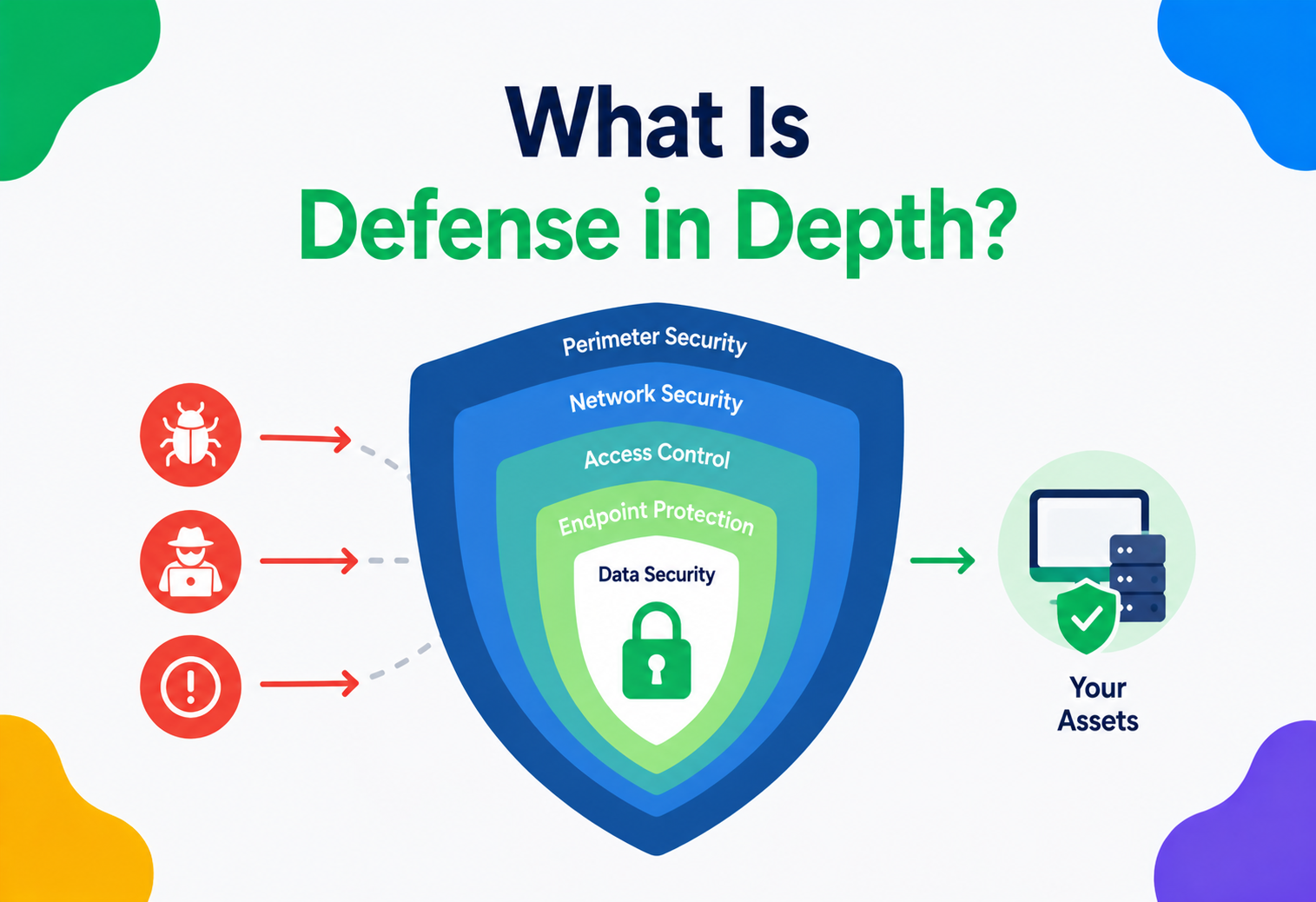
- Defense in depth — layering multiple protections so that a single unpatched flaw isn’t automatically catastrophic; a firewall rule or network segmentation can buy time even before a patch is applied.
- Ring‑based deployment — patching progressively larger groups of systems, catching problems early with minimal blast radius.
- Automated vulnerability scanning — continuously checking running systems against known‑vulnerable version lists, rather than relying on manual audits.
- Patch‑then‑verify — treating deployment and verification as two distinct, both‑required steps, rather than assuming success.
Anti‑patterns to avoid
Common Anti‑patterns
- “Patch never” drift — treating systems as untouchable because “it’s been fine so far,” letting known vulnerabilities accumulate for years
- Patch‑and‑pray — deploying to all systems at once with no staged rollout or rollback plan
- Shadow IT — unmanaged devices or applications that exist outside the official asset inventory, and therefore never get patched
- Alert fatigue — so many patch notifications that critical ones get lost among routine ones
How Good Teams Avoid Them
- Maintain a maximum “vulnerability age” policy, escalating anything left unpatched too long
- Always stage rollouts, even under time pressure, using the smallest safe pilot group
- Continuously scan the network for unmanaged or unknown devices
- Prioritize and triage patches by severity so nothing critical gets buried
Best Practices & Common Mistakes
A field‑guide checklist distilled from what mature teams actually do — and the surprisingly common failures that keep resurfacing across incident post‑mortems.
Best practices
- Maintain a complete, current asset inventory. Every device, application, and library version needs to be known before it can be patched.
- Prioritize by real‑world risk, not just severity score. A moderate‑severity flaw that’s actively being exploited deserves faster attention than a high‑severity flaw with no known exploit.
- Automate wherever safely possible. Manual patching doesn’t scale, and delays caused by manual processes are one of the biggest contributors to long exposure windows.
- Always stage rollouts. Even a small pilot group can catch a patch that breaks something important before it reaches everyone.
- Keep tested rollback procedures ready. Speed to patch matters less if a bad patch can’t be quickly undone.
- Patch third‑party dependencies, not just your own code. Most real‑world exposure today comes through libraries and components, not code written in‑house.
- Verify, don’t assume. Confirm a patch actually applied and the vulnerability is genuinely closed, rather than treating “deployment succeeded” as proof.
Common mistakes
- Delaying patches indefinitely out of fear of breaking production, without ever building the testing pipeline that would make patching safe and fast
- Ignoring firmware and embedded devices because they’re inconvenient to update
- Assuming a cloud provider patches everything, including layers the customer actually owns
- Applying patches without a backup or rollback plan
- Treating patch notifications as noise rather than triaging them by real risk
If a vulnerability is both severe and actively being exploited, patching speed should take priority over exhaustive testing — accept a small, managed risk of disruption to avoid a much larger risk of compromise.
The human side of patching
A surprising share of patching failures have nothing to do with technology at all — they come down to people and process. A system administrator who owns dozens of competing priorities may quietly deprioritize a patch that seems inconvenient. A business team may push back on a maintenance window because it conflicts with a product launch. A help desk may field complaints from users annoyed by forced restarts, and leadership may respond by loosening patching requirements rather than addressing the underlying scheduling conflict. None of these reactions are unreasonable in isolation, but together they explain why so many breaches trace back to a patch that was, technically speaking, available all along.
Building a healthy patching culture usually means treating patch windows as a fixed, expected part of normal operations rather than an occasional disruption — the same way many organizations treat a weekly backup job as non‑negotiable. It also means giving the people responsible for patching clear authority and clear metrics, so that “we didn’t get to it” is never a quietly acceptable outcome for a critical, actively exploited vulnerability.
Building a patch prioritization framework
Because no organization can patch everything instantly, most build a simple framework for deciding what gets attention first. A workable framework typically weighs three questions together, rather than relying on severity score alone: how severe is the vulnerability, is it known to be actively exploited in the wild, and how exposed is the affected system, meaning is it reachable from the open internet or only from a tightly controlled internal network. A moderate‑severity flaw on an internet‑facing system that’s already under active attack should almost always be patched before a higher‑severity flaw sitting on an isolated internal system with no known exploitation — a nuance that a raw CVSS number alone doesn’t capture.
Real‑World Examples
Five well‑known incidents, each of which turned into a story about the gap between “fix available” and “fix installed everywhere” rather than a story about unknown, undiscoverable weaknesses.
WannaCry (2017)
Microsoft released a patch for a Windows networking vulnerability roughly a month before the WannaCry ransomware worm exploited that exact flaw to spread across more than 200,000 computers in over 150 countries, disrupting hospitals, shipping companies, and government agencies. The vulnerability had a patch available; the damage was overwhelmingly concentrated on systems that hadn’t installed it. This remains one of the most cited real‑world illustrations of the cost of delayed patching.
Equifax data breach (2017)
A vulnerability in the Apache Struts web framework was disclosed, and a patch was released. Equifax, a major credit reporting agency, failed to apply that patch to one of its public‑facing systems for months. Attackers exploited the unpatched flaw, ultimately exposing the sensitive personal data of roughly 147 million people — one of the largest data breaches in history, traced directly back to a single unpatched, publicly known vulnerability.
Log4Shell (2021)
A critical vulnerability was discovered in Log4j, a logging library embedded — often invisibly, several layers deep — in an enormous number of Java applications used by companies including Amazon, Google, Microsoft, and countless smaller organizations. Because the library was so widely and indirectly used, organizations first had to figure out where they even used it before they could patch it, illustrating how dependency patching in modern software is often harder than patching code written in‑house.
Heartbleed (2014)
A flaw in OpenSSL, a cryptographic library used across a huge share of the world’s secure websites, allowed attackers to read chunks of a server’s memory remotely — potentially exposing passwords, private encryption keys, and other sensitive data, without leaving any obvious trace in normal logs. Because OpenSSL sat quietly underneath so many unrelated products, the aftermath required not just patching the library itself but reissuing security certificates and rotating credentials across a huge portion of the internet, illustrating how a single deep, widely embedded dependency can create ripple effects far beyond the original vendor.
MOVEit Transfer breaches (2023)
A vulnerability in a widely used managed file transfer product was exploited by a ransomware group before many affected organizations had applied the available patch, leading to data theft affecting government agencies, universities, and corporations across multiple countries. This incident is often cited as a reminder that enterprise software, not just consumer operating systems, carries exactly the same patching obligations, and that a delay of even a few days can be enough for a well‑resourced attacker to strike.
What these cases have in common
In each case, the fix existed before the worst damage occurred. The differentiator wasn’t whether a patch was available — it was how quickly, and how completely, organizations actually applied it. This pattern repeats across nearly every major security incident tied to a known vulnerability, and it’s a large part of why security professionals treat “time to patch” as one of the most meaningful indicators of an organization’s real‑world risk, often more telling than the sophistication of its firewalls or detection tools.
FAQ & Summary
Eight questions that keep coming up in patching conversations, followed by a distilled summary and the seven takeaways worth remembering from this entire guide.
Is it safe to turn on automatic updates?
For most personal devices, yes — vendors thoroughly test updates before releasing them broadly, and the risk of a bad update is generally far smaller than the risk of remaining unpatched against a known vulnerability.
Why do some patches require a restart?
Certain fixes touch code that’s already loaded into active memory — such as core operating system components — and the only reliable way to load the corrected version is to restart the affected process or the whole system.
What’s the difference between a patch and a full software update?
A patch is typically narrow and focused on fixing a specific issue, often a security flaw. A full update or new version may bundle many patches together with new features, redesigned interfaces, or performance improvements.
What happens if a device never gets patched?
Known vulnerabilities remain permanently exploitable on that device. Over time, as more vulnerabilities accumulate and more exploit tools become available, the device becomes an increasingly easy and attractive target.
Do zero‑day vulnerabilities mean patching doesn’t matter?
No — zero‑days are dangerous precisely because no patch exists yet, but once the vendor releases a fix, prompt patching immediately removes that specific risk. Zero‑days make patching more urgent once a fix is finally available, not less relevant overall.
Why does patching sometimes break other software?
A patch changes real, working code, and if other software depended, even accidentally, on the exact previous behavior — including the buggy version — a fix can sometimes disrupt that dependency. This is exactly why staged rollouts and testing exist: to catch this kind of unintended side effect before it reaches everyone.
How quickly should a critical vulnerability be patched?
There’s no single universal number, but many security frameworks and regulations set targets such as 24 to 72 hours for critical, actively exploited vulnerabilities on internet‑facing systems, and somewhat longer windows, often measured in weeks, for lower‑severity issues on internal systems.
Are open‑source projects patched differently than commercial software?
The underlying goal is the same, but the process can differ: open‑source maintainers are sometimes volunteers with limited time, disclosure and fix timelines can vary widely between projects, and users are often responsible for tracking and applying updates themselves rather than receiving them automatically.
Summary
A security patch is a small, targeted fix that closes a specific vulnerability in software, firmware, or a device. Because vulnerabilities are discovered continuously and a published patch can be reverse‑engineered into a working exploit within hours, the discipline of security patching is fundamentally a race — and every stage of the patch lifecycle, from disclosure through verification, either shortens or lengthens the window of exposure. Real‑world incidents like WannaCry, Equifax, Log4Shell, Heartbleed and MOVEit all trace back to known, patchable vulnerabilities that simply weren’t fixed quickly enough on the systems that got hit. Good patch management balances speed with stability, using staged rollouts, automated testing, monitoring, and rollback plans rather than treating patching as an all‑or‑nothing gamble. And in modern software, patching extends beyond your own code to every third‑party library and dependency you rely on — increasingly the hardest, and most important, part of the job.
Key Takeaways
- A security patch is a targeted fix that closes a specific vulnerability in software, firmware, or a device.
- Vulnerabilities are discovered continuously; the moment one becomes known, a race begins between defenders applying the fix and attackers building an exploit.
- Patches move through a lifecycle — discovery, development, testing, release, distribution, installation, and verification — and delay at any stage extends the window of risk.
- Timely patching is important precisely because a published patch can be reverse‑engineered into a working exploit within hours, and unpatched systems become the easiest remaining targets.
- Real‑world incidents like WannaCry, Equifax, and Log4Shell all trace back to known, patchable vulnerabilities that simply weren’t fixed quickly enough.
- Good patch management balances speed with stability, using staged rollouts, automated testing, monitoring, and rollback plans rather than treating patching as an all‑or‑nothing gamble.
- Patching extends beyond your own code to every third‑party library and dependency you rely on — modern software supply chains make this the harder, and more important, part of the job.