What Is a Vulnerability Scan?
A complete, beginner-to-production guide to vulnerability scanning — what it is, why it exists, how scanning engines work internally, how to architect scanning at scale, and how real companies like Netflix, Amazon, and Google use it to stay secure.
What Is a Vulnerability Scan?
An automated inspection that walks around your digital “house” every night, checking every door, window, and lock against a constantly updated catalog of known weaknesses — before an attacker does the same walk with worse intentions.
Imagine you own a house. Before you go on a long vacation, you’d probably walk around and check: is every window locked? Is the back door shut properly? Did you leave the garage code taped to the wall? You’re not trying to break in — you’re trying to find the weak spots before a burglar does. A vulnerability scan is the digital version of that walk-around check, except it’s done automatically, on your servers, applications, networks, and cloud infrastructure, often thousands of times a day.
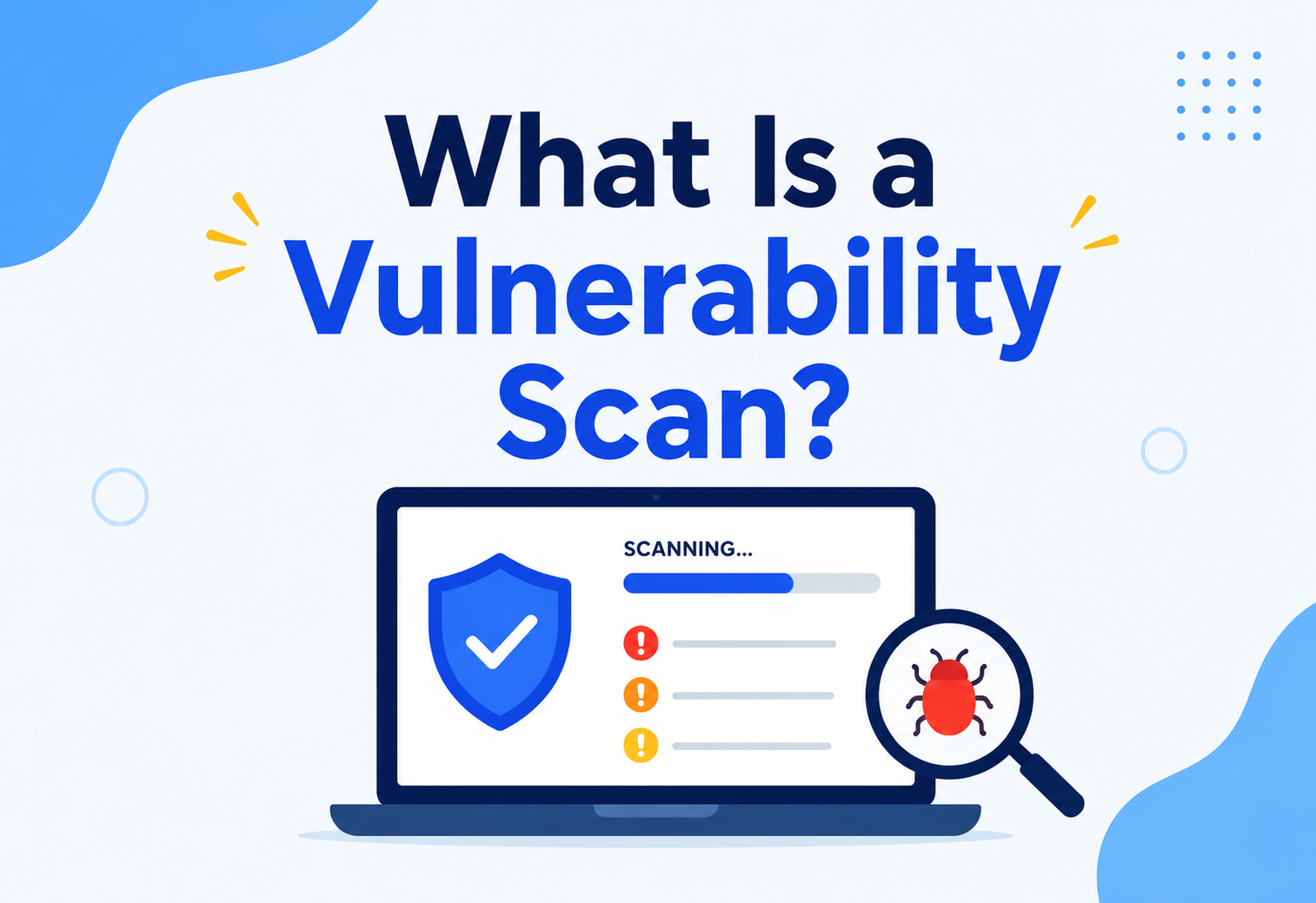
In formal terms, a vulnerability scan is an automated process that inspects computers, networks, applications, or containers to identify known security weaknesses — misconfigurations, outdated software, missing patches, weak encryption, exposed ports, or flawed code — before an attacker can exploit them.
Think of a vulnerability scanner as a very thorough building inspector who visits your house every night with a checklist compiled from every known burglary technique in the city. They don’t just check the front door — they check window latches, the garage remote’s frequency, whether your Wi-Fi router still uses the default password, and whether last month’s “fix the fence” patch was actually applied. Each morning, they hand you a report ranked by how easily a burglar could get in.
A Short History
Vulnerability scanning grew out of the earliest days of network security research. In the late 1980s and early 1990s, security researchers wrote simple scripts to probe systems for known weaknesses — the most famous early example being SATAN (Security Administrator Tool for Analyzing Networks), released in 1995, which caused significant controversy because the same tool that helped defenders could also help attackers. This “dual-use” tension has followed vulnerability scanning ever since.
Through the late 1990s and 2000s, commercial scanners such as Nessus (1998), and later tools like OpenVAS, Qualys, and Rapid7 Nexpose, turned scanning from a hacker’s script into an enterprise discipline. The rise of the Common Vulnerabilities and Exposures (CVE) system in 1999, maintained by MITRE, gave the industry a shared naming scheme so that “this vulnerability” meant the same thing to every vendor and every organization. Later, the National Vulnerability Database (NVD) added severity scoring through the Common Vulnerability Scoring System (CVSS), letting teams triage thousands of findings by actual risk rather than guesswork.
Today, vulnerability scanning is woven into nearly every stage of software delivery — from a developer’s IDE, to the CI/CD pipeline, to container registries, to live production infrastructure — and is often mandated by compliance frameworks like PCI-DSS, HIPAA, SOC 2, and ISO 27001.
1988 — The Morris Worm
The internet’s first widespread automated attack forces the industry to think seriously about proactively finding weaknesses before adversaries can weaponize them.
1995 — SATAN
The Security Administrator Tool for Analyzing Networks is released and sparks a lasting “dual-use” debate: the same probe helps defenders and attackers alike.
1998 — Nessus
Vulnerability scanning starts becoming an enterprise discipline instead of a researcher’s hobby project.
1999 — CVE Launches
MITRE’s Common Vulnerabilities and Exposures ID scheme gives every organization on Earth a shared vocabulary for “that specific flaw.”
2000s — CVSS & the NVD
Objective severity scoring lets teams triage tens of thousands of yearly findings by real risk instead of alphabetical order or gut feel.
2010s Onward — Shift-Left & Continuous
Cloud, containers, and CI/CD push scanning into the IDE, the pull request, and the build pipeline — not just the production perimeter.
You’ll hear “vulnerability scan” in job descriptions (“DevSecOps engineer — run and triage vulnerability scans”), in compliance audits (“show evidence of quarterly vulnerability scans”), and in incident postmortems (“this CVE was flagged by our scanner three weeks before exploitation”).
How Scanning Fits Into the Bigger Security Picture
It helps to place vulnerability scanning on a map alongside its neighboring disciplines, because beginners often confuse them:
- Vulnerability management is the overall program — scanning is just one input into it, alongside patching policy, risk acceptance decisions, and reporting.
- Threat intelligence tells you what attackers are actually doing right now in the wild, which helps decide which scan findings deserve urgent attention.
- Penetration testing and red teaming are more manual, goal-driven exercises that often start from a scan’s output but go much further, chaining weaknesses together the way a real attacker would.
- Security monitoring / SIEM watches for signs that a system has already been attacked, whereas scanning tries to find the weakness before that ever happens.
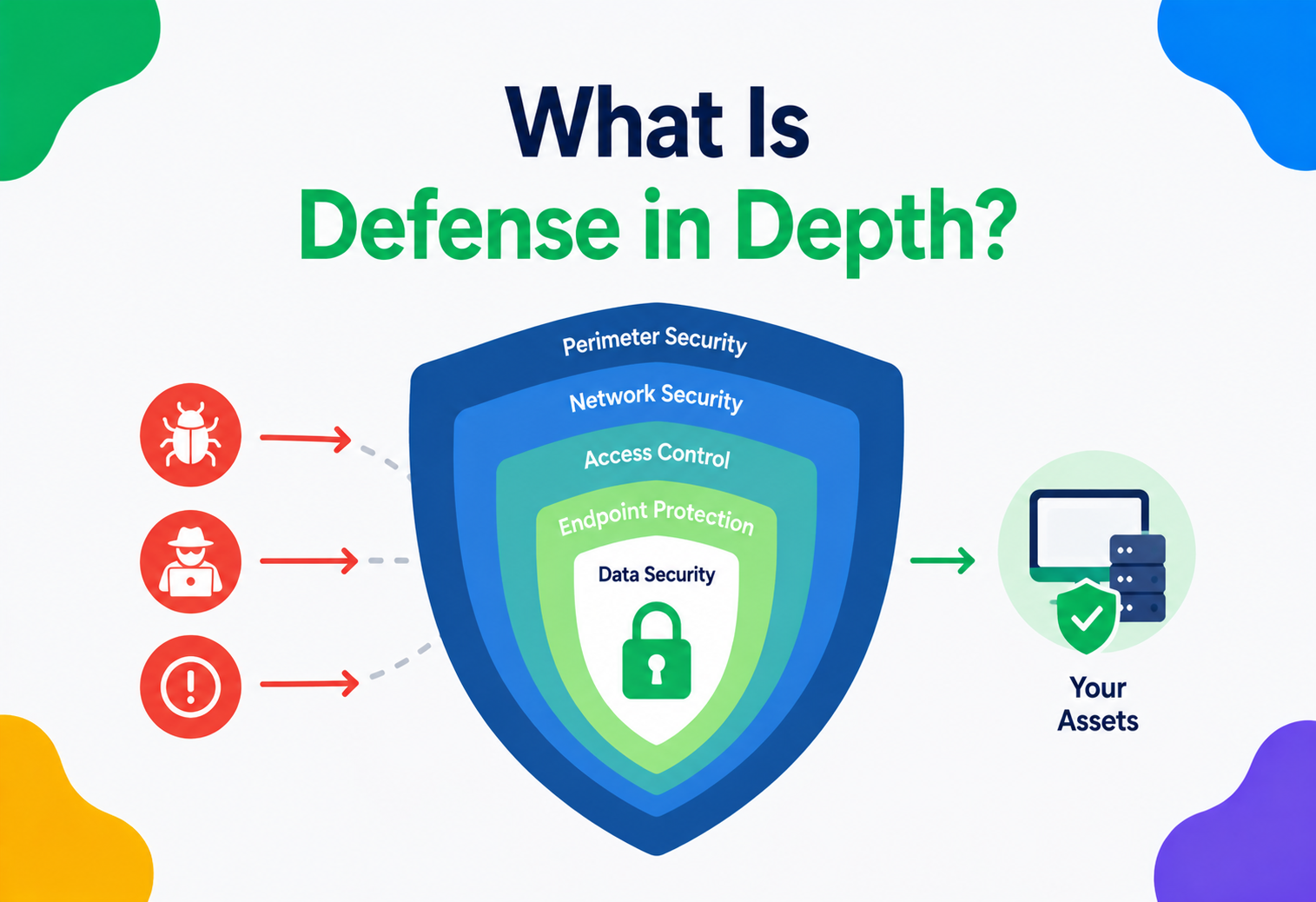
None of these disciplines replace the others — a mature security program layers them together, the same way a bank doesn’t rely on just a vault door; it also has cameras, guards, alarms, and insurance.
Why Vulnerability Scanning Has to Exist at All
Because modern software systems are enormous, constantly changing, and built from thousands of pieces that nobody in your company wrote — and attackers only need to find one weak spot to win.
The Scale Problem
A single modern web application might depend on hundreds of open-source libraries, each of which depends on more libraries. A mid-size company might run thousands of servers, containers, and cloud resources. No human team can manually check every one of these for every newly discovered flaw, every single day. New vulnerabilities are disclosed constantly — the NVD logs tens of thousands of new CVEs every year. Manual review simply cannot keep pace.
The Moving-Target Problem
Software is never “done.” Every deployment, every dependency upgrade, every new cloud resource can silently introduce a new weakness. A server that was perfectly secure on Monday can become vulnerable on Tuesday, the moment a new CVE is published for a library it happens to use — even if nobody touched that server at all.
The Asymmetry Problem
Attackers only need to find one weak point. Defenders need to close all of them. This asymmetry means defenders need tooling that is at least as fast and thorough as an attacker’s own reconnaissance — which is exactly what attackers use too. In fact, attackers routinely run the very same class of scanning tools against the internet’s exposed systems, looking for the one unpatched box.
Organizations discover weaknesses the hard way — after a breach. Well-known incidents such as the 2017 Equifax breach were traced back to a known, publicly disclosed vulnerability in Apache Struts that had a patch available for months before attackers exploited it. The vulnerability was known; it just wasn’t found and fixed on Equifax’s own systems in time. Scanning exists to close that gap between “a fix exists” and “the fix is applied everywhere it’s needed.”
What Problem Does Scanning Actually Solve?
Know What Exists
You cannot fix what you don’t know about. Scanning creates an inventory of weaknesses across your entire estate.
Rank the Risks
Not all flaws are equally dangerous. Scanning provides severity scoring so teams fix the most dangerous issues first.
Catch the Drift
A one-time security review goes stale immediately. Scanning repeats automatically, catching drift and newly disclosed CVEs.
Prove It
Regulators and auditors want proof that you are actively looking for weaknesses, not just hoping for the best.
The Dependency Problem
Most modern applications are built mostly from code the development team did not write. A typical Java Spring Boot service might directly declare thirty dependencies in its pom.xml, but those thirty libraries transitively pull in hundreds more. A vulnerability in any layer of that dependency tree becomes a vulnerability in your application, even though nobody on your team ever looked at that code. This is exactly what made the Log4Shell vulnerability so severe in December 2021 — Log4j wasn’t a library most engineers had even heard of, yet it was buried deep inside an enormous number of Java applications worldwide, often several dependency layers removed from anything a developer had knowingly chosen.
The Configuration-Drift Problem
Even if your code never changes, your environment does. Cloud infrastructure is provisioned and modified constantly — new storage buckets, new IAM roles, new security groups — and a single misclick can turn a private resource into a publicly accessible one. Traditional code review catches problems in application logic; it does not catch a storage bucket permission that was flipped to “public” during an unrelated infrastructure change six months later. Continuous scanning is what catches this kind of silent drift.
Why “We’ll Just Be Careful” Doesn’t Scale
Early-stage teams sometimes rely on manual diligence — a senior engineer reviewing configuration changes, or a security-conscious developer keeping mental notes about which libraries need upgrading. This works for a handful of services. It breaks down completely once an organization reaches dozens or hundreds of services, multiple cloud accounts, and a development team large enough that no single person has full visibility into everything being built. Vulnerability scanning replaces “someone remembers to check” with “the system checks automatically, every time, without fatigue.”
The Vocabulary of Vulnerability Scanning
Before going further, let’s build a solid vocabulary. Each term below includes what it means, why it matters, and a beginner-friendly example.
Vulnerability
What: A weakness in a system that could be exploited to cause harm — unauthorized access, data leakage, denial of service, and so on.
Why it matters: Every security control that follows (scanning, patching, hardening) exists because vulnerabilities exist.
Example: A web server running an old version of OpenSSL with a known bug that lets attackers read server memory (this actually happened — it’s called Heartbleed, CVE-2014-0160).
CVE (Common Vulnerabilities and Exposures)
What: A unique ID assigned to a publicly known vulnerability, e.g., CVE-2021-44228 (the Log4Shell flaw in Log4j).
Why it matters: It gives everyone — vendors, scanners, security teams — a shared reference so “the Log4j bug from December 2021” always means the exact same thing.
Example: Your scanner report says “Log4j 2.14.1 detected — CVE-2021-44228 — Critical.” Now you know exactly which flaw, in which library, at which version.
CVSS (Common Vulnerability Scoring System)
What: A numeric score from 0.0 to 10.0 describing how severe a vulnerability is, based on factors like how easy it is to exploit and what damage it can cause.
Why it matters: With thousands of findings, teams need an objective way to decide what to fix first.
Example: A CVSS score of 9.8 (“Critical”) means fix it today; a score of 3.1 (“Low”) might wait for the next maintenance window.
False Positive / False Negative
What: A false positive is a finding the scanner reports that isn’t actually exploitable in your environment. A false negative is a real vulnerability the scanner misses entirely.
Why it matters: Too many false positives cause “alert fatigue,” where teams start ignoring scan results altogether. False negatives give a false sense of safety.
Example: A scanner flags a vulnerable library version, but your code never actually calls the vulnerable function — that’s a false positive requiring human judgment to dismiss safely.
Attack Surface
What: The complete set of points where an attacker could try to get in — open ports, exposed APIs, login forms, third-party integrations, and so on.
Why it matters: Scanning tools are pointed at the attack surface; a bigger surface means more work and more risk.
Example: Every public API endpoint, every open cloud storage bucket, and every SSH port exposed to the internet is part of your attack surface.
Exploit
What: A piece of code or technique that actually takes advantage of a vulnerability to cause harm.
Why it matters: A vulnerability being “exploitable in the wild” (an active exploit exists) is far more urgent than a theoretical one.
Example: A published proof-of-concept script that uses CVE-2021-44228 to run arbitrary commands on a vulnerable server.
Patch / Remediation
What: The fix — an updated version of software, a configuration change, or a compensating control that removes or mitigates a vulnerability.
Why it matters: Scanning finds problems; remediation is the actual work of closing them.
Example: Upgrading Log4j from 2.14.1 to 2.17.1 to remove the Log4Shell vulnerability.
Authenticated vs. Unauthenticated Scanning
What: An unauthenticated scan looks at a target the way an outside attacker would — from the outside, with no login credentials. An authenticated scan logs in with valid credentials first, then inspects the system from the inside, checking installed packages, configuration files, and registry settings directly.
Why it matters: Authenticated scans are dramatically more accurate and thorough, because they don’t have to guess software versions from network banners — they can read the actual installed package list.
Example: An unauthenticated scan might only see “port 22 open, SSH service” while an authenticated scan logging in over that same SSH connection can see every installed package and its exact version.
Zero-Day Vulnerability
What: A vulnerability that is unknown to the vendor and the public — no patch exists yet, and by definition no scanner signature exists for it either.
Why it matters: This is the fundamental limit of vulnerability scanning: it can only find what it already knows to look for.
Example: Before Log4Shell was publicly disclosed in December 2021, no scanner in the world could detect it — the moment it was disclosed, every major scanner vendor rushed to ship a detection signature within hours to days.
Risk Acceptance
What: A formal decision to knowingly leave a vulnerability unfixed for a period of time, usually because a fix isn’t feasible right now, the business impact of fixing it is too high, or a compensating control reduces the real-world risk.
Why it matters: Not every finding can be fixed instantly; risk acceptance keeps the process honest and auditable rather than findings simply being ignored silently.
Example: A legacy system scheduled for decommission in two months has a Medium-severity finding; the team formally accepts the risk rather than spending engineering time patching software that’s about to be retired.
Scan Types at a Glance
| Type | What It Examines | Typical Tool Category |
|---|---|---|
| Network scan | Open ports, running services, network devices | Nmap, Nessus, Qualys |
| Host / OS scan | Missing OS patches, misconfigurations, weak accounts | Nessus, OpenVAS, Rapid7 |
| Web application scan (DAST) | Running web apps for SQLi, XSS, auth flaws | OWASP ZAP, Burp Suite |
| Static code scan (SAST) | Source code for insecure patterns | SonarQube, Checkmarx, Semgrep |
| Software composition analysis (SCA) | Third-party/open-source dependency versions | Snyk, Dependabot, OWASP Dependency-Check |
| Container image scan | OS packages and libraries inside container images | Trivy, Grype, Clair |
| Cloud configuration scan (CSPM) | Misconfigured cloud resources (public S3 buckets, open security groups) | Prowler, AWS Security Hub, Wiz |
Architecture & Components of a Scanning Platform
A production-grade vulnerability scanning platform is itself a small distributed system. Let’s break down its components.
Component Walkthrough
- Asset inventory service — maintains the list of “things to scan”: IPs, hostnames, cloud resource IDs, container image tags, repository URLs. You can’t scan what you don’t know exists — this component fights “shadow IT.”
- Scan scheduler / orchestrator — decides when and how often to scan each asset, distributes work across scan engines, and respects rate limits so scanning doesn’t degrade production traffic.
- Scan engines — the actual workers that connect to a target (over the network, by reading a container image layer, or by parsing source code) and run detection logic.
- Vulnerability signature database — a constantly updated feed of known vulnerability patterns, CVE definitions, and detection rules, usually synced from public feeds (NVD) and vendor research teams.
- Findings normalizer — different engines produce results in different formats; this component converts everything into one consistent schema.
- Findings store — a database holding every discovered issue, its status (open/fixed/accepted-risk), and its history over time.
- Risk scoring engine — combines CVSS score, asset criticality, and exploit intelligence to rank findings by real-world urgency, not just raw severity.
- Dashboard / API / ticketing integration — where humans actually see and act on results, often auto-creating Jira tickets for engineering teams.
Beginner: you run nmap -sV 192.168.1.10 on your laptop to scan one machine on your home network.
Production (Netflix-scale): a fleet of distributed scan engines continuously scans tens of thousands of cloud instances and container images across multiple regions, feeding results into a centralized risk platform that auto-files remediation tickets to the owning team.
Why Separate Scan Engines by Type at All?
It might seem simpler to build one giant scanner that does everything, but splitting by scan type mirrors a classic microservices motivation: each engine type has wildly different resource profiles and release cadences. A container image scanner mostly does local file analysis and is CPU-bound in short bursts. A network scanner is mostly waiting on the network and is I/O-bound over long periods. A web application scanner needs to render and interact with pages, closer to a lightweight browser automation workload. Bundling all of this into one service means every scan type is constrained by the slowest, heaviest one, and a bug in the web-app engine can take down container scanning too. Splitting them lets each scale, deploy, and fail independently — the same reasoning that drives service decomposition in any large distributed system.
The Asset Inventory as the System of Record
It’s worth dwelling on the asset inventory a little longer, because it quietly determines the ceiling of the entire program’s effectiveness. If a new cloud server is spun up and never registered in the inventory, it will never be scanned — not because the scan engines are broken, but because nothing ever told them it exists. This is why mature programs wire the inventory directly into cloud provisioning workflows (e.g., automatically registering every new EC2 instance or Kubernetes namespace as it’s created) rather than relying on someone remembering to add it manually. An inventory that’s even 95% complete still leaves a meaningful blind spot, and attackers specifically look for exactly the kind of forgotten, unmanaged system that tends to live in that missing 5%.
How a Scan Actually Happens
Let’s walk through what a scan engine does step by step when it scans a single target host.
Discovery
The engine first confirms the target is reachable — usually with a lightweight probe (like a ping or a TCP handshake attempt) — and identifies open ports. A port being open just means “something is listening here”; it doesn’t yet say what.
Service & Version Fingerprinting
For every open port, the engine sends carefully crafted requests and studies the responses (banners, headers, protocol quirks) to determine exactly what software and version is running. This is like knocking on a door and listening to how it creaks to guess its brand and age.
Vulnerability Matching
With a known software name and version in hand, the engine checks it against its signature database. If Apache HTTP Server 2.4.49 is detected, and the database has a CVE entry for exactly that version, it’s flagged.
Active Checks (Optional, Higher Risk)
Some scanners go further and send a real, safe test payload to confirm a vulnerability is actually exploitable rather than just “possibly present based on version number.” This is more accurate but riskier, since a poorly written active check can crash a fragile service — which is why production scans are usually scheduled during low-traffic windows and tested carefully first.
Evidence Collection & Scoring
The engine records what it found, how confident it is, and computes a severity score.
Reporting
Findings are normalized and pushed to the central findings store.
Below is a deliberately simplified Java model of a scan engine’s core loop — the real thing has vastly more nuance around protocols, TLS, and safe-mode toggles, but the shape is the same: fingerprint a service, then match it against known signatures.
// A simplified illustration of a vulnerability scan engine's core matching loop.
// In production this logic is far more sophisticated, but the shape is the same:
// fingerprint a service, then match it against known vulnerability signatures.

import java.util.List;
import java.util.Optional;

public class ScanEngine {

    private final VulnerabilitySignatureRepository signatureRepo;

    public ScanEngine(VulnerabilitySignatureRepository signatureRepo) {
        this.signatureRepo = signatureRepo;
    }

    public List<Finding> scanTarget(Target target) {
        List<Finding> findings = new java.util.ArrayList<>();

        for (OpenPort port : target.discoverOpenPorts()) {
            ServiceFingerprint fingerprint = fingerprintService(target, port);
            if (fingerprint == null) continue;

            List<VulnerabilitySignature> matches =
                signatureRepo.findMatching(fingerprint.getProductName(), fingerprint.getVersion());

            for (VulnerabilitySignature sig : matches) {
                Finding finding = new Finding(
                    target.getHostId(),
                    port.getNumber(),
                    sig.getCveId(),
                    sig.getCvssScore(),
                    sig.getDescription()
                );
                findings.add(finding);
            }
        }
        return findings;
    }

    private ServiceFingerprint fingerprintService(Target target, OpenPort port) {
        // Sends a small set of protocol-aware probes and parses the response
        // banner/headers to determine product name + version.
        return target.probe(port);
    }
}
This is intentionally simplified — real engines handle protocol nuances, TLS negotiation, authenticated scanning (logging in first to see deeper), and safe-mode toggles to avoid crashing fragile targets — but the core idea of “fingerprint, then match against known signatures” is universal.
How to Read a Real Scan Finding
A typical finding in a report contains several fields that beginners should learn to read quickly:
| Field | Meaning | Example Value |
|---|---|---|
| Asset | What was scanned | web-prod-14.internal (10.2.4.19) |
| CVE ID | Unique vulnerability identifier | CVE-2021-44228 |
| CVSS score / severity | How dangerous, on a 0–10 scale | 10.0 / Critical |
| Affected component | Exact software and version | log4j-core 2.14.1 |
| Detection method | How confident the finding is | Version match (unauthenticated) |
| Remediation | What to do about it | Upgrade to log4j-core 2.17.1 |
| First seen / Last seen | How long it’s been open | 2026-01-04 / 2026-07-20 |
Reading these fields together, not in isolation, is the key skill: a Critical CVSS score on an internal-only test server behind three layers of firewall is a very different real-world risk than the same score on an internet-facing production login page — which is exactly why risk scoring engines combine the raw CVSS number with asset context.
Data Flow & Lifecycle of a Finding
Following one finding from the moment a probe leaves the scan engine to the moment a follow-up scan confirms the fix.
A finding’s lifecycle typically moves through states: Discovered → Triaged → Assigned → In Progress → Remediated / Risk-Accepted → Verified-Closed. That last step matters enormously — a good program doesn’t just trust that a fix was applied; it re-scans to confirm the vulnerability is actually gone.
Treating a scan report as a one-time checklist rather than a living dataset. Findings should be tracked over time, re-verified after fixes, and aged (a Critical finding open for 90 days is a very different risk story than one open for 90 minutes).
Pros, Cons & Trade-offs
Scanning is powerful, but it is not magic. Being honest about what it does and doesn’t do is what separates a program that works from one that just generates reports.
Advantages
- Automates coverage across huge, constantly changing environments.
- Provides objective, repeatable evidence for audits and compliance.
- Catches known issues fast — often before attackers scan the same targets.
- Feeds directly into prioritized remediation workflows.
Limitations
- Only finds known vulnerabilities — zero-days won’t appear.
- Can produce false positives, causing wasted engineering time.
- Active scans can, in rare cases, disrupt fragile production systems.
- A scan is a point-in-time snapshot; new CVEs can appear the next day.
Key Trade-off: Passive vs. Active Scanning
Passive/version-based checks are safe but less certain (a matched version doesn’t always mean the vulnerable code path is reachable). Active checks are more certain but carry real operational risk. Most mature programs use passive checks broadly and reserve active checks for high-value or already-suspicious targets, often with change-management approval.
Key Trade-off: Scan Frequency vs. System Load
Scanning more often catches problems sooner, but every scan consumes network bandwidth and target CPU/IO. Teams balance this with staggered schedules, rate limiting, and prioritizing critical assets for more frequent scans.
Key Trade-off: Breadth vs. Depth
A scanner can be tuned toward breadth — quickly covering every asset with lightweight checks — or depth — spending much more time per asset with deeper, more thorough checks including authenticated access and active exploitation attempts. Breadth-first scanning is great for maintaining continuous baseline coverage across a huge estate; depth-first scanning is better reserved for high-value targets like internet-facing production systems or anything holding sensitive data. Most mature programs run both simultaneously at different cadences rather than picking one approach for everything.
Key Trade-off: Build vs. Buy
Organizations can build custom scanning tooling in-house or adopt commercial/open-source platforms. Building in-house offers maximum flexibility and tight integration with internal systems, but requires ongoing investment to keep signature databases current — a genuinely difficult, research-heavy undertaking. Buying a commercial platform (or using a managed cloud-native service like Amazon Inspector) offloads that signature research burden to a vendor with a dedicated research team, at the cost of licensing fees and somewhat less customization. Most organizations, even very large ones, choose to buy or use managed services for the core scanning engine and signature feed, then build custom orchestration and integration logic around it.
Performance & Scalability
At the scale of a large company, scanning becomes a distributed-systems problem in its own right. Consider scanning 50,000 cloud instances across five regions every 24 hours.
Partitioning the Work
Just like a database shards data across nodes, a scan orchestrator partitions the asset inventory across many scan engine workers — often by region, subnet, or asset type — so scans run in parallel instead of one giant sequential queue. This is directly analogous to horizontal partitioning in system design: split the workload so no single worker is a bottleneck.
Concurrency Inside a Single Engine
A single scan engine typically probes many ports and hosts concurrently using thread pools or async I/O, since most scan time is spent waiting on network responses (I/O-bound), not CPU work.
// Illustrative: bounding concurrency so scanning doesn't overwhelm the network
// or the target systems, using a fixed thread pool with a semaphore as a safety valve.

import java.util.concurrent.*;

public class ConcurrentScanRunner {

    private final ExecutorService pool = Executors.newFixedThreadPool(50);
    private final Semaphore rateLimiter = new Semaphore(20); // max 20 concurrent probes per target subnet

    public void scanAll(List<Target> targets, ScanEngine engine) {
        List<Future<List<Finding>>> futures = new ArrayList<>();

        for (Target target : targets) {
            futures.add(pool.submit(() -> {
                rateLimiter.acquire();
                try {
                    return engine.scanTarget(target);
                } finally {
                    rateLimiter.release();
                }
            }));
        }

        for (Future<List<Finding>> future : futures) {
            try {
                List<Finding> findings = future.get(60, TimeUnit.SECONDS);
                // persist findings...
            } catch (TimeoutException | InterruptedException | ExecutionException e) {
                // log and continue scanning remaining targets
            }
        }
    }
}
Scaling Patterns
Horizontal Scaling
Add more scan engine workers behind the orchestrator as asset count grows, similar to adding more consumers to a message queue.
Incremental Scanning
Scan only what changed since the last run (new deployments, new CVE signatures) instead of re-scanning everything from scratch.
Signature Caching
The signature DB is read-heavy and changes slowly — a great candidate for in-memory caching close to each engine.
Rate Limiting
Per-subnet caps prevent scanning from becoming its own accidental denial-of-service against fragile production systems.
Consistency, Replication, and Consensus in the Scanning Platform
Even though scanning isn’t usually described in CAP-theorem terms, the same trade-offs quietly show up. The findings store is typically distributed and replicated for durability, and most teams accept eventual consistency here: it’s perfectly fine if a finding takes a few seconds to appear on every dashboard replica after a scan completes, because nobody is making split-second decisions based on it. Availability and partition tolerance are favored over strict consistency — this is the same reasoning that leads many distributed systems to choose an AP design for read-heavy, delay-tolerant workloads.
Where consensus does matter is in the scan orchestrator itself: if you run multiple orchestrator instances for high availability, they need to agree on which engine already claimed which job, or the same asset could be scanned twice while another sits unscanned. This is typically solved with a distributed lock or leader-election mechanism (backed by something like ZooKeeper, etcd, or a database-level lease) — a lightweight consensus problem, but a real one.
High Availability & Reliability
A scanning platform that silently stops working is dangerous — it creates false confidence (“no findings” can mean “nothing wrong” or “the scanner is broken,” and those look identical from a dashboard unless you design against it).
Failure Recovery
Orchestrators track “last successful scan time” per asset, not just “scan scheduled.” If an asset hasn’t been successfully scanned within its expected window, that itself becomes an alert — treating scanning coverage as a monitored SLA, not a fire-and-forget job.
Replication & Redundancy of the Signature Database
The vulnerability signature database — arguably the platform’s most critical dependency — is typically replicated across multiple nodes/regions, similar to a read-replica pattern in traditional databases, so a single node failure doesn’t stall every scan engine simultaneously.
Idempotency
Re-running a scan on the same target should produce a consistent, de-duplicated result rather than creating duplicate findings each time — an idempotency concern very similar to idempotent API design in distributed systems.
If a scan orchestrator’s primary region goes down mid-cycle, a well-designed platform fails over to a standby orchestrator in another region, resumes from the last checkpoint (which assets were already scanned), and avoids re-scanning everything from zero — much like resuming a large batch job from a checkpoint rather than restarting it entirely.
Graceful Degradation
When the signature database update feed is temporarily unreachable, a well-built scan engine should keep working with its last known-good signature set rather than failing every scan outright. It should, however, clearly flag results as “signatures last updated N hours ago” so downstream consumers know the data might be slightly stale — surfacing degraded confidence rather than silently pretending everything is fully up to date. This mirrors the general system-design principle of degrading gracefully under partial failure instead of failing completely.
Timeouts and Circuit Breakers
A single unresponsive target shouldn’t be allowed to stall an entire scan job. Engines apply per-target timeouts, and orchestrators often use a circuit-breaker pattern: if a particular subnet or target type starts failing repeatedly (perhaps a firewall change is now blocking probes), the orchestrator temporarily stops sending it new jobs rather than burning worker capacity on requests that are guaranteed to fail, and alerts a human to investigate.
Securing the Scanner Itself
Here’s an important twist: the vulnerability scanner is itself a piece of software with enormous privilege — it often needs credentials to log into every server it scans (this is called authenticated scanning, and it finds far more than unauthenticated network-only scanning). That makes the scanner a very high-value target.
- Credential management — scan credentials should be stored in a secrets manager (e.g., HashiCorp Vault, AWS Secrets Manager), never hardcoded, and rotated regularly.
- Least privilege — scan service accounts should have only the read access needed to fingerprint systems, not broad admin rights.
- Network segmentation — scan engines are often placed on a restricted network segment so a compromised scan engine can’t be used as a launchpad to attack the rest of the environment.
- Audit logging — every scan action should be logged, since scan traffic can look identical to an actual attack; security teams need to distinguish “our scanner” from “an intruder” instantly.
- Data at rest — findings often describe exactly how to exploit your own systems; the findings store itself needs strong access control and encryption, since a leak of that database is effectively a leaked attack roadmap.
Access to the findings dashboard itself should follow the principle of need-to-know rather than being open to the entire engineering organization by default. A detailed, unfiltered list of every unpatched Critical vulnerability in a company, sorted conveniently by asset, is close to an ideal reconnaissance document for an attacker who manages to gain even low-level internal access. Scoping dashboard visibility so each team primarily sees its own assets, while security leadership retains the full view, meaningfully reduces this exposure without slowing down day-to-day remediation work.
A misconfigured or outdated vulnerability scanner can itself have vulnerabilities. Scanning platforms should be patched and monitored with the same rigor they apply to everything else.
Monitoring, Logging & Metrics
A scanning program’s health is measured, not assumed. Key metrics teams track:
| Metric | What It Tells You |
|---|---|
| Scan coverage % | Fraction of known assets actually scanned in the last cycle |
| Mean time to detect (MTTD) | How quickly a new vulnerability is discovered after disclosure |
| Mean time to remediate (MTTR) | How quickly findings are actually fixed, by severity |
| Open critical findings, aged >30 days | Backlog risk — the “hot potatoes” nobody has fixed |
| False positive rate | Scanner tuning quality; too high erodes trust |
| Scan job failure rate | Platform reliability itself |
These metrics are typically exposed on dashboards (Grafana is common) with alerting on Prometheus-style thresholds, and every scan job emits structured logs with a correlation ID so a specific finding can be traced back to the exact scan run, engine version, and signature set that produced it — invaluable when investigating a false positive or confirming when a fix actually took effect.
It’s worth calling out one counterintuitive point: a dashboard showing “zero findings” is not automatically good news. It’s just as likely to mean the scanner failed silently, an asset dropped out of the inventory, or a signature feed update broke matching logic, as it is to mean everything is genuinely secure. Experienced teams treat a sudden, unexplained drop in finding counts as something to investigate, not celebrate — the same instinct a good operator applies to a metrics dashboard that suddenly goes suspiciously flat.
Deployment & Cloud — Shifting Left
Modern scanning happens at multiple points across the software lifecycle, often called “shifting left.”
In cloud environments, scanning also extends to Cloud Security Posture Management (CSPM) — checking cloud account configuration itself for issues like publicly readable storage buckets, overly permissive IAM roles, or unencrypted databases. Cloud-native scanners often use the cloud provider’s own APIs rather than network probing, since many misconfigurations (like an S3 bucket policy) aren’t visible from a network port scan at all.
Beginner: you scan a single EC2 instance manually using an online port scanner.
Production (Amazon-scale): every container image is automatically scanned before it’s allowed into the internal registry, and any image with a Critical CVE is blocked from deployment entirely by a policy gate — shifting the check from “after the fact” to “before it can ever ship.”
Designing a CI/CD Security Gate
A practical deployment gate typically works like this: when a container image is built, the CI pipeline pushes it to a staging registry and triggers an image scan. The pipeline then polls (or receives a webhook) for scan completion, and the deployment step proceeds only if no findings above an agreed severity threshold are present. Teams usually start this gate in “warn only” mode — reporting violations without blocking anything — for a few weeks, so engineers can clear out the existing backlog of findings before the gate starts actually blocking deployments. Turning on a hard block immediately, with no warning period, is one of the fastest ways to make a security team unpopular and get the gate quietly disabled.
Exceptions matter too: a gate with no override path will eventually be bypassed entirely by a frustrated team during an incident. Mature gates support a time-boxed, logged exception process — for example, “deploy is allowed for 48 hours with a documented justification and an automatically created follow-up ticket” — balancing safety with the reality that sometimes a fix genuinely can’t land before an urgent deployment needs to go out.
Databases, Caching & Load Balancing
The scanning platform is a data-intensive system in its own right. Three storage and distribution concerns dominate its design.
Findings Store
The findings store is usually a relational or document database (e.g., PostgreSQL, or a document store for flexible finding schemas), indexed heavily on asset ID, CVE ID, and status, since dashboards constantly query “show me all open Critical findings for team X.”
Caching
The vulnerability signature database changes relatively infrequently compared to how often it’s read (every single scan probe consults it), making it a textbook cache candidate. Many scan engines pull a local, versioned snapshot of signatures and refresh it periodically (say, every few hours) rather than querying a central database on every single check — trading a small amount of staleness for a large reduction in load and latency.
Load Balancing Across Scan Engines
The orchestrator acts as a load balancer, distributing scan jobs across a pool of engine workers, often using a queue (like Kafka, SQS, or RabbitMQ) so engines pull work at their own pace rather than being pushed jobs that might overwhelm them — the same producer/consumer pattern used in many distributed job-processing systems.
Findings Store
Relational or document DB, indexed by asset, CVE, and status for dashboard queries.
Signature Snapshots
Local, versioned copies close to each engine to avoid hitting the central DB on every probe.
Job Queue
Kafka/SQS/RabbitMQ let engines pull work at their own pace and absorb spikes.
APIs & Microservices
Vulnerability scanning platforms are almost always built as a set of cooperating microservices rather than one monolith.
An inventory service, a scheduler, one or more scan-engine services (often one per scan type), a findings service, and a reporting service — each independently deployable and scalable, since a container image scanner has very different resource needs (CPU-heavy, bursty) than a lightweight network port scanner (I/O-heavy, constant).
These services expose REST or gRPC APIs internally, and typically a public-facing REST API externally so other tools (CI/CD pipelines, ticketing systems, custom dashboards) can trigger scans and pull results programmatically.
// Illustrative Spring Boot REST endpoint to trigger a scan and fetch results

@RestController
@RequestMapping("/api/v1/scans")
public class ScanController {

    private final ScanOrchestrationService orchestrationService;

    public ScanController(ScanOrchestrationService orchestrationService) {
        this.orchestrationService = orchestrationService;
    }

    @PostMapping
    public ResponseEntity<ScanJobResponse> triggerScan(@RequestBody ScanRequest request) {
        ScanJob job = orchestrationService.scheduleScan(request.getAssetIds(), request.getScanType());
        return ResponseEntity.accepted().body(new ScanJobResponse(job.getId(), job.getStatus()));
    }

    @GetMapping("/{jobId}/findings")
    public ResponseEntity<List<FindingDto>> getFindings(@PathVariable String jobId) {
        List<FindingDto> findings = orchestrationService.getFindingsForJob(jobId);
        return ResponseEntity.ok(findings);
    }
}
Because scans are long-running, the trigger endpoint returns 202 Accepted immediately with a job ID rather than blocking — a common async API pattern — and clients poll (or receive a webhook callback) once results are ready.
Design Patterns & Anti-patterns
Certain shapes of scanning programs succeed reliably; a matching set of shapes fail just as reliably.
Good Patterns
Producer / Consumer Queue
Distribute scan jobs across engine workers without overload; engines pull at their own pace.
Strategy Pattern Internally
Different scan types (network, web, container) implement a common interface so the orchestrator doesn’t need to know engine-specific details.
Risk-based Prioritization
Combine CVSS with asset criticality and exploit intelligence rather than treating every “Critical” label the same.
Shift-left Scanning
Catch issues in code review and CI, where fixes are cheapest, rather than only in production.
Anti-patterns to Avoid
“Scan and Forget”
Running scans but never tracking whether findings get fixed. The scan becomes theater rather than a real control.
Alert Fatigue by Design
Reporting every low-severity finding with the same urgency as criticals, until teams tune out the noise entirely.
Scanning Without an Asset Inventory
You can only scan what you know about — untracked “shadow” servers stay invisible and unpatched forever.
One-time Compliance Scan
Scanning only right before an audit, rather than continuously, leaves huge real-world exposure windows.
Best Practices & Common Mistakes
A distilled checklist of what mature scanning programs do — and the recurring mistakes that show up in almost every immature one.
Best Practices
- Maintain an accurate, continuously updated asset inventory — this is the single biggest predictor of scanning program success.
- Prioritize by real risk (exploitability + asset criticality), not raw CVSS score alone.
- Automate ticket creation and track remediation SLAs by severity (e.g., Critical fixed in 7 days, High in 30 days).
- Re-verify fixes with a follow-up scan rather than trusting a status update.
- Use authenticated scanning wherever possible — it finds far more than unauthenticated scans.
- Shift scanning left into CI/CD so issues are caught before deployment, not after.
- Tune out confirmed false positives so real signal isn’t drowned out.
Common Mistakes
- Treating a clean scan report as proof of security rather than as one input among many.
- Scanning production during peak traffic and causing performance degradation.
- Ignoring “Medium” findings indefinitely until they compound into a serious weakness.
- Not scanning container base images, only the application layer on top.
- Forgetting that scanning only catches known vulnerabilities — it’s one layer of defense, not the whole strategy.
A Simple Maturity Model
Organizations tend to move through recognizable stages as their scanning program matures:
| Stage | Characteristics |
|---|---|
| 1. Ad hoc | Scans run manually, occasionally, usually right before an audit; no tracking of remediation. |
| 2. Scheduled | Scans run on a fixed schedule (e.g., weekly); findings are reviewed but remediation isn’t consistently tracked to closure. |
| 3. Integrated | Findings automatically create tickets in the team’s existing workflow (Jira, ServiceNow); remediation SLAs are defined by severity. |
| 4. Shifted-left | Scanning happens in CI/CD and even the IDE, catching issues before they ever reach production; deployment gates block critical findings. |
| 5. Risk-driven | Findings are prioritized using real exploit intelligence and business context, not just raw CVSS score; the program measures and reports MTTR trends over time. |
Most organizations don’t need to reach stage 5 to see enormous value — even reaching stage 3 (integrated, tracked remediation) closes the majority of the gap between “we scanned it” and “we’re actually secure.”
Building the Remediation Feedback Loop
The single most impactful practice in any scanning program isn’t the scanner itself — it’s the feedback loop around it. A finding that is discovered, ticketed, fixed, and then re-verified by a follow-up scan closes the loop completely. A finding that is discovered and simply sits in a dashboard nobody looks at provides zero actual security benefit, no matter how sophisticated the scanning technology behind it. Teams that treat the scanner as the finish line, rather than the starting line, tend to accumulate large backlogs of unaddressed Critical findings — which defeats the entire purpose of scanning in the first place.
Real-World & Industry Examples
The organizations most resilient to breaches are rarely the ones with the fanciest scanning technology — they’re the ones with the tightest loop between “a scan finds something” and “an engineer fixes it, and the fix is verified.”
Netflix has published extensively on its internal security tooling philosophy, integrating vulnerability and dependency scanning directly into its CI/CD pipelines and container build process so that security checks happen automatically as part of normal engineering workflow, not as a separate gate bolted on afterward.
AWS offers Amazon Inspector, a managed vulnerability scanning service that continuously scans EC2 instances, container images in ECR, and Lambda functions for known CVEs and network exposure — reflecting the industry shift toward continuous, always-on scanning rather than periodic manual scans.
The widely studied 2017 Equifax breach is a textbook example of why scanning and remediation tracking must work together: a known, patchable vulnerability in Apache Struts existed on a public-facing system for months after a patch was available, ultimately leading to a breach of roughly 147 million people’s personal data. This is one of the most-cited real-world arguments for continuous, well-tracked vulnerability management programs.
Google’s internal security engineering practices emphasize automated, continuous scanning across its infrastructure combined with strict internal SLAs for how quickly discovered vulnerabilities must be remediated based on severity — an approach widely referenced as an industry best-practice model for vulnerability management at scale.
Across these examples, a common thread emerges: the organizations most resilient to breaches are not necessarily the ones with the fanciest scanning technology, but the ones with the tightest feedback loop between “a scan finds something” and “an engineer fixes it, and the fix is verified.” The Equifax case shows what happens when that loop breaks down even once, on even one system; the Netflix, Amazon, and Google examples show what a well-oiled version of that loop looks like when scanning is treated as a continuous engineering discipline rather than a periodic checkbox exercise.
FAQ, Summary & Key Takeaways
The most common beginner questions, followed by a distilled summary and the takeaway checklist.
Frequently Asked Questions
Is a vulnerability scan the same as a penetration test?
No. A vulnerability scan is automated and broad — it identifies known weaknesses across many systems quickly. A penetration test is typically manual (or hybrid), narrower in scope, and actively tries to chain multiple weaknesses together to simulate a real attacker achieving a specific goal. Scanning is a component that often feeds into a penetration test, not a replacement for one.
How often should scans run?
It depends on asset criticality and change frequency, but continuous or daily scanning of externally facing systems, and at least weekly for internal systems, is a common baseline in mature programs — with container images scanned on every build.
Can vulnerability scanning replace patching?
No — scanning only identifies weaknesses; it doesn’t fix them. Scanning and patching/remediation are two halves of the same process, and a program that scans well but remediates slowly still leaves the door open.
Do vulnerability scanners find every possible security issue?
No. They find known issues matched against existing signatures and patterns. Zero-day vulnerabilities (unknown to the public and vendors) and complex business-logic flaws typically require other techniques like manual code review, threat modeling, and penetration testing.
Why do scanners produce false positives, and what should I do about them?
False positives usually happen because the scanner matched a software version number without confirming the vulnerable code path is actually reachable in your specific configuration. The right response is to investigate and formally mark confirmed false positives as such in the findings store (with a reason), rather than just deleting or ignoring them — that record protects you the next time the same finding resurfaces and someone asks “didn’t we already look at this?”
Who is usually responsible for running and acting on vulnerability scans?
Security or DevSecOps teams typically own the scanning platform and triage process, but remediation itself — actually applying the patch or fixing the code — is almost always the responsibility of the engineering team that owns the affected system. This split is why good integration with ticketing systems (auto-filing issues to the right team) matters so much in practice.
Is vulnerability scanning required for compliance?
Many regulatory and industry frameworks explicitly require it. PCI-DSS mandates regular vulnerability scans for organizations handling payment card data, and frameworks like SOC 2 and ISO 27001 expect documented evidence of an ongoing vulnerability management process as part of their control sets.
What’s the difference between SAST, DAST, and SCA?
SAST (Static Application Security Testing) examines source code without running it, looking for insecure coding patterns. DAST (Dynamic Application Security Testing) tests a running application from the outside, the way an attacker would interact with it. SCA (Software Composition Analysis) focuses specifically on third-party and open-source dependencies, checking their versions against known CVEs. Mature programs use all three together, since each catches issues the others miss.
Summary
A vulnerability scan is an automated inspection process that finds known security weaknesses across networks, applications, containers, and cloud infrastructure before attackers can exploit them. It exists because modern systems are too large, too fast-changing, and too dependent on third-party code for manual review to keep up. A production-grade scanning platform is a distributed system in its own right — with asset inventories, orchestrators, specialized scan engines, signature databases, and risk-prioritization pipelines — and its value depends entirely on what happens after a finding is discovered: tracked, prioritized, remediated, and verified.
Key Takeaways
- Vulnerability scanning automates the discovery of known weaknesses at a scale humans can’t match manually.
- CVE and CVSS give the industry a shared language for naming and scoring vulnerabilities.
- Scan types span network, host, web app, source code (SAST), dependencies (SCA), containers, and cloud configuration (CSPM).
- A scanning platform is itself a distributed system requiring careful architecture, scaling, and security.
- Scanning without tracked, timely remediation provides false assurance — the Equifax breach is the industry’s cautionary tale.
- Shifting scanning left, into code review and CI/CD, catches problems when they’re cheapest to fix.
- Scanning is one layer of defense, not a complete security strategy on its own.
To build on this, explore related guides on CVSS scoring in depth, the CVE/NVD ecosystem, container security fundamentals, and how CI/CD security gates are designed in production pipelines. Each of these builds naturally on the vocabulary and architecture introduced here, and together they form a complete picture of how modern organizations keep their systems secure at scale.