Why Do Architect Interviews Include Leadership and Behavioural Questions?
A complete, beginner-friendly guide to understanding why technical depth alone is never enough to become a Software Architect — and how to prepare for the leadership and behavioural side of the interview loop with real frameworks, examples, and a two-week preparation plan.
Introduction & History
Architect interviews did not always test leadership. They do now — because decades of hiring outcomes made it painfully clear that technical brilliance alone is not enough to actually ship an architecture.
Imagine two candidates applying for the same Software Architect role. Candidate A can whiteboard a flawless microservices design, explain CAP theorem in their sleep, and recite the trade-offs between SQL and NoSQL without pausing for breath. Candidate B has slightly less encyclopedic technical recall, but tells a clear story about convincing a skeptical VP to fund a risky but necessary database migration, mentoring three junior engineers into senior roles, and calmly resolving a heated disagreement between two teams about API ownership. Which one is more likely to succeed as an Architect?
Most experienced hiring managers will tell you: it depends, but leadership and behavioural evidence often matters just as much as technical depth — sometimes more. This is not an accident or a fad. It reflects decades of hard-earned lessons about what actually makes an Architect succeed or fail once they are on the job.
Architect interviews did not always look this way. In the earlier decades of enterprise software, from the 1980s through the 1990s, “Architect” was often a purely technical title, closer to “Senior Engineer with a fancier business card.” Interviews for these roles focused almost entirely on technical depth: system design, algorithms, and familiarity with specific technologies. As software systems grew larger and organisations grew more complex through the 1990s and 2000s, companies began to notice a troubling pattern: brilliant technical architects were designing systems that were technically elegant but organisationally disastrous — ignored by the teams who had to build them, misaligned with business priorities, or abandoned halfway through because nobody outside the architecture team understood or supported the vision.
By the 2000s and 2010s, as large technology companies like Amazon, Google, and Microsoft scaled their engineering organisations into the tens of thousands, this lesson became formalised. Amazon’s now-famous Leadership Principles, introduced in the mid-2000s, explicitly wove behavioural evaluation into every interview loop, including the most senior technical roles. Google’s hiring process built “Googleyness and Leadership” into its interview rubric alongside technical competence. The message across the industry became consistent: an Architect’s job is not just to design correct systems, but to get correct systems built, adopted, and maintained by real teams of real people — and that requires leadership skill, not just technical skill.
The Problem & Motivation
To understand why behavioural questions exist in Architect interviews, we first need to understand what actually goes wrong when a company hires an Architect based on technical skill alone.
2.1 What an Architect’s real job actually looks like
A common misconception, especially among engineers early in their careers, is that an Architect’s job is to produce the “correct” technical design and hand it off. In reality, a large share of an Architect’s actual day-to-day work involves things that have nothing to do with drawing boxes and arrows:
- Convincing skeptical stakeholders that a proposed change is worth the cost and risk.
- Negotiating trade-offs between competing team priorities.
- Mentoring engineers so that architectural thinking spreads beyond a single person.
- Communicating complex technical trade-offs to non-technical executives who control budget and headcount.
- Navigating disagreement, sometimes deeply emotional disagreement, between engineers who each believe their approach is correct.
- Making a difficult, ambiguous decision with incomplete information, and living with the consequences.
None of these skills show up on a whiteboard system design round. All of them can make or break whether an architectural vision actually survives contact with a real organisation.
A brilliant urban planner can design the most efficient city layout in the world on paper. But if they cannot convince the city council to approve the budget, cannot negotiate with residents who do not want a road through their neighbourhood, and cannot coordinate dozens of construction crews over several years, the beautiful plan never becomes a real city. The planning skill and the leadership skill are both necessary, and neither one alone is sufficient.
2.2 The “brilliant but ineffective” architect problem
Hiring managers use the phrase “brilliant but ineffective” to describe a very specific, very common failure pattern: a technically outstanding architect whose designs never actually ship, or ship but are quietly abandoned, because the architect could not build the trust, communication, and organisational support needed to see the work through. This person often scores extremely well on pure technical interview rounds, which is exactly why relying on technical rounds alone became recognised as an incomplete hiring signal.
2.3 The cost of getting an Architect hire wrong
Architect roles influence the work of dozens or hundreds of engineers, sit close to major budget decisions, and often stay embedded in an organisation’s technical direction for years. A bad Architect hire is expensive not because the person cannot write good code or design good systems, but because a poor communicator, a poor listener, or someone unable to build consensus can quietly stall or derail initiatives worth millions of dollars, while looking, on paper, perfectly qualified.
Behavioural and leadership questions exist specifically to catch the risk that a purely technical evaluation cannot see: whether this person can turn a correct idea into an adopted, sustained, organisationally successful outcome.
2.4 Why technical interviews alone cannot catch this risk
It is worth being precise about exactly why a system design round, however rigorous, structurally cannot surface the “brilliant but ineffective” risk. A system design interview asks a candidate to solve a problem that has already been handed to them, cleanly scoped, in a room with a cooperative interviewer who wants to help them succeed. Almost none of the real difficulty of an Architect’s job — securing buy-in from a skeptical stakeholder, managing a disagreement between two proud senior engineers, persuading a budget owner who does not share your technical intuition — exists anywhere in that format. A candidate can be genuinely excellent at the cooperative, well-scoped puzzle of system design while being genuinely weak at the messier, political, relationship-dependent work of actually shipping that design in a real organisation. These are different skills, exercised in different conditions, and one interview format simply cannot observe both.
2.5 The organisational research behind this shift
The move toward blended evaluation was not just intuition — it followed years of hard organisational learning. Companies that scaled quickly through the 2000s and 2010s repeatedly observed the same pattern in post-hoc reviews of failed initiatives: the technical design was rarely the primary cause of failure. Much more often, the cause traced back to a breakdown in communication, a failure to build early buy-in, an inability to navigate legitimate disagreement, or a leader who could not adapt their message for a non-technical audience holding the purse strings. This pattern, observed independently across many organisations, is exactly why leadership and behavioural competencies eventually became formalised, structured interview components rather than an informal afterthought left to a hiring manager’s personal impression.
2.6 It is not about being “likeable” — it is about being effective
A frequent misunderstanding among candidates is assuming behavioural questions are really testing charisma, likeability, or social smoothness. In well-designed processes, they are not. A quiet, understated architect who consistently builds genuine trust, listens carefully, and follows through reliably will typically score better on a rigorous behavioural rubric than a charismatic but unreliable one, precisely because the evaluation is anchored to concrete evidence of outcomes, not to how entertaining or confident the storytelling felt in the room.
Core Concepts
Six ideas that recur through every behavioural round: what these questions really are, what they measure, and the shared vocabulary interviewers use to score them.
3.1 What is a “behavioural question”?
A behavioural question asks a candidate to describe a real situation from their past experience, rather than a hypothetical or purely technical scenario. The underlying assumption, well supported by organisational psychology research, is that past behaviour is one of the best available predictors of future behaviour — much stronger than simply asking someone to describe their values or intentions in the abstract.
Asking “are you a good communicator?” invites almost anyone to say yes. Asking “tell me about a time you had to explain a complex technical decision to someone who disagreed with you” forces the candidate to produce concrete, checkable evidence — what actually happened, not what they believe about themselves.
3.2 What is a “leadership question”?
Leadership questions are a specific category of behavioural question focused on influence without formal authority — because most Architects do not manage the engineers who build their designs. They lead through persuasion, technical credibility, mentorship, and relationship-building, not through the org chart. Leadership questions probe exactly this kind of influence: driving alignment, unblocking teams, resolving conflict, and setting technical direction that other people voluntarily choose to follow.
3.3 The STAR framework
Most structured behavioural interviews, across nearly every major technology company, are built around a shared answer structure called STAR:
| Letter | Meaning | What it captures |
|---|---|---|
| S | Situation | The real-world context: what was the environment, team, and constraint? |
| T | Task | What specifically was your responsibility or goal in that situation? |
| A | Action | What did you personally do, step by step — not what “we” did as a team. |
| R | Result | What measurable or observable outcome followed, and what did you learn? |
Interviewers are trained to listen for each of these four elements specifically, and a common reason strong technical candidates score poorly on behavioural rounds is that they skip straight from Situation to Result, leaving out the crucial “Action” details that actually reveal how they think and lead.
3.4 Core competencies typically assessed
Across the industry, most Architect-level behavioural loops assess some combination of the following competencies, even though the exact names vary by company:
Influence Without Authority
Can you get people who do not report to you to follow your technical direction?
Conflict Resolution
How do you handle disagreement between engineers, teams, or with your own manager?
Communication Across Audiences
Can you adjust the same message for executives, peers, and junior engineers?
Ownership & Accountability
Do you take responsibility for outcomes, including failures, rather than deflecting blame?
Mentorship & Multiplier Effect
Do you make the people around you better, not just your own output?
Judgment Under Ambiguity
How do you make good decisions when information is incomplete or conflicting?
Dealing With Failure
How do you respond when a decision you made turns out to be wrong?
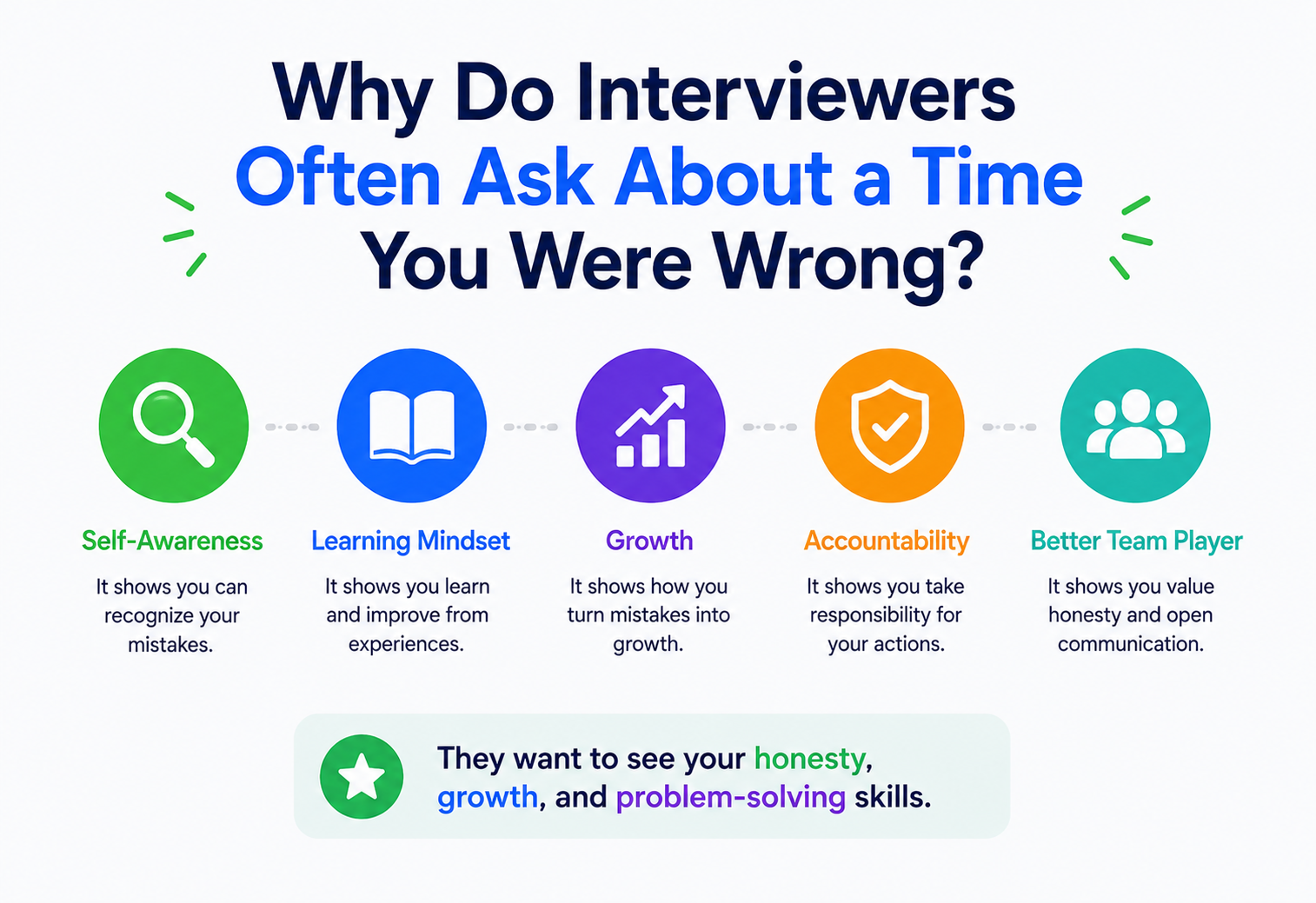
If you remember only one thing from this section, remember this: behavioural interviews are not testing whether you are a “nice person.” They are testing whether your past actions provide concrete evidence that you can do the non-technical half of an Architect’s real job.
3.5 How the same competency gets asked in different words
One of the most confusing parts of preparing for behavioural rounds is that the same underlying competency can be disguised behind many different-sounding questions. Recognising the pattern underneath the wording is a skill in itself.
| Competency being tested | Possible question phrasings |
|---|---|
| Influence without authority | “Tell me about a time you had to convince someone without formal power over them.” · “Describe a decision you shaped that was not officially yours to make.” · “How have you driven alignment across teams you do not manage?” |
| Conflict resolution | “Tell me about a disagreement with a peer.” · “Describe a time two teams wanted opposite things from you.” · “How do you handle pushback on a technical decision?” |
| Ownership and accountability | “Tell me about a mistake you made.” · “Describe a project that did not go as planned.” · “What is a decision you would make differently today?” |
| Mentorship | “Tell me about someone you helped grow.” · “Describe how you have multiplied your impact through others.” · “How do you approach onboarding a new architect?” |
| Judgment under ambiguity | “Tell me about a decision with incomplete information.” · “Describe a time requirements were unclear.” · “How do you decide when you do not have all the data?” |
Notice that all five phrasings for “ownership” are really asking the same underlying question in different clothing. A well-prepared candidate does not need five different stories — they need one strong, honestly-told failure story, told with enough specificity to answer any of these variations convincingly.
3.6 The difference between a “situational” and a “behavioural” question
It is worth distinguishing behavioural questions from a close cousin: situational or hypothetical questions, which ask “what would you do if…” rather than “tell me about a time when…” Situational questions test judgment and reasoning in the moment, while behavioural questions test proven, real-world track record. Many Architect loops use both, but they are evaluated differently — a great hypothetical answer shows you can reason well, while a great behavioural answer proves you have actually done it before, which many interviewers consider the stronger signal.
Anatomy of the Interview Loop
A modern Architect interview loop is made up of distinct rounds, each designed to surface a different kind of signal. Understanding this architecture helps you prepare deliberately for each piece.
4.1 The components explained
- Recruiter screen: A lightweight early conversation checking basic fit, motivation, and logistics, but often the very first place a recruiter is quietly assessing communication style.
- System design rounds: Classic technical architecture rounds — designing a system on a whiteboard or document, discussing trade-offs, scalability, and failure handling.
- Dedicated behavioural rounds: One or more rounds entirely focused on structured STAR-style questions about past experience, usually run by a different interviewer than the technical rounds, to avoid one person’s technical impression colouring their behavioural judgment.
- Bar raiser or independent calibrator: A role, popularised by Amazon and adopted in various forms elsewhere, where one interviewer outside the immediate hiring team is specifically responsible for holding the leadership and culture bar consistently across all candidates, regardless of how badly the hiring team wants to fill the role.
- Hiring committee debrief: A structured discussion, often without the original interviewers present, where written feedback and evidence — not gut feeling — are weighed to reach a final decision.
4.2 Why behavioural rounds are kept separate from technical rounds
A subtle but important design choice: most rigorous loops deliberately avoid asking one interviewer to judge both technical depth and leadership in the same round. This separation exists because of a well-documented cognitive bias called the halo effect — once an interviewer is impressed by a candidate’s technical fluency, they tend to unconsciously rate everything else about that candidate more favourably too, including qualities they did not actually observe carefully. Separating the rounds, and often the interviewers, is a structural defence against this bias.
4.3 Variations across company size and maturity
Not every organisation runs the full loop shown above. Smaller companies and startups often blend behavioural and technical questions within the same round, run by the hiring manager alone, simply because they do not have the interviewer bandwidth to staff a fully separated process. Larger, more mature organisations tend to run fully separated loops with dedicated bar raiser or calibrator roles, precisely because they can afford the additional interviewer time, and because the cost of a bad senior hire scales with the size of the organisation that hire will influence.
| Organisation type | Typical behavioural round structure |
|---|---|
| Early-stage startup | Blended into one or two rounds, often run by the founder or hiring manager directly |
| Mid-size company | One dedicated behavioural round, sometimes run by a peer architect or engineering director |
| Large enterprise / big tech | Multiple dedicated behavioural rounds, often including an independent calibrator, with formal scorecards feeding a hiring committee |
Candidates should not assume a smaller, less formal company cares less about leadership evidence — often the opposite is true, since a small team has even less room to absorb an ineffective senior hire. The formality of the process varies far more than the underlying importance of the evaluation itself.
4.4 The role of the hiring manager versus the panel
It is worth understanding that the hiring manager — the person the Architect would actually report to or work closely with — often carries extra weight in the final decision, even within a structured, multi-interviewer loop. This is because the hiring manager typically has the clearest, most concrete picture of the specific organisational challenges the new Architect will need to navigate, and can judge behavioural evidence against that specific context more precisely than a more general interview panel.
How Interviewers Evaluate Answers
Understanding how an interviewer actually scores a behavioural answer turns interview preparation from guesswork into a targeted skill.
5.1 Structured scorecards, not gut feeling
Most mature interview processes use a written scorecard tied to specific competencies (like the ones listed in Section 3.4), not a single vague “did I like them” rating. An interviewer typically writes down specific evidence from the candidate’s story, then maps that evidence to one or more competencies, and assigns a rating with written justification that other people on the hiring committee can independently evaluate.
5.2 What “strong evidence” looks like to an interviewer
| Weak answer pattern | Strong answer pattern |
|---|---|
| “We decided to refactor the service” (vague, team-attributed) | “I proposed the refactor, built a one-page cost-benefit doc, and personally walked it through with the two most skeptical senior engineers first” (specific, personally attributed) |
| “It went well in the end” (no measurable result) | “Deployment failures dropped from 12 a month to 2, and two other teams adopted the same pattern within a quarter” (concrete, measurable) |
| No mention of any obstacle or disagreement | Explicitly describes real resistance, and how it was specifically addressed |
| Blames others for a failure | Owns their share of a failure and describes what they changed afterward |
5.3 The “so what did YOU do” probe
Experienced interviewers are trained to notice when a candidate hides behind “we” language, and to gently but persistently probe with follow-up questions like “what specifically did you personally say in that meeting?” or “who exactly disagreed, and what did they say?” Candidates who cannot answer these follow-ups in specific, first-person detail raise a real concern: either they were not actually the driver of the story they are telling, or they have not reflected deeply enough on their own experience to describe it precisely.
A common internal rule of thumb among trained interviewers: if a candidate cannot name at least one moment of real friction, disagreement, or difficulty in their story, the story is probably too polished to be fully honest, and probably too polished to be useful evidence.
5.4 Calibration across interviewers
Individual interviewers are also calibrated against each other over time, through shared training, sample answer review sessions, and hiring committee discussion, specifically to reduce the chance that one interviewer’s personal bar for “good leadership” differs wildly from another’s. This is one more layer of structure that separates a mature, defensible hiring process from an informal, gut-feeling-driven one.
The Interview Process, Step by Step
What actually happens, from a candidate’s point of view, across a typical Architect interview lifecycle — and where leadership evaluation enters at each stage.
6.1 Preparing your own “story bank” before the loop begins
Because behavioural rounds reward specific, well-recalled detail, the single most effective preparation step is building a story bank well before the interview: a written list of 8 to 12 real situations from your career, each mapped to one or more competencies (influence, conflict, failure, mentorship, ambiguity), with the key Situation-Task-Action-Result details already written down in your own words.
Example story bank entry
Competency: Influence without authority

Situation: Two backend teams disagreed on synchronous vs. event-driven
           integration for a new order-fulfillment flow.

Task:      As the architect, I needed both teams aligned within one sprint
           to avoid blocking the quarterly roadmap.

Action:    I ran a 45-minute working session where each team presented
           their trade-offs on a shared doc, then I proposed a hybrid
           approach (synchronous for the critical path, event-driven for
           notifications), specifically addressing each team’s top concern
           by name.

Result:    Both teams signed off within the same week; the pattern was
           later reused by two other teams; I documented it as a shared
           ADR (architecture decision record).
6.2 During the round: listening for the real question
Many leadership questions are phrased differently but are really asking about the same underlying competency. Recognising this pattern lets you draw from the same story bank entry, adapted slightly, rather than needing a completely new story for every possible phrasing.
6.3 Handling follow-up probes gracefully
As covered in Section 5.3, interviewers are trained to probe deeper with follow-up questions once you finish your initial answer. This is not a sign that your first answer was inadequate — it is standard practice, and how you handle it is itself part of the evaluation. A good approach is to answer follow-ups with the same specificity as your main story: name real names (or roles, if names are sensitive), quote roughly what was actually said, and be honest about parts that were uncertain or difficult, rather than inventing polished detail on the spot to fill a gap.
6.4 Remote versus onsite behavioural rounds
Many Architect loops today run partly or entirely over video calls rather than in person. This changes very little about the substance of what is being evaluated, but a few practical adjustments help: keeping your story bank as brief written notes nearby (not read from, but glanced at for structure), watching your own pacing more deliberately since video calls make rambling more noticeable, and pausing briefly before answering to visibly organise your thoughts, which reads as thoughtful rather than slow.
6.5 What happens after the loop: how scorecards become a decision
Once all rounds are complete, written scorecards from every interviewer — technical and behavioural — are typically compiled before the hiring committee meets. In many structured processes, interviewers submit their written feedback independently, without first seeing what other interviewers wrote, specifically to prevent one interviewer’s strong opinion from anchoring everyone else’s judgment. The committee discussion that follows focuses on reconciling any sharp disagreements using the specific written evidence, rather than defaulting to a simple average of numeric scores.
Advantages, Limits & Trade-offs
Behavioural evaluation is genuinely better than the alternative — but it is not perfect. Being honest about both is the mark of a mature hiring process.
7.1 Advantages of including behavioural evaluation
What behavioural rounds get right
- Predicts real-world success better — organisational research consistently shows structured behavioural evidence predicts on-the-job performance better than unstructured impressions or pure technical scoring alone
- Surfaces the “brilliant but ineffective” risk — catches candidates whose technical skill would otherwise mask a serious organisational blind spot
- Reduces pure “whiteboard performance” bias — excellent architects who are better at calm, reflective storytelling than live, high-pressure algorithmic performance get a fairer chance to show real strengths
Real limitations and criticisms
- Coachability and memorisation risk — well-prepared candidates can rehearse polished STAR answers that sound compelling without reflecting how they would actually behave under real pressure
- Cultural and communication-style bias — candidates from different cultural or linguistic backgrounds may tell stories in styles that read as less “confident” to interviewers calibrated on a narrower norm
- Interviewer subjectivity — despite scorecards and calibration, behavioural evaluation still involves more human judgment than a technically correct answer
- Recency and narrative bias — candidates naturally tell their best stories, and interviewers rarely have a way to independently verify the details
7.3 Why most companies still consider it worth the trade-off
Despite these real limitations, most engineering organisations have concluded, after years of hiring experience, that the cost of these imperfections is smaller than the cost of skipping behavioural evaluation entirely and hiring purely on technical merit. The imperfect signal is still meaningfully better than no signal at all, especially for a role where organisational impact matters as much as technical correctness.
Candidates sometimes conclude “behavioural rounds are just theatre, so I’ll wing it.” In practice, unprepared candidates give vague, team-attributed, poorly recalled answers that score noticeably worse than candidates who genuinely prepared — the round is imperfect, but it is not meaningless.
7.4 When behavioural evaluation goes wrong in practice
It is worth being honest about failure modes on the company side, not just the candidate side. Behavioural evaluation can go wrong when interviewers are poorly trained and default to gut-feeling scoring despite having a scorecard in front of them; when a company’s stated values on paper do not match how leadership actually behaves internally, making the interview questions feel disconnected from reality; or when a rigid, over-scripted process leaves no room for a candidate whose genuine experience does not map neatly onto the expected competency list, even though their underlying judgment is sound. None of these failure modes are arguments against behavioural evaluation in principle — they are arguments for continuing to invest in interviewer training and process refinement, which is exactly what Section 10 covers.
7.5 The candidate’s own trade-off: authenticity versus optimisation
Candidates face their own version of this trade-off. Over-optimising every answer for what you believe the interviewer wants to hear can produce technically well-structured but hollow-feeling stories that experienced interviewers detect quickly. The more durable strategy — and the one this guide recommends throughout — is investing preparation effort into recalling and structuring real experience clearly, rather than inventing an idealised version of yourself that you would then have to sustain through every follow-up question and, eventually, through the actual job itself.
How Expectations Scale With Seniority
Leadership expectations scale with seniority in a very predictable pattern — and matching your story’s scope to the level of the role is one of the most underrated preparation moves.
| Level | Scope of technical influence | Typical behavioural expectation |
|---|---|---|
| Senior Engineer | Single component or service | Mentors 1–2 engineers; resolves disagreements within their own team |
| Architect / Staff Engineer | Multiple services or one domain | Drives alignment across 2–4 teams; influences roadmap without formal authority |
| Principal Architect | Whole platform or multiple domains | Shapes org-wide technical strategy; mentors other architects; influences VP-level decisions |
| Distinguished Architect / Fellow | Company-wide or industry-facing | Sets multi-year technical vision; represents the company externally; shapes org design itself |
8.1 Why this matters for interview preparation
A candidate interviewing for a Principal Architect role who only tells stories about resolving a disagreement between two engineers on their own team is, in effect, telling a Senior-Engineer-level story at a Principal-level interview. Matching the scope of your stories to the scope of the role you are interviewing for is one of the most underrated preparation strategies, and one of the fastest ways experienced interviewers silently downgrade an otherwise capable candidate.
Asking a city mayor “tell me about a decision you made” and hearing only about which restaurant to pick for a family dinner would immediately signal a scope mismatch, even if the reasoning process described was perfectly sound. The skill demonstrated has to match the scale of the role.
8.2 Scaling the same competency across levels
The same underlying competency, like “influence without authority,” looks different at each level — not because the skill itself changes, but because the stakes, audience, and organisational distance grow:
Cross-team scale
Convincing two team leads to align on a shared integration pattern.
Org scale
Convincing a VP of Engineering to fund a costly but necessary platform migration, against short-term feature pressure.
8.3 A common scoping mistake and how to fix it
It is worth walking through a concrete before-and-after to make this scaling idea tangible. Imagine a candidate interviewing for a Principal Architect role who answers an “influence without authority” question with: “I noticed a teammate’s pull request had a subtle bug, so I left a detailed comment explaining the issue, and they thanked me and fixed it.” This is a genuine, honest example of influence — but it operates at a scope far below what a Principal-level role requires, and an experienced interviewer will silently register the mismatch, even if the story itself is pleasant to hear.
A better-scoped answer for the same competency, at the same seniority level, might instead describe organising a working group across three previously siloed platform teams, building a shared technical proposal document, personally presenting it to each team’s leadership separately to address their specific concerns, and ultimately securing sign-off that unblocked a company-wide initiative. The underlying skill — influence without formal authority — is the same in both stories. What changes is the number of people involved, the organisational distance being bridged, the stakes of the outcome, and the duration and complexity of the effort required. Recognising which of your own stories genuinely matches the scope of the role you are targeting, rather than defaulting to whichever story comes to mind first, is one of the highest-leverage preparation steps described in this guide.
Fairness, Consistency & Bias
Just as a distributed system needs mechanisms to stay reliable under stress, an interview process needs deliberate mechanisms to stay fair and consistent across many different candidates and interviewers.
9.1 Common sources of bias in behavioural evaluation
Affinity Bias
Unconsciously favouring candidates who communicate or think similarly to the interviewer’s own style.
Confirmation Bias
Once an early impression forms (positive or negative), interviewers may unconsciously interpret later answers to fit that impression.
Halo / Horn Effect
Letting a strong or weak technical round colour the perceived quality of behavioural answers, and vice versa.
Narrative Charisma Bias
Rewarding polished, confident storytelling over substantive but less theatrically delivered evidence.
9.2 Structural defences used by mature hiring processes
- Standardised question banks: Asking the same core behavioural questions to every candidate for a given role, rather than improvising differently each time.
- Written, evidence-based scorecards: Requiring interviewers to record specific quotes or details, not just a numeric gut rating.
- Independent, separated rounds: Different interviewers for technical and behavioural evaluation, as discussed in Section 4.
- Bar raiser or calibrator roles: A dedicated, trained interviewer whose job is specifically to defend evaluation consistency across candidates and over time.
- Structured debrief discussions: Requiring the hiring committee to reconcile differing scorecards using written evidence, not simply averaging gut impressions.
As a candidate, you benefit directly from understanding these defences: specific, first-person, evidence-rich answers are not just “what a good communicator does” — they are precisely the kind of answer that structured scorecards are designed to capture and reward.
9.3 The limits of structure
No amount of process design fully eliminates human bias from behavioural evaluation — this remains an active area of ongoing improvement across the industry, and a legitimate, well-documented criticism of even the most mature interview processes. Structure reduces bias meaningfully; it does not remove it entirely.
9.4 Why consistency matters legally and ethically, not just organisationally
Beyond simply making better hiring decisions, consistent, evidence-based evaluation criteria also help organisations defend their hiring decisions against claims of unfair or discriminatory treatment, since a documented, competency-based scorecard gives a concrete, job-related basis for a decision, rather than an informal, hard-to-justify impression. This is one of the underappreciated reasons large organisations invest heavily in structured behavioural interview training: it is simultaneously better hiring practice and better organisational governance.

9.5 Advice for candidates from underrepresented or different communication backgrounds
Given the real, documented risk of communication-style bias described above, candidates whose natural storytelling style differs from a narrower cultural norm sometimes benefit from being slightly more explicit than feels natural — directly stating “the specific action I took was…” or “the measurable result was…” rather than relying on an interviewer to infer these details from a more indirect narrative style. This is not about changing who you are; it is about making sure the evidence you already have is legible to an evaluation process that, however well-intentioned, may not automatically recognise every valid storytelling style.
How Companies Track Signal
Just as a production system needs monitoring to know whether it is actually working, mature hiring organisations track metrics about their own interview process, to know whether behavioural evaluation is actually predicting good hires.
10.1 What gets measured
| Metric | What it reveals |
|---|---|
| Interviewer score vs. on-the-job performance (post-hire) | Whether a given interviewer’s behavioural ratings actually predict real success |
| Inter-rater reliability | Whether different interviewers rate the same candidate’s answers similarly |
| Offer acceptance and early attrition by score band | Whether highly-rated candidates actually stay and thrive |
| Demographic pass-rate parity | Whether the process disproportionately screens out particular groups, prompting a fairness review |
10.2 Feedback loops that refine the interview bar over time
Organisations that take this seriously periodically compare interview scorecards against later performance reviews, promotion outcomes, and manager feedback for people who were hired, effectively closing the loop between “what we predicted at interview time” and “what actually happened.” Question banks, competency definitions, and interviewer training are refined based on this evidence, similar to how a production system’s alerting thresholds get refined based on real incident postmortems.
10.3 What this means for candidates
Because companies actively study which kinds of answers correlate with long-term success, the emphasis on specific, first-person, outcome-oriented storytelling is not an arbitrary interview convention — it reflects real, measured evidence about what kind of past behaviour actually predicts strong future performance in ambiguous, high-influence roles like Architect.
Patterns & Anti-Patterns
Five habits that consistently show up in strong answers, and six habits that consistently show up in weak ones.
11.1 Strong answer patterns
Own the “I”, not just the “we”
Be explicit about your personal contribution, even within a team effort.
Name the friction
Include the real disagreement, resistance, or uncertainty, not a frictionless success story.
Quantify the result
Specific numbers or observable outcomes are more convincing than “it went well.”
Show reflection, not just action
Briefly note what you learned or would do differently — this signals growth mindset, a competency many companies explicitly value.
Match story scope to role level
As discussed in Section 8, calibrate the scale of your examples to the seniority of the role.
11.2 Anti-patterns to avoid
The “we” deflection
Describing team accomplishments without ever clarifying your specific role, which prevents interviewers from assessing your individual contribution.
The conflict-free story
A story with no real obstacle or disagreement, which reads as either dishonest or lacking in genuine challenge.
The blame-shift
Describing a failure entirely in terms of what other people or circumstances did wrong, with no personal accountability.
The rehearsed monologue
An answer so polished and generic it could apply to almost any question, signalling memorisation rather than genuine recall.
The technical tangent
Drifting into deep technical implementation detail during a behavioural question, missing the actual competency being probed.
The outdated story
Relying on a single story from many years ago for every question, rather than building a broader, current story bank.
11.3 A side-by-side comparison
| Anti-pattern answer | Improved pattern answer |
|---|---|
| “Our team migrated the payment service and it went smoothly.” | “I led the migration plan after two failed attempts by other teams; the biggest resistance came from the on-call engineers worried about rollback risk, so I personally built a phased rollback plan and walked it through with them before we started.” |
| “The project failed because the requirements kept changing.” | “The project slipped because I underestimated how much the requirements would evolve; afterward, I started building a lightweight change-log review into every project I lead, which caught a similar issue early on the next initiative.” |
Best Practices & Common Mistakes
A short checklist to run yourself against, a list of the mistakes that keep costing otherwise-strong candidates their offer, and a concrete two-week plan.
12.1 Best practices checklist
- Build a written story bank of 8–12 real situations before the interview, mapped to common competencies.
- Practice telling each story out loud, timed to roughly 2–3 minutes, since rambling answers lose interviewer attention and dilute the signal.
- Explicitly include at least one moment of real friction or difficulty in every story.
- Quantify outcomes wherever honestly possible.
- Match the scope of your examples to the seniority of the role you are interviewing for.
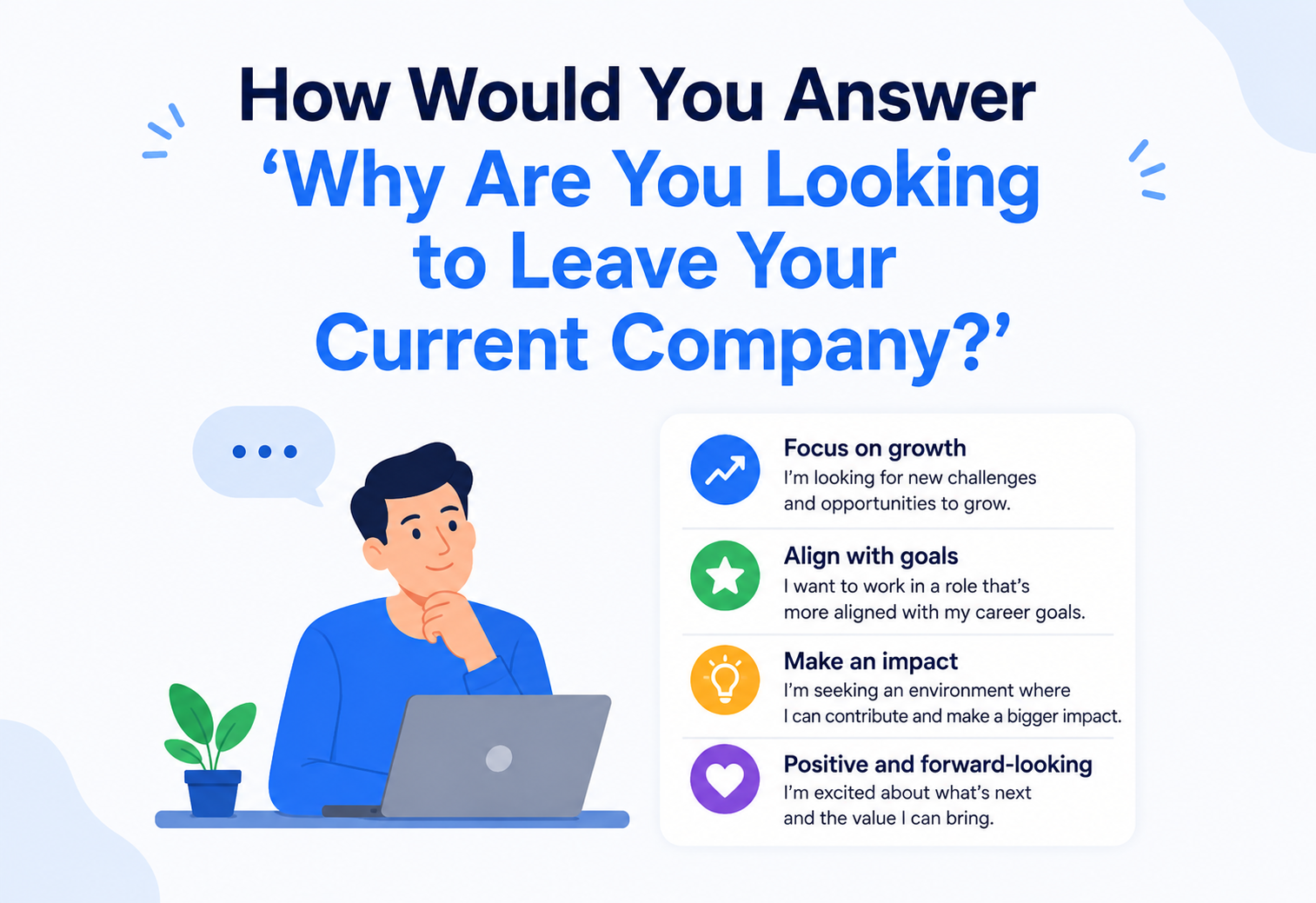
- Prepare at least one strong “failure” story — nearly every mature loop asks about failure, and having no answer, or a superficial one, is a common red flag.
- Listen carefully for which specific competency a question is really probing, even when the phrasing is unfamiliar.
- Ask the interviewer clarifying questions if a scenario question is ambiguous, mirroring the real judgment-under-ambiguity skill being assessed.
12.2 Common mistakes candidates make
- Treating behavioural rounds as an afterthought, preparing extensively for system design but not at all for leadership questions.
- Reusing one all-purpose story for every question, regardless of fit, which interviewers notice quickly.
- Speaking only in team language (“we”), obscuring personal contribution.
- Avoiding any story involving real failure or conflict, out of a natural instinct to present only successes.
- Rambling without structure, losing the STAR shape and burying the actual result.
- Underestimating how much interviewers probe with follow-up questions, and being caught unprepared for specific detail.
Preparing for behavioural rounds is not about inventing impressive-sounding stories — it is about taking real experiences you already have and learning to tell them with the specificity and structure that lets an interviewer actually recognise the leadership skill that was already there.
12.3 A practical two-week preparation timeline
Candidates who wait until the night before a loop to think about behavioural questions almost always give weaker answers than those who prepare deliberately over time.
Days 1–3 — Brainstorm broadly
Raw list of 15–20 real situations from your career, without filtering for how impressive they sound — quantity first, quality later.
Days 4–7 — Map and narrow
Map each situation to one or more competencies from Section 3.4, and narrow down to the 8–12 strongest, most distinct stories, ensuring every major competency has at least one solid example.
Days 8–10 — Write in STAR
Write each story out in full STAR structure, then compress it to speaking notes — a few bullet points, not a script to memorise word-for-word.
Days 11–13 — Practise out loud
Practise telling each story out loud, ideally to another person who can ask realistic follow-up questions, timing yourself to stay within roughly 2–3 minutes.
Day 14 — Light review, do not over-rehearse
Do a light final review of your notes, but avoid over-rehearsing to the point where answers sound robotic rather than genuine.
12.4 Two more mistakes worth calling out
- Confusing enthusiasm with substance: Speaking energetically and confidently about a story that, on closer inspection, lacks any real personal action or measurable result. Interviewers trained on structured scorecards are specifically taught to separate delivery style from actual evidence content.
- Neglecting the “what would you do differently” close: Many strong stories lose points at the very end by skipping reflection entirely. A brief, honest closing line — what you would change, or what you took forward into later work — often does more to demonstrate growth mindset than the rest of the story combined.
Real-World Industry Examples
Four industry examples show how the biggest technology employers apply exactly the ideas above — and how a single well-told composite story can hit multiple competencies at once.
Amazon — Leadership Principles
Amazon formalised behavioural evaluation earlier and more explicitly than most of the industry, building a published set of Leadership Principles (such as “Ownership,” “Dive Deep,” and “Are Right, A Lot”) directly into every interview loop, including the most senior technical roles. Every Amazon interviewer is trained to ask STAR-based questions tied to specific principles and to write structured feedback mapped to them, and the Bar Raiser role exists specifically to protect this consistency across thousands of hiring managers.
Google — Googleyness & Leadership
Google’s interview process evaluates candidates across several dimensions, one of which is explicitly labelled leadership and general cognitive ability alongside role-related technical knowledge — reflecting Google’s own internal research, published publicly in various forms over the years, that pure technical brilliance without collaborative and leadership skill was a weaker predictor of long-term success than a blended evaluation.
Netflix — Culture-Driven Hiring
Netflix has been notably vocal, through its widely circulated internal culture materials, about hiring for judgment and communication alongside technical excellence, on the premise that a small team of highly capable, highly trusted people who communicate well and take ownership outperforms a larger team assembled purely on technical credentials.
The Broader Industry Convergence
Beyond the three most-cited examples, financial technology firms, healthcare technology companies, and enterprise software vendors have converged on similar blended evaluation practices through their own internal experience, often independently rediscovering the same lesson: senior technical roles fail or succeed based on organisational effectiveness at least as often as on raw technical correctness.
13.4 What these examples have in common
Despite different specific frameworks and terminology, the common thread across these (and most other mature technology employers) is the same: technical competence is treated as a necessary but not sufficient condition for senior technical roles, and structured, evidence-based behavioural evaluation exists specifically to assess the other, equally necessary half.
13.5 Beyond the three most-cited examples
While Amazon, Google, and Netflix are the most frequently cited examples in industry discussion, the pattern is far broader than these three companies alone. Financial technology firms, healthcare technology companies, and enterprise software vendors — including large, established organisations with less publicly documented interview cultures — have converged on similar blended evaluation practices through their own internal experience, often independently rediscovering the same lesson: senior technical roles fail or succeed based on organisational effectiveness at least as often as on raw technical correctness. This convergence across otherwise very different companies, industries, and cultures is itself meaningful evidence that the underlying problem being solved — the “brilliant but ineffective” architect risk described in Section 2.2 — is a genuine, widely shared organisational challenge, not a fashion specific to a handful of well-known technology employers.
13.6 A composite example story (illustrative)
Consider a composite, realistic scenario reflecting how these principles play out together. A Principal Architect candidate is asked to describe a time they influenced a decision without formal authority. They describe joining a platform re-architecture initiative where two senior engineering directors disagreed sharply about whether to adopt a shared internal platform or let each business unit build its own. Rather than picking a side immediately, the candidate spent two weeks personally interviewing engineers from both camps, built a side-by-side cost model showing the platform approach saved an estimated 30% of duplicated engineering effort over 18 months, and proposed a middle-ground governance model that let business units customise within shared guardrails. The candidate explicitly names the moment one director remained unconvinced until shown the specific cost data for their own team, and describes following up individually rather than only presenting to the group. The initiative was approved, adopted by four business units within a year, and the governance model was later cited in the company’s internal architecture handbook.
This single story simultaneously demonstrates influence without authority, data-driven persuasion, conflict navigation, and outcome ownership — exactly the blend of evidence a well-structured Architect interview loop is designed to surface.
FAQ, Summary & Key Takeaways
Eight of the questions candidates ask most often once they start preparing seriously — and seven takeaways worth carrying into every next interview loop.
Does a strong technical round matter less if my behavioural round is strong?
No — most loops require both technical and behavioural evidence to clear the bar. A strong behavioural round does not compensate for a weak technical round, and vice versa; they are typically evaluated as separate, both-required signals.
What if I genuinely do not have a strong “failure” story?
Nearly everyone with meaningful career experience has made a real misjudgment, missed a risk, or made a decision they would revisit. Interviewers are wary of candidates who claim they have never failed at anything; a modest, honest failure with clear reflection is far stronger than an evasive non-answer.
Is it dishonest to prepare and rehearse behavioural stories in advance?
No. Preparing accurate, well-recalled stories from real experience is the intended use of the process. The concern is fabricating or exaggerating events, not preparing to tell true stories clearly and specifically.
How long should a behavioural answer be?
Roughly 2 to 3 minutes for the core story is a common guideline — long enough to include real Situation, Task, Action, and Result detail, short enough to respect interview time and hold attention.
Can I use the same story for two different questions in the same loop?
It is generally better to avoid repeating a story across multiple interviewers if possible, since a broader story bank demonstrates a wider range of experience; occasional reuse for a genuinely different angle is usually acceptable.
What if my best leadership example happened outside of work, like in a community project or open-source contribution?
Most interviewers welcome strong examples from outside a formal job, especially for competencies like influence without authority or mentorship, as long as the scope and stakes are comparable to what is expected at the role’s level. Being upfront about the context (“this was actually an open-source project I maintain”) is better than implying it was a formal work assignment.
Should I bring up a story where I disagreed with my own manager?
Yes, when told carefully and respectfully — it can be a strong example of judgment and constructive disagreement, which many companies explicitly value (Amazon’s “Have Backbone; Disagree and Commit” principle is a well-known example). The key is describing the disagreement professionally and showing how it was resolved, not venting about a past manager.
How do behavioural expectations differ between a first-time Architect and someone with 15+ years of experience?
A first-time Architect is typically expected to show early evidence of influence and ownership at a growing scope — proof the transition from senior engineer is already underway. A candidate with many years of experience is expected to show a track record across multiple, larger initiatives, with more organisational complexity and higher stakes, consistent with the scaling pattern described in Section 8.
Key takeaways worth carrying with you
- Architect interviews test leadership and behaviour because the real job requires far more than correct technical design — it requires getting that design adopted, funded, and sustained by real organisations of people.
- Behavioural questions use past, concrete experience as evidence, structured through frameworks like STAR, because past behaviour predicts future behaviour better than stated intentions.
- Interviewers evaluate answers against written competency scorecards, not gut feeling, and specifically probe for personal ownership, real friction, and measurable results.
- Expectations for leadership scope scale with seniority, just like technical scope does — match your story’s scale to the role you are interviewing for.
- No process fully eliminates bias, but structured, separated, calibrated behavioural rounds meaningfully reduce it compared to unstructured evaluation.
- Major technology companies (Amazon, Google, Netflix, and others) have independently converged on blended technical-plus-behavioural evaluation, based on real hiring outcomes over many years.
- The most effective preparation is building a genuine, specific, well-recalled story bank from real experience — not inventing impressive-sounding fiction.
Treating both halves with equal seriousness, and preparing for the behavioural half with the same discipline you would bring to studying system design trade-offs or distributed systems fundamentals, gives you the most accurate, most complete chance to demonstrate that you are ready for the full scope of what the Architect role actually demands.