How I would describe my role in mentoring other engineers
Not as a title, and not as a checkbox on a performance review — as a standing offer to think alongside someone, so they get to the same insight faster and with less bruising than I did the first time.
Mentoring Is Transferring Judgment, Not Just Knowledge
If you asked me to describe my role in mentoring in a single sentence, it would be this: I try to make my thinking visible so someone else can borrow it, adapt it, and eventually replace it with their own.
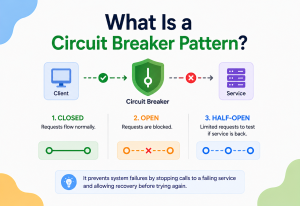
Anyone can hand over a fact — “use an index here,” “add a circuit breaker there.” That is useful, but it is the cheapest part of mentoring. The expensive, valuable part is showing how I arrived at the recommendation in the first place: what I ruled out, what trade-off I was weighing, what quiet past failure I was busy trying not to repeat.
A junior engineer who copies my answer has solved today’s problem. A junior engineer who understands my reasoning can solve next month’s problem without me in the room. That, honestly, is the entire point — mentoring should make itself unnecessary over time, at least for the specific skill being taught. If a mentee still needs me in the room a year later for the same class of question, one of us has misunderstood the assignment.
A good mentor is less like a GPS giving turn-by-turn directions, and more like someone teaching you to read a map. The GPS gets you there once. Map-reading gets you anywhere, forever — including places the GPS has never been.
The Many Hats of a Mentor
“Mentor” is a single word covering at least four distinct jobs, and knowing which hat a moment actually calls for is half the skill.
I have learned, sometimes painfully, to notice which one a conversation really needs — because reaching for the wrong one (coaching when someone needs a straight answer, or answering when someone needs to struggle a little longer) does more harm than saying nothing at all.
Technical Guide
Walking through system-design trade-offs, reviewing architecture decisions, explaining why a pattern exists and where it breaks down under load or over time.
Sounding Board
Listening to a half-formed idea and reflecting it back sharper — without hijacking it, and without quietly turning it into my idea somewhere along the way.
Sponsor
Talking about someone’s work when they are not in the room — nominating them for the hard project, the stretch assignment, the visible presentation nobody else volunteered for.
Career Coach
Helping someone name what they actually want (breadth vs. depth, IC track vs. management, generalist vs. specialist) and plan backward from it rather than drifting toward it.
In practice, most mentoring conversations blend two or three of these inside a twenty-minute slot. Someone comes in asking a technical question (guide), but the real issue underneath is “am I even good at this?” (coach). Learning to hear the second question hiding under the first one took me years to develop, and I still miss it sometimes — usually on the days when I am tired and reach for the fastest available answer instead of the right one.

The Frameworks I Actually Lean On
I do not run mentoring sessions from a script, but a few mental models consistently keep me useful instead of just opinionated. These are the ones I have kept because they have survived contact with real people, not because they sound clever in a talk.
3.1 Ask before I answer
My default first move, almost every time, is a clarifying question rather than a solution: “What have you already tried?” or “What does your gut say, and what is making you doubt it?” This does two useful things at once — it respects that the person has usually already done real thinking before they walked in, and it stops me from confidently solving a problem they did not actually have.
3.2 Match support to skill and will (situational mentoring)
Borrowed loosely from situational leadership: someone who is new to a skill but highly motivated needs direction and structure. Someone who is skilled but has lost confidence needs encouragement far more than instruction. Someone who is skilled and motivated mostly needs me to get out of the way and just remove blockers. I try to diagnose which quadrant a person is sitting in this week before deciding how much to say, because “how much to say” is almost always the harder question than “what to say.”
3.3 The 70/20/10 lens on how people actually grow
Roughly seventy percent of growth comes from doing the hard, real work itself; twenty percent from relationships — mentors, peers, feedback; ten percent from formal learning like courses or docs. That ratio quietly reframes my job: I am not the primary source of someone’s growth, I am an amplifier around the edges of work they are already doing. It keeps me from overestimating my own importance in the story, and it pushes me to get people into the hard work rather than talking about it from a safe distance.
From the work itself
Doing the actual hard thing. Shipping the ambiguous project. Owning the on-call rotation. Nothing else in the mix compounds this fast.
From people
Mentors, peers, sharp feedback, an honest 1:1. This is the slice I am part of — important, but never the biggest.
From formal learning
Courses, books, docs. Useful scaffolding, but almost useless without the seventy percent underneath it.
Adapting to Where Someone Is in Their Career
The same mentoring move lands completely differently depending on experience level. I have had to unlearn the instinct to mentor everyone the same way I would have wanted to be mentored — because what I actually needed at year one and what I needed at year eight were almost opposites.
| Career stage | What they mostly need | What I try to bring |
|---|---|---|
| Early career | Clear scaffolding, explicit “why,” permission to ask small questions without feeling behind. | Direct answers more often than anywhere else — confidence has not yet caught up to competence, and over-Socratic questioning can just feel like being tested. |
| Mid career | A sparring partner more than a teacher. Usually already has a good answer and wants a second, harder question. | “What happens under load?” “What breaks in five years?” My job shifts from teaching to stress-testing. |
| Senior / Staff | Rarely needs technical mentoring from me at all. | Organizational context, influence and visibility, and someone to think out loud with about ambiguous, high-stakes calls where there is no clean right answer. |
| New managers | Permission to stop being the best individual contributor in the room. | A framework for judging their own success by their team’s output, not their own commits — and reassurance that the transition should feel awkward for a while. |
Nothing about that table is a rigid classification. People move between rows depending on the topic, the week, and how much sleep they got. A senior engineer taking on their first data-intensive system is, briefly, back to early-career on that specific axis, and treating them like a staff engineer in that moment would just make them feel behind. Calibration is a continuous practice, not a one-time diagnosis.
Before opening my mouth in a mentoring conversation, I try to answer two quick questions to myself: where is this person on this specific topic today, and what would over-explaining cost them? The second question keeps me honest.
What Mentoring Actually Looks Like Week to Week
Stripped of the vocabulary, most of my mentoring happens inside ordinary engineering work, not in separate “mentoring meetings” that show up on a calendar with a helpful label. A few of the concrete shapes it tends to take:
Code reviews as teaching moments
Explaining the why behind a comment, not just the fix — and explicitly calling out what was done well, not only what needs to change. A one-line “this is a nice way to model that” costs nothing and matters more than people admit.
Design-doc reviews
Asking about the alternatives that were rejected, not just the one that was chosen. That is usually where the real thinking is hiding — and where the mentoring opportunity lives.
Pairing on the hard 20%
Sitting together specifically on the ambiguous part of a task, then stepping back once the pattern clicks. Not shadowing the whole thing, and not disappearing entirely.
Protected 1:1 time
A recurring slot that is not a status update — reserved for whatever is actually on their mind that week, even if that is nothing technical at all.
Post-incident debriefs
Walking through outages blamelessly, focused on what the system and the process should learn, not who erred. The tone of that walk-through teaches more about the team’s culture than any onboarding doc.
Opening doors, then leaving
Introducing someone into a conversation or project, then deliberately going quiet so they get the visibility. If I am still doing most of the talking after the introduction, I have missed the point.
What ties these together is that none of them require a formal “mentor” title to work. They are the ordinary artifacts of engineering — a review comment, a design meeting, an incident channel — being treated as opportunities to make thinking visible instead of just moving tickets across a board.
Mistakes I Have Learned to Avoid
Most of what I know about mentoring well, I learned by first doing it badly — usually with the best of intentions. A few patterns I now actively watch for in myself:
What tends to work
- Asking one more question before offering a solution.
- Being explicit about trade-offs instead of presenting an opinion as fact.
- Naming growth I have noticed, specifically, not generically.
- Saying “I don’t know, let’s find out” when that is the truth.
- Following up on advice weeks later, not just giving it and moving on.
What tends to backfire
- Rewriting someone’s code instead of explaining the gap.
- Mentoring in my own image — pushing my path onto someone else’s goals.
- Giving feedback only when something goes wrong.
- Treating a mentee as a junior version of myself rather than their own person.
- Confusing being liked with being useful.
Solving problems for people because it is faster than teaching them to solve it themselves. It feels helpful in the moment and quietly creates dependency. The short-term cost of slowing down is almost always worth the long-term payoff of someone who no longer needs to ask.
The pattern underneath all of these anti-patterns is the same: prioritizing my own comfort — the comfort of being seen as helpful, being fast, being right — over the mentee’s actual growth. Whenever I catch myself reaching for one of them, it is almost always because I am tired, not because it is genuinely the right move.
How I Know It Is Actually Working
Mentoring does not show up cleanly in a dashboard, but there are honest signals I watch for over the arc of a mentoring relationship rather than inside any single conversation.
- The questions someone brings me get harder over time, not easier — they have quietly stopped needing me for the easy ones.
- They start pre-empting my questions before I ask them: “I know you’ll ask about the failure mode here, so…”
- They disagree with me and hold their ground with a reasoned argument — and I find, embarrassingly often, that they are right.
- They start mentoring someone else, unprompted.
That last signal is the real marker of success for me. Everything else can be faked or accidentally produced by proximity to a good team. Watching a former mentee, in a review or a design meeting, patiently ask a junior engineer the same clarifying question I once asked them — that is when I know something actually transferred, and did not simply sit in one head for a while before evaporating.
Advice If You Want to Start Mentoring
I get asked this often by engineers a few years in who want to mentor but feel like they have not “earned” it yet. My honest take: you do not need to be senior to mentor. You need to be one step ahead of someone on one specific thing, and willing to be patient and honest about it.
Start narrow
Offer to help with one specific skill you are genuinely strong at — testing, debugging, a particular framework — not “mentoring” in the abstract. Narrow offers get taken up. Broad ones get politely ignored.
Ask more than you tell
In your first few sessions, aim for more questions than statements. It builds the habit early, before “let me just tell them the answer” becomes the default reflex.
Make it low-stakes to start
A single code review or a twenty-minute coffee chat is a real mentoring relationship. It does not need a title, a program, or a monthly cadence to count.
Expect to learn too
If you are not learning something from the relationship — a fresh question, a new perspective, a corner of the codebase you had never noticed — you are probably lecturing, not mentoring.
The next code review you open this week, try leaving one comment that is a question rather than a directive — something like “what made you go with this shape here?” instead of “change this to X.” That single-line shift is the entire practice, compressed into one comment.
Frequently Asked Questions
These are the questions I get most often when engineers ask about mentoring off the record — usually in the hallway, after a talk, or as a “quick DM” that turns into a long thread.
Is mentoring the same as managing?
No. A manager is accountable for someone’s output and has authority over their role. A mentor has no formal authority — the relationship only works because the mentee chooses to engage with it. Some of the most effective mentors I have had were never my manager, and some of my managers were, honestly, not the people I went to for mentoring at all.
How much time does good mentoring actually take?
Less than people expect, but it needs to be consistent. A protected thirty-minute conversation every two weeks, plus being genuinely present during code reviews and design discussions, goes far further than one long session a quarter. Consistency compounds; intensity does not.
What if my mentee wants a different career path than mine?
That is common and completely fine. My job is not to produce a copy of myself — it is to help them get clearer on their own goals, even ones I have not personally pursued, and connect them with people who have. A mentor who can only usefully advise on the exact path they walked themselves is a fairly limited mentor.
How do I mentor someone more senior than me on a specific topic?
This happens more than people admit out loud. Expertise does not map neatly to seniority — someone senior might genuinely need your help with a tool, a technique, or a corner of the domain that you know better. Treat it as a peer exchange rather than forcing it into a hierarchy, and both sides get more out of it.
What do I do when a mentee stops taking my advice?
First, check whether the advice was actually good in their context, not just correct in the abstract. Second, get curious about why — often there is a constraint I did not see. And third, remember that ignoring specific advice is not the same as ending the relationship. A mature mentee will absorb some of what I say, discard some, and adapt the rest. That is a healthy sign, not a warning one.
How do I mentor across remote and time-zone gaps?
Write more, and write it down where it can be re-read. In a remote setting the hallway conversation disappears, and thoughtful asynchronous review comments, small Loom-style walkthroughs, and clearly-scheduled 1:1s carry a disproportionate share of the mentoring load. The medium changes; the underlying practice does not.
Summary and Key Takeaways
If a single page of this piece is all you carry with you, it should be this one — the working notes I would want a version of myself from ten years ago to read before their first serious mentoring conversation.
Key Takeaways
- My role, in one line: I try to make my reasoning visible enough that it becomes someone else’s, and unnecessary from me over time.
- Mentoring has multiple modes — technical guide, sounding board, sponsor, career coach — and most of the skill is choosing the right one for the moment in front of you.
- Ask before answering. A clarifying question almost always beats an immediate solution, and it respects the thinking the person has already done.
- Calibrate to career stage. Early-career engineers want structure; senior engineers mostly want context and a thinking partner, not another teacher.
- Most mentoring happens inside real work — code review, design docs, pairing, incident debriefs — not in separate meetings labelled “mentoring.”
- The best signal of success is when a mentee starts mentoring someone else, unprompted. Anything short of that is a partial success.
- You do not need seniority to start — you need to be one step ahead on one thing, and willing to ask more than you tell.
Make your thinking visible, ask more than you tell, calibrate to the person in front of you, and quietly aim to become unnecessary on the specific thing you are teaching.
None of this is a finished discipline. Every mentoring relationship rewrites some small part of how I understand mentoring itself, and the version of this piece I would write in five years is almost certainly going to disagree with parts of the version I wrote today. That is the point — mentoring is the one skill in engineering that gets better mainly by staying humble about it, not by declaring it solved.