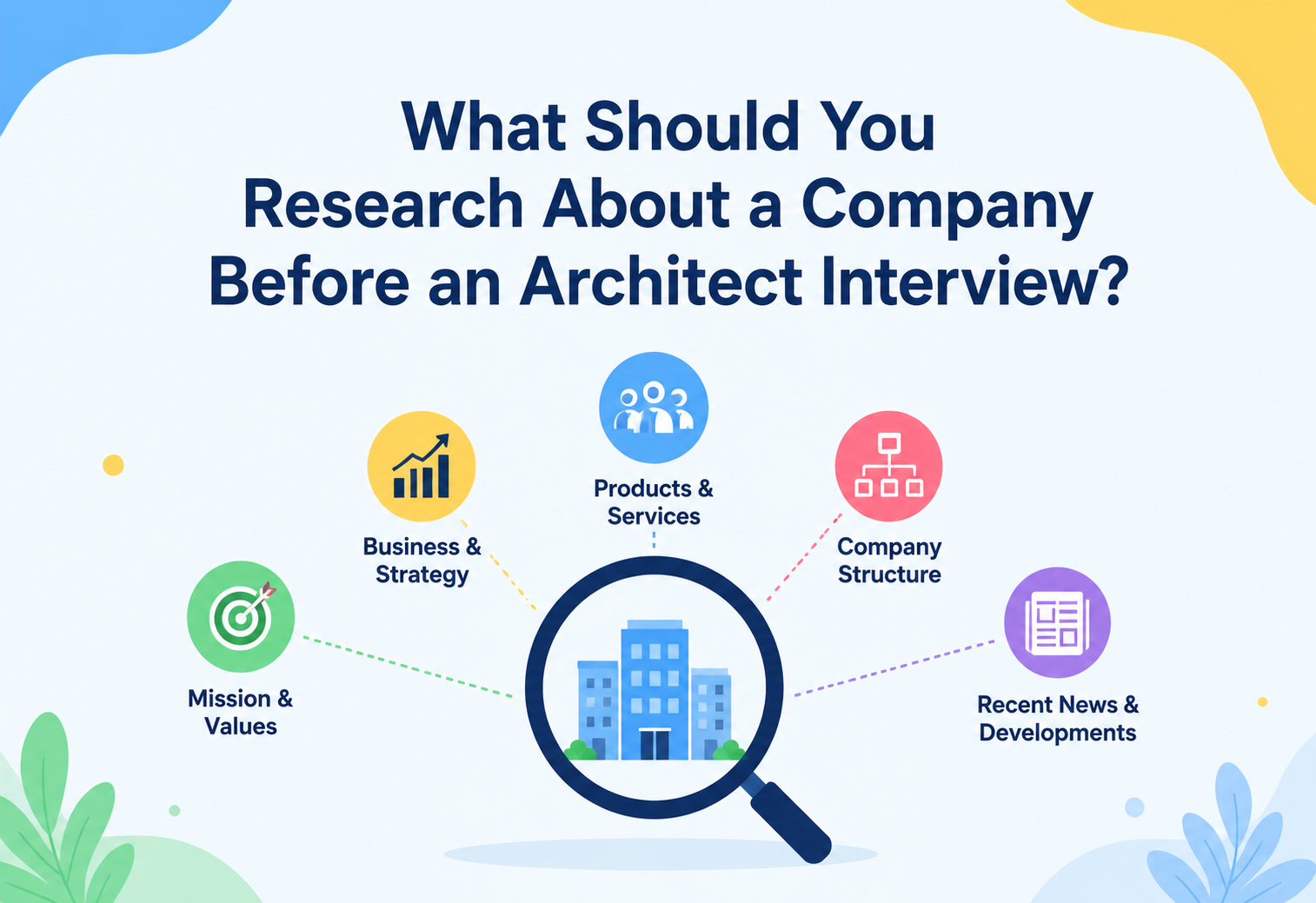
What to Research Before an Architect Interview
Not a checklist to memorize the night before, but a gentle guide to understanding a company well enough to have a real, contextual conversation with it — because architecture is never abstract, and neither is a good architect interview.
Why This Matters More for Architects Than for Other Roles
When you’re interviewing for a role focused on writing code, the company’s context matters, but it’s somewhat secondary — you can often demonstrate your skill in a fairly context-free way, solving a problem on a whiteboard or in a shared editor. Architecture interviews rarely work that way, and if they do, they probably shouldn’t, because the entire point of the role is judgment applied to a specific context.
An architect’s job, at its core, is making decisions that hold up under a particular company’s constraints — its scale, its history, its team structure, its risk tolerance, its budget. A brilliant, textbook-perfect answer that ignores those constraints isn’t actually a good architectural answer; it’s a good answer to a different, imaginary company. Interviewers in these rounds are often listening less for “do they know the right pattern” and more for “do they know how to ask what this company actually needs before reaching for a pattern at all.”
This is why research before an architect interview isn’t just about impressing someone with your diligence, although it does that too. It’s about giving yourself the raw material to think the way the role actually requires you to think — contextually, not abstractly. Without that context, even a technically excellent candidate can end up sounding like they’re reciting a system design textbook rather than genuinely reasoning about a real business.
You’re not researching the company to prove you did your homework. You’re researching it so that, during the interview, you have something real to think with — instead of defaulting to generic answers that would apply anywhere.
There’s a related reason this matters, one that has less to do with impressing an interviewer and more to do with your own decision about whether the role is right for you. An architect interview is one of the few points in a hiring process where the conversation genuinely runs both ways — you’re being evaluated, but you’re also gathering the information you’ll need to decide whether you actually want this job, at this company, solving these particular problems. Walking in without having done the research means walking out with only a surface impression to base that decision on, which is a strange position to be in for a role this consequential to your own day-to-day work for the next several years.
It’s worth saying plainly that this kind of preparation is also simply more enjoyable than the alternative. Cramming technical trivia the night before an interview tends to feel stressful and thin. Spending an evening genuinely getting curious about how an interesting company actually works — what problems its engineers wrestle with, what choices it’s made and why — tends to feel more like satisfying, useful curiosity than like studying for a test. If you can find a way to enjoy the research itself, the whole process of preparing for these interviews becomes considerably less draining.
Understanding How the Company Actually Makes Money
This might feel like an odd place to start for a technical interview, but it’s arguably the single most useful thing you can understand, because almost every meaningful architectural decision eventually traces back to it. A payments company’s tolerance for eventual consistency looks very different from a social media company’s. A business that makes money through subscription renewals cares about churn-related data integrity in a way a business monetized through advertising might not. The “right” architecture is never right in a vacuum — it’s right relative to what the business needs to protect, optimize, or move quickly on.
Spend time understanding, in plain terms, what the company sells, who pays them, and what would hurt them most if it broke. Is downtime catastrophic and immediately visible to customers, the way it would be for a trading platform, or is it merely annoying, the way a delay in an internal reporting tool might be? Is the core product something that changes constantly, favoring flexibility over stability, or something that needs to feel unshakeably reliable, even if that means moving slower?
None of this requires insider knowledge. Company websites, investor materials for public companies, app store descriptions, even the language used in job postings across different teams can tell you a surprising amount about what the business actually cares about and where the real pressure points are likely to sit.
A simple frame to hold while you research
As you read, keep coming back to one quiet question: if this system went down for an hour, who would notice first, and what would it cost them? The answer shapes almost everything else — how much redundancy makes sense, how much complexity is worth tolerating for the sake of reliability, and how conservative or experimental the engineering culture is likely to be.
What do they sell?
The product itself — not the marketing headline. What does a customer actually receive when money changes hands?
Who pays them?
End consumers, enterprises, advertisers, or someone entirely different? Each of these shapes what the systems must optimize for.
What breaks the business?
The failure mode that would hurt them most — downtime, data loss, latency, missed regulation, or something quieter.
Getting a Feel for Their Scale and Growth Stage
A company with fifty engineers and a company with five thousand engineers are, for architectural purposes, almost different professions, even if their job titles look identical on paper. Scale changes what problems are worth solving and what solutions are worth considering. It’s worth spending real time getting a rough, honest sense of where a company sits — not to the exact user count, but enough to know which era of problems they’re likely living in.
Early stage
The challenge is usually speed and validation — architecture decisions that let the team learn fast and change direction without excessive cost, even if that means some technical debt is a reasonable trade, not a failure.
Growth stage
The challenge shifts toward scaling what already works, often under real production pressure for the first time — this is where questions about database scaling, caching, and service boundaries start to matter in a way they simply didn’t before.
Mature stage
The challenge becomes coordination and coherence across many teams and legacy systems — the hardest problems often aren’t purely technical anymore, they’re about migration paths, backward compatibility, and organizational alignment.
You can often infer where a company sits from public signals: how long they’ve existed, how large their engineering blog’s archive is, whether recent job postings emphasize “move fast and experiment” or “own reliability for a mission-critical system.” None of these signals are perfect on their own, but together they build a useful, honest picture.
It also helps to look specifically for signs of a company moving between these stages right now, rather than assuming it sits neatly in one category forever. A round of recent funding often signals a deliberate push from early to growth stage, with pressure to scale systems that were never designed for the traffic they’re about to receive. A wave of recent senior engineering hires, especially into newly created “platform” or “infrastructure” teams, often signals a growth-stage company waking up to problems that used to be ignorable and no longer are. If you can spot that transition happening, you’ve found something genuinely useful — because the architect role you’re interviewing for is very likely tied directly to helping the company navigate exactly that shift, and being able to speak to it shows real situational awareness rather than a generic read of the company.
What You Can Learn About Their Technology, Honestly
It’s tempting to treat this as the main event — finding out exactly what languages, databases, and cloud providers a company uses, so you can rehearse talking points about each one. That’s useful, but only a small part of the picture, and leaning on it too heavily can actually work against you, because interviewers can usually tell the difference between someone who genuinely understands a technology’s trade-offs and someone who’s memorized a company’s tech stack from a job posting.
What’s more valuable is understanding, roughly, the shape of their systems and why they might have ended up that way. Engineering blogs, conference talks by their engineers, open-source repositories they maintain, and even changelogs of public APIs can tell you a great deal — not just what they use, but what problems pushed them toward those choices. A company that writes publicly about migrating from a monolith to services usually explains why, and that “why” is far more useful to internalize than the resulting list of technologies.
If a company has open-source projects, spend a little time looking at how they’re maintained — how issues are triaged, how thoughtfully pull requests are reviewed, how clearly things are documented. This tells you something honest about engineering culture that a careers page never will.
Less useful to memorize
A bullet list of exact frameworks, database versions, and cloud services, recited without context — the kind of thing that reads as trivia the moment a follow-up question probes any deeper.
More useful to understand
Why they likely made certain architectural shifts, and what business pressure probably drove each one — the reasoning underneath the choices, not the choices themselves.
Engineering Culture — The Quiet Signals
Culture is harder to research than technology, precisely because it’s rarely stated outright — nobody writes “we tend to avoid difficult conversations about technical debt” on their careers page. But it leaks through in smaller, more honest ways if you know where to look.
Notice how engineers at the company talk about failure in public writing — conference talks, blog posts, even public social media. Do they discuss outages and mistakes with something like ownership and curiosity, or is the language defensive and vague? Notice whether their technical writing explains reasoning, or simply announces conclusions. A postmortem that walks through what was misunderstood and why, rather than just what was fixed, usually signals a culture that treats mistakes as something to learn from rather than something to hide.
It’s also worth paying attention to how diverse the voices are in a company’s public engineering content. A blog where the same two or three senior names write everything might suggest a narrower culture of who gets heard; a blog with many different contributors, including newer or more junior engineers, often suggests a broader, more distributed sense of ownership.
Public Incidents, Postmortems, and What They Reveal
If a company has a public status page, incident history, or published postmortems, this is some of the richest research material available, and it’s often overlooked because it feels like digging up someone’s mistakes rather than doing “real” research. In truth, understanding how a company has handled its hardest moments tells you more about its actual engineering maturity than almost anything else you could find.
Read a postmortem the way you’d read a case study, not a scandal. Ask yourself what it reveals about their systems’ failure modes, their monitoring maturity, and their appetite for structural change versus quick patches. If they’ve had a handful of related incidents over time, notice whether later postmortems reference lessons from earlier ones — that continuity is a good sign of an organization that actually learns, rather than one that simply moves on.
This kind of research also gives you something valuable and specific to bring into the interview itself — not to show off, but genuinely to ask about. A thoughtful, well-informed question about how a known past incident shaped their current architecture tends to land far better than a generic question about “what technologies do you use,” because it shows you engaged with their actual history, not just their marketing.
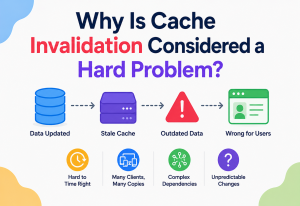
Root-cause depth (is it one honest layer or several?), tone (curious or defensive?), the specific change committed to afterward, and whether that change actually persisted — you can often tell by watching whether the same failure mode reappears months later.
The Team and Structure You’d Actually Be Joining
It’s easy to research “the company” as one large, abstract entity and forget that you’d actually be joining a specific team, inside a specific part of a much larger organization, with its own particular history and personality. Where possible, try to understand that smaller picture too.
Look at the org structure implied by job postings — are there many overlapping platform teams, suggesting a complex internal landscape you’d need to navigate carefully? Is there a dedicated architecture function, or is the role you’re interviewing for meant to help create one? If you can find current or former employees willing to talk, even briefly, ask about how decisions actually get made day to day — is it consensus-driven, or does a small group of senior people set direction that others largely follow? Neither answer is inherently better, but knowing which one you’re walking into changes how you’d want to operate on day one.
What the Company Says It Values, and Whether That Holds Up
Most companies publish some version of an engineering values statement — principles like “move fast,” “own your outcomes,” “bias toward simplicity.” These are easy to skim past because they can sound interchangeable from one company to the next. But it’s worth pausing on them a little longer than feels natural, because they often reveal what a company believes it should be, even when reality doesn’t fully match.
The genuinely useful move isn’t just reading these values, it’s testing them gently against everything else you’ve found. If a company says it values simplicity, but its public architecture diagrams or blog posts describe a sprawling, deeply layered system, that gap is worth noticing — not as a red flag necessarily, but as a real question worth exploring in the interview itself. Sometimes the gap has a good explanation, like legacy constraints from an earlier era of the company that newer values are actively working to correct. Sometimes it reflects an aspiration that hasn’t been matched by follow-through yet. Either way, understanding the gap, rather than taking the stated values at face value, gives you a much more honest picture of what you’d actually be walking into.
This kind of comparison also gives you something valuable to bring into the conversation. Rather than asking “what are your engineering values,” which tends to produce a rehearsed answer, you can ask something like, “your values page mentions valuing simplicity — how does that show up in a system as large as the one described in your engineering blog?” That question invites a much more honest, specific answer, because it’s clearly come from someone who did more than skim the surface.
Competitors and Where the Company Sits in Its Market
Understanding a company’s competitive position isn’t about being able to recite market share numbers. It’s about understanding what pressures the business is under, because those pressures often translate directly into engineering priorities.
A company racing to catch an established competitor might prioritize speed of shipping over long-term architectural cleanliness, at least for a while. A company that’s the established leader might prioritize stability and gradual, careful evolution, protecting what already works rather than reinventing it.
A short amount of reading about recent company news, funding rounds, leadership changes, or public statements about strategy can tell you a lot about which of these postures a company is currently in, and that context is genuinely useful when you’re later asked, in the interview itself, how you’d approach a hypothetical architectural trade-off. Answers that reflect an awareness of the company’s actual situation land very differently from answers that could apply to any company anywhere.
A Quieter Kind of Research: The People You’ll Actually Meet
Most guidance about interview preparation focuses entirely on the company as an institution, and understandably so — but it’s easy to forget that you’re not really interviewing with “the company.” You’re interviewing with two or three specific people, each with their own background, their own history at the company, and their own sense of what a good architect looks like. A little quiet research into who you’ll actually be speaking with can shape how you show up in ways that pure company research never will.
If you know the names of your interviewers in advance, a brief, respectful look at their public professional background — the kind of thing found on a professional networking profile or in a past conference talk — can tell you a surprising amount. Have they been at the company a long time, meaning they likely carry a lot of institutional memory and might appreciate questions that draw on that history? Are they relatively new, meaning they might have a fresher, more comparative view of how this company does things differently from places they’ve been before? Have they written or spoken publicly about a particular area — reliability, data architecture, developer experience — that might shape the kinds of questions they’re likely to ask, or at least what they’ll find most interesting to discuss?
None of this is about performing familiarity or trying to flatter someone by mentioning a talk they gave years ago — that can easily feel forced if handled clumsily. It’s simply about walking in with a slightly better sense of who’s on the other side of the table, so the conversation can feel a little more like two people getting to know each other and a little less like a one-sided evaluation.
Look, don’t stalk. A five-minute glance at a public professional profile is preparation. A deep archive dive of someone’s personal social media is not, and generally reads as such the moment it slips into the conversation.
A Small Story About Two Very Different Kinds of Preparation
Picture two candidates preparing for the same architect interview at the same mid-size company. The first spends the week before memorizing the company’s public tech stack — every database, every cloud service, every framework mentioned anywhere online — and rehearses confident opinions about each one. The second spends roughly the same amount of time, but splits it differently: a couple of hours understanding how the company makes money and who its customers are, a couple more reading three or four of their engineering blog posts closely, and a bit more looking at a public postmortem from the previous year.
In the interview, both candidates get asked a fairly open question: “How would you think about improving reliability for our checkout flow?” The first candidate gives a technically sound, generic answer — circuit breakers, retries, redundancy — that could have applied to almost any e-commerce system anywhere in the world. It’s not wrong, but it doesn’t feel like it’s really about this company.
The second candidate starts by referencing something specific: an insight from the postmortem about how a previous checkout outage was actually caused by a downstream payment provider timing out, not by the company’s own systems failing outright. Their answer builds directly from that real, specific history — discussing timeout budgets, fallback payment providers, and graceful degradation in a way clearly grounded in what had actually gone wrong before, not just what generally goes wrong at any company. The technical content isn’t dramatically more advanced. But it sounds like someone who’s already started thinking like a member of the team, rather than someone auditioning from the outside.
That difference — not depth of technical knowledge, but depth of contextual understanding — is very often what separates a good architect interview from a forgettable one.
A Few Honest Mistakes to Avoid
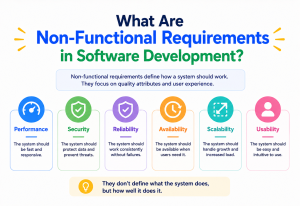
Even well-intentioned preparation can drift into shapes that quietly work against you. The four traps below tend to be the most common, and none of them are anyone’s fault the first time they happen — they’re just worth naming so you can catch yourself before they harden into habits.
Over-indexing on trivia
Knowing the exact version of a database a company uses rarely matters as much as understanding why they likely chose it. Interviewers can tell when trivia is standing in for real understanding.
Treating research as a one-way street
The best use of research isn’t just to prepare answers — it’s to prepare better questions. If all your research goes toward sounding informed, and none of it goes toward genuine curiosity about what you don’t yet understand, you lose one of the most valuable things research can offer: a real, two-sided conversation.
Assuming public info is the whole story
Company blogs and marketing pages are, understandably, presented in the best possible light. Hold what you read a little loosely, and let the interview itself — the questions you ask, the way people describe real challenges — fill in a more honest picture rather than assuming everything you found in advance is the complete truth.
Letting research replace judgment
It’s possible to become so focused on tailoring every answer to what you think the company wants to hear that you stop offering your own honest perspective. The goal of research is context for your judgment, not a replacement for it. Interviewers are generally looking for someone who can think independently within their context, not someone who simply mirrors back what they believe the company wants said.
A Gentle Checklist, Organized by Time Available
Not everyone has a free week to prepare. Here’s a rough guide depending on how much time you realistically have before the conversation — use whichever tier honestly matches your calendar rather than aiming for the longest one out of guilt.
If you have thirty minutes
- Read the company’s “about” or “how it works” page to understand what they actually sell and to whom.
- Skim the most recent one or two posts on their engineering blog, if one exists.
- Note down one specific, honest question this raised for you.
If you have a couple of hours
- Everything above, plus a closer read of three or four engineering blog posts, looking for recurring themes.
- A look at their public status page or any published postmortems from the last year or two.
- A quick sense of company scale and growth stage from recent news or job posting language.
- A look at how the specific team you’re interviewing with is described, if that’s findable.
If you have a full evening or more
- Everything above, plus reading a handful of their public conference talks or podcast appearances by engineers, if available.
- A look at any open-source repositories they maintain, paying attention to how they handle contributions and documentation.
- A short conversation, if possible, with a current or former employee about day-to-day decision-making culture.
- Writing out two or three specific, curious questions grounded in what you found, rather than generic ones.
Thirty focused, curious minutes tend to beat three unfocused hours. If the longer tiers here feel unrealistic given the week you actually have, the shortest tier done well is more than enough — there’s no bonus for doing the deepest research if the depth wasn’t genuinely absorbed.
Turning Research Into Questions Worth Asking
The real payoff of all this research shows up less in the answers you give and more in the questions you ask, especially toward the end of the interview when you’re usually invited to ask your own. Generic questions — “what’s your tech stack,” “what does a typical day look like” — are fine, but they rarely leave a strong impression, because they could be asked by anyone who hadn’t prepared at all.
Questions grounded in real research tend to feel different, both to you and to the interviewer. Something like, “I read about the shift you made toward event-driven processing a couple of years back — I’m curious how that’s held up as the team has grown, and whether it’s created new coordination challenges,” shows you’ve engaged seriously with their actual history, and it often opens up a genuinely interesting conversation rather than a rehearsed one.
| Generic question | Research-grounded alternative |
|---|---|
| What’s your tech stack? | I noticed you moved from a monolith to services around [time] — what pushed that decision, and would you make the same call again today? |
| What are the biggest challenges the team faces? | Reading your postmortem from [event], it sounds like cross-team dependency was a real factor — has that continued to be a pattern? |
| What’s the culture like? | Your engineering blog has a lot of different contributors — is that reflective of how ownership is spread across the team day to day? |
The pattern here is worth naming plainly: a good question grounded in research usually has three ingredients — a specific reference to something you actually found, a genuine uncertainty you’re curious about, and enough openness that the interviewer can take the answer wherever they think is most useful. Questions built like that almost always produce more interesting conversations than any question that could be pasted, unchanged, into a dozen other interviews.
A Few Honest Questions People Ask
Short, honest answers to the questions that come up most often when candidates start taking this kind of research seriously for the first time.
What if the company barely has any public information?
This happens often, especially with smaller or more private companies, and it’s not a dead end — it’s simply a signal to shift where your research goes. Lean more heavily on the job description itself, any available employee reviews, LinkedIn profiles of people on the team to understand backgrounds and tenure, and direct, honest questions early in the interview process about scale, structure, and challenges. Limited public information is common; it doesn’t mean limited preparation is possible.
Is it possible to over-research and come across as trying too hard?
It’s possible to lean too heavily on trivia, as mentioned earlier, but genuine, well-integrated understanding rarely comes across as excessive. The line usually isn’t about how much you know — it’s about whether you use it to listen and ask better questions, or simply to perform how much homework you did. Curiosity reads as thoughtful; recitation reads as rehearsed.
Should I bring up things I found that seem like weaknesses, like a bad outage?
Yes, gently and with genuine curiosity rather than judgment. Every real system has had painful moments, and interviewers generally respect candidates who engage with that honestly rather than pretending everything is flawless. The framing matters — “I’m curious how that experience shaped your current approach” lands very differently from anything that sounds like pointing out a mistake.
How do I balance this with practicing actual system design skills?
They’re not competing uses of your time — they reinforce each other. Understanding a company’s real context makes your system design practice sharper and more specific, because you’re not just solving an abstract problem, you’re solving something closer to what they’d actually face. A little research early tends to make the rest of your preparation more focused, not less.
A Closing Thought
It’s worth remembering, underneath all the specifics, what this kind of research is really for. It isn’t a performance you put on to seem impressive, and it isn’t a box to check off the night before. It’s simply an act of taking the company, and the conversation you’re about to have with real people there, seriously enough to understand it a little before walking in.
Done well, this preparation quietly changes the shape of the interview itself. Instead of trying to prove you know things in the abstract, you get to have a real conversation about a real company’s real problems — the kind of conversation that’s actually a preview of the work itself, not just a test standing in front of it. And that shift, more than any single fact you memorize along the way, tends to be what people remember afterward.
So give yourself the time this deserves, even if it’s only thirty honest minutes rather than a week. Read a little slower than feels efficient. Let yourself get genuinely curious about how this particular company works, not just what you’ll need to say about it. That curiosity, more than any perfectly rehearsed answer, is usually what carries an architect interview from good to memorable.
And if, partway through your research, you find yourself genuinely losing interest — if the company’s problems don’t spark any curiosity in you at all, even after real effort to understand them — treat that as useful information too, not as a failure of preparation. Sometimes the most valuable outcome of researching a company before an interview isn’t a better answer to give them. It’s a clearer, more honest sense of whether this is somewhere you actually want to spend your next few years solving problems. Either way, you’ll walk into the room knowing more than you did before, and that’s never wasted effort.
What’s actually worth remembering
- Architecture is never abstract. The role is judgment applied to a specific company, so preparation has to be, too.
- Start with the business, not the tech stack. How the company makes money quietly shapes every architectural decision downstream.
- Read for the “why,” not the “what.” Understanding what pushed a company toward a choice matters more than memorizing the choice itself.
- Postmortems are gold. They reveal engineering maturity more honestly than any careers page ever will.
- Notice the culture’s quiet signals — who writes, how failure is discussed, whose voice shows up on the blog.
- Compare stated values against real evidence. The gap between the two is one of the most useful things you can walk in understanding.
- Turn research into better questions, not just better answers — that’s where curiosity actually shows.
- Use research to decide, too. You’re also evaluating whether this is a place you actually want to spend the next several years.
Research well enough that when you walk in, you’re no longer auditioning for a company from the outside — you’re already thinking like someone who could plausibly work there tomorrow.