Chaos Engineering & Resilience
A complete, beginner-to-production guide to deliberately breaking your systems on purpose — so that real-world failures never catch you by surprise. Covers principles, internals, tooling, patterns, and the exact way large companies like Netflix, Amazon and Google run controlled failure experiments in live systems.
Crash-Testing Software on Purpose
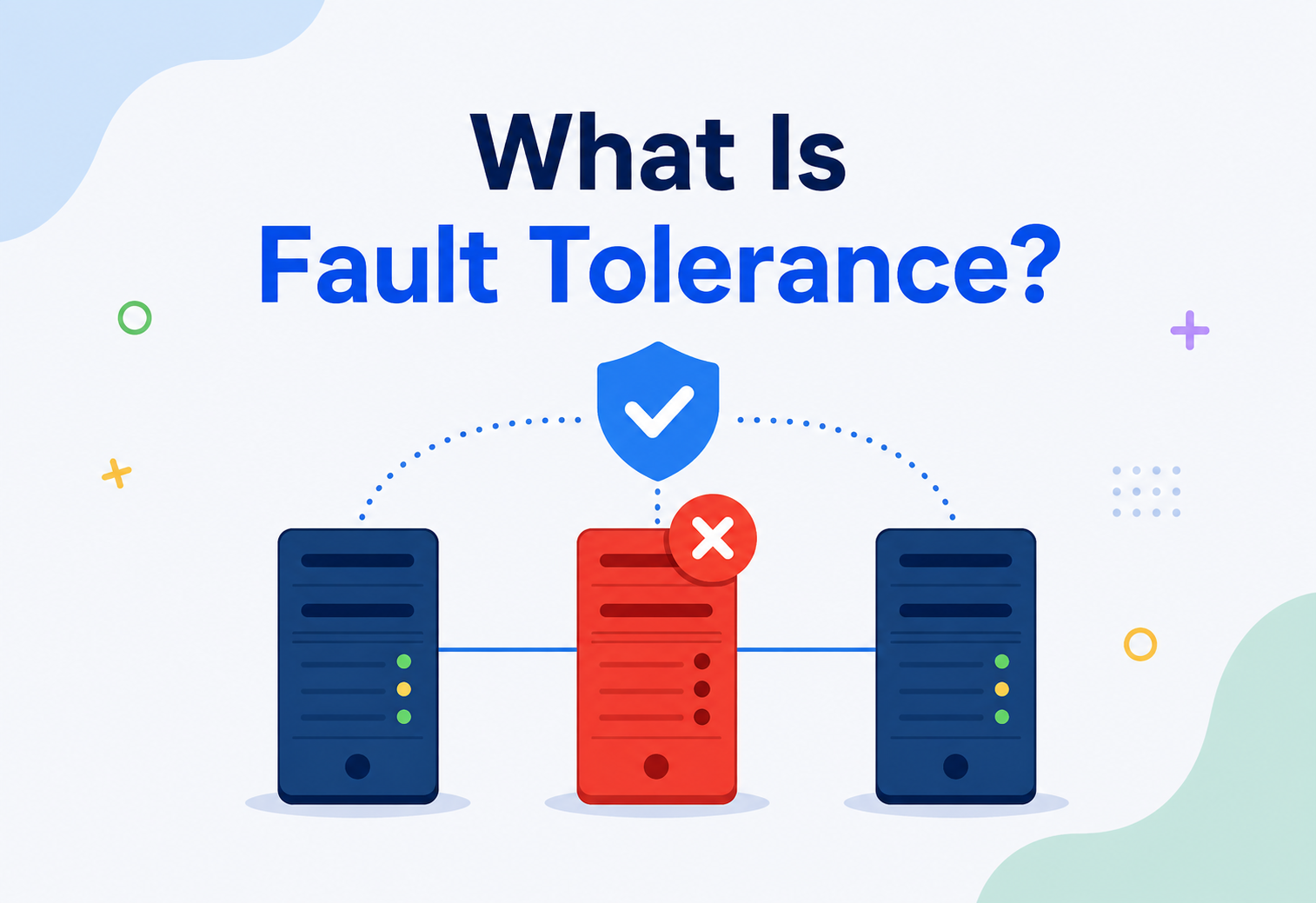
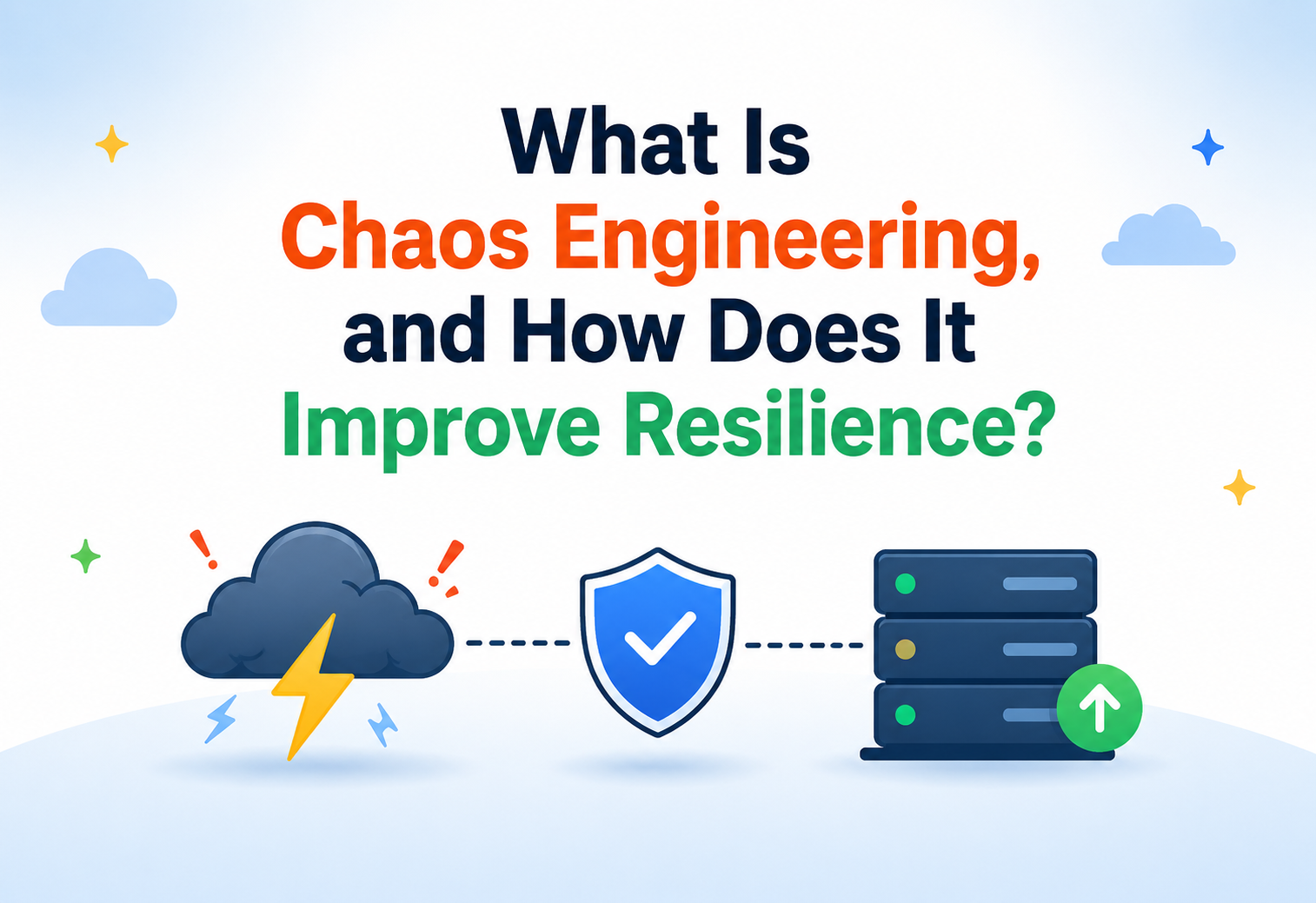
Chaos engineering is the discipline of intentionally injecting failure into a live software system, in a controlled and measured way, to prove — with evidence, not guesses — that the system can withstand real-world turbulence.
Imagine you own a car, and you want to know if it is truly safe before you trust your family inside it during a long highway trip. You would not just look at the car and hope for the best. Instead, car companies crash real cars into walls on purpose, at controlled speeds, with dummies inside, to see exactly what breaks and how the passengers are protected. That is crash testing. Chaos engineering is the software version of crash testing. Instead of crashing a car, engineers deliberately break parts of a live, running software system — a server, a network connection, a database, a whole data center — to find out, before a real customer ever notices, whether the system can survive that kind of damage.
The word “chaos” here does not mean random destruction for its own sake. It means introducing turbulence — the same kind of turbulence that happens naturally in the real world, like a server crashing at 3 AM or a network cable failing during a storm — but doing it on purpose, in daylight, with your whole team watching and ready to stop it.
Where Did It Come From?
The story usually begins at Netflix around 2010–2011. Netflix was moving its video streaming service from physical data centers to Amazon Web Services (AWS), a cloud platform made of thousands of shared virtual servers. Netflix engineers realized something uncomfortable: in the cloud, individual servers fail all the time, not as a rare accident but as a routine, expected event. If their software could not survive a single server disappearing without warning, then their entire streaming service could go down at any moment, for millions of people, during their favourite show.
Instead of hoping this would not happen, Netflix built a tool called Chaos Monkey. Its job was almost silly-sounding at first: during business hours, on purpose, it would randomly turn off live production servers that were actively serving real Netflix customers. The idea was simple but powerful — if engineers knew a server could vanish at any moment because a robot might kill it, they would be forced to design every part of the system to tolerate that loss automatically, instead of assuming servers would always be there.
Chaos Monkey worked so well that Netflix built an entire family of tools around it, nicknamed the Simian Army — including tools that simulated an entire data-center region failing, tools that added artificial network delay, and tools that intentionally created unusual, badly-formed data to see how services reacted. In 2017, Netflix and other companies formalized these ideas into the discipline now called chaos engineering, publishing “The Principles of Chaos Engineering,” a short document that is still the closest thing the field has to an official rulebook.
Since then, chaos engineering has grown far beyond one company. Amazon runs internal “GameDay” exercises. Google has a program called DiRT (Disaster Recovery Testing). Gremlin, LitmusChaos, Chaos Mesh and AWS Fault Injection Service are all popular platforms built specifically to run these controlled failure experiments in any company’s systems, not just at giant tech firms.
Why the Cloud Made This Necessary
It is worth understanding exactly why Netflix’s move to AWS made this practice necessary rather than optional. When a company owns its own physical servers in its own data center, hardware failures are relatively rare and, when they happen, are usually visible and controllable — an engineer can walk over and physically replace a failed disk. In a public cloud, an application runs on virtual machines that share physical hardware with thousands of other customers’ workloads, hardware is retired and replaced constantly, and the underlying provider can reclaim or relocate a virtual instance with little or no warning as part of normal operations. This was a fundamental shift: failure stopped being a rare exception to plan around occasionally, and became a routine, expected condition to design for constantly, from day one.
“The Principles of Chaos Engineering,” published by engineers from Netflix and other companies in 2017, distilled years of this experience into a small number of guiding ideas: build a hypothesis around steady-state behaviour, vary real-world events, run experiments in production, automate experiments to run continuously, and minimize blast radius. These five principles remain the closest thing the field has to a shared definition, and nearly every modern chaos tool and practice traces directly back to them.
Chaos engineering is the discipline of intentionally injecting failure into a system, in a controlled and measured way, to prove — with evidence, not guesses — that the system can withstand real-world turbulence.
Car companies do not test crash safety by hoping. They accelerate real cars into concrete walls with dummies inside, at controlled speeds, on a closed track, so they can measure exactly what breaks and how the passengers are protected. Chaos engineering is that same instinct, applied to software: crash the system on your own terms, on your own schedule, with your own safety net — so the real crash, when it happens, is not the first one you have ever seen.
Modern Systems Are Too Complex to Reason About Alone
Why would any sane engineer want to break their own system on purpose? Because modern distributed systems have grown too complex for any single person to hold in their head — and the only reliable way to know what really happens when a piece fails is to actually make it fail, safely.
Twenty years ago, a typical web application might run on one or two physical servers with one database. If something broke, there were only a handful of possible causes, and one engineer could usually hold the whole system in their head. Today’s systems look completely different. A single action, like tapping “Buy Now” on a shopping app, might travel through dozens or even hundreds of independent microservices, each one talking to the others over a network, each one backed by its own database, cache and message queue, and each one able to fail independently, at any time, for its own unrelated reason.
This creates a problem researchers call emergent behaviour: the system as a whole can behave in ways that no single engineer intended or predicted, simply because of how the pieces interact. A slow database query in one small service might cause a chain reaction — that service becomes slow, so the services that call it start piling up waiting requests, those services run out of memory, they crash, and now a completely unrelated part of the app that had nothing to do with the original slow query also goes down. This is sometimes called a cascading failure.
Think of a school of fish swimming together. No single fish is in charge, and no single fish “decides” the shape of the school. But if one fish suddenly panics and darts sideways, it can trigger a wave of movement through the entire school, even fish far away that never sensed the original danger directly. Software systems built from many independent, communicating services behave the same way — small local problems can create big, distant, unexpected consequences.
Traditional testing — unit tests, integration tests, even load tests — is not built to catch this kind of problem. A unit test checks that one small piece of code works correctly in isolation, using clean, expected inputs. A load test checks that the system can handle a lot of traffic, assuming everything else is healthy. Neither of these approaches ever asks the question: “What happens if this dependency simply is not there anymore, right in the middle of normal operation?” Real production failures rarely announce themselves politely. A hard disk fills up. A certificate silently expires. A cloud provider’s entire availability zone goes offline. A downstream partner’s API starts responding three seconds slower than usual. None of these are bugs in your code — they are the environment itself misbehaving, and your code has to survive them anyway.
The Motivation, Restated Simply
- Failure is not an “if,” it is a “when.” In any large enough system, some component is always failing somewhere, all the time.
- You cannot inspect your way to confidence. Reading the code, drawing architecture diagrams and reviewing pull requests all help, but none of them prove the system survives a real failure — only running the failure does.
- The first time a failure mode is discovered should not be during a real customer-facing outage. It is far cheaper, safer and less embarrassing to discover a weakness at 2 PM on a Tuesday with the whole engineering team watching a dashboard than at 2 AM during a public incident with customers tweeting angrily.
This is the entire motivation behind chaos engineering: replace fear and assumption with evidence. Instead of saying “I think our system can handle a database failover,” a team using chaos engineering can say “we tested a database failover last Thursday, it took 4.2 seconds, and here is the graph proving customer traffic was unaffected.”
The Hidden Cost of Not Testing Failure
It helps to put this in concrete terms. Industry outage reports consistently show that most large-scale production incidents are not caused by some exotic, never-seen-before bug. They are caused by ordinary, well-understood failure modes — a dependency timing out, a retry storm overwhelming an already-struggling service, a configuration change rolled out everywhere at once, a certificate expiring on a Friday night. What makes these incidents expensive is not that the failure itself was unusual; it is that nobody had ever actually rehearsed the system’s response to that specific failure, so the recovery path that “should have” worked on paper either did not exist, was broken, or was being executed for the very first time under maximum pressure, in front of angry customers and worried executives.
Chaos engineering directly attacks this cost. Every weakness found on a calm Tuesday afternoon, with a rollback plan ready and the whole team watching a dashboard, is far cheaper than the same weakness discovered during a real 2 AM outage, with customers already affected, revenue already being lost, and engineers debugging under stress with a much higher chance of making the situation worse through a panicked mistake.
Think about a fire evacuation drill at school. Nobody hopes there will ever be a real fire. But if a fire does happen, a school that has practised the drill calmly walks out in an orderly line, while a school that never practised experiences confusion, bottlenecks at doorways and panic — even though both schools have exactly the same hallways and exits. Whether the hallways were adequate on paper was never the real question; whether people knew how to use them under pressure was.
This is precisely why experienced platform teams treat “have we chaos-tested this failure mode?” as seriously as they treat “does this code have unit tests?” Both are forms of the same underlying discipline: proving correctness with evidence instead of assuming it from good intentions.
The Small Precise Vocabulary of the Field
Chaos engineering has its own small, precise vocabulary. Once you understand these five ideas — steady state, hypothesis, blast radius, fault injection and Game Day — the entire discipline becomes much easier to follow.
3.1 Steady State
The steady state is a measurable definition of “the system is behaving normally.” It is not a vague feeling — it is a number, usually pulled from real monitoring data, such as “95% of checkout requests complete in under 300 milliseconds” or “error rate stays below 0.1%.” Before you break anything, you must first agree on what “healthy” looks like in numbers, or you will have no way to tell if your experiment actually caused harm.
Before a doctor tests how your body reacts to exercise, they first take your resting heart rate and blood pressure. That resting measurement is your steady state. Only once they know your baseline can they tell whether a change during the test is dangerous or perfectly normal.
3.2 Hypothesis
A chaos experiment is not “let’s see what happens” — it is a scientific hypothesis, just like in a school science class. You state, in advance, what you believe will happen: “If we kill one instance of the payment service, we hypothesize that the load balancer will detect it within 10 seconds and route traffic to the healthy instances, and customers will experience no failed payments.” The experiment either proves this hypothesis true or false. A false result is not a failure of the experiment — it is a success, because you just found a real weakness for free, safely.
3.3 Blast Radius
The blast radius is how much of the system, and how many real users, are exposed to a given experiment. Responsible chaos engineering always starts with the smallest possible blast radius — perhaps just 1% of traffic, or a single non-critical service in a staging environment — and only expands it once confidence is built. This is the single most important safety concept in the entire field.
Running an untested chaos experiment against 100% of production traffic on day one is like testing a new parachute by jumping off a building instead of a small ladder first. Chaos engineering is about controlled, incremental risk — never reckless risk.
3.4 Fault Injection
Fault injection is the actual mechanism used to create the turbulence: terminating a server process, adding artificial network latency, dropping a percentage of network packets, filling up a disk, throttling CPU, returning error responses from an API or disconnecting a database connection pool. Fault injection is the “verb” of chaos engineering — it is the thing that actually happens during an experiment.
3.5 Game Day
A Game Day is a scheduled event where a team deliberately runs one or more chaos experiments together, live, often simulating a large-scale disaster like “our primary AWS region is completely down.” Everyone who would respond to a real incident participates, practising their exact real response procedures against a fake — but realistic — emergency.
3.6 Chaos Engineering Maturity Levels
Organizations rarely arrive at fully automated, production-wide chaos engineering overnight. It helps to think of adoption as a ladder, with each rung building confidence and tooling for the next.
Manual, Staging-Only
An engineer manually kills a single instance or unplugs a dependency in a test environment and watches the dashboards by hand.
Scheduled, Staging-Only
The same experiments now run on a recurring schedule, with results automatically recorded and compared over time.
Manual, Low-Blast-Radius Production
Small, carefully scoped experiments (e.g., 1% of traffic, one instance) run in production, always with an engineer present and an abort plan ready.
Automated Game Days
Cross-team disaster simulations run regularly, exercising both the software’s recovery mechanisms and the humans’ incident-response procedures together.
Continuous, Self-Service Chaos
Any team can safely define and run their own experiments through a central platform, chaos experiments run automatically as part of CI/CD, and resilience coverage is tracked like test coverage.
Trying to jump straight to level 5 without building the observability, automated safeguards and organizational trust needed at levels 1 through 4 is one of the most common reasons chaos engineering initiatives fail or get shut down after a bad first experience.
Anatomy of a Chaos Engineering Platform
A production-grade chaos engineering platform is not just a single script that kills servers — it is a small system of its own, with several cooperating components. Understanding these pieces helps you evaluate tools like Gremlin, Chaos Mesh, LitmusChaos and AWS Fault Injection Service, and helps you build your own if needed.
Experiment Definition Store
Stores the hypothesis, target, blast radius and fault type for each experiment, usually as version-controlled YAML or JSON, so experiments are repeatable and reviewable like code.
Scheduler / Orchestrator
Decides when an experiment runs, coordinates multi-step experiments and enforces safety windows (e.g., never during a known high-traffic sale event).
Fault Injection Agents
Small processes running on target hosts, containers or the network layer that actually execute the fault — killing a process, adding latency or corrupting a packet.
Steady-State Monitor
Continuously pulls real-time metrics (latency, error rate, throughput) from your existing observability stack to judge if the hypothesis holds.
Automated Abort / “Big Red Button”
Watches steady-state metrics during the experiment and instantly halts the fault if things go worse than an agreed safety threshold.
Reporting & Audit Trail
Records exactly what was injected, when, for how long and what the measured impact was — turning every experiment into permanent, shareable evidence.
The observability stack is not optional — it is a hard dependency. Without accurate, real-time metrics, a chaos platform is flying blind: it cannot verify a hypothesis, and it cannot safely abort a dangerous experiment. This is why mature organizations always build strong monitoring first, and only introduce chaos engineering once they can already answer “is the system healthy right now?” with confidence.
What Actually Happens When a Fault Is “Injected”
Let’s walk through, mechanically, what actually happens on a computer when a fault is “injected.” Different fault types use different underlying mechanisms.
5.1 Process / Instance Termination
The simplest fault: the orchestrator calls a cloud provider’s API (or a container orchestrator like Kubernetes) to forcibly terminate a running instance or pod, exactly the way a real hardware failure or an accidental human deletion would. No warning, no graceful shutdown signal — just gone.

5.2 Network-Level Faults
These are usually implemented using operating-system-level traffic control tools (on Linux, a tool called tc — traffic control — combined with netem, the network emulator kernel module). The fault agent inserts rules into the Linux kernel’s networking stack that intentionally delay, drop, duplicate or reorder packets matching specific criteria, such as “all traffic between this service and the payments database.”
5.3 Resource Exhaustion
To simulate a server running out of CPU, memory or disk space, agents run small stress programs that deliberately consume those resources up to a target percentage, or write large temporary files to fill a disk partition, then clean up afterward.
5.4 Application-Level Fault Injection
Instead of touching infrastructure, some faults are injected directly inside application code, using middleware or interceptors that randomly (based on a configured percentage) throw an exception, return an error HTTP status or add an artificial delay before completing a request. This is common in microservice environments because it does not require special infrastructure permissions.
Below is a minimal Spring Boot filter that randomly injects latency and errors into a percentage of incoming requests — a simplified version of what real application-level chaos tooling does internally.
@Component
public class ChaosInjectionFilter extends OncePerRequestFilter {

    private final double latencyInjectionRate = 0.10;   // 10% of requests
    private final double errorInjectionRate   = 0.05;   // 5% of requests
    private final Random random = new Random();

    @Override
    protected void doFilterInternal(HttpServletRequest request,
                                     HttpServletResponse response,
                                     FilterChain chain)
            throws ServletException, IOException {

        if (!"true".equals(System.getenv("CHAOS_ENABLED"))) {
            chain.doFilter(request, response); // chaos disabled, normal flow
            return;
        }

        // Fault type 1: inject artificial latency
        if (random.nextDouble() < latencyInjectionRate) {
            try {
                Thread.sleep(2000); // simulate a slow downstream dependency
            } catch (InterruptedException e) {
                Thread.currentThread().interrupt();
            }
        }

        // Fault type 2: inject a synthetic failure response
        if (random.nextDouble() < errorInjectionRate) {
            response.setStatus(HttpServletResponse.SC_SERVICE_UNAVAILABLE);
            response.getWriter().write("{\"error\":\"chaos-injected-failure\"}");
            return; // stop the chain, do not forward the real request
        }

        chain.doFilter(request, response); // normal, unaffected request
    }
}
In production chaos tools, this filter would be controlled remotely by the orchestrator, scoped to a specific percentage of traffic, a specific service or even a specific customer segment, and it would automatically report every injected fault back to the reporting component so the impact is fully auditable.
5.5 A Quick Reference: Common Fault Types
| Fault Type | What It Simulates | Typical Mechanism |
|---|---|---|
| Instance / pod termination | Hardware failure, accidental deletion, spot-instance reclamation | Cloud provider API / Kubernetes API call |
| Network latency | Congested network, distant data center, overloaded router | Linux tc/netem traffic shaping |
| Packet loss | Flaky network hardware, wireless interference, ISP issues | Linux tc/netem loss rules |
| DNS failure | DNS provider outage, misconfigured record | Local resolver interception / blackhole routing |
| CPU / memory exhaustion | Noisy-neighbour workloads, memory leaks, traffic spikes | Stress-testing processes consuming resources |
| Disk fill | Log files or temp data filling a volume | Writing large temporary files |
| Dependency error injection | A downstream API returning 5xx errors | Application middleware / service-mesh fault rules |
| Clock skew | Server time drifting out of sync | Temporarily adjusting system clock in a sandboxed host |
5.6 The Automated Abort Mechanism
Perhaps the most important internal component is the safety watchdog. It continuously polls the steady-state metric (say, error rate) at a short interval, such as every 5 seconds, and compares it against a pre-agreed threshold. If the threshold is crossed, it immediately signals every fault agent to reverse the injected fault — restart the killed process, remove the network rule, release the memory — usually within a few seconds, without needing a human to react.
A Single Experiment, End to End
Every well-run chaos experiment follows the same repeatable lifecycle, whether it is done manually by a small team or fully automated by a mature platform.
Step by Step, in Plain Language
- Baseline capture: the platform records how the system behaves for a short warm-up period before touching anything, so it has a fair “before” picture.
- Controlled injection: the fault is applied to the smallest reasonable blast radius first — one instance, one availability zone, one percentage of traffic.
- Continuous observation: real production telemetry (not synthetic test data) is streamed and compared against the baseline in near real time.
- Decision point: either the system holds steady (hypothesis confirmed, safe to try a bigger blast radius next time) or it degrades beyond the safety line (automatic rollback, weakness logged).
- Fault removal: whether the experiment succeeded or failed, the fault is always fully reversed at the end — killed instances are restarted, network rules are removed, injected errors are switched off.
- Report and remediation: results are written up, shared with the team, and any discovered weaknesses become tracked engineering work, closing the loop.
What Chaos Engineering Gives You — and What It Costs
Chaos engineering’s expressive power comes with a real risk and complexity budget. Understanding both sides is the difference between a well-scoped rollout and a self-inflicted outage.
✓ Advantages
- Finds real weaknesses before customers do, using actual production conditions instead of guesses.
- Builds organizational confidence backed by evidence, not assumptions or hope.
- Forces teams to build automatic recovery (retries, failover, circuit breakers) rather than relying on manual intervention.
- Improves incident response by giving teams practised “muscle memory” through Game Days.
- Surfaces hidden dependencies and single points of failure in complex distributed architectures.
- Directly validates resilience patterns such as circuit breakers, bulkheads, retries and graceful degradation.
✗ Disadvantages & Trade-offs
- Carries genuine risk — a misconfigured experiment can itself cause a real outage.
- Requires mature monitoring and alerting to already be in place, or experiments are unsafe.
- Significant upfront investment in tooling, culture and engineering time.
- Can be organizationally difficult — some teams resist “breaking things on purpose” culturally.
- Needs careful scheduling to avoid clashing with real high-stakes business events.
- Insight decays without repetition — a fix that worked last year may have silently regressed unless the experiment is re-run.
The central trade-off in chaos engineering is between short-term risk and long-term safety. Every experiment introduces a small, controlled, temporary risk to gain permanent, measurable confidence. Teams that skip chaos engineering are not avoiding this risk — they are simply choosing to take it later, unplanned, at the worst possible time, with no safety controls at all.
Chaos Under Load, and the Chaos Program at Scale
Chaos engineering directly overlaps with performance and scalability testing, but it asks a different question. A load test asks “can the system handle 10x traffic?” A chaos experiment asks “can the system handle 10x traffic while one of its database replicas is down?”
Combining both — often called chaos-under-load testing — reveals problems that neither technique finds alone, because real-world outages almost always happen during periods of stress, not calm.
Keeping the Chaos Tooling Itself Lightweight
At scale, chaos experiments must themselves be engineered carefully so they do not become a performance bottleneck. A poorly designed fault-injection agent that intercepts every single network packet can add measurable overhead even when it is not actively injecting a fault. Mature platforms solve this using lightweight kernel-level hooks (like Linux tc/netem) rather than intercepting traffic in application code wherever possible, and by scoping experiments narrowly instead of applying them system-wide.
Scaling the Chaos Program Itself
Scalability of the chaos program also matters, not just of the tooling. A company with 5 microservices can coordinate experiments manually in a spreadsheet. A company with 2,000 microservices needs an automated experiment scheduler, self-service tooling so individual teams can safely run their own experiments, and a central registry of “which services have been chaos-tested” so leadership can measure resilience coverage across the whole organization, similar to test-coverage percentages in traditional testing.
Imagine an e-commerce platform preparing for a major annual sale. A pure load test tells them the checkout service can handle three times normal traffic. But a combined chaos-under-load experiment — tripling traffic while simultaneously killing one of the three payment-gateway connections — might reveal that the remaining two connections become saturated and checkout latency triples, something a load test run against a fully healthy system would never have shown. Finding this a month before the sale, instead of during it, is exactly the value chaos engineering adds on top of ordinary performance testing.
Blast Radius Also Scales
There is also a subtler scalability concern: the blast radius of an experiment must scale down, not up, as the surrounding system gets bigger. In a small system with three servers, killing one server removes a third of total capacity — a significant event. In a system with three thousand servers, killing one server is barely noticeable, so a meaningful experiment at that scale might need to target an entire class of servers, an availability zone or a specific traffic percentage instead of a single instance, to actually exercise the failure paths that matter at that scale.
Verifying the Redundancy You Already Paid For
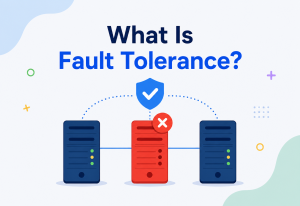
High availability (HA) is the design goal — building a system with enough redundancy that it keeps running even when individual parts fail. Chaos engineering is the verification method — the only reliable way to prove that redundancy actually works the way it was designed to.
It is entirely common for a system to look highly available on an architecture diagram (multiple replicas, multiple regions, automatic failover) while, in reality, the failover logic has a bug that was never triggered because the primary component never actually failed since the code was written.
A building can have fire sprinklers installed on every ceiling, technically satisfying the fire code. But nobody actually knows if those sprinklers work until there is a real fire — or until a fire drill deliberately tests them. Chaos engineering is the fire drill for your redundancy systems.
HA Mechanisms Chaos Engineering Specifically Verifies
- Automatic failover from a primary database to a replica when the primary is lost.
- Multi-availability-zone or multi-region traffic rerouting when one location becomes unhealthy.
- Health-check-based removal of unhealthy instances from a load balancer.
- Graceful degradation — showing a simplified experience instead of a full crash when a non-critical dependency is unavailable.
MTBF vs MTTR: The Number Chaos Actually Moves
Reliability engineers often talk about two related numbers when discussing HA: MTBF (Mean Time Between Failures — how often something breaks) and MTTR (Mean Time To Recovery — how quickly the system heals once it breaks). Interestingly, chaos engineering usually has a bigger impact on MTTR than on MTBF. It rarely stops failures from happening in the first place — servers will still crash, networks will still hiccup — but it dramatically shortens how long it takes the system, and the humans operating it, to recover, because both have already rehearsed the exact recovery path multiple times before a real incident ever occurs.
High availability is often described only in terms of uptime percentages, such as “99.99% available.” Chaos engineering pushes teams to go further and ask a second question: not just “how often are we down,” but “how fast and how automatically do we come back up when we inevitably are?” A system that fails often but recovers in two seconds automatically can deliver a better real-world experience than one that rarely fails but takes thirty minutes of manual intervention to recover when it does.
Applying the Same Method to Security Controls
A newer branch of the field, sometimes called Security Chaos Engineering, applies the exact same scientific method to security controls instead of availability. Instead of asking “will the system stay up if a server dies?” it asks “will our security detection and response actually catch a real attack technique?”
Examples of Security-Focused Chaos Experiments
- Credential rotation / revocation: intentionally rotating or revoking a credential to confirm dependent services fail safely rather than silently continuing with stale access.
- Port-scan detection: simulating a port scan against internal infrastructure to confirm intrusion-detection alerts actually fire.
- Policy-compliance detection: deliberately misconfiguring a permission to see if automated policy-compliance scanning catches it.
- Segmentation containment: simulating a compromised container to test whether network segmentation actually contains the blast radius as designed.
Security controls suffer from exactly the same false-confidence problem as availability controls: a firewall rule, an intrusion-detection system or an access policy can exist on paper and still fail silently in practice. Security chaos engineering replaces “we believe we are protected” with “we tested it last Tuesday and here is the proof.”
Security Chaos vs. Penetration Testing
The relationship between security chaos engineering and traditional penetration testing is worth clarifying, since beginners often confuse the two. A penetration test is usually a point-in-time, often external, assessment aimed at finding unknown vulnerabilities in a system. Security chaos engineering instead takes controls that are believed to already exist and already work — such as “our system automatically revokes access within 60 seconds of a credential being flagged as compromised” — and repeatedly, continuously verifies that specific claim stays true as the system evolves, the same way an availability chaos experiment continuously verifies a failover claim stays true. The two practices complement each other well: penetration testing finds new gaps, security chaos engineering keeps proving old fixes have not silently regressed.
Observability Is the Ground the Field Stands On
Observability is the foundation chaos engineering stands on, so it is worth being precise about the three pillars it depends on.
Numeric Time-Series
Numeric time-series data such as request latency percentiles, error rate, CPU usage and queue depth. Metrics are what the steady-state hypothesis and the automated abort mechanism are built from.
Timestamped Events
Detailed, timestamped records of individual events, used after an experiment to understand exactly what happened inside a service during the fault window.
End-to-End Request Paths
End-to-end records that follow a single request as it travels across many microservices, essential for understanding cascading failures — a trace shows exactly which downstream service caused a slowdown or error.
Every chaos experiment should produce a permanent artifact: a timestamped record correlating the exact fault-injection window with the corresponding metrics, logs and traces from that period. This turns each experiment into reusable institutional knowledge, and it is what lets a team later say, precisely, “our p99 latency rose from 120ms to 340ms for 45 seconds during the database failover, then recovered automatically.”
Dashboard Annotation: A Small Habit With Outsized Value
A practical habit worth adopting from day one is dashboard annotation: automatically drawing a vertical marker on relevant monitoring dashboards at the exact moment an experiment starts and ends. This small detail matters enormously months later, when an engineer unfamiliar with the original experiment is looking at a historical graph and needs to quickly tell the difference between “this dip in traffic was a real customer-facing incident” and “this dip was an intentional, successful chaos experiment.” Without clear annotation, chaos experiments can be mistaken for real outages during later investigations, wasting significant engineering time.
Alerting Is Also Under Test
Alerting deserves special attention too. A well-designed chaos program deliberately checks whether its experiments trigger the same alerts a real failure would trigger. If a team kills a database primary during a controlled experiment and no on-call engineer receives a page, that is not a clean result — it is a serious discovery, because it means the exact same failure happening for real, unplanned, would also go silently undetected. In this sense, chaos engineering doubles as a continuous, realistic test of the alerting system itself, not just of the application code.
Where Chaos Fits in Kubernetes and the Public Cloud
Modern chaos engineering is deeply tied to cloud and container platforms, because those platforms already expose the exact control points needed for safe fault injection.
Kubernetes
Kubernetes-native chaos tools such as Chaos Mesh and LitmusChaos define experiments as native Kubernetes objects (Custom Resource Definitions), meaning a fault injection is described in YAML exactly like a deployment or a service, and version-controlled alongside application code.
# Example: Chaos Mesh experiment definition (Kubernetes YAML)
apiVersion: chaos-mesh.org/v1alpha1
kind: PodChaos
metadata:
  name: kill-payment-pod-experiment
  namespace: chaos-testing
spec:
  action: pod-kill
  mode: one              # target exactly one matching pod
  selector:
    namespaces:
      - production
    labelSelectors:
      app: payment-service
  scheduler:
    cron: "@every 2h"     # run automatically every 2 hours
Public Cloud Providers
AWS Fault Injection Service (FIS), Azure Chaos Studio and similar managed offerings let teams run fault injection using the cloud provider’s own control plane — for example, simulating an entire Availability Zone outage, throttling an EC2 instance’s network bandwidth or triggering a real (but scoped and reversible) database failover — without needing to build custom low-level tooling.

CI/CD Integration
Mature teams embed small, low-blast-radius chaos experiments directly into their deployment pipelines, so that every new release must automatically prove it survives a basic fault (like a dependency timeout) before it is allowed to reach production, the same way it must already pass unit tests.
A typical pipeline gate might look like this: after a new build passes its unit and integration tests, it is deployed to a canary environment receiving a small slice of real traffic. Before that canary is promoted to full production rollout, an automated chaos step briefly injects a dependency timeout and confirms the service’s circuit breaker trips as configured, and that error rates for end users stay within the defined steady-state threshold throughout. Only if this automated resilience check passes does the pipeline proceed to a full rollout; if it fails, the deployment is automatically rolled back, exactly as it would be for a failed automated test suite. This turns resilience from something checked occasionally in a manual Game Day into something verified continuously, on every single release, with no extra manual effort once the pipeline step is built.
Data-Path Chaos Experiments
The data path — databases, caches and load balancers — is where a huge fraction of real production incidents actually originate. It is also where some of the highest-value, most commonly-run chaos experiments live.
Databases
Database-focused chaos experiments test scenarios like: killing the primary node to verify automatic promotion of a replica, introducing replication lag to see if the application correctly tolerates slightly stale reads, or filling connection pools to verify the application degrades gracefully (queues requests, returns a friendly error) instead of crashing when it cannot get a database connection.
Caching
A very common and dangerous real-world failure is a cache stampede: when a cache (like Redis) suddenly becomes unavailable or is flushed empty, every single request that used to be served instantly from cache now hits the database at once, often overwhelming it. Chaos experiments that deliberately flush or disconnect the cache layer are one of the highest-value, most commonly run experiments in the entire field, because this failure mode is both common in the real world and easy to simulate safely.
Load Balancers
Experiments here verify that health checks correctly detect and remove unhealthy instances within an acceptable time window, and that traffic correctly redistributes without dropping in-flight requests. A classic experiment: kill 30% of instances behind a load balancer simultaneously and measure exactly how many customer requests, if any, actually failed.
If you are starting a chaos program tomorrow, a deliberate, controlled cache flush against a non-critical, cache-dependent service is one of the highest-signal experiments you can run. It exercises the retry, timeout and graceful-degradation paths at once, and it maps directly onto a failure mode that has caused catastrophic real-world outages at nearly every major internet company.
Circuit Breakers, Bulkheads and the Patterns Chaos Validates
Chaos engineering and microservice resilience patterns evolved together, almost as two halves of the same idea. The most important pattern to understand is the circuit breaker, popularized by libraries like Netflix Hystrix and its modern successor, Resilience4j.
A circuit breaker works exactly like the electrical circuit breaker in your home. If a downstream service starts failing repeatedly, the circuit breaker “trips” — it stops sending new requests to that failing service entirely for a short period, immediately returning a fast, controlled error (or a fallback response) instead. This protects the calling service from wasting resources waiting on a service that is clearly not going to respond, and it gives the failing service breathing room to recover instead of being hammered with even more traffic while it is already struggling.
// Resilience4j circuit breaker example in a Spring Boot service
CircuitBreakerConfig config = CircuitBreakerConfig.custom()
        .failureRateThreshold(50)                       // trip at 50% failures
        .waitDurationInOpenState(Duration.ofSeconds(10)) // stay open 10s
        .slidingWindowSize(20)                           // look at last 20 calls
        .build();

CircuitBreaker circuitBreaker = CircuitBreaker.of("inventoryService", config);

Supplier<String> decoratedSupplier = CircuitBreaker
        .decorateSupplier(circuitBreaker, () -> inventoryClient.checkStock(itemId));

String result = Try.ofSupplier(decoratedSupplier)
        .recover(throwable -> "FALLBACK: showing cached stock estimate")
        .get();
Chaos engineering is precisely how a team proves this circuit breaker configuration actually works — by deliberately making the inventory service slow or unresponsive and confirming, with real metrics, that the circuit trips at the expected threshold and the fallback response is returned within the expected time, instead of the calling service hanging indefinitely or crashing.
Other Patterns Chaos Continuously Validates
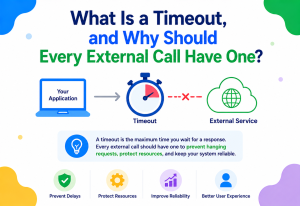
Other microservice patterns commonly validated with chaos experiments include retries with exponential backoff (retrying failed calls with increasing delay instead of hammering a struggling service), bulkheads (isolating resource pools per dependency so one slow dependency cannot exhaust threads needed by others) and timeouts (never waiting forever for any single network call).
The term “bulkhead” comes from shipbuilding. A ship’s hull is divided into separate, sealed compartments, so that if one compartment floods due to damage, the water is contained there and does not sink the entire vessel. In software, a bulkhead pattern gives each downstream dependency its own separate pool of threads or connections, so that if one dependency becomes slow and exhausts its own pool, the other dependencies — and the rest of the application — keep working normally, unaffected.
Retries, if implemented carelessly, can actually make an outage worse rather than better — a phenomenon called a retry storm. If a downstream service is already struggling and every calling service instantly retries three times on failure, the total load on the struggling service can suddenly quadruple, tipping a partial slowdown into a complete outage. This is exactly the kind of subtle, dangerous emergent behaviour that a chaos experiment can surface safely — deliberately slowing a dependency and watching whether the calling services’ retry logic makes the situation better or worse — long before it happens for real during an actual incident.
What to Copy, and What to Refuse to Copy
Chaos engineering, like any discipline, has patterns worth deliberately copying and anti-patterns worth deliberately avoiding.
Good Patterns
- Start in staging, graduate to production. Prove the tooling and process work safely in a lower environment before ever touching real customer traffic.
- Automate the abort, not just the injection. A safe chaos program invests as much engineering effort into stopping an experiment quickly as it does into starting one.
- Treat experiments as code. Store experiment definitions in version control, code-review them and run them repeatably — a one-off manual experiment that nobody can reproduce provides much less lasting value.
- Tie every experiment to a specific hypothesis. “Let’s see what breaks” is not chaos engineering; it is just recklessness. A hypothesis-driven experiment is science.
Anti-Patterns to Avoid
- Chaos theater: running dramatic-looking experiments that do not actually map to realistic failure modes, mostly for show, without producing real engineering fixes afterward.
- Skipping the baseline: injecting a fault without first agreeing on what “normal” looks like, making it impossible to objectively judge impact.
- No abort plan: running an experiment with no automated or manual way to stop it quickly if things go wrong — this turns a controlled experiment into an actual incident.
- One-and-done experiments: running a chaos experiment exactly once and never repeating it, even though the system changes constantly and a fix validated last year may have silently broken since.
- Blaming instead of fixing: treating a discovered weakness as someone’s individual failure rather than the entire point of running the experiment, which discourages teams from ever wanting to run experiments again.
A Practical Field Manual
A concrete list of habits worth adopting, mistakes worth naming, and a realistic first-quarter roadmap for a team starting from zero.
Best Practices
- Always begin with a minimal blast radius and expand gradually as confidence grows.
- Run experiments during business hours with the responsible team present, never silently overnight when nobody can respond.
- Invest in observability and alerting before investing in fault injection tooling — you cannot safely break what you cannot measure.
- Communicate experiments clearly to stakeholders in advance, including a defined start time, end time and rollback plan.
- Turn every discovered weakness into a tracked engineering ticket with an owner, not just a Slack message that gets forgotten.
- Re-run past experiments periodically (“regression chaos testing”) to make sure old fixes have not silently regressed.
Common Mistakes
- Running chaos experiments before basic reliability practices (retries, timeouts, health checks) even exist — this just produces guaranteed outages with no learning value.
- Injecting multiple unrelated faults simultaneously on a first attempt, making it impossible to isolate which fault caused which effect.
- Forgetting to fully reverse a fault after the experiment, leaving the system in a degraded state long after the test window ends.
- Treating chaos engineering as a one-time compliance checkbox instead of an ongoing, continuous practice woven into the engineering culture.
A Simple Roadmap for Getting Started
For a team that has never run a chaos experiment before, the path does not need to be complicated. A realistic first quarter might look like this:
Weeks 1–2 · Observability Foundation
Ensure basic observability exists — dashboards for latency, error rate and throughput for at least the most critical service.
Weeks 3–4 · First Manual Experiment
Pick one low-risk, stateless service. Manually terminate one instance in staging and observe recovery time by hand.
Weeks 5–8 · Automate & Grade
Automate that same experiment to run on a schedule, and add an automated pass/fail check against the steady-state metric.
Weeks 9–10 · Enter Production Carefully
Repeat the experiment against a small percentage of production traffic, with the team present and a manual abort ready.
Weeks 11–12 · First Game Day
Run the team’s first Game Day, simulating a larger scenario such as a full availability-zone outage, with the whole on-call rotation participating.
By the end of this roadmap, a team has real, evidence-backed answers to questions that used to be pure guesswork, and a repeatable process for continuing to ask harder ones.
Who Actually Runs Chaos in Production
A quick tour of how chaos engineering shows up in the wild — from Netflix’s Chaos Monkey to Amazon GameDays, Google DiRT and the tools most teams reach for today.
Netflix
Chaos Monkey and the Simian Army randomly terminate production instances and simulate entire region failures, forcing every team’s service to tolerate infrastructure loss automatically — a core reason Netflix streaming stays available despite running on shared, failure-prone cloud infrastructure.
Amazon
Internal “GameDay” exercises simulate large-scale, realistic disaster scenarios — such as a full regional outage — with cross-team participation, testing not just the software but the human incident-response process itself.
Google’s DiRT (Disaster Recovery Testing) program has, in the past, intentionally taken down significant pieces of internal infrastructure to validate that critical services and the humans operating them can recover under realistic pressure.
Uber
Uber has publicly discussed running large-scale, automated failure-injection programs across its microservice fleet to continuously validate resilience patterns like circuit breakers and fallback logic at massive scale.
LinkedIn / Meta
Both companies run internal chaos and “storm” testing programs that simulate data-center failures and network partitions to validate their globally distributed infrastructure before real disasters occur.
Everyone Else, Eventually
Every one of these programs began small — one team, one experiment, one server killed on purpose — and grew as confidence and evidence accumulated. This is a realistic and encouraging pattern for any team, of any size, starting today.
Popular Chaos Engineering Tools
| Tool | Best Suited For | Notes |
|---|---|---|
| Chaos Monkey / Simian Army | Cloud instance termination | The original open-source tool that started the field, built by Netflix. |
| Chaos Mesh | Kubernetes-native environments | Defines faults as native Kubernetes custom resources; CNCF project. |
| LitmusChaos | Kubernetes-native environments | Provides a large community-driven catalog of reusable experiments. |
| Gremlin | Enterprise, multi-platform | Commercial SaaS platform with strong safety controls and a “halt” button. |
| AWS Fault Injection Service | AWS-native workloads | Managed fault injection integrated directly with AWS infrastructure APIs. |
| Azure Chaos Studio | Azure-native workloads | Equivalent managed offering for Microsoft Azure environments. |
| Toxiproxy | Local development & testing | A lightweight TCP proxy for simulating network faults in dev/test environments. |
Common Questions, and What to Remember
A short round of the questions most commonly asked about chaos engineering — followed by a portable summary you can carry into any resilience design conversation.
Before diving into specific questions, it is worth restating the core idea one last time in the simplest possible terms: chaos engineering trades a small, controlled, well-understood risk today for a large, uncontrolled, poorly understood risk tomorrow. Every team already carries the risk of unexpected failure — chaos engineering does not create that risk, it simply chooses when, where and how safely to face it.
Is chaos engineering the same as just testing in production?
No. Testing in production without a hypothesis, without a defined blast radius and without an abort mechanism is simply causing an outage. Chaos engineering is testing in production done scientifically, safely and with strict controls — the discipline is in the safeguards, not the location.
Do I need a huge team like Netflix to start chaos engineering?
No. A single engineer can start by manually killing one non-critical service instance in a staging environment and observing what happens. The principles scale down just as well as they scale up.
What is the very first experiment a new team should run?
A good first experiment is usually terminating a single instance of a stateless, horizontally-scaled service in a non-production environment, and confirming traffic reroutes automatically without customer-visible impact.
How is chaos engineering different from a disaster recovery (DR) plan?
A DR plan is a written document describing what should happen during a disaster. Chaos engineering is the practice of actually triggering controlled versions of those disasters to prove the plan works as written, rather than trusting it untested.
How often should chaos experiments be repeated?
Frequently enough that the answer to “does this resilience mechanism still work?” is never older than the last significant change to the system. In practice, this usually means a rolling schedule where each critical failure mode is re-verified at least monthly, and ideally continuously via CI/CD-integrated experiments so every release proves resilience automatically.
What is the biggest cultural obstacle to adopting chaos engineering?
By far the most common obstacle is not technical, it is emotional: the discomfort of deliberately introducing risk into a system whose whole job is to be reliable. Teams often need to see one or two low-blast-radius experiments succeed, safely, and produce concrete engineering improvements, before the practice starts to feel less like sabotage and more like insurance.
Key Takeaways
- Chaos engineering means deliberately injecting controlled failure into a system to discover weaknesses before real, uncontrolled outages do.
- It began at Netflix with Chaos Monkey and has grown into a formal discipline with published principles, dedicated platforms and a security-focused branch.
- Every experiment follows the same scientific loop: define a steady state, form a hypothesis, choose a small blast radius, inject the fault, observe and automatically abort if needed.
- Strong observability (metrics, logs and traces) is a hard prerequisite — you cannot safely run chaos experiments without first being able to measure system health accurately.
- Chaos engineering directly validates the resilience patterns used throughout microservice architecture, especially circuit breakers, retries, bulkheads and timeouts.
- The impact shows up more in MTTR than in MTBF — failures still happen, but the system and the humans operating it recover far faster because they have rehearsed the recovery path.
- Blast radius always starts small and grows only with earned confidence, and every experiment must have an automated or manual abort ready before it begins.
- The ultimate purpose is to replace assumption and hope with tested, evidence-based confidence that a system will survive the turbulence of the real world.
Chaos engineering is the practice of turning “we believe our system is resilient” into “we tested it last week, here is the evidence, and here is what we fixed because of it.”
If you take one habit away from this guide, let it be this: before you trust any redundancy, failover or graceful-degradation mechanism in your architecture, run one small, well-scoped, hypothesis-driven experiment against it. The redundancy either works, in which case you now have evidence to show, or it does not, in which case you have found — on a calm Tuesday afternoon, with a rollback plan ready — the exact weakness that would otherwise have surfaced at 2 AM during a real incident. Either outcome is a win, which is why chaos engineering pays back its cost so quickly once it is safely underway.