
Why “Designing for Failure” Is a Core Architectural Mindset
A complete, beginner-to-production walkthrough of the single assumption that quietly shapes almost every serious decision a working software architect ever makes — and how to actually apply it, layer by layer, without over-engineering along the way.
The Bridge-Builder Who Assumed Rust
Designing for failure is what happens when an architect stops asking “how do we keep this from ever breaking?” and instead asks “when this eventually breaks — and it will — what do we want to happen next?” It is less a technique and more a lens, and it is applied every time the diagram touches a network, a disk, or another team’s service.
Picture two engineers asked to build a bridge over the same river. The first assumes nothing will ever go wrong: the steel will not rust, the river will not flood, no truck will ever exceed the posted weight limit. The second assumes the opposite: steel corrodes on a schedule, once-a-century floods happen roughly once a century, and drivers occasionally miss the weight sign. The second engineer bolts on extra support beams, drainage channels and weight sensors — not because a disaster is expected next Tuesday, but because over a fifty-year lifespan, something unexpected is essentially guaranteed to occur at least once. Which bridge would you rather drive across at 3 a.m. in the rain?
Designing for failure is the software-architecture version of that second engineer’s mindset. It means starting every design decision from the assumption that individual parts of the system — servers, networks, disks, databases, whole data centres — will fail, not as some rare accident, but as a routine, statistically expected event over the system’s working life. Instead of asking “how do we prevent this component from ever failing?” (a question with no honest answer at any real scale), the architect asks “when this component fails, what happens next, and how do we make certain it does not drag the rest of the system down with it?”
Where the mindset actually came from
The idea itself is not new. Reliability engineering in aviation, nuclear power and civil engineering has embraced “assume failure, plan for it” thinking for more than a century, precisely because in those fields the cost of being wrong is measured in human lives, not lost revenue. Software inherited this thinking rather late — only once systems finally grew large enough that failure stopped being a rare, dramatic event and became a routine, background one.
In the early days of computing, a typical application ran on a single physical mainframe or server. If that machine had a hardware fault, the whole application went down, and everyone waited for a technician to fix it. This was quietly accepted as normal because there was no realistic alternative — buying redundant mainframes was extraordinarily expensive, and most businesses did not yet need constant, always-on availability the way modern consumers now expect it.
Everything shifted with the rise of internet-scale computing in the 2000s and 2010s. Companies like Amazon, Google and later Netflix found themselves running tens of thousands of ordinary, inexpensive servers instead of a small handful of expensive, reliable ones. At that scale, hardware failure is not an occasional inconvenience — statistically, some server, somewhere in the fleet, is failing at almost every moment of every day. Werner Vogels, Amazon’s CTO, popularised a phrase that has since become a foundational mantra of modern cloud architecture: “Everything fails, all the time.” That single sentence marks the philosophical turning point where designing for failure stopped being a specialist’s technique and quietly became the default, mainstream mindset for any system built at meaningful scale.
Amazon Web Services was built from the ground up around this assumption, exposing multiple Availability Zones and regions specifically so architects could build applications capable of surviving the loss of any single data centre. Netflix took the mindset a step further with Chaos Monkey, a service that deliberately kills random production instances so every engineering team is forced to internalise the same lesson through direct, repeated experience rather than by reading about it in an incident post-mortem after the fact.
In the years since, the mindset has spread well past the original hyperscale internet companies. Banks, airlines, telecommunications providers and government systems have all adopted their own variations, because the underlying mathematics — many components, each individually reliable, combining into a fragile whole — applies equally to any sufficiently large system, regardless of industry. Today, “assume it will fail, design accordingly” is taught in system design courses, referenced in architecture review templates, and embedded directly into cloud-provider documentation as a first-class design principle, no longer treated as an advanced, optional technique reserved for the biggest companies.

Designing for failure means architecting a system so that the failure of any individual part is an expected, survivable event, rather than a catastrophic, system-wide emergency that a human has to scramble to contain.
Why “Prevent Every Failure” Runs Out of Runway
To understand why this mindset became core, rather than merely useful, it helps to understand the opposite mindset it replaced: designing to prevent failure. For decades, the instinctive approach to reliability was to make each individual component as robust and failure-proof as possible — buy the most expensive, reliable hardware, write extremely careful code, test thoroughly, and hope nothing ever breaks. That approach has a fatal mathematical flaw the moment a system grows past a certain size.
The math of large systems
Suppose a single server has a 99.9% chance of staying healthy on any given day — a seemingly excellent number. If an entire application depends on just that one server, it enjoys the same 99.9% reliability. But modern applications rarely depend on just one component. They depend on dozens or hundreds of servers, databases, network links and third-party services, all of which must be working simultaneously for the system as a whole to function. If a system depends on 100 independent components, each individually 99.9% reliable, the probability that all 100 stay healthy at the same instant drops to roughly 90% — already worse than any single component alone. Add a few hundred more components, which is entirely normal in a mid-sized microservice architecture, and the combined reliability of “everything working perfectly at once” can fall shockingly low, even though every individual piece is, by itself, quite reliable.
Picture a chain of 100 paper clips, each individually strong, each with only a 1-in-1,000 chance of snapping under load. If the whole chain only works when every single clip holds, the chain as a whole is dramatically weaker than any one clip on its own, simply because there are so many independent opportunities for one clip to snap. Software systems built from many dependent components behave the exact same way — the more pieces that all must succeed together, the more fragile the whole system becomes, no matter how strong each individual piece happens to be.
This is the core problem that motivates designing for failure: you cannot engineer your way to a system where nothing ever breaks, once the system is large enough. The sheer number of components, each with its own independent chance of failure, guarantees that something, somewhere, will fail on a regular basis. The only real question an architect can actually control is what happens next when it does.
Restating the motivation as plainly as possible
- Failure is a statistical certainty at scale, not a rare exception. With enough servers, disks and network links, something is always broken somewhere in the fleet.
- Preventing failure entirely is economically and physically impossible. Even the most expensive hardware fails eventually; even the best-written code has bugs; even the best-run networks drop packets.
- The real design goal is limiting the blast radius of failure — making sure one broken part degrades a small piece of functionality rather than dragging the entire system down with it.
- Users judge systems by what they experience, not by what broke internally. A well-designed system can lose a database replica, an entire server rack, or a whole data centre without the end user noticing anything at all.
This is why designing for failure is described as a mindset rather than a single pattern. It is not one thing you add to a system; it is the lens through which every architectural decision — from picking a database, to shaping an API, to choosing a deployment strategy — is filtered from the very first whiteboard sketch onwards.
What actually happens without this mindset
It is worth walking through what typically happens when a system is built without this assumption, because the pattern repeats itself across the industry with almost eerie consistency. A team builds an application that works flawlessly in development and in early production, when traffic is low and every component is healthy. As the system grows, more dependencies are added — a caching layer here, a third-party payment gateway there, a recommendation microservice, an analytics pipeline — each one bolted on with the unspoken assumption that it will simply keep working. Eventually one of these dependencies has a bad day: a network blip, a botched deployment, a sudden spike in its own traffic. Because nothing in the original design ever seriously considered “what if this specific piece is unavailable,” the failure propagates outward instead of stopping at its source, and a problem that should only have affected one minor feature ends up taking down checkout, login, or the entire site.
A retail website once had its entire homepage go down not because of a database or server failure, but because a third-party service providing “customers also bought” recommendations became slow. The homepage code called that service without a timeout, so every homepage request waited indefinitely for a response that was arriving too slowly, page-load queues backed up, and the whole site became unreachable — all because of a feature most customers would not have noticed missing if it had simply disappeared for an hour. This kind of incident, common across the industry, is exactly the scenario designing for failure exists to prevent.
The financial and reputational cost of these incidents is almost always disproportionate to the size of the original failure. A minor, non-critical dependency having a bad afternoon should never be capable of producing a headline-making outage — and in a system genuinely designed for failure, it is not.
Every prevention-only architecture eventually meets the same wall: the moment the number of components grows past a certain point, the compounding probability of “all healthy at once” falls below what the business can tolerate. At that point, no additional investment in individual component reliability can save the system — only investment in how failure is handled can.
The Vocabulary of Resilience
A handful of foundational ideas underpin the entire designing-for-failure mindset. Once these terms land, you will start to see them everywhere in modern system design — in retry libraries, cloud console tooltips, architecture review checklists and incident post-mortems alike.
3.1 Redundancy
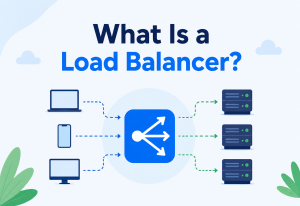
Redundancy means having more than one copy of something critical, so that if one copy fails, another can immediately take over. This applies to servers (multiple instances behind a load balancer), data (multiple database replicas), and even entire data centres (multiple regions running the same application simultaneously).
An airplane does not have just one engine — it has at least two, specifically so that if one fails mid-flight, the other can safely carry the plane to a landing. The second engine is redundancy: expensive, rarely needed on any single flight, and the difference between an inconvenience and a disaster the one time it matters.
3.2 Fault Isolation (Blast Radius)
Fault isolation is the practice of designing hard boundaries so that a failure in one part of the system cannot spread and damage unrelated parts. The goal is to keep the “blast radius” of any single failure as small as possible — ideally affecting only the specific feature, or the specific slice of customers, directly connected to the failed component, and leaving everyone else entirely untouched.
3.3 Graceful Degradation
Instead of a total crash, a well-designed system trades away non-essential functionality first, keeping the core experience alive. A shopping site might disable personalised recommendations during a partial outage while keeping “add to cart” and “checkout” fully functional, because those are what actually matter to the business and the customer in that moment. Graceful degradation is the visible, user-facing face of designing for failure — it is what turns an outage into a slightly lesser experience rather than a full stop.
3.4 Failover
Failover is the automated process of switching from a failed component to a healthy standby, ideally without any human needing to intervene, and ideally fast enough that users barely notice. A database failover promotes a replica to become the new primary; a network failover reroutes traffic away from a failed link; a regional failover redirects the entire application away from an unhealthy data centre.
3.5 Idempotency
An operation is idempotent if performing it multiple times produces exactly the same result as performing it once. This matters enormously when designing for failure, because failure recovery often involves retrying an operation that might have partially succeeded before the failure happened — without idempotency, a retried “charge the customer’s card” request could accidentally charge them twice.
3.6 Single Point of Failure (SPOF)
A single point of failure is any component whose failure, on its own, is enough to take down the entire system. Identifying and eliminating SPOFs — usually by adding redundancy or fault isolation around them — is one of the most concrete, practical activities that “designing for failure” translates into during real architecture reviews.
3.7 The “What If This Fails” Discipline
Perhaps the most practical concept of all is not a technical pattern but a habit of thought. Experienced architects, when reviewing any design — a new service, a new integration, a new data flow — deliberately walk through every arrow on the diagram and ask, out loud, “what happens if this specific connection fails right now, mid-request?” This simple, repeatable question is often more valuable than any particular pattern, because it is the mechanism that actually surfaces where redundancy, timeouts or graceful degradation are needed in the first place. Teams that adopt this habit as a standing item in every design review tend to catch single points of failure early, while they are still cheap to fix, rather than discovering them later in production during an incident.
| Question | What it forces the architect to decide |
|---|---|
| What happens if this server crashes right now? | Whether redundancy and automated failover exist for that component. |
| What happens if this network call never returns? | Whether a timeout is configured, and what the caller does after it fires. |
| What happens if this dependency returns wrong or corrupted data? | Whether input validation and defensive checks exist downstream. |
| What happens if this operation is accidentally repeated? | Whether the operation is idempotent and safe to retry. |
| What is the smallest acceptable experience if this fails? | Whether a graceful degradation path has been designed and built. |
The Building Blocks of a Failure-Resilient System
Designing for failure is not a single component you install — it is a set of architectural decisions and supporting building blocks that, taken together, make a system resilient. These are the pieces that show up, in various shapes and sizes, in almost every failure-resilient architecture in production today.
Load Balancer with Health Checks
Continuously probes each server instance for liveness and automatically stops routing traffic to anything that fails a check — without waiting for a human to notice.
Multiple Availability Zones / Regions
Physically separate data centres so that a power outage, fire or network failure in one location cannot affect the others sharing the workload.
Replicated Data Stores
Databases and caches with automatic replication and failover, so losing one node does not mean losing data, or losing availability, or both.
Circuit Breakers & Timeouts
Protect calling services from wasting resources on a dependency that has already failed or is responding too slowly to be useful anyway.
Retry & Backoff Logic
Automatically retries transient failures using increasing, jittered delays, without piling on load and overwhelming an already-struggling downstream service.
Bulkheads
Isolated resource pools (threads, connections) per dependency, so one slow dependency cannot exhaust the resources needed elsewhere in the same process.
Notice how every component in this diagram has a partner. There is no single load balancer, no single service instance, no single database, no single region. This redundancy is not accidental — it is the direct, visible output of applying the designing-for-failure mindset consistently, one layer at a time, across the entire architecture.
What Actually Happens When a Component Fails
Let us look at what happens, mechanically, when failure-aware components detect a real problem and respond to it. Each of the pieces below is small and boringly practical on its own — and each is what turns the abstract phrase “the system tolerates failure” into observable, testable behaviour in production.
5.1 Health Checks
A load balancer or orchestrator periodically sends a lightweight request — often called a “heartbeat” or a “liveness probe” — to each server instance, expecting a fast, healthy response. If an instance misses several checks in a row, it is automatically marked unhealthy and removed from the pool receiving live traffic, without any human needing to intervene, and usually within seconds of the underlying failure.
5.2 Automatic Failover
When a primary database node stops responding to its own health checks, a monitoring process — often built directly into the database engine, such as PostgreSQL’s streaming replication combined with Patroni, or a managed cloud database’s built-in failover controller — promotes the most up-to-date replica to become the new primary, and updates the connection routing so applications automatically start talking to the new primary, usually within a small handful of seconds.
5.3 Circuit Breakers in Action
A circuit breaker library sits between a service and its downstream dependency, quietly counting recent successes and failures. Once the failure rate crosses a configured threshold, the breaker “trips” and starts short-circuiting calls immediately, returning a fast, controlled error or fallback response instead of forwarding requests to a dependency that has already proven itself unreliable. This buys the downstream service time to recover without being pounded by fresh requests, and it protects the calling service from wasting its own threads on calls that would almost certainly fail anyway.
CircuitBreakerConfig cbConfig = CircuitBreakerConfig.custom()
        .failureRateThreshold(50)
        .waitDurationInOpenState(Duration.ofSeconds(15))
        .slidingWindowSize(20)
        .build();

TimeLimiterConfig timeoutConfig = TimeLimiterConfig.custom()
        .timeoutDuration(Duration.ofMillis(800))   // never wait forever
        .build();

CircuitBreaker breaker    = CircuitBreaker.of("shippingService", cbConfig);
TimeLimiter    timeLimiter = TimeLimiter.of("shippingService", timeoutConfig);

Supplier<CompletableFuture<String>> futureSupplier =
        () -> CompletableFuture.supplyAsync(() -> shippingClient.getEstimate(orderId));

Supplier<String> decorated = CircuitBreaker.decorateSupplier(breaker,
        () -> {
            try { return timeLimiter.executeFutureSupplier(futureSupplier); }
            catch (Exception e) { throw new RuntimeException(e); }
        });

String estimate = Try.ofSupplier(decorated)
        .recover(t -> "Shipping estimate unavailable — showing standard delivery time")
        .get();
Notice how this snippet composes three tools at once: a timeout (never wait forever for a response), a circuit breaker (stop trying entirely once the dependency has proven unreliable), and a fallback (always return something useful to the end user rather than an error page). That layered combination is a concrete, code-level expression of the designing-for-failure mindset — the architect assumed, from the outset, that the shipping service would eventually fail or slow down, and designed the calling code with that assumption baked in from line one.
5.4 Idempotency Keys
To make retries safe, many APIs accept a unique idempotency key generated by the client for each logical operation. If a request fails partway through — for example, the server processed a payment but the network dropped before the confirmation reached the client — the client can safely retry with the exact same idempotency key, and the server recognises it has already handled that specific operation, returning the original result rather than processing the payment a second time.
@PostMapping("/api/payments")
public ResponseEntity<PaymentResult> charge(
        @RequestHeader("Idempotency-Key") String idempotencyKey,
        @RequestBody PaymentRequest request) {

    Optional<PaymentResult> existing =
        paymentRepository.findByIdempotencyKey(idempotencyKey);
    if (existing.isPresent()) {
        return ResponseEntity.ok(existing.get()); // safe replay
    }

    PaymentResult result = paymentService.charge(request);
    result.setIdempotencyKey(idempotencyKey);
    paymentRepository.save(result);
    return ResponseEntity.ok(result);
}
5.5 Bulkheads in Practice
A bulkhead limits how many concurrent calls, or how much of a shared thread pool, a single dependency is allowed to consume, so that one slow or failing dependency cannot starve the resources needed by unrelated parts of the same application. The name comes from ship design, where physical bulkheads compartmentalise a hull so that a leak in one section cannot flood the whole vessel.
ThreadPoolBulkheadConfig config = ThreadPoolBulkheadConfig.custom()
        .maxThreadPoolSize(10)
        .coreThreadPoolSize(5)
        .queueCapacity(20)
        .build();

ThreadPoolBulkhead recommendationBulkhead =
        ThreadPoolBulkhead.of("recommendationService", config);

Supplier<CompletionStage<List<Product>>> decorated =
    ThreadPoolBulkhead.decorateSupplier(recommendationBulkhead,
        () -> CompletableFuture.supplyAsync(
                 () -> recommendationClient.fetchFor(userId)));

decorated.get().exceptionally(ex -> Collections.emptyList());
// fail safe: empty list, page still renders
Even if the recommendation service becomes completely unresponsive, only its own small, dedicated pool of ten threads is affected. The threads handling checkout, login and every other feature remain completely untouched, because they were never sharing a resource pool with the failing dependency in the first place. That is the internal, mechanical reason bulkheads are considered one of the most effective, low-effort techniques for designing for failure inside a single microservice.
5.6 Graceful Degradation Logic
At the application layer, graceful degradation is usually implemented as explicit fallback logic wrapped around every non-essential feature, following a consistent try-catch-fallback pattern: try the enhanced experience, catch any failure, and fall back to a simpler-but-still-functional experience instead of propagating the error to the user.
public HomePageView buildHomePage(String userId) {
    HomePageView view = new HomePageView();
    view.setCoreCatalog(catalogService.getFeaturedItems()); // must succeed

    try {
        view.setRecommendations(recommendationService.getPersonalized(userId));
    } catch (Exception e) {
        view.setRecommendations(catalogService.getPopularItems()); // graceful fallback
    }

    return view; // page always renders, even if personalisation failed
}The Six-Step Lifecycle of a Handled Failure
It helps enormously to trace exactly what happens, step by step, from the moment a real component fails to the moment the system has fully recovered from that failure, inside a well-designed, failure-aware architecture. The whole point of the mindset is that this cycle happens automatically, in seconds, without a customer noticing.
Step by step, in plain language, that same story reads:
- Failure occurs: a server crashes, a network link drops, or a disk fills up — something that was always statistically expected to happen eventually.
- Detection: a health check, heartbeat or monitoring alert notices the failure, ideally within seconds, without waiting for a human to notice first.
- Isolation: the failed component is automatically removed from serving live traffic, containing the blast radius before it has any chance to spread further.
- Failover or degradation: traffic is automatically rerouted to a healthy redundant component, or the system gracefully degrades non-essential functionality if no redundant component happens to be available.
- Recovery: the failed component is repaired, replaced or restarted, either automatically (a new container is scheduled) or through a human-driven fix during business hours.
- Reintegration: once healthy again, the recovered component rejoins the pool and resumes handling normal traffic, quietly closing the loop.
In a system that has genuinely internalised the designing-for-failure mindset, this entire cycle — from failure to full recovery — happens automatically, in seconds, with no customer-visible impact and no engineer needing to wake up at 2 a.m. to babysit it. That outcome is the whole point of the mindset, made concrete.
What the Mindset Buys, and What It Costs
Every architectural choice is a trade-off, and designing for failure is no exception. Its benefits are large and durable, but they come with real, measurable costs in money, complexity and operational overhead. Honest evaluation of both sides is what separates thoughtful application of the mindset from thoughtless over-engineering.
Advantages
- Systems survive real-world hardware and network failures automatically, without manual intervention.
- Customer-visible outages become rare, short or invisible, instead of long and severe.
- Engineering teams sleep better and respond to incidents with far less stress, since most failures self-heal.
- Forces clearer thinking about what functionality is truly essential versus optional, improving the overall design.
- Builds long-term organisational trust and reputation, since reliability quietly compounds into customer loyalty.
Disadvantages / Trade-offs
- Redundancy costs real money — running multiple instances, replicas and regions is more expensive than one of each.
- Adds architectural and operational complexity — more moving parts, more failure modes to reason about.
- Distributed, redundant systems are harder to test, debug and reason about than a simple single-server system.
- Consistency trade-offs often appear — replicated systems must choose how to handle data during a partition (see CAP theorem).
- Requires cultural buy-in — teams must actually practise and verify failure handling, not just design it on paper.
The central trade-off is simplicity versus resilience. A single server with a single database is easy to build, reason about and debug — but it has zero tolerance for failure. A multi-region, redundant, gracefully-degrading architecture tolerates enormous amounts of failure — but it is significantly more complex to design, build and operate correctly. Designing for failure does not mean maximising redundancy everywhere regardless of cost; it means deliberately choosing, component by component, how much resilience is actually worth the added complexity and expense for that specific piece of the system.
A useful way to frame this decision in practice is to weigh the cost of resilience against the cost of failure for each component individually, rather than applying a single blanket policy across the whole system. The cost of resilience includes the extra infrastructure spend, the added code complexity, and the ongoing operational burden of testing and maintaining failover paths. The cost of failure includes lost revenue during downtime, damage to customer trust, regulatory penalties in some industries, and the engineering time spent firefighting an incident. When the cost of failure for a component is high — a payment system, an authentication service, a core database — investing heavily in redundancy is clearly justified. When the cost of failure is low — an internal analytics dashboard, a rarely-used reporting feature — the added complexity of full redundancy may simply not be worth it, and a simpler design with a known, accepted risk of occasional downtime can be the more sensible engineering choice.
Where Failure-Handling and Scale Meet
Designing for failure and designing for scale are deeply connected, because many of the same techniques quietly serve both goals at once. Horizontal scaling — running many smaller instances rather than one large one — simultaneously increases capacity and reduces the impact of any single instance failing, since losing one of fifty instances is a far smaller event than losing your only server.
However, failure-handling mechanisms themselves have a performance cost that must be measured, not assumed. Health checks consume network bandwidth and server resources. Replication consumes extra storage and network capacity to keep copies synchronised. Circuit breakers and retries add a small amount of latency and code complexity to every request path. None of these costs are usually large individually, but at very high scale, even small per-request overheads add up, so mature architectures tune the frequency of health checks, the size of retry budgets and the depth of replication carefully, rather than maximising every safety mechanism blindly.
A team scaling a checkout service for a big sale might discover that their retry logic, while excellent for handling occasional transient failures under normal load, actually amplifies load significantly during a real partial outage — every failed request becomes three retried requests, tripling load on an already-struggling downstream dependency exactly when it can least afford it. Solving this by adding retry budgets and jittered exponential backoff is itself a further, refined application of designing for failure: even the failure-handling mechanism needs to be designed assuming it, too, can behave badly under stress.
Scalability of the mindset itself also matters organisationally. A small team with one service can reason about failure scenarios informally, in conversation. A large organisation with hundreds of services needs shared, platform-level tooling — standardised circuit breaker libraries, common health-check conventions, centralised chaos testing — so that every team benefits from the same resilience baseline without reinventing it independently, inconsistently and with varying quality.
There is also a well-known tension between resilience mechanisms and raw performance under normal, healthy conditions. A conservative timeout set very low will fail fast during real problems, protecting the wider system — but it may also incorrectly abandon perfectly healthy, slightly slow requests during ordinary traffic spikes, causing unnecessary retries and wasted work. A timeout set too high avoids that false-positive problem but reacts too slowly during a genuine outage, letting a struggling dependency keep consuming resources for longer than necessary. Tuning these values correctly requires real production data about normal latency distributions, not guesswork — another reason observability and designing for failure are inseparable in practice.
The Measurable Outcome of Doing This Well
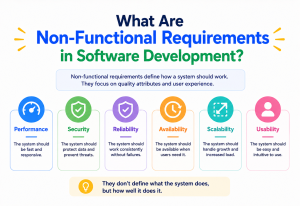
High availability (HA) is essentially the measurable outcome that designing for failure produces when it is done well. An architecture is described as highly available when it keeps operating correctly for the vast majority of time, even while individual components fail underneath it. Availability is usually expressed as a percentage, often summarised in “nines,” and each additional nine represents a dramatically smaller amount of allowed downtime per year.
| Availability | Approximate allowed downtime per year |
|---|---|
| 99% (“two nines”) | ~3.65 days |
| 99.9% (“three nines”) | ~8.76 hours |
| 99.99% (“four nines”) | ~52.6 minutes |
| 99.999% (“five nines”) | ~5.26 minutes |
Reaching each additional nine of availability typically requires exponentially more investment in redundancy, automation and failure handling — which is exactly why designing for failure must be a deliberate architectural decision made early, rather than something bolted on afterwards. Retrofitting true high availability onto a system that was originally built assuming everything would always work is usually far more expensive and disruptive than designing for failure from the start.
High availability is not about preventing every possible failure — that goal is unreachable at scale. It is about making sure the system’s combined, redundant design stays available even while its individual parts fail underneath it, continuously, in the background, largely unnoticed by users.
High availability also has a close, sometimes uncomfortable relationship with data consistency, formalised by the CAP theorem: during a network partition, a distributed system must choose between remaining fully available (continuing to serve requests, possibly with slightly stale or temporarily inconsistent data) or remaining fully consistent (refusing requests until the partition heals, to guarantee every reader sees the same, up-to-date data). Designing for failure forces architects to make this trade-off explicitly and deliberately for each specific piece of data, rather than leaving it as an accidental side effect of whichever database happened to be chosen. A social-media “like” count can usually tolerate being briefly, slightly stale in exchange for staying available; a bank account balance usually cannot.
Site Reliability Engineering teams often formalise the acceptable amount of unreliability using an error budget — for example, if the availability target is 99.9%, the system is allowed roughly 8.76 hours of downtime or degraded performance per year as an explicit, agreed budget. This budget can be deliberately spent on calculated risks, such as rolling out new features faster or performing planned maintenance, precisely because the architecture has already been designed to tolerate a certain amount of failure gracefully. This reframes reliability from “never break anything” — an impossible and demotivating goal — into “operate within an agreed, deliberately chosen tolerance for failure,” which is both achievable and honest.
Assume Breach the Way You Assume Breakage
Designing for failure extends naturally into security thinking, under a closely related principle sometimes called designing for compromise, or defence in depth. Just as an architect assumes a server will eventually fail rather than hoping it never does, a security-minded architect assumes a credential will eventually leak, a dependency will eventually contain a vulnerability, or an attacker will eventually gain some initial foothold — and designs the system so that a single compromised component does not automatically grant access to everything else.
This shows up in practices such as network segmentation (an attacker who breaches one service cannot automatically reach the database directly), the principle of least privilege (each service only has the specific permissions it truly needs, limiting what a compromised service can do in the first place), short-lived credentials that automatically expire and rotate, and encrypted data at rest so that even a stolen disk does not expose readable data to whoever picks it up.
A system designed only to prevent failure or compromise, with no plan for what happens if prevention fails anyway, tends to fail catastrophically and completely the first time prevention actually does fail. A system designed assuming failure or compromise will eventually happen contains the damage automatically, the same way fault isolation contains an availability failure to a small blast radius.
This overlap between availability-focused and security-focused failure design is not a coincidence — both disciplines are solving the same underlying structural problem with different threats in mind. A service that has already been built with strong fault isolation, bulkheads and least-privilege access boundaries for availability reasons is, almost as a side effect, also significantly harder for an attacker to move laterally through if they do manage to compromise one small piece of it. This is one of the more encouraging discoveries architects make once they take the designing-for-failure mindset seriously: many of the same investments quietly pay off twice, once for reliability and once for security, because both are ultimately about limiting the damage any single broken assumption can cause.
You Cannot Design for Failure You Cannot See
You cannot design for failure you cannot see. Observability is what turns “we assume things fail” from an abstract philosophy into an operational reality with real feedback loops. Three categories of signal matter most, and mature production systems collect all three deliberately, not accidentally.
- Metrics — numeric time-series data such as error rate, latency percentiles and saturation (how close a resource is to its limit), used to detect that something is degrading, often before it becomes a full failure.
- Logs — detailed event records used after the fact to understand exactly what happened and why, particularly useful for root-causing failures that health checks alone cannot explain.
- Traces — end-to-end records following a single request across multiple services, essential for understanding where in a distributed chain of calls a failure or slowdown actually originated.
Beyond simply collecting this data, a failure-aware architecture defines clear alerting thresholds tied to real user impact — not just “CPU is high,” but “checkout error rate exceeds 1% for more than two minutes” — so that engineers are notified about problems that actually matter to customers, without being overwhelmed by noisy alerts about internal fluctuations that self-correct harmlessly.
Dashboards built with designing-for-failure in mind typically surface not just current health, but redundancy headroom — for example, “we currently have 3 of 3 database replicas healthy” is a very different signal than “we have 1 of 3 healthy,” even though both might currently be serving traffic successfully, because the second scenario has already lost its safety margin and the next failure could be far more serious.
A closely related concept is the distinction between a symptom-based alert and a cause-based alert. A symptom-based alert fires on user-visible impact, such as elevated checkout error rate — this is what should page an on-call engineer at 2 a.m., because it directly reflects harm to real customers. A cause-based alert fires on an internal condition, such as one of three database replicas being unhealthy — this matters, but if the system is designed for failure correctly, it should not necessarily wake anyone up immediately, because redundancy is still absorbing the impact. Mature observability practice deliberately separates these two categories, reserving urgent paging for genuine symptom-based, user-impacting alerts, and routing cause-based signals to lower-urgency channels for daytime investigation and repair.
Cloud Primitives That Make the Mindset Practical
Cloud platforms are built specifically to support failure-aware architecture, offering primitives that would be extremely expensive to build from scratch on physical hardware. Recognising which primitive maps to which resilience concern is much of what turns architectural theory into practical, day-to-day cloud design.
Multi-Zone and Multi-Region Deployment
Cloud providers group physical data centres into Availability Zones (independent facilities within a region, isolated from each other’s power and cooling failures) and Regions (geographically distant groups of Availability Zones, isolated from region-wide disasters). Deploying across multiple zones protects against a single facility failure; deploying across multiple regions protects against much larger, rarer events such as widespread network partitions or catastrophic natural disasters.

Kubernetes and Self-Healing
Container orchestrators like Kubernetes continuously compare the actual running state of an application against its declared desired state, and automatically restart, reschedule or replace failed containers without human intervention — a direct, automated embodiment of designing for failure at the deployment layer.
apiVersion: apps/v1
kind: Deployment
metadata:
  name: checkout-service
spec:
  replicas: 6                     # redundancy: never rely on one instance
  strategy:
    rollingUpdate:
      maxUnavailable: 1            # never take down more than one at a time
  template:
    spec:
      topologySpreadConstraints:
        - maxSkew: 1
          topologyKey: topology.kubernetes.io/zone   # spread across zones
          whenUnsatisfiable: DoNotSchedule
      containers:
        - name: checkout-service
          image: axts/checkout-service:1.4.0
          livenessProbe:
            httpGet: { path: /healthz, port: 8080 }
            periodSeconds: 5
          readinessProbe:
            httpGet: { path: /ready, port: 8080 }
            periodSeconds: 5
Deployment Strategies
Techniques like blue-green deployment (running two full production environments and switching traffic between them) and canary releases (rolling a new version out to a small percentage of traffic first) exist specifically to limit the blast radius of a bad deployment — treating “the new code itself might be the failure” as just another failure mode to design around. This is designing for failure applied to the release process itself, not just to the runtime system.
Applying the Mindset to the Data Layer
The data layer is where designing for failure gets most concrete and most consequential — a stateless service can be replaced in seconds, but data, once lost, is gone. That single asymmetry is why databases, caches and load balancers get disproportionate attention when architects apply this mindset in practice.
Databases
Failure-aware database design typically includes automated replication to standby nodes, regular tested backups (an untested backup is not a real backup — it is a hope), and a clearly defined, practised failover procedure with a known Recovery Time Objective (how long recovery is allowed to take) and Recovery Point Objective (how much recent data loss is acceptable in the worst case). Both numbers should be written down, agreed with the business, and actually tested on a regular schedule, not assumed.
Caching
Caches introduce their own failure mode: what happens when the cache itself is unavailable? A failure-aware design ensures the application can still function, just more slowly, by falling back to the underlying database directly, rather than treating the cache as a hard dependency whose failure would take down the entire application. A well-designed cache layer is always an optimisation, never a load-bearing wall.
Load Balancing
Load balancers are themselves a potential single point of failure if only one exists, so failure-aware architectures typically run redundant load balancers, often behind a DNS-based or cloud-provider-managed traffic distribution layer, so that even the component responsible for routing around failures does not itself become an unprotected weak point in the same design it is supposed to protect.
Anything whose job is to route around failure must itself be designed for failure, or the entire redundancy story collapses at the exact moment it is most needed.
Failure Design at the Service Boundary
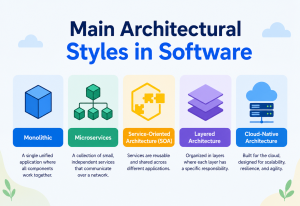
Microservice architecture is, in many ways, “designing for failure” applied to the very shape of an application. Instead of one large program where an internal bug can crash the entire process, an application is split into many independent services, each with its own failure domain — one service crashing does not directly crash another, as long as the calling service handles the resulting network error gracefully.
But this benefit is not automatic — it depends entirely on every service correctly treating every network call to another service as something that might fail. This is why timeouts, retries with backoff, circuit breakers and bulkheads (covered in Section 05) are considered mandatory, not optional, in any serious microservice architecture. Without them, splitting a monolith into microservices can actually make a system more fragile, not less, because a single slow dependency can now cause a cascading pile-up of waiting threads across many separate services instead of just one program.
Notice that the recommendation service failing does not stop the order from completing — it simply causes that one non-essential feature to be hidden for this request. This is graceful degradation applied concretely at the API level, and it is only possible because the architect explicitly designed the order service to keep functioning even when a dependency it calls is unavailable.
Distributed Transactions and the Saga Pattern
Designing for failure becomes especially interesting when a single business operation spans multiple services, each with its own database. A traditional single-database transaction guarantees that either all changes happen or none do. Across multiple independent services, that guarantee is far harder to provide, because a failure partway through — say, inventory was reserved successfully but payment failed — cannot simply be rolled back with a single database command.
The saga pattern solves this by breaking a distributed operation into a sequence of local transactions, each with a corresponding, pre-defined compensating action that undoes its effect if a later step fails. If payment fails after inventory was already reserved, the saga automatically triggers a compensating “release inventory” action, restoring the system to a consistent state despite the partial failure, without ever needing a traditional cross-service transaction.
| Step | Forward Action | Compensating Action (if a later step fails) |
|---|---|---|
| 1 | Reserve inventory | Release reserved inventory |
| 2 | Charge payment | Refund payment |
| 3 | Schedule shipment | Cancel scheduled shipment |
This pattern is a direct, structural expression of designing for failure applied to business logic itself: rather than hoping a multi-step process always completes successfully, the architecture assumes any individual step can fail at any time and explicitly defines how to unwind the steps that already succeeded.
What Reliably Works, and What Reliably Bites
Certain patterns show up over and over in resilient production systems, and certain anti-patterns show up over and over in post-mortems. Recognising both lists from memory is much of what separates architects who talk about resilience from architects whose systems actually stay up.

Good Patterns
- Redundancy at every critical layer — no single server, database, load balancer or region the entire system depends on alone.
- Fail fast, recover automatically — detect problems quickly using tight timeouts and health checks, rather than letting a failing component linger and cause damage slowly.
- Graceful degradation over total failure — always ask “what is the minimum viable experience if this dependency is gone?” rather than treating every dependency as equally critical.
- Idempotent operations wherever retries are possible — since retries are a core failure-recovery mechanism, they must always be safe to repeat.
- Verify resilience with real experiments — chaos engineering and Game Days turn assumed resilience into proven resilience.
Anti-Patterns to Avoid
- The hidden single point of failure: a system that looks redundant on the architecture diagram but secretly depends on one shared component underneath — a single DNS provider, a single certificate authority, a single configuration service — that nobody remembered to make redundant.
- Infinite retries with no backoff: retry logic that hammers a failing dependency at full speed forever, turning a partial slowdown into a complete, self-inflicted outage.
- Assuming the network is reliable: code written as if a network call to another service will always succeed instantly, with no timeout and no error handling at all.
- Untested failover: a failover mechanism that has never actually been triggered outside of a diagram, and therefore might not work correctly when it is finally needed for real.
- Over-engineering low-value components: adding expensive multi-region redundancy to an internal admin tool a handful of employees use occasionally, where the cost of resilience clearly outweighs its business value.
A Practical Checklist for Real Teams
Every mindset eventually has to become a set of concrete habits, or it never leaves the whiteboard. These are the working habits and repeat mistakes that consistently separate teams that ship reliable systems from teams that ship fragile ones with impressive-looking architecture diagrams.
Best Practices
- Explicitly list every critical dependency for a system and ask, for each one, “what happens if this is unavailable right now?” before writing any code.
- Set a timeout on every single network call — there should be no such thing as a call that can wait forever.
- Make retries idempotent and bounded, using exponential backoff and jitter to avoid synchronised retry storms.
- Define and practise a clear Recovery Time Objective and Recovery Point Objective for every critical data store.
- Regularly test failover and recovery procedures on purpose, rather than discovering they do not work during a real incident.
- Match the level of redundancy and resilience investment to the actual business criticality of each component — not every service needs five nines of availability.
Common Mistakes
- Designing the “happy path” first and treating failure handling as an afterthought added later, if there is time.
- Assuming that cloud infrastructure being reliable means the application built on top of it is automatically reliable too.
- Building redundancy at the infrastructure layer while leaving a single shared dependency, like a configuration service or a message queue, unprotected underneath everything.
- Never validating failure handling with real experiments, leaving the entire design as an untested assumption.
How Serious Companies Actually Apply This
The mindset only really lands when you can point at systems in production that clearly embody it. Each of these examples is well-documented publicly, and each illustrates a slightly different flavour of applying the same underlying idea: assume the failure, and build for it.
Amazon
Amazon’s own internal architecture principles explicitly assume “everything fails, all the time,” driving decisions like cellular architecture, where customer traffic is partitioned into independent cells so a failure in one cell cannot affect the others.
Netflix
Netflix’s regional failover capability lets the company redirect all traffic away from an entire AWS region during a major outage — a capability only possible because the architecture was built from day one assuming a whole region could disappear.
Google’s Site Reliability Engineering discipline formalises designing for failure through concepts like error budgets — an agreed, deliberate amount of acceptable failure that teams are allowed to “spend” on releasing new features and taking calculated risks.
Banking & Financial Systems
Core banking platforms typically run active-active across multiple data centres with strict idempotency guarantees on transactions, because a duplicated or lost financial transaction carries direct regulatory and monetary consequences.
Airline Reservation Systems
Global airline booking platforms are designed with graceful degradation in mind — during partial outages, core booking and check-in functions are kept alive even if secondary features like seat-map graphics or loyalty-point displays are temporarily disabled.
Public-Sector Platforms
Government identity and tax platforms increasingly adopt multi-region, active-standby architectures, precisely because a national-scale outage on filing day is a headline event no institution wants to be at the centre of.
A common thread runs through every one of these examples: none of them treats resilience as something achieved once and then forgotten. Designing for failure is an ongoing discipline, revisited continuously as systems grow, traffic patterns shift and new dependencies are introduced, not a checkbox completed during the system’s original design phase.
It is also worth noting that these organisations did not start with the sophisticated, mature architectures they run today. Amazon’s cellular architecture, Netflix’s regional failover and Google’s error-budget system were all built incrementally, refined over years, and driven directly by lessons learned from real incidents where an earlier, simpler design failed to contain a failure the way its architects had assumed it would. This is a genuinely encouraging pattern for smaller teams: the mindset matters more than the sophistication of any particular implementation, and it can be adopted gradually, one honest “what happens if this fails” conversation at a time.
What to Carry Forward
Before the specific questions, it is worth restating the central idea one more time as simply as possible: designing for failure means an architect spends their design effort not on making failure impossible, which cannot be achieved, but on making failure small, contained and quickly recoverable, which can. Every pattern discussed in this guide — redundancy, fault isolation, graceful degradation, idempotency, circuit breakers, bulkheads, sagas — is simply a different, concrete tool for achieving that one underlying goal, applied at a different layer of the system, from a single line of code to an entire multi-region deployment.
The mindset is, ultimately, a form of intellectual honesty about the limits of engineering. No architect can promise a system that never breaks; too many independent components, each with their own real-world failure modes, make that promise impossible to keep at any meaningful scale. What an architect can promise, and what designing for failure is built to deliver, is a system where breakage is small, expected and handled — where the difference between a good day and a bad day is measured in a few seconds of automated recovery, not hours of manual firefighting and public apology.
Does designing for failure mean my system will fail more often?
No. The frequency of underlying component failures stays roughly the same regardless of architecture — servers, disks and networks fail at similar rates either way. What changes is whether those failures are visible to users at all. A well-designed system quietly absorbs the same failures that would cause a poorly-designed system to go down completely.
Is not adding all this redundancy overkill for a small application?
Not every system needs multi-region, five-nines availability. Designing for failure is a mindset applied proportionally — a small internal tool might reasonably accept a single point of failure if the cost of an occasional short outage is genuinely low, while a customer-facing payment system usually cannot.
How is this different from disaster recovery planning?
Disaster recovery typically focuses on recovering from large, infrequent catastrophic events, like an entire data centre being destroyed. Designing for failure is broader — it applies the same underlying assumption (“this can and will fail”) down to the smallest components, like a single server or a single network call, not just to large-scale disasters.
What is the very first step for a team adopting this mindset?
Make a simple list of every critical dependency in the system, and for each one honestly answer “what happens right now if this becomes unavailable?” Most teams discover their first real single points of failure simply by writing honest answers to that one question, in one afternoon.
Does this replace the need for good testing?
No — it complements it. Traditional testing verifies that the system behaves correctly under expected conditions; designing for failure ensures the system continues to behave acceptably under unexpected conditions. Chaos experiments and Game Days are essentially the missing testing discipline for that second category.
Can I retrofit this into an existing system?
Yes, but incrementally. Start by mapping current dependencies and single points of failure, add timeouts and circuit breakers on the highest-risk network calls first, then work outward. Attempting a big-bang resilience rewrite tends to introduce as many new failure modes as it removes.
Key Takeaways
- Designing for failure means assuming components will fail as a routine, expected event, and architecting the system so that failure is contained, gracefully handled and quickly recovered from automatically.
- The mindset became essential once systems grew large enough that the combined probability of “everything working perfectly at once” became mathematically unreliable, even with individually strong components.
- Core techniques include redundancy, fault isolation, graceful degradation, automated failover and idempotent operations that make safe retries possible.
- It is a mindset applied throughout the architecture — from database replication, to circuit breakers in microservices, to multi-region cloud deployment — not a single feature added once.
- The mindset extends naturally into security thinking, where architects similarly assume compromise will eventually happen and design to contain its impact.
- The ultimate goal is not preventing failure, which is impossible at scale, but making sure failure is small, contained and invisible to the people relying on the system.
Whenever a new component, integration or feature is about to land in production, walk through it once with a colleague and ask a single question of every arrow on the diagram: “what happens if this specific thing fails right now?” If every arrow has an honest, satisfying answer, the design has already absorbed most of what “designing for failure” is meant to give you.