Attribute-Based Access Control
A complete, beginner-friendly guide to ABAC — what it is, how it actually decides who gets access to what, how companies like Amazon, Google, and Netflix build and scale it, and how to implement it correctly in production systems.
From ACLs and Roles to Attributes
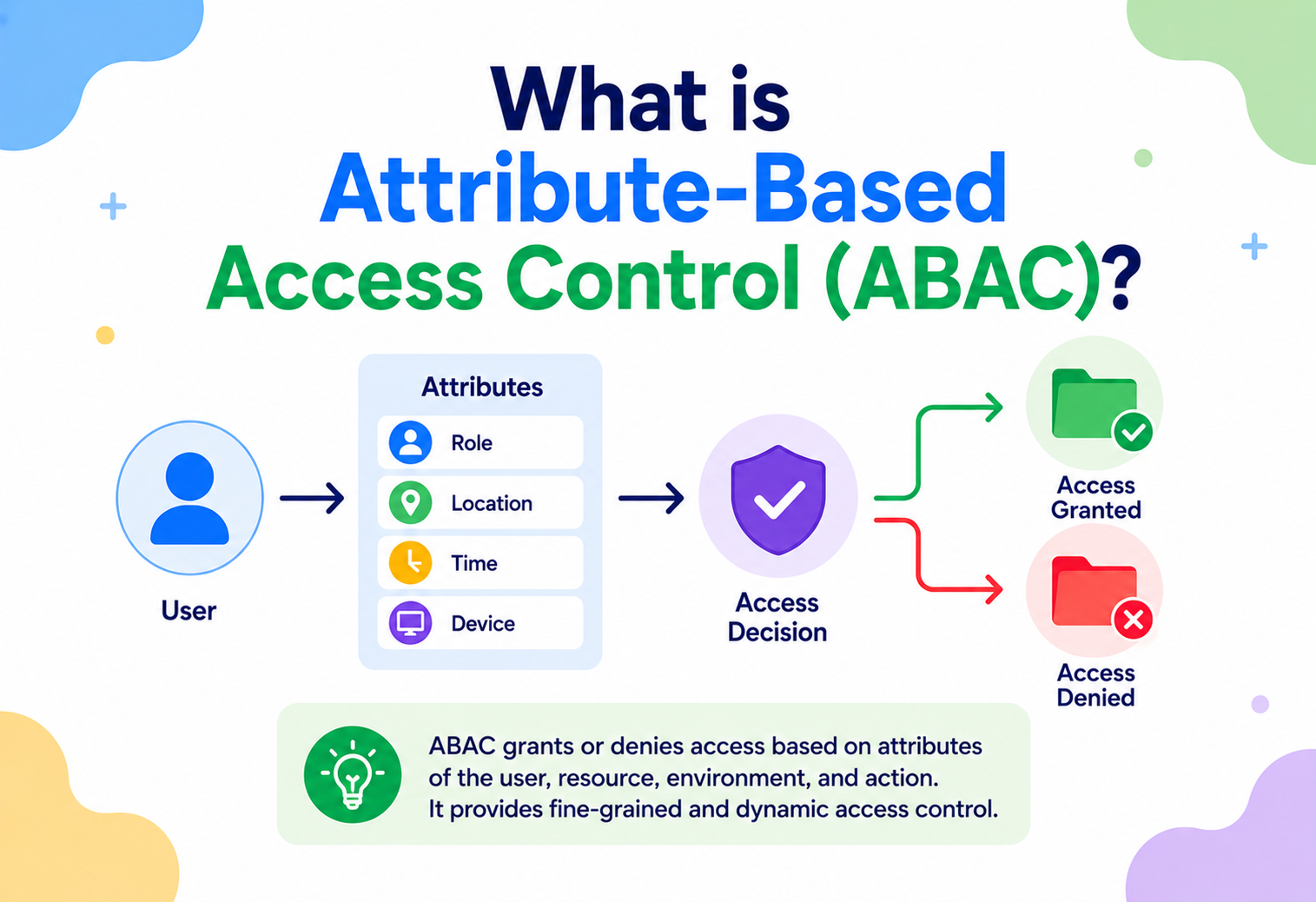
ABAC evaluates properties of the user, the resource, the action, and the environment against a policy — at the precise moment access is requested — to decide whether that specific request should be allowed.
Imagine a hospital where a doctor should be able to view the medical records of the patients currently under their care, but not the records of every patient in the building. A nurse should be able to update vitals during their shift, but not after it ends. An external auditor should be able to view billing records, but only during business hours, and only for insurance claims, never clinical notes. Trying to describe this with a simple list of “who is allowed to do what” quickly becomes impossible — the correct answer depends on who the person is, what they are trying to access, when they are trying to access it, and even where they are accessing it from.
Attribute-Based Access Control (ABAC) is an access control model that makes exactly these kinds of context-sensitive decisions. Instead of assigning permissions directly to a fixed job title or role, ABAC evaluates a set of attributes — properties of the user, the resource being accessed, the action being attempted, and the surrounding environment — against a policy, at the precise moment access is requested, to decide whether that specific request should be allowed.
A Brief History
Early computer systems, dating back to the 1960s and 1970s, used simple access control lists (ACLs) — a table directly mapping individual users to the specific files or resources they could touch. This worked fine when systems had a handful of users, but it became unmanageable as organizations grew: adding a new employee meant manually granting them access to dozens of individual resources, and revoking access when someone changed teams meant hunting down every ACL entry tied to them.
In the 1990s and early 2000s, Role-Based Access Control (RBAC) emerged as a major improvement, formalized in NIST standards work led by researchers including David Ferraiolo and Richard Kuhn. RBAC introduced an intermediate layer: instead of granting permissions to individual users, permissions are granted to roles (like “Nurse” or “Billing Clerk”), and users are assigned to roles. This dramatically simplified administration — but it still struggled with context. A role like “Nurse” does not naturally express “only during their shift” or “only for patients currently assigned to them.”
The concept of attribute-based access emerged through the 2000s as researchers and practitioners looked for a model expressive enough to handle these contextual, fine-grained requirements. A major milestone came in 2013, when the U.S. National Institute of Standards and Technology (NIST) published Special Publication 800-162, “Guide to Attribute Based Access Control (ABAC) Definition and Considerations” — a foundational document that formalized ABAC’s terminology and architecture, and remains a widely referenced standard today. Around the same time, the OASIS standards body’s XACML (eXtensible Access Control Markup Language) specification provided one of the earliest concrete, standardized languages for expressing ABAC policies.
Over the last decade, ABAC has moved from an academic and government-compliance concept into everyday production use at major cloud providers. AWS’s IAM condition keys, Google Cloud’s IAM Conditions, and Azure’s Attribute-Based Access Control features are all, at their core, ABAC engines — evaluating tags, resource properties, and request context to make fine-grained access decisions at massive scale.
Think of RBAC like a hotel keycard that is simply labeled “Housekeeping” — it opens every guest room door, all day, every day, because that is what the Housekeeping role does. ABAC is like a smart keycard that checks, at the exact moment you tap it against a door: is this room currently assigned to you for cleaning today, is it currently within your shift hours, and has the guest not requested “do not disturb”? The same person, the same keycard, but the access decision is computed fresh, based on live context, every single time.
Where RBAC Starts to Break Down
To understand why ABAC exists, it helps to see exactly where its predecessor, RBAC, starts to break down as systems grow more complex.
Problem 1: Role Explosion
In a pure RBAC system, any new dimension of context that matters — department, region, data sensitivity level, project assignment, time of day — often has to be baked into an entirely new role. A company might end up with “Senior Engineer – India – Project Atlas – Read Only” and “Senior Engineer – US – Project Atlas – Read Write” as two entirely separate, manually maintained roles. Multiply this across dozens of dimensions, and organizations end up with thousands of narrowly-scoped roles that become extremely difficult to audit or reason about — a phenomenon widely known as role explosion.
Problem 2: Static, Context-Blind Permissions
RBAC roles, once assigned, typically do not change based on the situation. A contractor’s role does not automatically stop granting access the moment their contract expires; a manager’s elevated access does not automatically pause outside business hours. Handling these situational, time-bound, or condition-based requirements in pure RBAC usually requires custom code bolted on top of the access control system, rather than being handled by the access control model itself.
Problem 3: Resource-Level Sensitivity
Modern systems often need to make decisions not just based on the type of resource, but its specific properties. A document tagged “Confidential — Legal” needs different access rules than one tagged “Public — Marketing,” even though both might technically be “documents” that a given role has generic access to. RBAC’s coarse-grained role-to-permission mapping struggles to express this without, again, spinning up new roles for every sensitivity tier.
Problem 4: Cross-Organizational and Dynamic Environments
In multi-tenant SaaS platforms, cloud environments, and partner ecosystems, the set of “who might need access to what” is constantly shifting, and pre-provisioning a role for every possible combination of user type, tenant, and resource simply does not scale operationally.
Imagine a file-sharing app where a user should be able to edit a document only if they are the original owner, or if the document has been explicitly shared with them with “edit” permission, and only while their account’s subscription is active. With RBAC alone, you would need a role per sharing state per subscription state — an unmanageable combinatorial explosion. With ABAC, this becomes a single readable policy: allow “edit” if user.id == document.owner_id OR user.id in document.shared_with_edit, AND user.subscription_status == "active".
Amazon S3’s bucket policies commonly use ABAC-style conditions — for example, allowing access to an object only if the requester’s IAM principal tag matches the object’s own resource tag (aws:ResourceTag/department equals aws:PrincipalTag/department). This single, generic policy automatically scales to correctly handle any number of departments and any number of new employees, without anyone ever writing a new role.
The ABAC Vocabulary
ABAC has its own specific vocabulary, much of it formalized by NIST SP 800-162. Let’s build a solid foundation, since these terms recur throughout the rest of this guide.
Attributes
What: A named property with a value, describing some characteristic of an entity involved in an access request. ABAC organizes attributes into four categories:
| Category | Description | Examples |
|---|---|---|
| Subject attributes | Properties of the user or service making the request | role, department, clearance level, employment status |
| Resource attributes | Properties of the object being accessed | document classification, owner, project, data sensitivity |
| Action attributes | Properties of the operation being attempted | read, write, delete, approve, export |
| Environment attributes | Contextual properties of the request itself | time of day, IP address, device posture, geolocation |
Policy
What: A rule (or set of rules) that combines attributes using logical conditions to determine whether a request should be permitted. Policies are typically written in a structured, machine-evaluable format rather than free-form code.
Analogy: A policy is like a recipe’s conditional instructions: “if the oven is preheated AND the dough has risen for at least an hour, THEN bake.” ABAC policies work the same way, just with security-relevant attributes instead of kitchen conditions.
PEP, PDP, PIP, PAP — The Four Pillars of an ABAC Architecture
NIST SP 800-162 formalizes four core architectural components, and understanding these four acronyms is essential to understanding any real ABAC deployment:
PEP — Policy Enforcement Point
The component that intercepts an access request and actually enforces the decision — for example, an API gateway or application middleware that blocks or allows a request.
PDP — Policy Decision Point
The “brain” that evaluates the applicable policy against the gathered attributes and returns a Permit or Deny decision.
PIP — Policy Information Point
The source (or sources) of attribute data — user directories, resource metadata databases, environmental context providers — that the PDP queries to gather the attributes it needs.
PAP — Policy Administration Point
The interface or system where administrators author, test, and publish policies.
Combining Algorithm
What: When multiple policies could apply to a single request, the combining algorithm decides how their individual decisions merge into one final answer — for example, “deny overrides” (if any applicable policy says deny, the final answer is deny, even if others say permit) or “permit overrides” (the opposite).
Policy Language (e.g., XACML, Cedar, Rego)
Policies need to be expressed in some structured, evaluable format. Historically XACML (XML-based) was the standard; more recent systems favor more developer-friendly languages like Rego (used by Open Policy Agent) or Amazon’s Cedar language, both designed to be easier to read, write, and statically analyze than XACML’s verbose XML.
Think of an airport security checkpoint. The security officer physically checking your boarding pass and ID is the PEP — they enforce whatever decision they are told to enforce. The centralized watchlist and rules database that determines whether you are flagged for extra screening is the PDP — it makes the decision, but does not itself stop you at the gate. The officer trusts and acts on what the PDP says.
The NIST-Shaped ABAC Architecture
Let’s assemble the concepts above into a complete, production-shaped architecture diagram.
1. Policy Enforcement Point (PEP)
Embedded at the point where access actually happens — an API gateway, a service mesh sidecar, application middleware, or even a database proxy. The PEP’s job is intentionally simple: intercept the request, ask the PDP for a decision, and enforce whatever answer comes back.
2. Policy Decision Point (PDP)
The evaluation engine. Given a request (who, what resource, what action) and a set of gathered attributes, it evaluates the relevant policies and returns Permit, Deny, or sometimes Indeterminate (if required attribute data is missing) or Not Applicable (if no policy addresses this request at all).
3. Policy Information Points (PIPs)
Attribute sources. In a real enterprise, these might include an LDAP or Active Directory server for subject attributes (department, title, clearance), a resource catalog or tagging service for resource attributes, and a request-context service supplying environment attributes like geolocation derived from IP address or device posture from an endpoint security agent.
4. Policy Administration Point (PAP)
Where policies are authored, versioned, tested, and published. In mature deployments this looks like a proper software development lifecycle — policies are stored in version control, reviewed, tested against sample requests, and deployed through a CI/CD pipeline, rather than edited directly on a production system.
A small SaaS startup might implement the PDP as a single library function embedded directly inside their monolithic application, with subject and resource attributes pulled straight from the application’s own database — no separate PIP services, no standalone PDP microservice. This is architecturally the “toy” version of the diagram above, useful for understanding the concept before adding enterprise-scale complexity.
How ABAC Actually Decides Access
Let’s trace through exactly what happens, step by step, when a user attempts an action that is protected by ABAC.
Step 1: Request Interception
A user (or service) attempts an action — say, a doctor trying to view a specific patient’s record through a hospital’s electronic health record system. The PEP, sitting in the request path, intercepts this before it reaches the actual application logic.
Step 2: Attribute Gathering
The PEP (or the PDP itself, depending on architecture) assembles the request into a structured description: who is asking (subject), what they want to do (action), what they want to do it to (resource), and any relevant context (environment). It then gathers the actual attribute values needed to evaluate policy — querying the PIPs for things like the doctor’s department, the patient’s currently assigned care team, and the current time.
Step 3: Policy Evaluation
The PDP retrieves the applicable policy or policies from the PAP and evaluates each one’s conditions against the gathered attributes, producing an individual decision per applicable policy.
Step 4: Combining Decisions
If more than one policy applies, the configured combining algorithm resolves them into one final answer — Permit or Deny.
Step 5: Enforcement
The PDP returns its decision to the PEP, which either allows the original request to proceed to the application, or blocks it and returns an appropriate error (commonly an HTTP 403 Forbidden in web-based systems).
A Minimal Conceptual Example in Java
While production PDPs (like Open Policy Agent or AWS IAM’s evaluation engine) are far more sophisticated, the core evaluation logic — matching attributes against policy conditions — can be illustrated simply:
import java.util.Map;
import java.util.Set;

public class SimpleAbacPdp {

    // Represents a single ABAC policy as a functional condition
    interface Policy {
        boolean evaluate(Map<String, Object> subject,
                          Map<String, Object> resource,
                          String action,
                          Map<String, Object> environment);
    }

    public static void main(String[] args) {

        // Policy: A doctor may view a patient record if the patient
        // is in a department the doctor belongs to, AND it's during
        // business hours, AND the action requested is "view".
        Policy doctorViewPolicy = (subject, resource, action, environment) -> {
            String subjectDept = (String) subject.get("department");
            String resourceDept = (String) resource.get("department");
            int hourOfDay = (int) environment.get("hourOfDay");

            boolean sameDepartment = subjectDept != null && subjectDept.equals(resourceDept);
            boolean businessHours = hourOfDay >= 8 && hourOfDay < 20;
            boolean correctAction = action.equals("view");

            return sameDepartment && businessHours && correctAction;
        };

        Map<String, Object> subject = Map.of(
            "id", "doc-102",
            "department", "Cardiology"
        );

        Map<String, Object> resource = Map.of(
            "id", "record-4521",
            "department", "Cardiology",
            "sensitivity", "Standard"
        );

        Map<String, Object> environment = Map.of("hourOfDay", 14);

        boolean decision = doctorViewPolicy.evaluate(subject, resource, "view", environment);
        System.out.println("Access decision: " + (decision ? "PERMIT" : "DENY"));
    }
}
This snippet is deliberately simplified — real PDPs handle policy combining across many simultaneously applicable rules, attribute caching, obligation handling (e.g., “permit, but log this access”), and far richer condition languages — but it captures the essential mechanic: attributes go in, a boolean condition is evaluated, a decision comes out.
Handling Missing or Ambiguous Attributes
Real-world requests do not always arrive with every attribute cleanly populated. What should the PDP do if a resource’s sensitivity tag was never set, or a subject’s department field is temporarily null due to an upstream directory sync issue? NIST SP 800-162 formally acknowledges a third decision outcome beyond Permit and Deny: Indeterminate, returned when the PDP cannot reach a confident decision because required attribute data is missing or a PIP is unreachable. How a system handles Indeterminate matters enormously for security posture — treating it as equivalent to Deny (the safe, conservative choice) versus accidentally treating it as equivalent to Permit (a serious and common implementation bug) can be the difference between a system that fails safely and one that silently exposes data during a data-quality hiccup.
Normalizing Attribute Values Before Comparison
A subtle but very real production issue: attribute values arriving from different source systems often use inconsistent formats — one system might record department as "Cardiology" while another uses the code "CARD". Before policies can reliably compare attributes for equality, most mature ABAC deployments introduce a normalization layer that maps raw source values into a single canonical vocabulary, ensuring a policy comparing subject.department == resource.department does not silently fail simply because two upstream systems format the same real-world value differently.
A Single Decision, End to End
Let’s zoom into the lifecycle of a single access decision request, since this is where beginners often get confused about which component does what, and in what order.
Attribute Freshness and the Point-in-Time Problem
A subtlety that trips up many production deployments: attributes can change between the moment they are fetched and the moment a decision is enforced. If a doctor’s assigned patient list is cached for performance and a patient is reassigned to a different doctor mid-shift, a stale cached attribute could produce an incorrect decision. Well-designed ABAC systems carefully balance attribute freshness against the performance cost of always fetching live data, often using short cache TTLs (time-to-live) for volatile attributes and longer caching for stable ones (like an employee’s department, which rarely changes minute to minute).
Request Context Propagation
In a microservices environment, the original request context (who is calling, on whose behalf, from where) needs to be reliably propagated across service boundaries so that a downstream service’s PEP has the full picture needed to make a correct decision — not just a raw resource ID with no accompanying subject or environment context.
Obligations and Advice
Beyond a simple Permit/Deny, some ABAC systems support returning obligations alongside a decision — additional actions the PEP must perform if it enforces the decision, such as “permit, but redact the patient’s social security number field” or “permit, but log this access to the audit trail with elevated detail.” This lets a single policy framework express both binary access control and finer data-masking behavior.
What ABAC Gives You — and What It Costs
ABAC’s expressive power comes with a real complexity budget. Understanding both sides is the difference between a well-scoped rollout and an over-engineered one.
Advantages
✓ Benefits
- Fine-grained, contextual decisions: Access can depend on real-time context — time, location, resource sensitivity — not just a static role assignment.
- Scales without role explosion: A single well-written policy can correctly handle combinations that would require dozens or hundreds of RBAC roles.
- Easier to express dynamic business rules: Conditions like “only during business hours” or “only for resources the user owns” become native policy expressions rather than custom application code.
- Centralized, auditable policy logic: When implemented with a proper PDP, access logic lives in one reviewable, versioned place instead of scattered across application code.
- Naturally supports least privilege: Because decisions are computed per-request based on current context, users do not retain broad standing access “just in case.”
✗ Disadvantages & Tradeoffs
- Increased implementation complexity: Designing attribute schemas, writing correct policies, and standing up PDP/PIP infrastructure requires significantly more upfront engineering investment than simple RBAC.
- Harder to audit “who can access what” statically: Because decisions depend on runtime attributes, answering “which users currently have access to resource X” often requires actually evaluating policies against live data.
- Performance overhead: Every access decision may require fetching multiple live attributes from various PIPs, adding latency compared to a simple in-memory role lookup.
- Policy sprawl and testing difficulty: As the number of policies grows, verifying that they interact correctly (no unintended overlaps or gaps) becomes its own significant engineering challenge.
- Requires reliable, well-governed attribute data: ABAC’s correctness is entirely dependent on the accuracy of the underlying attribute data — a badly maintained HR system feeding stale department attributes will silently produce wrong access decisions.
ABAC vs. RBAC vs. ACL: A Quick Comparison
| Feature | ACL | RBAC | ABAC |
|---|---|---|---|
| Granularity | Per resource, per user | Per role | Per attribute combination |
| Handles context (time, location) | No | Not natively | Yes, natively |
| Administrative overhead as org grows | Very high | Moderate (role explosion risk) | Lower, if attributes are well-governed |
| Ease of static audit | High (direct mapping) | High (role-to-permission mapping) | Lower (requires runtime evaluation) |
| Implementation complexity | Low | Moderate | High |
In practice, most mature production systems do not pick purely one model — they combine RBAC for broad, stable categories of access with ABAC-style conditions layered on top for fine-grained, contextual refinement. This hybrid approach is sometimes informally called “RBAC with ABAC conditions” and is exactly how systems like AWS IAM operate: roles and policies define broad permission boundaries, while attribute-based conditions narrow them down per request.
Making Every Decision Fast Enough
For a system handling millions of access decisions per day — think a large cloud provider’s IAM system or a bank’s core transaction platform — performance engineering around ABAC becomes a serious discipline.
The Latency Cost of Attribute Fetching
Every network call the PDP makes to a PIP to fetch a missing attribute adds latency to the decision. A naive implementation that makes several sequential, uncached calls to external directories for every single access check can easily add tens or hundreds of milliseconds to every protected request — unacceptable for a high-throughput API.
Local Policy Evaluation and Embedded PDPs
To avoid a network round-trip to a centralized PDP service on every single request, many production architectures embed a lightweight PDP directly inside the application or its sidecar process (a pattern popularized by Open Policy Agent’s “OPA sidecar” deployment model), with policies and cached attribute snapshots pushed down locally and refreshed periodically in the background, rather than fetched synchronously per request.
Attribute Caching Strategy
Not all attributes need the same freshness guarantees. A user’s department (changes rarely) can be cached for hours; a document’s current sensitivity classification (can change more often) might need a much shorter cache window or event-driven cache invalidation, where the resource catalog actively pushes updates to the PDP’s cache whenever a classification changes, rather than relying purely on time-based expiry.
Capacity Planning: A Worked Example
Suppose an API platform processes 50,000 requests per second at peak, and every request requires an ABAC decision. If each decision, evaluated against a locally cached policy bundle with no network round-trip, takes roughly 0.5 milliseconds of CPU time, a single modern CPU core can theoretically handle around 2,000 decisions per second — meaning the platform needs on the order of 25 cores’ worth of PDP evaluation capacity purely for policy decisions, before accounting for headroom, garbage collection pauses, and the rest of the request-handling pipeline. This is exactly the kind of calculation infrastructure teams perform before deciding how many instances to provision and whether embedded, in-process evaluation is necessary versus a centralized PDP service.
Bulk and Batch Authorization
Some real-world scenarios need many decisions at once rather than one at a time — for example, rendering a search results page that must filter out any documents the current user is not authorized to see, potentially across thousands of candidate results. Calling the PDP separately for every single item would be prohibitively slow. Mature ABAC systems typically expose a batch evaluation API, letting the PEP submit many subject-resource-action tuples in a single call and receive back a corresponding list of decisions, amortizing network overhead and allowing the PDP to apply internal optimizations like sharing already-fetched subject attributes across every item in the batch, since the subject making the request does not change between items.
Pre-Filtering vs. Post-Filtering Strategies
A related architectural choice is whether to evaluate authorization before querying the underlying data store (pre-filtering, pushing conditions like “only rows where department matches” directly into the database query) or after retrieving a broader result set (post-filtering, fetching more data than needed and discarding unauthorized items in application code). Pre-filtering is generally far more efficient at scale, since it avoids fetching and then throwing away data the user was never entitled to see in the first place, but it requires the underlying data layer to support expressing ABAC conditions as native query predicates — not always straightforward for complex, multi-attribute policies.
The PDP Sits in Everything’s Critical Path
An ABAC PDP sitting in the critical path of every protected request means its availability directly determines the availability of everything it guards. If the PDP goes down and there is no sensible fallback, the entire protected system can become unusable.
Fail-Closed vs. Fail-Open: A Critical Design Decision
When the PDP is unreachable or returns an error, should the PEP deny the request (fail-closed) or allow it through (fail-open)? Security-sensitive systems almost universally choose fail-closed — better to temporarily block legitimate access during an outage than to silently grant access to everyone during that same outage. Fail-open should only ever be a deliberate, narrowly-scoped choice for genuinely low-risk operations, never a default.
Defaulting to fail-open “just to keep things running” during an incident is one of the most dangerous ABAC implementation mistakes possible — it can silently turn a temporary infrastructure outage into a temporary, undetected security breach affecting every protected resource in the system.
Redundant PDP Deployment
Production PDP services are typically deployed across multiple availability zones or regions, behind a load balancer, with automatic health checks removing unhealthy instances from rotation — the same high-availability patterns used for any other critical backend service.
Graceful Degradation via Local Caching
The embedded, locally-evaluating PDP pattern discussed in the Performance section has a valuable side benefit for reliability: if the central policy and attribute service becomes temporarily unreachable, the local PDP can continue making decisions using its last successfully cached policy bundle, rather than failing immediately — trading a small amount of policy freshness for significantly improved resilience during upstream outages.
Securing the System That Enforces Security
Because ABAC’s entire purpose is enforcing security boundaries, the security of the ABAC system itself deserves particularly careful treatment.
Attribute Integrity and Provenance
An ABAC decision is only as trustworthy as the attributes feeding it. If an attacker can manipulate a subject attribute — for example, tampering with a client-supplied “department” field instead of it being authoritatively sourced from a trusted identity provider — they could trick the PDP into granting access it never should. Production systems must ensure subject and environment attributes come from trusted, authenticated sources, never directly from unauthenticated client input.
Policy Testing and Formal Verification
Because a single misconfigured policy can silently grant far broader access than intended, mature ABAC deployments invest heavily in policy testing — maintaining a suite of test cases (both should-permit and should-deny scenarios) that run automatically whenever a policy changes, similar to unit tests for application code. Some organizations go further, using formal policy analysis tools that can mathematically verify properties like “no policy in this set can ever grant access to resources tagged Top-Secret to a subject without Top-Secret clearance,” catching subtle logic errors that manual review might miss.
Least Privilege by Default
Policies should default to Deny unless a specific condition explicitly grants Permit — never the reverse. This “deny by default” posture ensures that gaps in policy coverage fail safely, rather than silently granting broad access to anything not explicitly restricted.
Auditability
Every access decision, along with the specific attributes and policy that produced it, should be logged in enough detail to reconstruct exactly why a particular request was permitted or denied — essential both for security investigations after an incident and for regulatory compliance audits in industries like healthcare and finance.
A subtle but serious mistake is allowing resource owners to set arbitrary custom attributes on their own resources without any governance — for instance, letting any user tag a document as “public” regardless of its actual content, which then interacts unpredictably with broader organizational policies that trust the “public” tag. Attribute governance (who is allowed to set which attributes, and under what approval process) is just as important as policy governance.
Preventing Policy Injection
Just as SQL injection exploits unsanitized input concatenated directly into a database query, a poorly designed policy engine that dynamically constructs evaluation logic from untrusted input can be similarly vulnerable to a form of policy injection, where an attacker crafts input specifically designed to alter the structure of the evaluated condition rather than merely supplying a value for it. Well-designed policy languages avoid this class of vulnerability by strictly separating policy structure (authored and reviewed ahead of time by administrators) from request data (supplied at evaluation time and only ever treated as attribute values, never as executable logic).
Time-of-Check to Time-of-Use (TOCTOU) Considerations
Because ABAC decisions are computed based on the attribute values available at the moment of evaluation, a gap can exist between when access is checked and when the protected action actually executes — particularly in systems with asynchronous processing or queued operations. If a relevant attribute changes in that window (a user’s access is revoked moments after a decision was made but before the corresponding action completes), the system may act on a now-stale authorization. Production systems handling long-running or asynchronous operations often mitigate this by re-validating authorization immediately before the action actually executes, rather than trusting a decision made earlier in the request’s lifecycle.
Treating the PDP Like Any Other Critical Service
Operating a production ABAC system means treating it, like any other critical piece of infrastructure, with proper observability.
Key Metrics to Track
| Metric | Why It Matters |
|---|---|
| Decision latency (p50/p95/p99) | Directly impacts the latency of every protected request across the system |
| Permit vs. Deny rate | Sudden shifts can indicate a misconfigured policy or an attack pattern |
| PIP query failure rate | Missing attribute data can lead to incorrect or fail-closed decisions |
| Policy evaluation error rate | Indicates bugs in policy logic that need immediate attention |
| Cache hit ratio for attributes | Low hit ratios signal performance risk and unnecessary PIP load |
| Policy change frequency and author | Supports change auditing and rollback if a bad policy is deployed |
Centralized Decision Logging
Every decision — including the specific attribute values used and the policy that fired — is typically shipped to a centralized logging and analytics system, letting security teams answer questions like “show me every Deny decision for user X in the last 24 hours” quickly during an investigation.
Alerting
Production teams set alert thresholds on the metrics above — for example, paging on-call engineers if decision latency p99 exceeds a set threshold, or if the Deny rate suddenly spikes well above its historical baseline, which could indicate either a bad policy deployment or a coordinated unauthorized access attempt.
If you are experimenting with Open Policy Agent locally, the built-in decision logging feature will print every evaluated input and resulting decision to your console — a miniature version of the enterprise-scale centralized decision logging pipelines described above.
Where and How the PDP Actually Runs
Deployment choices — managed vs. self-hosted, centralized vs. sidecar — shape the latency, freshness, and blast-radius characteristics of the whole system.
Self-Hosted vs. Managed Cloud ABAC/Authorization Services
Organizations can either build and operate their own PDP infrastructure using open-source tools like Open Policy Agent (OPA) or Cedar, or use a managed cloud-native authorization service such as AWS Verified Permissions, Google Cloud IAM Conditions, or Azure ABAC. Managed services handle scaling, patching, and high availability automatically, at the cost of less flexibility and potential vendor lock-in around the specific policy language used.
Sidecar vs. Centralized Service Deployment
As introduced earlier, teams generally choose between deploying the PDP as a centralized network service that every application calls over the network, or embedding it as a local sidecar or in-process library alongside each application instance. The sidecar pattern trades some policy freshness for dramatically lower latency and better fault isolation — a crash in one PDP sidecar does not affect any other service.
Infrastructure as Code for Policy Deployment
In modern cloud-native environments, ABAC policies are typically version-controlled and deployed through the same CI/CD pipelines as application code, ensuring changes are reviewed, tested, and auditable rather than manually edited on a production system.
package example.healthcare.authz

import future.keywords.if

default allow := false

# Permit a doctor to view a patient record only if the patient's
# department matches the doctor's own department, and the request
# occurs during business hours.
allow if {
    input.action == "view"
    input.subject.department == input.resource.department
    input.environment.hour_of_day >= 8
    input.environment.hour_of_day < 20
}
This snippet, written in Rego (the policy language used by Open Policy Agent), expresses the same “doctor views patient record” condition shown earlier in Java — but as a declarative policy artifact that can be version-controlled, tested, and deployed independently of the application’s own codebase.
Distributed-Systems Thinking, Applied to Policy
Although ABAC is not a database, the same distributed-systems thinking that governs load balancing and caching in typical web architectures applies directly to policy and attribute infrastructure.
Load Balancing Centralized PDP Clusters
When a centralized PDP deployment model is used, PDP instances are typically deployed behind a load balancer across multiple nodes, allowing horizontal scaling as decision volume grows, along with health checks that route traffic away from unhealthy instances — the same pattern applied to any other stateless backend service.
Attribute Store Read Replicas
Since PIPs are frequently queried (potentially on every access decision), the underlying attribute stores — user directories, resource metadata databases — often need read replicas to handle the query volume without becoming a bottleneck, mirroring how any high-read-traffic database is scaled in general system design.
Policy Bundle Distribution
In the sidecar deployment pattern, policy updates need to reach potentially thousands of distributed PDP instances reliably and relatively quickly. This is commonly handled through a pull-based model, where each sidecar periodically polls a central policy bundle service for updates, combined with a CDN or object storage layer (like an S3 bucket) to distribute the actual policy bundle files efficiently at scale.
Distributing policy bundles to thousands of PDP sidecars is like distributing a new edition of a rulebook to every referee at a massive, geographically spread-out sports league — you do not want a courier hand-delivering a fresh printed copy to every single referee individually every time a rule changes; instead, referees periodically check a shared, centrally updated online rulebook and download the latest version themselves.
Authorization as a Shared, API-Driven Capability
Modern ABAC systems are rarely monolithic — commercial and open-source PDPs expose APIs, and enterprises increasingly consume authorization as a managed, API-driven service rather than hand-rolling access checks inside every application.
The Authorization API Contract
A well-designed PDP typically exposes a simple, consistent API: submit a structured request (subject, resource, action, environment), receive back a decision (and optionally, obligations). This uniform contract lets dozens or hundreds of different microservices integrate with the same authorization system without each one needing custom integration logic.
// Simplified example: calling a centralized ABAC decision API
// from a Java microservice before allowing a protected operation.

public class AuthorizationClient {

    public boolean isPermitted(String subjectId, String resourceId,
                                String action, java.util.Map<String, Object> environment)
                                throws Exception {

        String requestBody = String.format("""
            {
              "subject": {"id": "%s"},
              "resource": {"id": "%s"},
              "action": "%s",
              "environment": %s
            }
            """, subjectId, resourceId, action, toJson(environment));

        java.net.http.HttpClient client = java.net.http.HttpClient.newHttpClient();
        java.net.http.HttpRequest request = java.net.http.HttpRequest.newBuilder()
            .uri(java.net.URI.create("https://pdp.internal.example/v1/authorize"))
            .header("Content-Type", "application/json")
            .POST(java.net.http.HttpRequest.BodyPublishers.ofString(requestBody))
            .build();

        java.net.http.HttpResponse<String> response =
            client.send(request, java.net.http.HttpResponse.BodyHandlers.ofString());

        // In production, parse the JSON response body to extract
        // the "decision" field: "Permit" or "Deny".
        return response.body().contains("\"decision\":\"Permit\"");
    }

    private String toJson(java.util.Map<String, Object> map) {
        // Placeholder for a real JSON serialization library call
        return "{}";
    }
}
ABAC as a Cross-Cutting Microservice
In a microservices architecture, authorization is a textbook example of a cross-cutting concern — logic that many independent services all need, but that should not be duplicated and re-implemented inside each one. Centralizing it as its own well-defined service (or a widely shared sidecar library) keeps policy logic consistent and lets it evolve independently of any individual application’s release cycle.
Service Mesh Integration
In service-mesh-based architectures (like Istio), ABAC-style authorization can be enforced directly at the mesh’s sidecar proxy layer, intercepting service-to-service calls before they ever reach application code — meaning individual microservices do not each need to implement their own PEP logic; the mesh handles enforcement uniformly across the entire platform.
Shapes That Work — and Shapes That Don’t
A short catalogue of the patterns that pay off in production ABAC deployments — and the anti-patterns that quietly wreck them.
Pattern: Hybrid RBAC + ABAC
As mentioned earlier, most production systems combine coarse-grained RBAC for broad permission boundaries with fine-grained ABAC conditions layered on top, getting the administrative simplicity of roles alongside the contextual precision of attributes, rather than choosing one model exclusively.
Pattern: Deny-by-Default with Explicit Permit Rules
Structuring the policy set so that access is denied unless a specific, well-tested condition explicitly grants it, rather than the reverse — ensuring that gaps in policy coverage fail safely.
Pattern: Attribute Provenance Tagging
Explicitly tracking where each attribute value came from (which trusted identity system, and when it was last refreshed) alongside the value itself, so that policy evaluation and later audits can distinguish a freshly-verified attribute from a potentially stale or lower-trust one.
Anti-pattern: Client-Supplied Attributes
Trusting attribute values sent directly by the client making the request (rather than sourced independently and authoritatively by the PDP or a trusted PIP) is a dangerous anti-pattern — it hands an attacker a direct lever to manipulate access decisions simply by lying about their own attributes in the request payload.
Anti-pattern: Monolithic, Unreviewed Policy Files
Allowing a single sprawling policy file to grow unchecked, edited directly by many people without structured review or automated testing, is a common path toward subtle, hard-to-detect authorization bugs — the same discipline applied to application code review needs to apply to policy changes.
Anti-pattern: No Policy Versioning or Rollback Plan
Deploying policy changes directly to production without version control or a fast rollback mechanism is a serious operational anti-pattern — when (not if) a bad policy change ships, teams need to be able to revert within seconds, not hours.
Habits That Separate Robust Deployments from Fragile Ones
A pragmatic checklist distilled from real production rollouts — the practices that keep ABAC systems correct at scale, and the mistakes that quietly erode them.
Best Practices
- Start with a small, well-governed attribute schema: Resist the temptation to model every conceivable attribute on day one; grow the schema deliberately as real requirements emerge.
- Source attributes from authoritative systems: Pull subject attributes from your identity provider, resource attributes from your system of record — never trust unauthenticated client input for security-relevant attributes.
- Test policies like code: Maintain automated test suites covering both should-permit and should-deny scenarios, run on every policy change before deployment.
- Default to fail-closed: Ensure that PDP unavailability results in denied access, not silently granted access.
- Log every decision with full context: Capture the attributes and policy that produced each decision, enabling fast investigation and compliance reporting later.
- Combine RBAC and ABAC pragmatically: Use roles for broad, stable boundaries and attributes for the fine-grained, contextual refinements — do not force everything into pure ABAC if a simpler model suffices for a given case.
- Plan for attribute freshness explicitly: Decide, per attribute, an acceptable staleness window, and design caching accordingly rather than applying one blanket policy to every attribute type.
Common Mistakes
- Underestimating implementation complexity: Teams sometimes adopt ABAC assuming it is simply “RBAC with extra fields,” without budgeting for the real engineering investment PIPs, policy testing, and governance require.
- Letting policy logic leak into application code: Scattering ad-hoc authorization checks throughout application code, alongside a “real” ABAC system, defeats the purpose of centralizing policy in the first place.
- Ignoring attribute data quality: Feeding the PDP inaccurate or stale attribute data (like an outdated department field from a poorly synced HR system) produces confidently wrong access decisions.
- No plan for policy conflict resolution: Deploying multiple overlapping policies without a clearly defined and well-understood combining algorithm, leading to unpredictable behavior when policies interact.
- Skipping performance testing under realistic load: Assuming PDP latency measured in a low-traffic test environment will hold at production scale, without load-testing the full attribute-fetching and evaluation path.
- Treating Indeterminate as Permit: As discussed earlier, silently defaulting ambiguous or error-state decisions to allow access, rather than the safer deny-by-default behavior, quietly undermines every other security control built around the policy set.
A Practical Rollout Path
Pick a narrow, high-value first use case
Choose a single well-understood, sensitive resource type — not the whole access surface at once.
Implement the full PEP/PDP/PIP loop end-to-end
Even in miniature. Prove the whole pipeline works and produces the decisions you expect.
Validate in production, with real traffic
Run in shadow mode first if possible — log the decision the PDP would have made without actually enforcing it, and compare against existing behavior.
Expand the pattern deliberately
Only add more resource types and policies once the first is genuinely stable. Attempting to model an organization’s entire access surface in ABAC terms from the first iteration is a common and largely avoidable source of stalled rollouts.
Who Actually Uses ABAC in Production
A quick tour of how ABAC shows up in the wild — from cloud IAM to healthcare, finance, SaaS, and government systems.
AWS IAM Condition Keys
Amazon Web Services’ IAM policies routinely incorporate ABAC-style conditions — for example, restricting an action to only succeed if a resource tag matches a principal tag, or if the request originates from a specific IP range or occurs within a specific time window — layered on top of its broader role- and policy-based permission system.
Google Cloud IAM Conditions
Google Cloud allows administrators to attach conditional expressions to IAM role bindings, evaluated against request attributes like resource name patterns, request time, and resource tags, extending its underlying RBAC-style role system with fine-grained, attribute-driven refinement.
Netflix’s Internal Authorization Platform
Large streaming and technology platforms with thousands of internal microservices, such as Netflix, commonly build centralized internal authorization platforms that combine role assignments with attribute-based conditions, allowing services across the company to make consistent, auditable access decisions without each team reinventing authorization logic independently.
HIPAA-Regulated Systems
Hospital and healthcare IT systems handling patient data under regulations like HIPAA in the US frequently rely on ABAC to enforce the kind of contextual, “minimum necessary access” rules regulators require — access limited to a patient’s actual current care team, during appropriate hours, logged in full detail — which is precisely the class of requirement RBAC alone struggles to express cleanly.
Segregation of Duties in Banking
Banks and financial institutions often use ABAC-style policies to enforce segregation-of-duties rules — for instance, ensuring the employee who initiates a large wire transfer can never be the same employee who approves it, a condition naturally expressed by comparing subject attributes across two related actions rather than being encoded into static roles.
Multi-Tenant Isolation
SaaS companies serving many independent customer organizations from a single shared application commonly rely on ABAC to enforce strict tenant isolation — every request’s resource attributes include a tenant identifier, and a foundational policy denies any access where the subject’s tenant does not match the resource’s tenant, regardless of what other roles or permissions might otherwise apply. This single, uniformly-applied condition acts as a critical safety net against the class of bugs where application code accidentally fails to filter by tenant, preventing one customer’s data from ever being exposed to another’s users even if a developer makes a mistake elsewhere in the codebase.
Defense & Classified Systems
Government agencies handling classified or sensitive information were, historically, among the earliest and most demanding adopters of attribute-based models, since mandatory access control requirements — matching a subject’s security clearance level against a resource’s classification level, combined with need-to-know restrictions tied to specific projects or compartments — map naturally onto ABAC’s subject-and-resource attribute comparison model, and were a significant motivating use case behind NIST’s original SP 800-162 publication.
Across these examples, a consistent pattern emerges: none of these organizations treats ABAC as an academic curiosity or a compliance box to tick. They treat it as production infrastructure, with its own SLOs, its own observability, and often its own dedicated platform team — because the correctness and availability of the ABAC system determines the correctness and availability of everything it protects.
Common Questions, and What to Remember
A short round of the questions most commonly asked about ABAC — followed by a portable summary you can carry into any authorization design conversation.
Is ABAC always better than RBAC?
Not necessarily. RBAC remains simpler to implement, administer, and audit for systems where access genuinely maps cleanly onto stable job functions. ABAC earns its added complexity specifically when access decisions depend on dynamic context that roles alone cannot express. Many production systems use both together rather than choosing one exclusively.
Does implementing ABAC require adopting a specific policy language like XACML?
No. While XACML was historically the standardized language associated with ABAC, modern implementations frequently use more developer-friendly alternatives like Rego (Open Policy Agent) or Cedar (AWS), or even simple custom domain-specific logic — what matters conceptually is the attribute-based evaluation model, not any single specific language.
How does ABAC relate to Zero Trust security models?
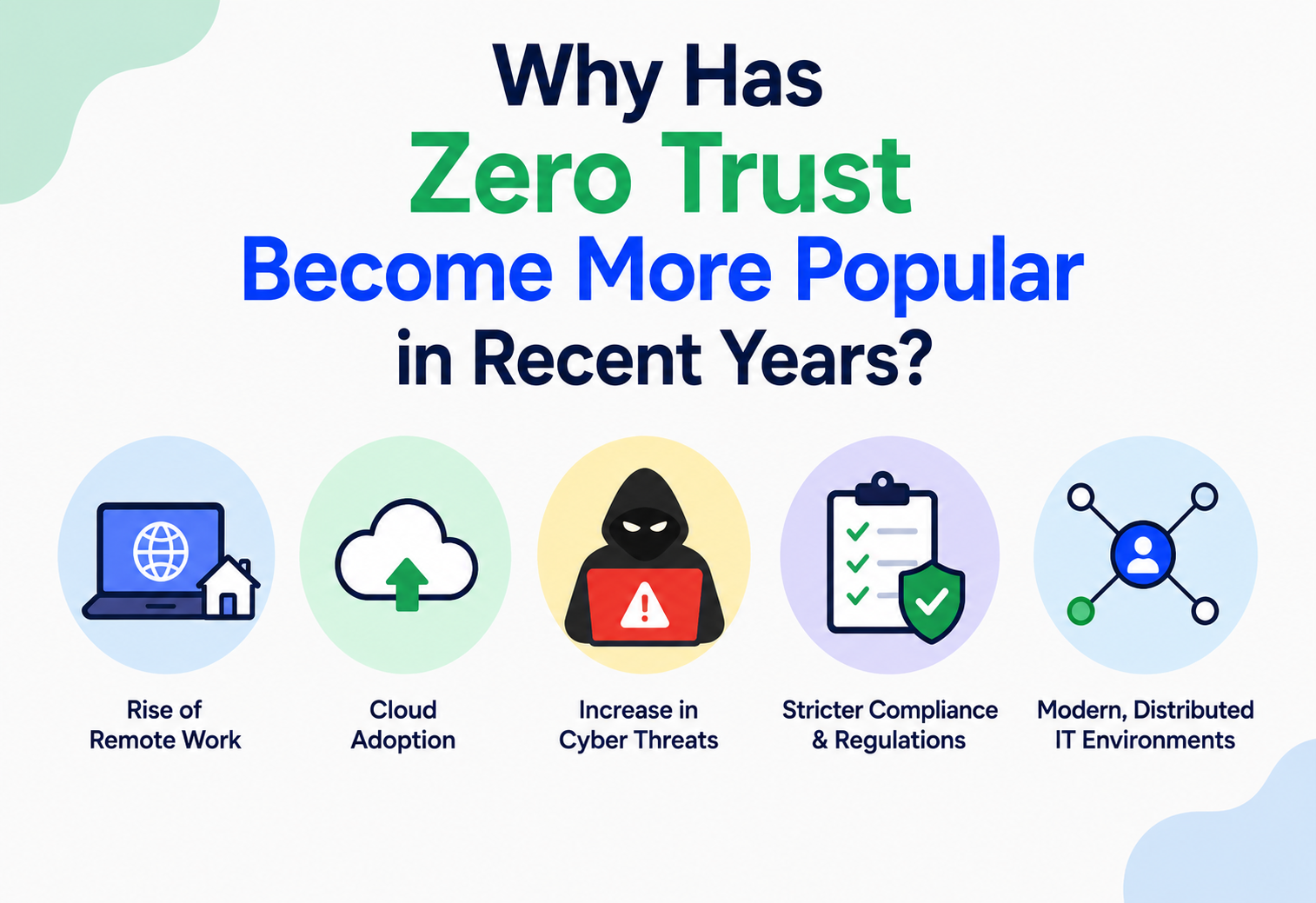
ABAC is a natural fit for Zero Trust architectures, since Zero Trust’s core principle — never grant broad standing trust based purely on network location or a coarse role, and instead verify every request on its own merits — aligns closely with ABAC’s per-request, context-aware evaluation approach.
Can ABAC policies become a performance bottleneck?
They can, if implemented naively with synchronous, uncached attribute fetches on every request. Well-architected ABAC systems mitigate this through local policy evaluation, attribute caching with sensible freshness windows, and horizontally scaled PDP infrastructure, as discussed in the Performance section.
Should a small startup implement full ABAC from day one?
Usually not. For most small teams, a simple RBAC system, or even a handful of hardcoded ownership checks in application code, is sufficient early on. The heavier ABAC architecture patterns described in this guide — dedicated PDP services, formal policy languages, distributed PIPs — tend to become worthwhile once the organization’s access requirements grow genuinely complex or regulatory compliance demands finer-grained, auditable control.
How is ABAC different from Attribute-Based Encryption (ABE)?
Despite the similar name, they solve different problems at different layers. ABAC is an access control model that decides, at request time, whether a system should allow an operation. Attribute-Based Encryption is a cryptographic technique where data itself is encrypted such that it can only be decrypted by a party whose attributes satisfy a policy embedded in the ciphertext — meaning the enforcement is mathematically baked into the data, rather than relying on a separate access-control system standing guard in front of it. The two can complement each other, but they are not interchangeable.
Can ABAC policies reference attributes of a relationship between two resources, not just a single resource?
Yes, and this is one of ABAC’s more powerful capabilities compared to simpler models. A policy can express conditions across relationships — for example, “permit if the requesting user is a member of the team that owns the parent project of this specific document” — by having the PDP query a PIP capable of resolving that relationship graph. This kind of relationship-aware authorization is increasingly common in modern systems and has even inspired newer, closely related models like Google’s Zanzibar, which specializes specifically in large-scale relationship-based access control.
Key Takeaways
- ABAC makes access decisions by evaluating attributes of the subject, resource, action, and environment against policies, at the moment each request is made — rather than relying on a static role assignment alone.
- ABAC emerged to solve RBAC’s limitations around role explosion and its inability to natively express contextual, situational access rules.
- The classic NIST architecture defines four components: the PEP (enforces), the PDP (decides), the PIP (supplies attribute data), and the PAP (manages policy).
- Real production decisions flow through request interception, attribute gathering, policy evaluation, decision combining, and enforcement — each step introducing its own performance and correctness considerations.
- ABAC trades implementation complexity for expressive power and reduced role sprawl; most production systems pragmatically combine it with RBAC rather than replacing roles entirely.
- Fail-closed behavior, deny-by-default policy design, trusted attribute sourcing, and thorough policy testing are non-negotiable security fundamentals for any real ABAC deployment.
- At scale, ABAC infrastructure requires the same distributed-systems rigor as any other production system: caching, load balancing, redundancy, and careful capacity planning around attribute-fetch latency.
ABAC is per-request, context-aware access control — expressive enough to handle the situational rules RBAC cannot, but powerful enough that it demands the same engineering discipline as any other critical production system.
If you take one habit away from this guide, let it be this: before choosing (or extending) an authorization model, spend a few minutes writing down the actual decisions the system must make and the context those decisions genuinely depend on. If a small number of stable roles cover it, RBAC is enough. If the correct answer changes based on who, what, when, and where, ABAC almost certainly earns its complexity budget — and building it deliberately, from a small first use case outward, is what turns that complexity into a lasting security advantage rather than a source of subtle production bugs.