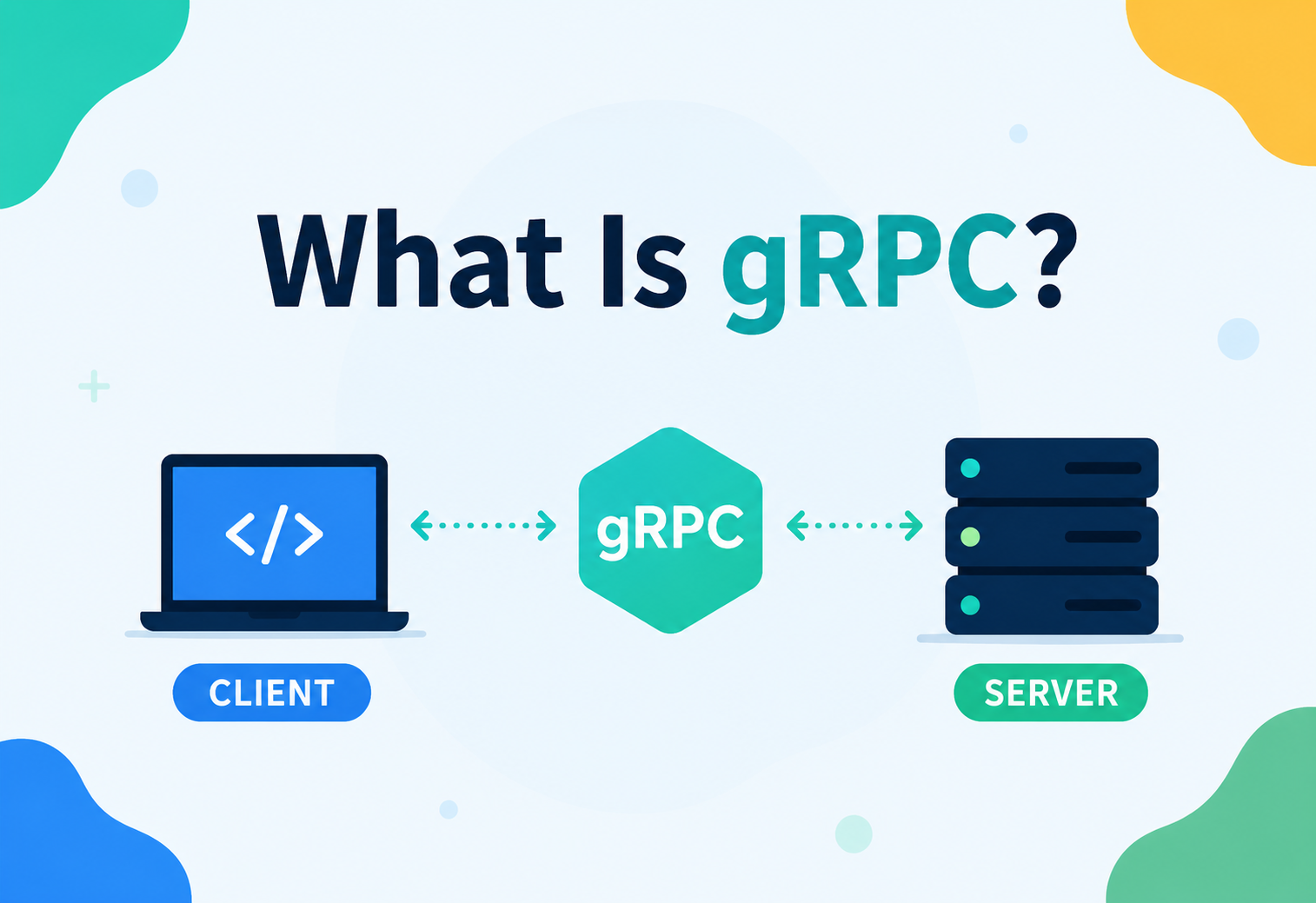
What Is gRPC?
A ground-up explanation of the high-performance RPC framework powering Google, Netflix, Square, Docker and thousands of microservice fleets — from “what problem does this actually solve” all the way through to production hardening, security, observability and real-world adoption patterns.
Introduction & History
gRPC (short for “gRPC Remote Procedure Calls,” a recursive-ish name much like GNU) is an open-source framework that lets a program running on one machine call a function on another machine as if it were a local function call. Instead of manually crafting HTTP requests, parsing JSON, and hoping both sides agree on field names, you define a service contract once, and gRPC generates client and server code in almost any language from that single definition.
Imagine two people who speak different native languages needing to work together every day. Instead of translating every sentence on the fly with varying accuracy, they agree on a strict phrasebook up front — every phrase has one exact meaning, one exact structure and no ambiguity. gRPC is that phrasebook for computers: a strict, pre-agreed contract (called a .proto file) that both sides compile into native code, so there is no guessing about what a message means.
gRPC was created by Google and open-sourced in 2015. It is the public evolution of an internal Google system called “Stubby,” which Google had used since roughly 2001 to let its thousands of internal services talk to each other efficiently at massive scale — think of every search query touching dozens of internal services, each call needing to be fast, strongly typed and cheap to serialize. When Google decided to open-source a version of this idea, they paired it with two other technologies they had already open-sourced: Protocol Buffers (protobuf), a compact binary serialization format, and built it on top of HTTP/2, a newer, more efficient version of the HTTP protocol.
Today gRPC is a project under the Cloud Native Computing Foundation (CNCF), the same neutral home as Kubernetes and Prometheus. It has become the de facto standard for internal service-to-service communication in high-performance microservice systems, and it powers pieces of infrastructure at Google, Netflix, Square, Docker, Cisco, IBM, Spotify, Uber and countless other companies with demanding latency and throughput requirements — effectively becoming the invisible plumbing of a large slice of modern cloud infrastructure.
Officially, Google says “gRPC” does not stand for “Google RPC” in a strict sense — the “g” is a recursive, ever-changing backronym that has stood for different things across releases (e.g., “gRPC Remote Procedure Calls,” a nod to the project itself, similar to how “GNU” recursively means “GNU’s Not Unix”). What matters practically is what it does, not what the letter stands for.
The Problem & Motivation
To understand why gRPC exists, it helps to understand the pain points of the technology most developers reach for by default: REST APIs over JSON. gRPC did not appear in a vacuum — it was designed as a targeted response to specific limitations that show up once REST/JSON is pushed hard enough.
2.1 The REST/JSON Baseline and its Cracks at Scale
REST over JSON is wonderful for public-facing APIs consumed by browsers and third parties: it is human-readable, universally supported, and easy to debug with a browser’s network tab. But once you have hundreds of internal microservices calling each other thousands of times per second, several problems surface:
- Verbose, text-based payloads. JSON repeats field names as strings in every single message (
"userId","userId","userId"a million times a second), wasting CPU on parsing and bytes on the wire. - No strict contract. Nothing stops a backend team from silently renaming a field or changing a type; failures only appear at runtime, often in production.
- One request per TCP round trip (historically). Classic HTTP/1.1 REST calls are typically one request-response per connection setup, with limited multiplexing, leading to head-of-line blocking under load.
- No native streaming. REST is fundamentally request/response. Building real-time, bidirectional communication on top of REST usually means bolting on WebSockets or long-polling as a separate mechanism.
- Manual client generation. Every team hand-writes or generates HTTP client wrappers, often inconsistently, with divergent error handling and retries.
Picture a food delivery app’s backend. The “Order Service” needs to ask the “Inventory Service” if 200 different restaurants have a given dish in stock — many times per second, for every user browsing the app. If each of those checks is a full JSON-over-HTTP/1.1 call with a new connection, string-parsed payloads and no compression by default, the cumulative CPU and network overhead becomes a real bottleneck once you are operating at the scale of a city, let alone a country.
2.2 What gRPC Set Out to Fix
gRPC was designed with a specific target in mind: efficient, strongly-typed, streaming-capable, polyglot communication between services that are largely under your own organization’s control (though it is increasingly used for public APIs too, via gRPC-Web and gateways). Its core motivations were:
| Problem in REST/JSON world | gRPC’s Answer |
|---|---|
| Verbose text payloads | Compact binary serialization via Protocol Buffers |
| No compile-time contract enforcement | Strict .proto Interface Definition Language (IDL) with codegen |
| One request per connection overhead (HTTP/1.1) | HTTP/2 multiplexed streams over one persistent connection |
| No native streaming model | First-class unary, server-streaming, client-streaming and bidirectional streaming |
| Inconsistent client SDKs per team | Auto-generated, idiomatic client/server stubs in 10+ languages from one source |
| Ad-hoc error handling | Standardized status codes and rich error metadata baked into the protocol |
Netflix’s internal service mesh handles an enormous volume of east-west (service-to-service) traffic. Netflix adopted gRPC for many of its internal calls specifically because binary serialization and HTTP/2 multiplexing reduce both CPU spent on serialization and the number of TCP connections needed under load, which matters enormously when you are operating tens of thousands of service instances.
2.3 A Concrete Before/After Comparison
It helps to see the actual shape of the difference. Below is a typical JSON payload for fetching a user, followed by how the equivalent data is represented conceptually in protobuf’s binary form (shown here as a readable breakdown rather than raw bytes, since the true wire bytes are not text).
{
  "id": "42",
  "fullName": "Meera Nair",
  "email": "meera.nair@example.com",
  "age": 29,
  "roles": ["admin", "billing"]
}
// ~120 bytes as text, field names repeated on every response// tag 1 (id) -> "42"
// tag 2 (full_name) -> "Meera Nair"
// tag 3 (email) -> "meera.nair@example.com"
// tag 4 (age) -> varint 29 (1 byte instead of 4)
// tag 5 (roles) -> "admin", "billing"
// ~65-75 bytes, no field-name text repeated, integers varint-packedThe savings on any single call look small, but multiply that saved bandwidth and parsing time by millions of internal calls per second across a large microservice fleet, and the aggregate CPU and network cost difference becomes a real, measurable line item in infrastructure spend — which is precisely the scale Google was optimizing for when it built Stubby and, later, gRPC.
Core Concepts
Before touching architecture, you need four foundational building blocks firmly in your head: Protocol Buffers, the Interface Definition Language, HTTP/2 and the four RPC call types. Every advanced gRPC concept later on assumes you already know these four cold.
3.1 Protocol Buffers (protobuf)
Protocol Buffers is a language-neutral, platform-neutral mechanism for serializing structured data — think of it as a much faster, much smaller alternative to JSON or XML. You define your data’s shape once in a .proto file, and a compiler (protoc) generates native classes in your target language that know how to encode/decode that data into a compact binary format.
JSON is like writing a letter in full sentences every time — clear to any human, but slow to write and heavy to mail. Protobuf is like both sides having agreed in advance on a numbered form: “Field 1 is always the name, Field 2 is always the age.” You do not need to write the words name: and age: every time — you just fill in the numbered boxes, and the other side, holding an identical copy of the form, knows exactly what each box means.
syntax = "proto3";

package com.utivra.userservice;

option java_multiple_files = true;
option java_package = "com.utivra.userservice.grpc";

message User {
  string id = 1;
  string full_name = 2;
  string email = 3;
  int32 age = 4;
  repeated string roles = 5;
}

message GetUserRequest {
  string id = 1;
}

message GetUserResponse {
  User user = 1;
}
Each field has a unique numeric “tag” (the = 1, = 2, etc.) that is what actually gets written on the wire — not the field name. This is a key reason protobuf messages are so much smaller than the equivalent JSON: a JSON payload repeats "full_name" as literal text every single time, while protobuf just writes a tiny tag number followed by the raw value.
3.2 The Interface Definition Language (IDL) and Service Contracts
Beyond just describing data shapes, .proto files also describe services — collections of remote methods, their input types and their output types. This is the actual “contract” that both the client and server compile against.
service UserService {
  // Unary RPC: one request, one response
  rpc GetUser (GetUserRequest) returns (GetUserResponse);

  // Server streaming: one request, a stream of responses
  rpc ListUsers (ListUsersRequest) returns (stream User);

  // Client streaming: a stream of requests, one response
  rpc BatchCreateUsers (stream CreateUserRequest) returns (CreateUsersSummary);

  // Bidirectional streaming: both sides stream independently
  rpc ChatWithSupport (stream ChatMessage) returns (stream ChatMessage);
}Because the schema is compiled, not interpreted at runtime, a whole category of bugs simply cannot happen: you cannot accidentally send a string where an integer is expected, and you cannot typo a field name, because your code will not even compile. In large organizations with hundreds of teams, this schema-first discipline dramatically reduces integration bugs between services owned by different teams.
3.3 HTTP/2 as the Transport
gRPC does not invent its own network transport — it runs on top of HTTP/2, the same protocol many modern websites use for regular web traffic. HTTP/2 brought several capabilities that gRPC leans on heavily:
- Multiplexing: many logical requests and responses share a single physical TCP connection at the same time, with no head-of-line blocking between independent streams at the HTTP layer.
- Binary framing: messages are broken into binary frames rather than parsed as raw text, which is both faster to process and less error-prone.
- Header compression (HPACK): repeated metadata (like headers) across many calls on the same connection is compressed, saving bandwidth.
- Native bidirectional streaming: a single HTTP/2 stream can carry a continuous flow of messages in both directions, which is exactly what gRPC’s streaming RPC types need.
3.4 The Four RPC Call Types
This is one of gRPC’s most distinctive features compared to REST: it has four built-in call shapes, not just one.
| Type | Shape | Beginner Example |
|---|---|---|
| Unary | 1 request → 1 response | “Get me user #42” → returns that one user’s details |
| Server streaming | 1 request → stream of responses | “Send me stock price updates for AAPL” → server keeps pushing new prices |
| Client streaming | stream of requests → 1 response | Uploading a large file in chunks, server responds once with a confirmation |
| Bidirectional streaming | stream ↔ stream, independently | A live customer support chat where both sides type at any time |
Architecture & Components
A gRPC system has a small number of moving parts, but understanding how they fit together is crucial before writing production code. The pieces mirror each other neatly on client and server sides, all driven from the same single source of truth — the .proto file.
.proto file drives everything: protoc emits a server skeleton and a client stub, and the two talk over HTTP/2 at runtime.4.1 The .proto File
The single source of truth. It defines messages (data shapes) and services (RPC method signatures). This file is typically checked into version control and often shared across repositories or published as an internal artifact, so multiple teams stay in sync.

4.2 The protoc Compiler and Code Generation Plugins
The Protocol Buffers compiler, protoc, reads the .proto file and — together with language-specific gRPC plugins — generates:
- Data classes for every
message(getters, setters, builders, serialization logic). - A server-side base class (often called a “skeleton” or “service base”) that you extend and implement.
- A client-side “stub” class that exposes the RPC methods as regular-looking method calls.
4.3 Server-Side Components
- Service implementation: your actual business logic, extending the generated base class.
- Server builder / runtime: binds your implementation to a network port and manages the HTTP/2 connection lifecycle, thread pools, and flow control.
- Interceptors: middleware-like hooks that run before/after each call — used for authentication, logging, metrics and tracing.
4.4 Client-Side Components
- Channel: a persistent, reusable connection abstraction to a specific server (or set of servers, when combined with a name resolver and load balancer).
- Stub: generated from the same
.proto, used to actually issue RPC calls; comes in blocking (synchronous) and non-blocking (asynchronous/reactive) flavors. - Client interceptors: mirror server interceptors — useful for attaching auth tokens, retries and deadlines automatically.
4.5 A Minimal Java Server Implementation
public class UserServiceImpl extends UserServiceGrpc.UserServiceImplBase {

    private final UserRepository userRepository;

    public UserServiceImpl(UserRepository userRepository) {
        this.userRepository = userRepository;
    }

    @Override
    public void getUser(GetUserRequest request,
                         StreamObserver<GetUserResponse> responseObserver) {
        User user = userRepository.findById(request.getId());

        if (user == null) {
            responseObserver.onError(
                Status.NOT_FOUND
                    .withDescription("User " + request.getId() + " not found")
                    .asRuntimeException()
            );
            return;
        }

        GetUserResponse response = GetUserResponse.newBuilder()
                .setUser(user)
                .build();

        responseObserver.onNext(response);
        responseObserver.onCompleted();
    }
}

// Wiring the server up
public class GrpcServerApplication {
    public static void main(String[] args) throws Exception {
        Server server = ServerBuilder.forPort(9090)
                .addService(new UserServiceImpl(new UserRepository()))
                .build();

        server.start();
        System.out.println("gRPC server started on port 9090");
        server.awaitTermination();
    }
}
4.6 A Minimal Java Client Implementation
public class UserServiceClient {
    public static void main(String[] args) {
        ManagedChannel channel = ManagedChannelBuilder
                .forAddress("localhost", 9090)
                .usePlaintext() // dev only; use TLS in production
                .build();

        UserServiceGrpc.UserServiceBlockingStub stub =
                UserServiceGrpc.newBlockingStub(channel);

        GetUserRequest request = GetUserRequest.newBuilder()
                .setId("42")
                .build();

        GetUserResponse response = stub.getUser(request);
        System.out.println("Fetched user: " + response.getUser().getFullName());

        channel.shutdown();
    }
}
4.7 Blocking vs. Asynchronous Stubs
Generated Java stubs come in a few flavors, and choosing the right one matters for throughput. The blocking stub shown above is simplest: the calling thread waits until the response arrives, which is easy to reason about but ties up a thread for the duration of the call — fine for low-concurrency use cases, wasteful under high concurrency. The async/future stub returns a ListenableFuture immediately and invokes a callback when the response arrives, freeing the calling thread to do other work in the meantime. Reactive libraries built on gRPC (such as reactive-grpc, which generates Reactor or RxJava-based stubs) go further, integrating naturally into fully non-blocking, backpressure-aware pipelines — particularly valuable for streaming RPCs where an unbounded producer needs to respect a slower consumer’s pace.
UserServiceGrpc.UserServiceStub asyncStub = UserServiceGrpc.newStub(channel);

asyncStub.getUser(request, new StreamObserver<GetUserResponse>() {
    @Override
    public void onNext(GetUserResponse response) {
        System.out.println("Received: " + response.getUser().getFullName());
    }

    @Override
    public void onError(Throwable t) {
        System.err.println("Call failed: " + Status.fromThrowable(t));
    }

    @Override
    public void onCompleted() {
        System.out.println("Call finished");
    }
});In a Spring Boot microservice, teams typically use the grpc-spring-boot-starter library, annotating the service implementation with @GrpcService so it auto-registers with a managed gRPC server bean, and injecting a generated stub via @GrpcClient("target-service") on the calling side — letting Spring’s dependency injection and configuration system manage channel lifecycle instead of hand-rolling it.
Internal Working — How a Call Actually Happens
Once you know the components, the next question is what actually happens under the hood when a client stub call turns into bytes on the wire and back. Understanding this stack makes debugging performance and reliability issues dramatically easier later.
5.1 How a Message Becomes Bytes on the Wire
When you call stub.getUser(request), a sequence of steps happens beneath that innocent-looking method call:
- The generated stub serializes your
GetUserRequestJava object into protobuf’s compact binary wire format, using tag-length-value encoding for each field. - gRPC wraps this binary payload in a length-prefixed message frame (a 5-byte header indicating compression flag and message length, followed by the message bytes).
- This frame is written onto an HTTP/2 stream — a single, independent, bidirectional flow of frames multiplexed over one shared TCP connection.
- HTTP/2 handles framing, flow control and (optionally) TLS encryption at the transport level.
- On the server, frames are reassembled into the message, deserialized back into a
GetUserRequestobject, and dispatched to yourgetUserimplementation. - The response follows the same path in reverse, and a set of HTTP/2 trailers carries the final gRPC status code and any trailing metadata.
5.2 Why Binary Tag-Value Encoding is Compact
Protobuf’s wire format writes each field as a small “tag” (field number + wire type, often just one byte) followed immediately by the value, with no field names and minimal punctuation. Integers use variable-length encoding (“varints”), so small numbers take as little as one byte instead of the fixed four or eight bytes a naive encoding might use. The net effect: a typical protobuf message is commonly a fraction of the size of the equivalent JSON, and it is dramatically faster to parse because there is no text tokenizing or string-to-number conversion involved.
5.3 Streaming Internals and Flow Control
For streaming RPCs, gRPC keeps a single HTTP/2 stream open and simply writes multiple length-prefixed messages onto it over time instead of just one. HTTP/2’s built-in flow control (using a windowing mechanism similar in spirit to TCP’s own flow control) prevents a fast sender from overwhelming a slow receiver’s buffer — the receiver advertises how many bytes it is willing to accept, and the sender respects that window, pausing when it is exhausted until the receiver acknowledges more capacity.
5.4 Compression and Pluggable Codecs
gRPC supports pluggable message compression (commonly gzip) negotiated per call, which can further shrink payloads for larger messages at the cost of extra CPU for compress/decompress cycles. Because protobuf messages are already dense binary data, compression tends to help most on larger, more repetitive payloads (like long text fields or large repeated lists) and helps less on small, already-compact messages — so teams generally benchmark before turning on compression broadly rather than enabling it everywhere by default.
5.5 Metadata: Headers and Trailers
Beyond the actual message payload, gRPC calls carry “metadata” — essentially key-value pairs analogous to HTTP headers, sent both at the start of a call (headers) and, crucially, at the end (trailers). This is a subtle but important design choice: because the final gRPC status code is delivered as a trailer, a server can start streaming a response before it knows whether the overall call will ultimately succeed or fail, which is exactly what is needed for long-running streaming RPCs where success or failure may only become clear near the end.
5.6 Deadlines and Cancellation Propagation
Every gRPC call can carry a deadline (an absolute point in time by which the call must complete) as metadata. If a client sets a 500ms deadline and the call is still pending when that time passes, the client library cancels the call locally and the cancellation signal propagates down through any intermediate services making further downstream calls on behalf of the original request — helping prevent wasted work across an entire call chain when the original caller has already given up.
Data Flow & Lifecycle of a Call
Walking through a concrete unary call end to end, in a typical production Java/Spring Boot microservice setup, ties the earlier concepts together and exposes several of the small but critical operational details you have to get right.
- Channel creation (once, reused): the client application builds a
ManagedChannelto the target service’s address (often a Kubernetes service DNS name), typically once at startup, and reuses it across many calls — creating a new channel per call is a common beginner mistake. - Stub invocation: application code calls a method on the generated stub, e.g.
stub.getUser(request). - Interceptor chain (client side): client interceptors run first — commonly attaching an auth token, a trace/correlation ID and a deadline.
- Name resolution & load balancing: if the channel targets multiple backend instances (e.g., via DNS or a service registry), the client-side load balancer picks a specific backend connection for this call.
- Transmission: the request is serialized, framed, and sent over an HTTP/2 stream.
- Server interceptors: on arrival, server-side interceptors run — commonly validating the auth token, extracting the trace ID for logging, and enforcing the deadline.
- Business logic execution: your service implementation runs, possibly calling a database, cache or further downstream gRPC services.
- Response & status: the response message is sent, followed by HTTP/2 trailers carrying the final gRPC status code (
OK,NOT_FOUND,DEADLINE_EXCEEDED, etc.). - Client resolution: the client stub either returns the deserialized response object (blocking stub) or invokes a callback/future/reactive publisher (async stub).
6.1 Standard gRPC Status Codes
Unlike REST, where HTTP status codes are sometimes stretched or misused inconsistently across teams, gRPC defines a fixed, well-documented set of status codes that every implementation across every language shares, which makes error handling far more predictable across a polyglot microservice fleet.
| Status Code | Meaning | Typical Cause |
|---|---|---|
OK | Success | The call completed as expected |
INVALID_ARGUMENT | Client sent bad input | Failed business validation despite valid protobuf structure |
NOT_FOUND | Requested resource does not exist | Looking up a record by an ID that is not in the database |
DEADLINE_EXCEEDED | Call took too long | Downstream dependency slow or unreachable within the deadline |
UNAVAILABLE | Server temporarily can’t handle the request | Service overloaded, restarting, or network partition — often safe to retry |
UNAUTHENTICATED | Missing or invalid credentials | Missing/expired token in metadata |
PERMISSION_DENIED | Authenticated but not authorized | Valid identity lacking the required role or scope |
RESOURCE_EXHAUSTED | Rate limit or quota hit | Client sending requests faster than the server allows |
Beyond the basic status code, gRPC supports attaching structured error detail messages (via the google.rpc.Status convention) so a server can return machine-readable specifics — for example, exactly which field failed validation — rather than forcing clients to parse a free-text error string.
Creating a brand-new ManagedChannel for every single RPC call is a frequent beginner error. Channels are relatively expensive to establish (TCP handshake, TLS negotiation, HTTP/2 settings exchange) and are explicitly designed to be long-lived and reused across many calls, with HTTP/2 multiplexing many concurrent calls over that one connection.
6.2 A Server-Streaming Code Example
To make streaming concrete, here is how a server-streaming RPC looks in practice — the server calls onNext multiple times on the same StreamObserver before finally calling onCompleted once, and the underlying HTTP/2 stream stays open the whole time to carry each message as it becomes available.
@Override
public void listUsers(ListUsersRequest request,
                       StreamObserver<User> responseObserver) {
    List<User> users = userRepository.findByDepartment(request.getDepartment());

    for (User user : users) {
        responseObserver.onNext(user);   // pushed to client as it's produced
    }

    responseObserver.onCompleted();      // signals end of stream, no more messages
}
6.3 Testing gRPC Services
gRPC’s ecosystem includes an in-process transport specifically designed for testing: rather than binding to a real network port, a test can start an in-process server and client connected via an in-memory channel, giving fast, network-free unit and integration tests that still exercise the real serialization and interceptor logic. Combined with tools like grpcurl (a command-line tool for manually invoking gRPC methods, analogous to curl for REST) and gRPC’s server reflection API (which lets tooling discover a service’s available methods without needing the original .proto file on hand), teams get a reasonably approachable manual-debugging story despite the binary wire format.
Pros, Cons & Trade-offs
gRPC is powerful but opinionated. Understanding what it optimises for — and what it deliberately gives up in exchange — is the difference between reaching for it in the right place and pushing it into problems that would be simpler with plain REST.
7.1 Advantages
| Advantage | Why it matters |
|---|---|
| Compact binary payloads | Lower bandwidth cost and faster serialization/deserialization than JSON |
| Strongly-typed contracts | Compile-time safety; fewer integration bugs between teams |
| Native streaming (4 call types) | Real-time and large-data use cases do not need a bolted-on second protocol |
| Multiplexed HTTP/2 connections | Fewer TCP connections, less connection-setup overhead under load |
| Polyglot code generation | Java, Go, Python, C++, Node.js, Kotlin, C#, Ruby and more, from one contract |
| Built-in deadlines and cancellation propagation | Helps prevent wasted work across long call chains |
| Pluggable interceptors | Clean, reusable cross-cutting concerns (auth, logging, tracing) |
7.2 Disadvantages & Limitations
| Limitation | Practical impact |
|---|---|
| Not human-readable on the wire | Debugging with plain browser tools or curl is harder than JSON; needs tools like grpcurl or BloomRPC |
| Limited native browser support | Browsers cannot speak raw gRPC directly; requires gRPC-Web plus a proxy translation layer |
| Schema evolution discipline required | Teams must follow protobuf’s compatibility rules carefully, or risk breaking consumers |
| Steeper learning curve | Requires understanding protoc tooling, codegen pipelines, and HTTP/2 concepts |
| Less convenient for public/third-party APIs | External partners often expect familiar REST/JSON; gRPC is best for internal, controlled environments |
| Tooling maturity varies by language | Some ecosystems have more mature gRPC support than others |
gRPC trades human-readability and browser-native accessibility for raw performance, strict contracts and native streaming — which is exactly the right trade for internal service-to-service traffic, and often the wrong trade for a public API consumed by arbitrary third parties or directly by browsers.
Performance & Scalability
gRPC’s performance story is not one big trick, it is many small optimisations stacked on top of each other. That layering is what turns a modest per-call saving into a materially different infrastructure bill at scale.
8.1 Where the Speed Actually Comes From
gRPC’s performance advantage over JSON/REST comes from stacking multiple efficiency gains: smaller payloads (less to transmit), faster serialization (less CPU per call), fewer TCP connections needed (less connection churn) and true multiplexing (higher throughput per connection under concurrent load). Individually each gain might be modest; combined, at the scale of millions of internal calls per second, they add up to meaningfully lower latency tails and lower infrastructure cost.
8.2 Streaming for Large or Continuous Datasets
Server streaming lets you send large result sets incrementally instead of building one enormous response in memory — critical for exporting large datasets or paginating without repeated round trips. Client streaming similarly lets you upload large payloads (e.g., a file, a batch of sensor readings) in manageable chunks rather than one giant message that could exceed message-size limits or blow out memory.
8.3 Connection Pooling and Channel Sizing
Because a single HTTP/2 connection can multiplex many concurrent RPCs, gRPC clients typically need far fewer connections than an equivalent REST client pool. However, a single connection does have a practical concurrency ceiling (governed by HTTP/2 stream limits negotiated between client and server), so very high-throughput clients sometimes maintain a small pool of channels rather than exactly one, spreading load across a handful of connections.
8.4 Benchmarking Considerations
When teams compare gRPC against REST/JSON in their own environment, a few factors commonly skew naive benchmarks: whether TLS is enabled on both sides equally, whether the REST comparison uses HTTP/1.1 or HTTP/2, whether connection reuse is configured fairly on both clients, and whether payload sizes are representative of real production data rather than tiny synthetic examples where the serialization difference barely registers. A fair benchmark holds transport security and connection reuse constant and varies only the serialization format and call style being tested.
8.5 Scaling Patterns
- Horizontal scaling: add more server instances behind a load balancer or service mesh; because gRPC connections are long-lived, client-side or proxy-based load balancing (rather than simple DNS round robin) is important to avoid overloading a subset of instances.
- Thread pool tuning: gRPC servers typically use a thread pool (or async/reactive execution model) to handle concurrent calls; undersized pools become a bottleneck well before network capacity does.
- Message size limits: gRPC enforces a configurable maximum message size (commonly 4MB by default) to protect servers from memory exhaustion; very large payloads should use streaming instead of one giant message.
High Availability & Reliability
Raw speed is only half the story — a production gRPC deployment also has to survive slow dependencies, transient failures and graceful restarts without dragging the whole system down. A handful of features work together to make that possible.
9.1 Deadlines Instead of Infinite Waits
Every production gRPC call should carry an explicit deadline. Without one, a client can hang indefinitely waiting on a stuck or slow server, tying up resources and cascading into a broader outage. Deadlines are propagated automatically to downstream calls made as part of handling the original request, which helps bound the “blast radius” of a slow dependency.
9.2 Retries and Backoff
gRPC supports configurable automatic retries for transient failures (like UNAVAILABLE status codes), typically combined with exponential backoff and jitter to avoid synchronized retry storms hammering a recovering service. Retries should generally be limited to idempotent operations — retrying a non-idempotent “charge credit card” RPC without care can cause duplicate side effects.
9.3 Circuit Breaking
When a downstream gRPC service starts failing consistently, a circuit breaker (often implemented at the service mesh or client library layer) can “trip,” short-circuiting further calls for a cooldown period instead of continuing to send doomed requests — protecting both the struggling downstream service and the calling service’s own resources.
In a Kubernetes-based microservices platform using a service mesh like Istio or Linkerd, gRPC’s health-checking protocol integrates with the mesh’s load balancer: unhealthy pods are automatically pulled out of rotation, new pods are added once they pass readiness probes, and retries/circuit-breaking policies are often configured centrally at the mesh layer rather than duplicated in every service’s code.
9.4 Graceful Shutdown
A production gRPC server should stop accepting new connections and finish in-flight calls before terminating (rather than abruptly dropping active streams) when a pod is being scaled down or redeployed — most gRPC server libraries expose a graceful shutdown method exactly for this purpose, and it should be wired into container orchestration’s termination lifecycle (e.g., Kubernetes’ preStop hook and SIGTERM handling).
Security
A schema-strict, high-throughput RPC framework does not automatically imply a secure one. Production gRPC deployments layer transport security, authentication, authorization, validation and rate limiting on top of the protocol itself — each solving a distinct problem.

10.1 Transport Security with TLS
Production gRPC deployments should always use TLS (Transport Layer Security) for encryption in transit — the usePlaintext() option seen in tutorial code is strictly for local development. gRPC has first-class TLS support built into its channel and server builders, including support for mutual TLS (mTLS), where both client and server present certificates to authenticate each other, which is extremely common inside service meshes for zero-trust internal networking.
10.2 Authentication
Common authentication approaches include:
- Token-based auth (e.g., JWT / OAuth2): attached as gRPC metadata on each call, validated by a server-side interceptor.
- Mutual TLS (mTLS): the connection itself proves identity via certificates, common in service-mesh environments like Istio.
- API keys: simpler, often used for less sensitive internal tooling or partner integrations.
public class AuthInterceptor implements ServerInterceptor {
    @Override
    public <ReqT, RespT> ServerCall.Listener<ReqT> interceptCall(
            ServerCall<ReqT, RespT> call,
            Metadata headers,
            ServerCallHandler<ReqT, RespT> next) {

        String token = headers.get(
            Metadata.Key.of("authorization", Metadata.ASCII_STRING_MARSHALLER));

        if (token == null || !tokenValidator.isValid(token)) {
            call.close(Status.UNAUTHENTICATED
                .withDescription("Missing or invalid token"), headers);
            return new ServerCall.Listener<>() {};
        }

        Context context = Context.current()
                .withValue(USER_CONTEXT_KEY, tokenValidator.extractUser(token));
        return Contexts.interceptCall(context, call, headers, next);
    }
}
10.3 Authorization
Once a caller’s identity is established, authorization decides what that caller may actually do — commonly implemented as a further interceptor or business-logic check, often mapping authenticated identities (a user, or a calling service’s own identity in service-to-service auth) to role- or scope-based permissions before allowing a given RPC method to execute.
10.4 Input Validation and Denial-of-Service Protection
Even with a strict schema, servers should validate business-level constraints (e.g., string length, numeric ranges) since protobuf only enforces structural types, not semantic correctness. Message size limits and deadlines also double as basic protection against resource-exhaustion attacks from oversized or slow-drip payloads.
10.5 Rate Limiting and Quotas
Because a single multiplexed gRPC connection can carry a very large number of concurrent calls, rate limiting is often applied per-caller-identity (rather than per-connection) at either an interceptor layer or a service mesh’s policy layer, returning RESOURCE_EXHAUSTED once a caller exceeds its allotted quota. This protects shared backend resources like databases from being overwhelmed by a single misbehaving or overly aggressive internal client, and gives operators a clean, standardized status code to build client-side backoff behavior around.
A payments platform might grant the “reporting” service a lower per-minute call quota against the “transactions” service than the “checkout” service gets, reflecting that checkout calls are latency-sensitive and business-critical in real time, while reporting queries can tolerate throttling and retries during traffic spikes.
Monitoring, Logging & Metrics
Once gRPC traffic is fanning out across many services, observability is the only way to keep it debuggable. gRPC’s design gives you natural hook points — interceptors, metadata, standardised status codes — to wire in structured logging, metrics and tracing without changing your business logic.
11.1 Structured Logging with Correlation IDs
Because a single user request often fans out into many downstream gRPC calls across services, every call should carry a correlation/trace ID as metadata, generated at the edge and propagated automatically through interceptors on every hop. Without this, correlating a slow or failed user request with the specific internal calls that caused it becomes extremely difficult.
11.2 Metrics
Common metrics teams track per gRPC method include: request count, error count broken down by status code, latency percentiles (p50 / p95 / p99) and in-flight call counts. Libraries like grpc-java’s interceptor hooks make it straightforward to wire these into Prometheus or another metrics backend, typically labeling metrics by service name, method name and status code.
11.3 Distributed Tracing
gRPC integrates naturally with distributed tracing systems (like OpenTelemetry, Jaeger or Zipkin) via client/server interceptors that automatically create spans for each call and propagate trace context through metadata — letting engineers visualize an entire request’s path across dozens of services as a single trace, including exactly where time was spent.
11.4 Health Checking
gRPC defines a standard health-checking protocol (grpc.health.v1.Health) that services can implement so orchestration platforms and load balancers can query a service’s health status in a uniform way rather than every team inventing their own health-check convention.
Deployment & Cloud
Deploying gRPC into containerised, cloud-hosted environments looks very similar to deploying any other service — until you hit a few well-known sharp edges around long-lived HTTP/2 connections and ingress. Knowing those in advance saves a lot of head-scratching later.
12.1 Containerization
gRPC services are typically packaged as Docker containers and deployed on Kubernetes, exposing their gRPC port through a Kubernetes Service. Because gRPC relies on long-lived HTTP/2 connections, naive Kubernetes Service load balancing (which operates at the connection level, not the request level) can under-distribute load across pods if clients do not reconnect periodically — a well-known gotcha that pushes many teams toward client-side load balancing or a service mesh.
12.2 Ingress and API Gateways
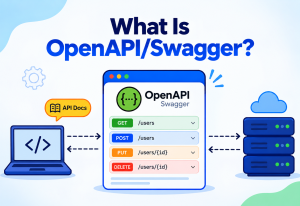
Exposing gRPC to the public internet or to browser clients typically requires a gRPC-aware gateway or proxy (e.g., Envoy, NGINX with gRPC support, or a cloud provider’s managed API gateway) that can also perform protocol translation for gRPC-Web clients, since browsers cannot originate raw HTTP/2 gRPC calls directly.
12.3 Service Mesh Integration
Service meshes such as Istio or Linkerd are particularly popular in gRPC-heavy environments because they transparently add mTLS, retries, circuit breaking, load balancing and tracing at the infrastructure layer (via sidecar proxies) without requiring every service team to reimplement these concerns in application code.
12.4 Multi-region and Cloud Considerations
Cloud load balancers vary in their native gRPC support; teams running across multiple regions or cloud providers need to verify that their chosen load balancer supports HTTP/2 and gRPC health checking properly, since older or misconfigured load balancers may silently degrade to connection-level (rather than request-level) balancing, harming distribution under multiplexed load.
Load Balancing & Caching Considerations
Two of the operational assumptions that just work for REST break in interesting ways under gRPC: connection-level load balancing and URL-based caching. Understanding why lets you pick the right replacement for each.
13.1 Why gRPC Load Balancing is Different
Traditional REST load balancing often relies on the fact that each request typically opens (or reuses from a small pool) its own connection, so simple round-robin connection distribution roughly balances request load too. gRPC’s multiplexing breaks that assumption: one client might send thousands of concurrent requests over a single long-lived connection, so a load balancer that only balances at the connection level can leave some backend instances idle while others are overloaded.
| Approach | How it works | Best for |
|---|---|---|
| Client-side load balancing | Client resolves multiple backend addresses (e.g., via DNS or a name resolver) and picks per-call | Internal traffic without a mesh, moderate operational complexity acceptable |
| Proxy-based / service mesh | A sidecar proxy (e.g., Envoy) load balances at the request level transparently | Large microservice fleets already using a service mesh |
| Lookaside load balancing | Client periodically queries a dedicated load-balancing service for updated backend lists | Very large-scale, dynamic backend pools |
13.2 Caching in a gRPC World
Because gRPC calls are not naturally cacheable the way GET requests with URLs are in HTTP caching layers (CDNs, browser caches), caching strategies usually move into the application layer: response caching inside the service using something like Redis, or caching at a gateway that understands gRPC semantics. Idempotent, read-heavy unary RPCs (like “get user by id”) are the best caching candidates; streaming RPCs generally are not cached in the traditional sense.
@Override
public void getUser(GetUserRequest request,
                     StreamObserver<GetUserResponse> responseObserver) {
    String cacheKey = "user:" + request.getId();
    User cached = redisTemplate.opsForValue().get(cacheKey);

    if (cached != null) {
        responseObserver.onNext(GetUserResponse.newBuilder().setUser(cached).build());
        responseObserver.onCompleted();
        return;
    }

    User user = userRepository.findById(request.getId());
    redisTemplate.opsForValue().set(cacheKey, user, Duration.ofMinutes(5));

    responseObserver.onNext(GetUserResponse.newBuilder().setUser(user).build());
    responseObserver.onCompleted();
}
This pattern — check cache, fall back to the source of truth, populate the cache, then respond — works identically whether the RPC is unary or the first message of a stream, and is one of the most common ways teams recover some of the caching convenience that HTTP GET semantics give REST APIs for free.
APIs & Microservices
Understanding where gRPC fits in the wider API landscape — alongside REST and GraphQL, and behind API gateways — is what turns theoretical understanding into good architectural choices.
14.1 gRPC’s Natural Fit for Internal APIs
In a microservices architecture, most traffic is “east-west” — services calling other services inside your own infrastructure, not “north-south” traffic from external browsers or partners. gRPC is purpose-built for exactly this east-west traffic: both ends of the conversation are under your control, so you can freely require protobuf tooling and a compiled contract without worrying about arbitrary third-party clients.
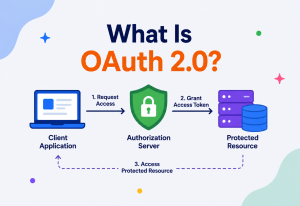
A very common real-world pattern, shown above: an API gateway speaks REST/JSON (or GraphQL) to external clients like browsers and mobile apps — because those clients need human-friendly, widely-supported protocols — and translates those calls into gRPC calls to internal microservices, getting the best of both worlds: external compatibility and internal performance.
14.2 gRPC vs REST vs GraphQL, Briefly
| Aspect | REST | GraphQL | gRPC |
|---|---|---|---|
| Payload format | JSON (text) | JSON (text) | Protobuf (binary) |
| Contract strictness | Loose (OpenAPI optional) | Strict schema, flexible queries | Strict, compiled schema |
| Streaming support | Limited / bolted-on | Subscriptions (via extensions) | Native, 4 call types |
| Browser-native | Yes | Yes | No (needs gRPC-Web + proxy) |
| Best fit | Public / simple APIs | Flexible client-driven data fetching | High-performance internal service-to-service calls |
14.3 Bridging gRPC to Browsers: gRPC-Web and gRPC-Gateway
Two common tools solve the “browsers cannot speak raw gRPC” problem in different ways. gRPC-Web is a JavaScript client library and wire-protocol variant that browsers can use directly, but it requires a compatible proxy (commonly Envoy) sitting in front of your gRPC servers to translate gRPC-Web framing into standard gRPC framing understood by your backend services. gRPC-Gateway takes a different approach: it reads your existing .proto file (annotated with HTTP mapping options) and generates a reverse-proxy that exposes a conventional RESTful JSON API, translating incoming REST calls into gRPC calls against your existing service — letting you maintain one source-of-truth contract while serving both protocols to different audiences.
service UserService {
  rpc GetUser (GetUserRequest) returns (GetUserResponse) {
    option (google.api.http) = {
      get: "/v1/users/{id}"
    };
  }
}
This pattern is common at companies that want gRPC’s internal performance benefits while still offering a REST-friendly API surface to external partners or internal frontend teams who prefer JSON tooling — without maintaining two separate hand-written API definitions that could drift out of sync.
14.4 Schema Evolution and Versioning
Protobuf’s compatibility rules allow adding new fields without breaking existing clients (older clients simply ignore unknown fields, newer clients see default values for fields absent from an old message), as long as teams follow the rules: never reuse a field number, never change a field’s number once published, and treat removing a field as adding it to a reserved list rather than deleting it outright. This lets independently-deployed services evolve their contracts gradually rather than requiring a synchronized “big bang” release.
Design Patterns & Anti-patterns
A few patterns show up in nearly every healthy gRPC codebase, and a few anti-patterns show up in nearly every troubled one. Knowing both by name makes design reviews faster and postmortems shorter.
15.1 Useful Patterns
- Interceptor chains for cross-cutting concerns: centralizing auth, logging and tracing in interceptors rather than repeating this logic in every RPC method.
- Backend-for-frontend (BFF) gateway: a dedicated gateway service translates external REST/GraphQL traffic into internal gRPC calls, isolating internal contract changes from external clients.
- Streaming for large collections: using server-streaming RPCs instead of returning one giant repeated field, keeping memory usage bounded on both sides.
- Deadline propagation as a default, not an afterthought: wiring a sensible default deadline into every client stub call site rather than relying on developers to remember it each time.
- Versioned packages: namespacing
.protopackages by version (e.g.,com.utivra.userservice.v1) to allow a clean, explicit path to a breaking v2 contract when truly necessary.
15.2 Anti-patterns to Avoid
Cramming dozens of unrelated RPC methods into a single service definition (mirroring a “God object” in OOP) makes ownership boundaries unclear and forces unrelated teams to coordinate releases. Prefer splitting services along genuine bounded-context lines.
Deleting a field from a .proto file and later adding a new field that reuses its old number can cause old serialized data (or old clients) to be misinterpreted as the new field’s type — a subtle, hard-to-debug data corruption risk. Always mark removed fields as reserved.
Calling downstream gRPC services with no deadline at all effectively means “wait forever,” which turns a single slow dependency into a cascading resource-exhaustion incident across every service in the call chain.
Exposing raw gRPC directly to browsers or arbitrary external partners, without an API gateway handling gRPC-Web translation, authentication and rate limiting, creates both a poor developer experience for consumers and a weaker security boundary.
Best Practices & Common Mistakes
If the earlier chapters were the “how it works” portion, this one is the concise checklist experienced engineers keep in their head when reviewing a gRPC PR or a new service design. Almost every gRPC production incident traces back to violating one of these.
16.1 Best Practices Checklist
| Area | Best Practice |
|---|---|
| Connections | Reuse a single long-lived ManagedChannel per target; never create one per call |
| Deadlines | Attach a sensible deadline to every outbound call, and propagate it downstream |
| Security | Always use TLS (ideally mTLS) in production; never ship usePlaintext() outside local dev |
| Schema evolution | Follow protobuf compatibility rules; use reserved for removed fields |
| Error handling | Use standardized gRPC status codes and rich error details instead of ad-hoc error messages |
| Observability | Propagate correlation/trace IDs via metadata through every hop |
| Streaming | Use streaming RPCs for large or continuous datasets instead of oversized single messages |
| Retries | Only retry idempotent operations; use exponential backoff with jitter |
16.2 Common Mistakes Beginners Make
- Forgetting that gRPC’s default max message size (commonly 4MB) will reject unexpectedly large payloads — a surprise the first time someone sends a big file as a single unary message.
- Assuming Kubernetes’ default Service load balancing spreads gRPC load evenly across pods — it often does not, due to connection-level (not request-level) balancing, without additional configuration.
- Not handling
onErrorin streaming clients, leaving streams open or resources leaked when a server-side error occurs mid-stream. - Ignoring protobuf’s “unknown field” forward-compatibility behavior and assuming all clients must be redeployed in lockstep with the server.
- Blocking a server’s thread pool with slow synchronous downstream calls inside a unary handler, starving the pool for unrelated concurrent requests.
Real-World / Industry Examples
Looking at how the biggest companies in the world actually use gRPC is one of the fastest ways to internalise which parts of the theory matter most at scale — and where the honest limits are.
Stubby → gRPC
gRPC’s direct ancestor, Stubby, has been Google’s internal RPC backbone since the early 2000s, handling enormous internal call volumes across nearly every Google service; gRPC itself is the public evolution of that same design philosophy.
East-west traffic at scale
Netflix uses gRPC extensively for internal service-to-service communication within its microservices architecture, valuing the reduced serialization overhead and multiplexed connections under its massive internal east-west traffic volume.
Payments microservices
Square was an early, prominent adopter and contributor to the gRPC ecosystem, using it extensively across its payments-related microservices where strict typing and low latency both matter for financial correctness and responsiveness.
Kubernetes, Envoy, etcd
Several foundational cloud-native tools use gRPC internally — for example, etcd (the key-value store behind Kubernetes’ control plane) exposes a gRPC API, and Envoy proxy’s control-plane protocol (xDS) is itself gRPC-based, illustrating how deeply gRPC is embedded in modern cloud infrastructure, not just application-level microservices.
Backend migration
Spotify has spoken publicly about migrating significant portions of its backend service-to-service communication toward gRPC, citing the value of a strongly-typed shared contract across the large number of independently-owned backend services that together power features like playlist recommendations and playback.
Daemon-to-client control plane
Docker adopted gRPC for parts of its internal daemon-to-client communication, valuing its efficient binary protocol and strong typing for control-plane operations where correctness and low overhead both matter.
17.1 A Word on When NOT to Reach for gRPC
Despite this list of adopters, gRPC is not a universal default. Simple CRUD applications with a handful of endpoints consumed only by a web frontend, prototypes and MVPs where iteration speed matters more than raw throughput, and public APIs aimed at third-party developers who expect familiar REST/JSON tooling are all cases where the operational overhead of protobuf tooling and codegen pipelines often is not justified by the performance gain. Choosing gRPC is ultimately a trade-off decision, not a default best practice for every API.
FAQ, Summary & Key Takeaways
A handful of the questions that come up most often when engineers start seriously evaluating gRPC for the first time, followed by the takeaways worth walking away with.
Is gRPC always faster than REST/JSON?
For internal, high-volume, service-to-service traffic, yes, typically — smaller payloads and multiplexed connections add up at scale. For a single occasional public API call from a browser, the difference is often negligible to the end user, and REST’s simplicity may outweigh gRPC’s raw performance edge.
Can browsers call gRPC services directly?
Not raw gRPC — browsers cannot originate true HTTP/2 gRPC calls in the way server environments can. gRPC-Web plus a translating proxy (commonly Envoy) bridges this gap for browser clients.
Do I need Kubernetes or a service mesh to use gRPC?
No — gRPC works fine on plain VMs or even a single machine. Kubernetes and service meshes simply solve operational concerns (load balancing, TLS, retries) that become more pressing at larger scale.
Is JSON support possible with gRPC?
gRPC’s core wire format is protobuf binary, but gRPC-Gateway and similar tools can auto-generate a REST/JSON-to-gRPC translation layer from the same .proto file, letting you serve both protocols from one contract.
Which languages does gRPC support?
Official and community support spans Java, Go, Python, C++, C#, Node.js, Kotlin, Ruby, PHP, Dart, Objective-C and more — code generation from the same .proto file works across all of them.
A natural next read is a deep dive into protobuf schema evolution rules, or into how service meshes like Istio layer mTLS, retries and observability on top of gRPC traffic without touching application code — both of which build directly on the foundations covered in this guide.
A Final Word on Adoption
The healthiest way to introduce gRPC into an existing organization is incrementally rather than as a wholesale rewrite: pick one or two internal, high-traffic service-to-service integrations where the performance and typing benefits are clearest, prove the operational model (deployment, observability, security) works well for your team, and expand from there. Because a gateway can bridge gRPC and REST/JSON for external consumers, internal adoption does not have to disrupt anything your public API contracts already promise to partners and client applications — the migration can be entirely invisible outside your own infrastructure boundary. Treat the first integration as a learning exercise for the whole organization, document the operational runbook you build along the way, and let that experience — not a mandate — drive further adoption across other teams.
Key Takeaways
- gRPC is Google’s open-source evolution of its internal Stubby RPC system, standardized on Protocol Buffers and HTTP/2.
- It solves the verbosity, weak typing, connection overhead, and lack of native streaming found in typical REST/JSON internal APIs.
- Four RPC types — unary, server streaming, client streaming and bidirectional streaming — cover a much wider range of communication patterns than plain request/response REST.
- Its architecture centers on a shared
.protocontract, code generation viaprotoc, and generated client stubs / server skeletons. - Production readiness requires deliberate attention to deadlines, retries, TLS/mTLS, load balancing strategy and observability via correlation IDs and tracing.
- gRPC shines for internal, high-throughput microservice communication; REST/GraphQL generally remain better suited for public-facing, browser-consumed APIs — with API gateways commonly bridging the two worlds.