Sharding vs Replication

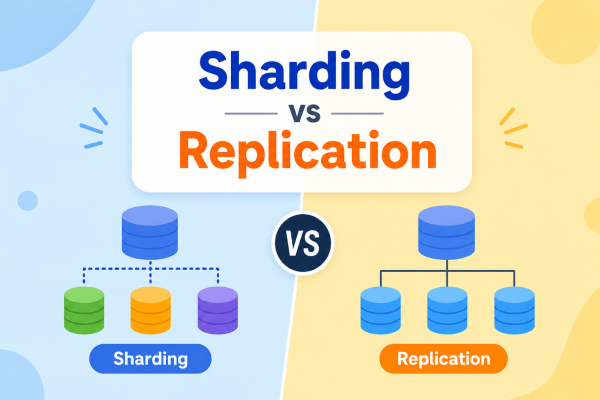
Sharding vs Replication

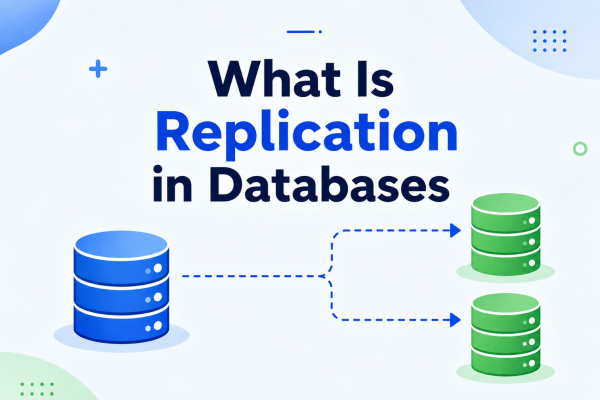
A complete, beginner-to-production tutorial on sharding versus replication in distributed databases: why the topic matters and the short history of horizontal scaling, the three failure modes of a single database and how each technique attacks a different one, precise definitions of nodes, replicas, and shards, a CAP-theorem foundation with consistency…

Read More
Data Sharding How Systems Decide Where Data Lives

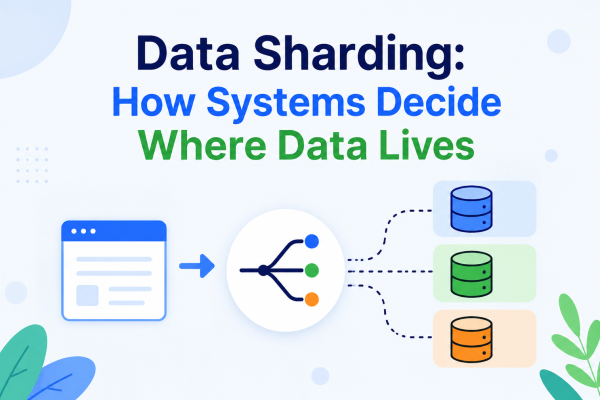
Data Sharding: How Systems Decide Where Data Lives

A first-principles guide to data sharding: what it is, why systems need it, and how they decide where data lives. Covers all five common strategies (range-based, hash-based, consistent hashing with virtual nodes, directory-based, and geographic/attribute-based) with worked Java code, sequence and ring diagrams, and honest trade-offs. Includes the routing architecture,…

Read More
What Is Sharding?

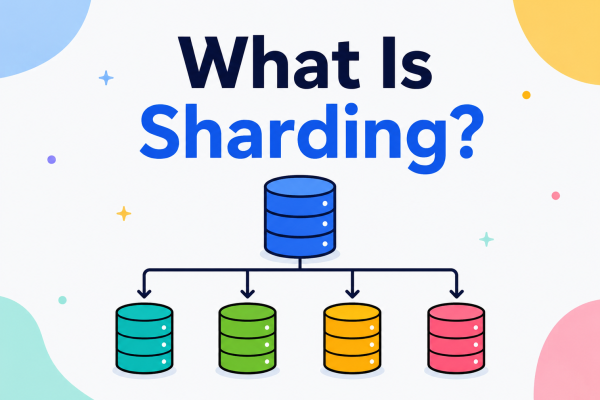
What Is Sharding?

A complete, beginner-friendly guide to database sharding. Covers: what sharding is and its history, the problem it solves (single-server scaling limits, vertical vs horizontal scaling, sharding vs replication), the core vocabulary (shard, shard key, logical vs physical shard, shard map, rebalancing, cross-shard queries), production architecture and routing options, the five…

Read More
What Is the Main Advantage of Microservices Over a Monolith?

What Is the Main Advantage of Microservices Over a Monolith?

A complete, from-zero, book-style tutorial answering “what is the main advantage of microservices over a monolith?” — with analogies, diagrams, Java code, and real production stories from Netflix, Amazon, Uber, Spotify, and the Amazon Prime Video counter-example. Covers history, the ShopEasy motivation example, core concepts (coupling, cohesion, bounded contexts, deployment…

Read More
Why Do Interviewers Ask You to Draw Diagrams During System Design Rounds?

Why Do Interviewers Ask You to Draw Diagrams During System Design Rounds?

A complete, beginner-friendly guide to the real reason behind the whiteboard in a system design interview. Covers: a short history of the whiteboard round, why words alone fail, what interviewers are secretly evaluating, the core vocabulary (system design, architecture diagram, component, data flow), the anatomy of a great high-level diagram…

Read More
Architect-Case-Monolith

The Architect’s Case for the Monolith

A complete, beginner-to-advanced tutorial on when to stay with a monolith instead of splitting into microservices. Covers the one-house vs small-city analogy and the full 1990s-through-mid-2020s history (single monolith, SOA, microservices popularised at Netflix and Amazon, the industry-wide adoption boom, then the correction toward modular monoliths); the real motivations for…

Read More
How Do You Find a Bottleneck in a System?

How Do You Find a Bottleneck in a System?

A complete, beginner-to-advanced guide to finding the one slow component that limits a whole system: the honey-bottle analogy and why bottleneck hunting separates senior engineers from junior ones; five reasons systems develop bottlenecks over time (traffic growth, data growth, hidden feature work, contested shared resources, hardware limits); precise vocabulary (latency,…

Read More