What Is Edge Computing?
A complete, beginner-friendly, production-ready guide to edge computing — what it is, why it exists, how it works internally, and how companies like Netflix, Amazon, and Uber use it in the real world.
Introduction & History
Edge computing is a way of designing computer systems so that data is processed physically close to where it is created — instead of sending every piece of data all the way to a distant, centralized data center (the “cloud”) and waiting for a response.
Think of “the edge” as the outer boundary of a network — the point closest to the user, the sensor, the camera, the phone, or the machine. Edge computing pushes computation, storage, and decision-making out to that boundary, rather than keeping everything in a handful of giant, centralized cloud regions.
Imagine a huge company with one central head office in Delhi that makes every decision — even something as small as approving a customer’s refund in Chennai. Every request has to travel to Delhi, get processed, and travel back. Now imagine instead the company opens small regional offices in Chennai, Mumbai, and Kolkata that can approve routine refunds locally, only escalating unusual cases to Delhi. Customers get faster service, and the Delhi office isn’t overwhelmed. Edge computing is the “regional office” model for computing.
A Brief History
Computing has swung between centralization and decentralization several times over the decades:
- 1960s–70s — Mainframes: All computing happened on one giant central machine; users connected via “dumb terminals” that had no processing power of their own.
- 1980s–90s — Personal Computers: Computing power moved out to individual desktops. This was an early form of decentralization.
- 2000s — Client-Server & the early Web: Centralization returned in a new form — browsers were thin clients, and servers in data centers did the heavy lifting.
- 2006 onward — Cloud Computing: Amazon Web Services (launched 2006) popularized renting compute and storage from a handful of massive, centralized data centers. This gave us elasticity and low operational overhead, but introduced a new problem: distance and latency.
- Content Delivery Networks (CDNs), late 1990s–2000s: Companies like Akamai pioneered caching static content (images, videos, files) at servers close to users — arguably the first mainstream form of “the edge.”
- 2010s onward — IoT explosion: Billions of sensors, cameras, and connected devices began generating enormous volumes of data. Sending all of it to the cloud became too slow, too expensive, and sometimes physically impossible (e.g., a factory floor with poor connectivity).
- Late 2010s–today — Modern Edge Computing: The term “edge computing” became mainstream as 5G networks, cheap powerful embedded chips, and platforms like AWS Wavelength, Azure Edge Zones, Cloudflare Workers, and Akamai EdgeWorkers made it practical to run real application logic — not just cached files — near the user.
Today, edge computing is not a replacement for the cloud — it is a complement to it. Modern systems are almost always a hybrid: some processing happens at the edge (fast, local, small-scale), and some happens in the cloud (slower, centralized, large-scale, resource-intensive).
Why This History Matters for You as a Learner
It’s tempting to think of edge computing as a brand-new invention, but understanding its history helps you see it for what it really is: the pendulum swinging back toward decentralization, armed with lessons learned from decades of both centralized and distributed systems. Every generation of this pendulum swing solved the previous generation’s problems while introducing new ones. Mainframes were reliable and centrally managed but rigid and expensive per user. PCs were flexible and cheap but hard to manage at scale and inconsistent. The cloud brought back centralized management with elastic scale, but reintroduced the tyranny of distance. Edge computing is the industry’s current answer to that distance problem — and, true to the pattern, it introduces its own new challenges around device management, security, and consistency, which you’ll see throughout the rest of this guide.
A useful mental model going forward: whenever you evaluate “should this run at the edge or in the cloud,” you are really asking “does the benefit of being physically closer to the data outweigh the added operational complexity of managing another distributed location?” Keep that question in mind — it will resurface in almost every section below.
The Problem & Motivation
To understand why edge computing exists, you first need to understand the problem it solves: the physics and economics of distance.
The Latency Problem
Data cannot travel faster than the speed of light, and in real fiber-optic cables it travels meaningfully slower than that due to signal processing, routing hops, and physical cable paths. If a user in Mumbai sends a request to a server in Virginia, USA, that round trip alone can take 250–300 milliseconds — before the server has even done any work.
| Distance (approx.) | Typical round-trip latency |
|---|---|
| Same data center rack | < 1 ms |
| Same city, different data center | 2–5 ms |
| Same country, cross-region | 20–40 ms |
| Cross-continent (e.g., India to US East) | 200–300 ms |
| Satellite link | 500–700 ms |
For a web page, a few hundred milliseconds might be tolerable. But for a self-driving car deciding whether to brake, a factory robot avoiding a collision, or a surgeon operating a remote robotic arm, 250ms could mean the difference between safety and disaster.
A self-driving car traveling at 100 km/h covers about 7 meters in just 250 milliseconds. If it must wait for a round trip to a cloud server before deciding to brake, it could travel several car-lengths before the “brake now” instruction even arrives. That’s why safety-critical decisions must happen at the edge, on the vehicle itself.
The Bandwidth and Cost Problem
IoT devices, cameras, and sensors generate staggering amounts of raw data. A single modern industrial camera doing 4K video at 30 frames per second can generate several gigabytes per minute. A factory with 200 such cameras cannot feasibly stream all of that raw video to the cloud 24/7 — the network bandwidth required would be enormous, and cloud storage/egress costs would be crushing.
The Connectivity and Reliability Problem
Not every environment has fast, always-on internet. Oil rigs, ships, remote farms, mines, and even retail stores during a network outage all need to keep functioning even if the connection to the cloud drops. If a system depends entirely on the cloud, a lost connection means the system halts completely.
The Privacy and Regulatory Problem
Certain data — medical records, biometric data, video footage of people’s faces — may be legally required to stay within a specific country or never leave a specific device. Sending everything to a centralized cloud in another country can violate data residency laws (in India, for example, provisions under the DPDP Act 2023 shape how personal data must be handled).
Putting It Together
Edge computing exists to solve four intertwined problems at once: latency (speed), bandwidth (cost and capacity), reliability (working offline or with intermittent connectivity), and privacy/compliance (keeping sensitive data local). It does this by moving computation closer to where data is generated and consumed.
Core Concepts
3.1 What “the Edge” Actually Means
“The edge” is a relative term — it simply means “closer to the data source or user than the centralized cloud.” Depending on context, the edge could be:
- Device edge: The device itself — a smartphone, a smart thermostat, a car’s onboard computer.
- On-premises edge (near edge): A small server or gateway inside a factory, retail store, or hospital.
- Network edge (far edge): Servers operated by telecom providers at cell towers or regional points-of-presence, especially relevant with 5G.
- Cloud edge / CDN edge: Points-of-presence (PoPs) that cloud and CDN providers operate in many cities worldwide (e.g., Cloudflare’s 300+ locations), closer to users than the “core” cloud region.
3.2 Edge Computing vs. Cloud Computing vs. Fog Computing
| Term | What it means | Typical distance from user |
|---|---|---|
| Cloud computing | Centralized data centers run by providers like AWS, Azure, GCP | Hundreds to thousands of km |
| Fog computing | An intermediate layer of networking gear (routers, gateways) that does light processing between devices and cloud | Local network / LAN level |
| Edge computing | Processing directly on or very near the device generating the data | Meters to a few km |
In practice, the industry often uses “edge computing” as an umbrella term that includes fog computing. The exact boundary is less important than the underlying idea: push computation as close to the data source as is practical.
3.3 Key Terminology
Latency
The time delay between a request being sent and a response being received. Lower latency = faster, more responsive systems.
Bandwidth
How much data can be transferred over a network connection in a given time — like the width of a pipe carrying water.
Point of Presence (PoP)
A physical location — often a small data center — where an edge or CDN provider has servers close to end users.
Gateway
A device or piece of software that sits between local devices/sensors and the wider network, often doing initial filtering and translation.
3.4 CAP Theorem at the Edge
The CAP theorem states that a distributed data system can only guarantee two of the following three properties at the same time: Consistency (every read gets the latest write), Availability (every request gets a response, even if it might not be the latest data), and Partition tolerance (the system keeps working even when network communication between nodes breaks down).
Edge computing environments are, by nature, prone to network partitions — a factory floor edge server might lose its connection to the cloud for minutes or hours. This means edge systems almost always have to choose Availability + Partition tolerance (AP) over strict consistency. In practice, this means edge nodes keep functioning and accepting local reads/writes even when disconnected from the cloud, and reconcile data later — a strategy known as eventual consistency.
A point-of-sale (POS) system in a retail store keeps working and recording sales even if the store’s internet goes down. It queues transactions locally (favoring Availability and Partition tolerance) and syncs them to the central inventory system once connectivity returns, rather than refusing to sell anything until it can confirm with the cloud (which would favor Consistency).
3.5 Deployment Models: Where Edge Logic Actually Lives
In practice, teams choose from a handful of recurring deployment models depending on their constraints:
- On-device inference: The entire decision-making logic runs directly on the end device — no gateway, no local server. Common in smartphones (e.g., face unlock) and modern cars.
- Gateway-based edge: Many small, “dumb” sensors connect to a single, more capable local gateway or industrial PC that does the actual processing on their behalf. Common in factories and agriculture, where individual sensors are too cheap and low-power to run any real compute themselves.
- Micro data center edge: A small, rack-mounted server cluster deployed on-premises — for example, inside a hospital or a large retail store — capable of running containerized workloads similar to a mini cloud region.
- Telecom/network edge: Compute resources embedded inside a telecom operator’s own infrastructure (cell towers, regional points-of-presence), made available to application developers via platforms like AWS Wavelength.
- CDN/serverless edge: Short-lived, stateless functions executed at hundreds of globally distributed points-of-presence operated by a CDN or cloud provider, typically for web and API workloads rather than physical sensor data.
These models are not mutually exclusive — a single production system, such as a nationwide retail chain, might use on-device inference in self-checkout kiosks, a gateway-based edge server in the stockroom, and a CDN edge layer in front of its e-commerce website, all feeding into the same central cloud backend.
Architecture & Components
A typical production edge computing architecture is layered. Data and control flow between layers, with each layer doing progressively heavier, less time-sensitive processing.
4.1 Key Components Explained
- Edge device / sensor: The origin of data — a camera, temperature sensor, GPS unit, or user’s phone.
- Edge gateway: Aggregates data from many local devices, often doing protocol translation (e.g., converting a sensor’s proprietary protocol into standard MQTT or HTTP).
- Edge compute node: Runs actual application logic — this could be a small server, an industrial PC, or even a smartphone. Runs things like real-time video analysis, anomaly detection, or request routing.
- Local edge storage/cache: A small database or cache (often something lightweight like SQLite, Redis, or an embedded time-series DB) that stores recent data locally so the system can function offline.
- Regional PoP / CDN edge: A mid-tier layer operated by cloud or CDN providers, closer than the core cloud but shared across many customers.
- Central cloud: Where heavy lifting happens — training machine learning models, long-term storage, cross-region analytics, and business logic that isn’t time-critical.
- Orchestration layer: Software (like Kubernetes with edge extensions such as K3s, or dedicated platforms like AWS IoT Greengrass and Azure IoT Edge) that deploys, updates, and monitors software running across thousands of distributed edge nodes.
A smart doorbell camera (device layer) detects motion and runs a small on-device model to check “is this a person?” (edge compute). Only if it thinks a person is present does it send a short video clip to the cloud (central cloud) for a more powerful model to identify who it might be, and to store the clip for 30 days. This avoids uploading hours of empty driveway footage.
4.2 What Each Layer Is Responsible For
A helpful way to reason about a layered edge architecture is to ask, for each layer, “what decision is this layer allowed to make on its own, and what must it escalate?”
| Layer | Typical responsibility | Typical time budget |
|---|---|---|
| Device | Raw signal capture, minimal filtering (e.g., ignore obviously blank frames) | Microseconds to a few milliseconds |
| Edge compute | Real-time inference, immediate local decisions, buffering for offline durability | Single-digit to tens of milliseconds |
| Regional / CDN PoP | Routing, caching, lightweight personalization, aggregation across nearby edge nodes | Tens of milliseconds |
| Central cloud | Cross-location analytics, model training, long-term storage, business logic requiring a global view | Hundreds of milliseconds to minutes/hours (batch) |
This escalating time budget is the organizing principle of nearly every edge architecture: the closer to the data source, the tighter the time constraint and the simpler the decision has to be; the further from the source, the more time is available and the more complex, resource-hungry processing becomes feasible.
Internal Working
Let’s walk through how an edge computing system actually processes data internally, using a concrete, simplified example: a smart traffic camera system that detects speeding vehicles.
5.1 Step-by-Step Internal Flow
Capture
The camera captures a continuous video stream at, say, 30 frames per second.
Local pre-processing
An edge compute unit attached to the camera (often a small embedded GPU board) runs an object-detection model directly on the video frames to detect vehicles and estimate speed using frame-to-frame movement.
Local decision
If no vehicle is speeding, the frame is discarded immediately — it never leaves the device. This alone can reduce data volume by over 95%.
Event generation
If a vehicle is detected speeding, the edge node creates a small structured event: {vehicle_id, speed, timestamp, license_plate_crop} — a tiny fraction of the size of the original video.
Local buffering
The event is written to a local queue/database first, so that if the network is down, it isn’t lost.
Sync to cloud
Once network connectivity is available, the edge node pushes the event (not the full video) to a regional or central API endpoint.
Central processing
The cloud service validates the event, cross-references the license plate with a vehicle registration database, and generates a fine notice.
Model feedback loop
Periodically, the cloud retrains its detection model using aggregated data from many cameras, then pushes an updated, more accurate model back down to each edge device.
5.2 A Simplified Java Example: Edge Event Processor
Below is a simplified Java example showing how an edge node might process incoming sensor readings locally, only forwarding events that matter, and buffering them if the network is unavailable.
public class EdgeEventProcessor {

    private final double SPEED_LIMIT_KMPH = 60.0;
    private final LocalEventQueue localQueue;   // durable local queue (e.g., backed by SQLite)
    private final CloudSyncClient cloudClient;  // handles sync to central API

    public EdgeEventProcessor(LocalEventQueue localQueue, CloudSyncClient cloudClient) {
        this.localQueue = localQueue;
        this.cloudClient = cloudClient;
    }

    // Called for every processed video frame's detection result
    public void handleDetection(VehicleDetection detection) {
        // 1. Local decision: filter out irrelevant data immediately.
        //    This is the core idea of edge computing - decide locally, act locally.
        if (detection.getSpeedKmph() <= SPEED_LIMIT_KMPH) {
            return; // Discard - never leaves the device, saves bandwidth
        }

        // 2. Build a small structured event instead of shipping the raw frame
        SpeedViolationEvent event = new SpeedViolationEvent(
                detection.getVehicleId(),
                detection.getSpeedKmph(),
                detection.getTimestamp(),
                detection.getLicensePlateCrop()
        );

        // 3. Always persist locally first (durability even if offline)
        localQueue.enqueue(event);

        // 4. Attempt to sync immediately; if it fails, the event stays queued
        trySync();
    }

    // Called periodically by a background scheduler, and after handleDetection()
    public void trySync() {
        if (!cloudClient.isReachable()) {
            return; // Stay in AP mode: keep working locally, sync later
        }
        List<SpeedViolationEvent> pending = localQueue.peekBatch(50);
        for (SpeedViolationEvent event : pending) {
            try {
                cloudClient.send(event);
                localQueue.markSynced(event.getId());
            } catch (NetworkException e) {
                // Stop trying this batch; will retry on next scheduled sync
                break;
            }
        }
    }
}
Notice the key architectural decisions embedded in this small snippet: filtering happens before anything touches the network, data is persisted locally before attempting to sync (durability), and the sync process tolerates disconnection gracefully rather than blocking or crashing.

5.3 Consensus and Coordination at the Edge
When multiple edge nodes need to agree on something (for example, several edge servers in the same store deciding who is the “leader” responsible for talking to the cloud), distributed systems use consensus algorithms such as Raft or Paxos. These are typically lightweight at the edge — full-scale consensus across thousands of geographically distributed edge nodes is usually avoided due to latency costs; instead, edge nodes are more commonly organized in independent, largely autonomous clusters that only need to reach consensus with a small number of local peers, if at all.
5.4 A Second Walkthrough: A Smart Retail Checkout System
To reinforce the pattern, let’s trace a second example from a completely different domain — a self-checkout kiosk in a supermarket.
- Capture: A shopper scans items using a barcode scanner and camera-based produce recognition system built into the kiosk.
- Local pre-processing: The kiosk’s onboard computer (device edge) immediately looks up the price from a locally cached product catalog — it does not call the cloud for every single scan, because that would be far too slow for a smooth checkout experience.
- Local decision: The kiosk calculates the running total, applies any locally-cached promotions, and checks for common theft-prevention signals (like “item scanned but not detected in the weight sensor”) entirely on-device.
- Local buffering: The completed transaction, along with a lightweight tamper-check summary, is written to a local durable queue.
- Sync to cloud: The store’s local network aggregates transactions from every kiosk and periodically forwards them to the central retail cloud platform for inventory reconciliation, sales reporting, and loyalty point updates.
- Central processing: Corporate systems combine transactions from every store nationwide to update enterprise-wide inventory, detect regional pricing anomalies, and refresh the product catalog that will next be pushed back down to every kiosk.
- Feedback loop: An updated, corrected product catalog (say, following a price change or a new product launch) is pushed down to every kiosk in every store, typically overnight in a low-traffic window.
Notice how structurally identical this is to the traffic-camera example from section 5.1, even though the business domain is completely different: capture locally, decide locally within a tight time budget, persist durably, sync opportunistically, and periodically receive updated intelligence from the cloud. This repeating shape is exactly why edge computing is best understood as an architectural pattern, not a specific technology or product.
Data Flow & Lifecycle
Data in an edge system moves through a predictable lifecycle: Generate → Filter → Process → Decide → Sync → Aggregate → Learn → Update.
6.1 Data Partitioning Across the Edge
Partitioning (also called sharding) means splitting data across multiple nodes so no single node has to hold everything. In edge computing, partitioning happens naturally by geography: each edge node typically owns the data generated in its physical location. A retail chain with 500 stores effectively has 500 natural data partitions, each store’s edge server being responsible for its own slice.
6.2 Replication and Synchronization
Replication means keeping copies of the same data on multiple nodes for durability and availability. In edge architectures, replication typically flows in one primary direction: from edge nodes up to the central cloud, which acts as the durable “source of truth” once data is synced. Some systems also replicate configuration and machine learning models in the opposite direction — from cloud down to many edge nodes.
Because edge nodes may be offline for extended periods, most edge systems use eventual consistency: the edge and cloud copies of data are allowed to temporarily disagree, with a defined process (like the “sync” step in section 5) to reconcile them once connectivity returns. Conflict resolution strategies commonly include:
- Last-write-wins: The most recent timestamp overwrites older data — simple but can silently lose updates.
- Vector clocks / version vectors: Track causality between updates from different nodes to detect true conflicts rather than just relying on wall-clock time.
- Application-specific merge logic: E.g., for a counter like “items sold,” you can safely sum values from multiple edge nodes rather than picking one and discarding the rest.
Pros, Cons & Tradeoffs
Lower latency
Decisions happen locally in milliseconds instead of waiting on round trips to distant servers.
Reduced bandwidth & cost
Only meaningful, filtered data is sent over the network, cutting egress and transfer costs dramatically.
Works offline
Local systems keep functioning even if the connection to the cloud is lost.
Privacy & compliance
Sensitive raw data (faces, medical readings) can stay on-device or on-premises.
Operational complexity
Instead of managing a handful of cloud regions, teams must manage software running across potentially thousands of physically distributed nodes.
Harder monitoring & debugging
You can’t just SSH into a data center — edge devices may be in a locked factory, a moving vehicle, or a remote village.
Limited hardware resources
Edge nodes typically have far less CPU, memory, and storage than cloud servers, constraining what models and workloads can run.
Security surface area
Every physical edge device is a potential attack point, and many are in physically insecure or unattended locations.
When Edge Computing Is NOT the Right Choice
Edge computing adds real complexity, so it shouldn’t be used by default. It usually is not worth the overhead when: the workload is not latency-sensitive, data volumes are small enough that shipping everything to the cloud is cheap and simple, the environment always has strong, reliable connectivity, or the team lacks the operational maturity to manage distributed infrastructure. A simple internal admin dashboard used by 20 employees in one office almost never needs edge computing — a normal cloud-hosted web app is simpler and cheaper.
A Simple Decision Framework
Before committing to an edge architecture, it helps to walk through a short set of questions with your team: Does the workload have a hard latency requirement measured in tens of milliseconds rather than hundreds? Would the raw data volume, if shipped entirely to the cloud, be prohibitively expensive or physically infeasible to transmit? Must the system remain functional during extended network outages? Is there a legal or contractual requirement to keep certain data within a specific physical boundary? If you answer “yes” to at least one of these, edge computing is likely worth the added complexity. If the honest answer to all of them is “no,” you will almost always be better served by a simpler, fully cloud-hosted design — resist the temptation to add edge infrastructure purely because it is currently a popular architectural trend.
Performance & Scalability
Scaling an edge system is fundamentally different from scaling a cloud application. Instead of adding more servers in one region (vertical or horizontal scaling within a data center), edge scaling typically means adding more physical locations — more stores, more cameras, more vehicles — each with its own modest compute footprint.
8.1 Scaling Strategies
- Horizontal scaling by location: Each new store, factory, or region gets its own edge node. This scales almost linearly since nodes are largely independent.
- Tiered aggregation: Instead of every edge node talking directly to a single central cloud endpoint, introduce regional aggregation points (e.g., one aggregator per country) that batch and forward data upward, reducing load on the central system.
- Model compression: Because edge hardware is resource-constrained, machine learning models are often compressed via quantization (reducing numeric precision) or distillation (training a smaller model to mimic a larger one) so they can run efficiently on limited hardware.
- Batching and debouncing: Rather than syncing every single event immediately, edge nodes often batch several events together and sync every few seconds, trading a small amount of latency for a large reduction in network overhead.
Netflix operates its own purpose-built CDN, Open Connect, placing caching servers (“Open Connect Appliances”) directly inside internet service providers’ networks around the world. This means when you press play, the video is very likely streamed from a server just a few network hops away rather than from Netflix’s core AWS infrastructure — dramatically improving performance and cutting bandwidth costs for both Netflix and the ISPs.
8.2 Measuring Edge Performance
Key performance indicators for edge systems include: p50/p95/p99 latency for local decisions, data reduction ratio (raw data generated vs. data actually sent to the cloud), sync lag (how far behind the cloud’s view of the world is compared to reality), and offline duration tolerance (how long a node can function correctly with zero connectivity).
8.3 A Worked Example: Building a Latency Budget
Suppose you’re designing a factory robot arm that must stop within 50 milliseconds of detecting an obstacle. You can work backward to figure out where computation must happen:
| Step | Approx. time if done in the cloud | Approx. time if done at the edge |
|---|---|---|
| Sensor reads obstacle distance | 1 ms | 1 ms |
| Data transmitted to processing location | 60–150 ms (round trip to distant cloud region) | < 1 ms (local bus/network) |
| Decision computed (“stop the arm”) | 5 ms | 5 ms |
| Instruction transmitted back to actuator | 60–150 ms | < 1 ms |
| Total | 126–306 ms | ~7 ms |
Against a 50ms safety budget, the cloud-only approach fails outright — it’s simply too slow, regardless of how fast the actual computation is. This kind of back-of-envelope latency budgeting is one of the most practical exercises an architect can do early in a project: lay out every hop the data must take, estimate the time cost of each, and compare the total against your requirement. If the total blows past your budget, that’s your signal that some or all of the decision-making needs to move to the edge.
High Availability & Reliability
Because edge nodes are often deployed in harsh, remote, or unattended environments, reliability engineering looks different than in a climate-controlled cloud data center.
9.1 Failure Recovery
- Local durability first: As shown in the Java example earlier, edge nodes should always persist critical data locally before attempting network operations, so a crash or reboot doesn’t lose unsynced data.
- Graceful degradation: If the primary detection model fails to load, an edge node might fall back to a simpler rule-based system rather than stopping entirely.
- Watchdog processes: A lightweight supervisor process monitors the main application and automatically restarts it if it crashes or becomes unresponsive.
- Automatic retry with backoff: When syncing to the cloud fails, edge nodes retry with exponential backoff (waiting progressively longer between attempts) to avoid overwhelming a recovering network or server.
9.2 Disaster Recovery for Edge Fleets
If an edge device is physically destroyed (fire, theft, hardware failure), the system should be designed so that: (1) any data already synced to the cloud is safe, (2) configuration and application code can be redeployed to a replacement device automatically via the orchestration layer, and (3) the loss of one node never takes down the entire fleet — each node should fail independently.
A common and costly mistake is building an edge system that silently drops data when the network is down, instead of queuing it locally. Teams often don’t discover this until an outage happens in production and they realize hours of data are simply gone forever.
Reliability at the edge is ultimately a matter of designing for the failure modes you can predict — power loss, network loss, hardware wear, and software crashes — and accepting that, unlike a cloud data center with redundant power and networking, edge devices will experience these failures far more often. The goal isn’t to eliminate failures entirely, which is unrealistic for thousands of distributed physical devices, but to make sure each individual failure is small, isolated, and recoverable rather than catastrophic and irreversible.
Security
Edge computing dramatically increases the physical and digital attack surface compared to a centralized cloud, because computing happens on thousands of distributed, sometimes physically accessible devices.
10.1 Key Security Concerns
- Physical tampering: Unlike a locked cloud data center, an edge device might sit in an unattended parking lot or public location. Devices need tamper-resistant hardware and encrypted local storage.
- Device identity & authentication: Every edge device should have a unique, cryptographically verifiable identity (often via X.509 certificates) so the cloud can trust that data genuinely came from that device and not an impersonator.
- Secure boot & firmware integrity: Devices should verify that their own software hasn’t been tampered with before running it.
- Encrypted communication: All data in transit between edge and cloud must use TLS, and ideally mutual TLS (mTLS) so both sides authenticate each other.
- Least privilege: Each edge node should only have the minimum permissions needed — a factory sensor node shouldn’t be able to access unrelated customer databases.
- Over-the-air (OTA) update security: Software updates pushed to edge devices must be signed and verified, otherwise attackers could push malicious code to thousands of devices at once.
The 2016 Mirai botnet attack exploited weak default credentials on IoT devices (cameras, routers) to hijack hundreds of thousands of devices and launch one of the largest DDoS attacks in internet history. It remains a widely cited case study for why edge/IoT device security cannot be an afterthought.
10.2 Threats and Mitigations at a Glance
| Threat | Mitigation |
|---|---|
| Physical device theft or tampering | Tamper-evident enclosures, encrypted local storage, remote wipe capability |
| Impersonating a legitimate device | Unique per-device certificates (mTLS), hardware security modules (HSMs) for key storage |
| Man-in-the-middle interception | TLS/mTLS for all edge-to-cloud traffic, certificate pinning where feasible |
| Malicious firmware/software updates | Cryptographically signed OTA updates, secure boot chains that reject unsigned code |
| Compromised device used to attack the network | Network segmentation, least-privilege access policies, per-device network ACLs |
| Data exposure from a lost or stolen device | Full-disk or field-level encryption at rest, minimal local retention of sensitive raw data |
A useful principle borrowed from zero-trust network design is to treat every edge device as untrusted by default, even after it has authenticated once — continuously verifying its identity and behavior rather than assuming that a device which was trustworthy yesterday remains trustworthy today.
Monitoring, Logging & Metrics
Observability at the edge is harder than in the cloud because you can’t simply attach a debugger to a device sitting inside a shipping container in the middle of the ocean. Edge observability strategies include:
- Lightweight local metrics agents: Small agents (e.g., a stripped-down Prometheus node exporter) collect CPU, memory, disk, and application-specific metrics locally.
- Store-and-forward telemetry: Like application data, metrics and logs are buffered locally and shipped to a central observability platform when connectivity allows, rather than requiring a constant live connection.
- Sampling and aggregation: Instead of shipping every single log line from every device, systems often pre-aggregate (“this node processed 4,231 events, 12 errors, in the last 5 minutes”) to save bandwidth.
- Health heartbeats: Each edge node periodically sends a small “I’m alive and healthy” signal; the central system can alert operators if heartbeats stop arriving from a device.
- Distributed tracing with correlation IDs: When a single business transaction spans an edge node and multiple cloud services, a shared correlation ID attached to the request lets engineers trace its full journey across the distributed system.
Think of each edge device as a remote employee who can’t always call the office. Instead of demanding constant live phone calls (which fail when the phone has no signal), you ask them to keep a daily log and send a summary text whenever they get signal again. Central monitoring for edge fleets works the same way.
Good edge observability isn’t just about catching failures after they happen — it’s what allows engineering teams to answer basic operational questions with confidence: how many devices are currently online, which firmware version is each one running, and which specific nodes are underperforming or approaching a hardware limit. Without this visibility, an organization running thousands of edge devices is effectively flying blind.
Deployment & Cloud Integration
Deploying and managing software across a large, distributed fleet of edge devices requires specialized tooling, since traditional “SSH in and run a deploy script” approaches don’t scale to thousands of nodes.
12.1 Common Platforms and Tools
| Platform | Provider | What it does |
|---|---|---|
| AWS IoT Greengrass | Amazon | Runs Lambda functions and containers on edge devices, syncs with AWS IoT Core |
| Azure IoT Edge | Microsoft | Deploys containerized modules to edge devices, managed from Azure cloud |
| AWS Wavelength / Azure Edge Zones | Amazon / Microsoft | Cloud compute embedded inside telecom 5G networks for ultra-low latency |
| Cloudflare Workers / Akamai EdgeWorkers | Cloudflare / Akamai | Run small pieces of application code at CDN edge points-of-presence |
| K3s / KubeEdge | Open source | Lightweight Kubernetes distributions built for resource-constrained edge hardware |
12.2 The Deployment Pipeline for Edge Fleets
Because edge devices are numerous and hard to individually inspect, safe deployment practices like canary rollouts (deploying to a tiny percentage first) and automatic rollback on failure are essential — a bad update pushed to an entire fleet at once could take down thousands of physical devices simultaneously, sometimes requiring a technician to physically visit each one to fix it.
Databases, Caching & Load Balancing at the Edge
13.1 Edge Databases
Edge nodes typically use lightweight, embedded databases rather than full-scale distributed databases, because of limited hardware resources:
- SQLite: A tiny, file-based relational database, extremely common on edge devices and mobile apps.
- Time-series databases (e.g., InfluxDB, TimescaleDB): Well-suited to sensor data, which is fundamentally a stream of timestamped readings.
- Embedded key-value stores (e.g., RocksDB, LevelDB): Fast, simple local storage often used as the underlying engine for local queues and caches.
13.2 Caching at the Edge
Caching is one of the oldest and most widely used forms of edge computing — CDNs have cached static assets (images, videos, JS/CSS files) at edge locations for over two decades. Modern edge caching has expanded to include:
- Static asset caching: Classic CDN behavior — serving unchanged files from the nearest PoP.
- API response caching: Caching the results of frequently-repeated, non-personalized API calls at the edge to avoid hitting origin servers.
- Edge-side rendering/personalization: Running small pieces of logic (like inserting a user’s name or currency) at the edge so most of the page can still be served from cache.
13.3 Load Balancing at the Edge
Edge load balancing typically happens at two levels: geographic load balancing (using DNS-based routing like GeoDNS or Anycast to send a user’s request to their nearest PoP automatically) and local load balancing (distributing requests across multiple edge compute instances within one location for redundancy and throughput). Anycast, notably, lets many physical servers around the world share a single IP address, with network routers automatically directing each user to the topologically nearest one.
Amazon’s CloudFront CDN caches content at edge locations worldwide, and its Lambda@Edge feature lets developers run custom code (like A/B test routing, authentication checks, or image resizing) directly at those edge locations — combining the classic “cache static content” pattern with genuine edge compute.
APIs & Microservices at the Edge
Modern edge architectures increasingly expose well-defined APIs between the device layer, edge layer, and cloud layer — treating each edge node almost like a tiny, self-contained microservice deployment.
14.1 Typical API Patterns
- MQTT (Message Queuing Telemetry Transport): A lightweight publish-subscribe protocol designed specifically for constrained devices and unreliable networks — the de facto standard for IoT-to-cloud communication.
- REST/HTTP APIs: Used where devices have enough resources and connectivity for standard request-response interactions, often for less time-critical synchronization.
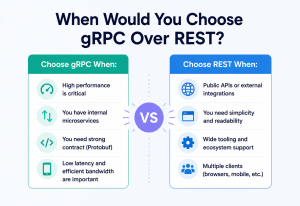
- gRPC: Used between edge gateways and cloud services where structured, efficient, strongly-typed communication is needed.
- Event-driven / message queues: Edge nodes often publish events to a message broker (like an MQTT broker or a cloud-native equivalent) rather than calling APIs directly, decoupling producers from consumers.
14.2 A Simplified Java Microservice Example: Edge Gateway API
Here’s a simplified Spring Boot-style controller showing how a central cloud service might expose an endpoint for edge gateways to sync batched events, including basic resilience via a circuit breaker pattern.
@RestController
@RequestMapping("/api/v1/edge")
public class EdgeSyncController {

    private final EventIngestionService ingestionService;
    private final CircuitBreaker circuitBreaker; // e.g., Resilience4j CircuitBreaker

    public EdgeSyncController(EventIngestionService ingestionService,
                              CircuitBreaker circuitBreaker) {
        this.ingestionService = ingestionService;
        this.circuitBreaker = circuitBreaker;
    }

    @PostMapping("/{deviceId}/events")
    public ResponseEntity<SyncResponse> syncEvents(
            @PathVariable String deviceId,
            @RequestBody List<EdgeEventDto> events) {

        // Wrap the downstream call in a circuit breaker so a struggling
        // downstream database doesn't cascade failures back to thousands
        // of edge devices retrying simultaneously.
        Supplier<SyncResponse> call = () ->
                ingestionService.ingestBatch(deviceId, events);

        SyncResponse response = circuitBreaker.executeSupplier(call);
        return ResponseEntity.ok(response);
    }
}
The circuit breaker pattern here is important at scale: if the central database is struggling, and thousands of edge devices all retry aggressively at once, they can create a “thundering herd” that makes the outage worse. A circuit breaker temporarily stops forwarding requests to a failing dependency, giving it room to recover, while edge devices fall back to local queuing.
14.3 Microservices Boundaries in Edge Systems
Just as in cloud microservices, edge systems benefit from clear bounded contexts: the edge node’s “detection service” shouldn’t need to know about the cloud’s “billing service” — they communicate only through well-defined event contracts, keeping each side independently deployable and testable.
Design Patterns & Anti-patterns
15.1 Useful Design Patterns
Patterns to Adopt
- Store-and-forward: Persist data locally, forward it when connectivity allows. The backbone of nearly every reliable edge system (shown in the Java example in section 5).
- Filter-at-source: Discard irrelevant data as early as possible, before it consumes bandwidth or storage.
- Gateway aggregation: Use a single gateway to aggregate many small devices’ data before it hits the wider network, reducing the number of individual connections the cloud must manage.
- Circuit breaker: Prevent local retries from overwhelming a struggling central system (section 14.2).
- Model cascade: Run a cheap, fast model at the edge for simple cases, and only escalate ambiguous cases to a more powerful (and expensive) cloud model.
- Digital twin: Maintain a virtual, up-to-date representation of a physical device’s state in the cloud, so other systems can query “what is this device doing right now” without needing to contact the physical device directly.
Anti-patterns to Avoid
- “Cloud-only thinking”: Designing the system as if the edge node always has a perfect internet connection — leads to silent data loss and poor offline behavior.
- Chatty edge-to-cloud communication: Sending many tiny individual requests instead of batching, wasting bandwidth and increasing server load.
- No local state at all: Treating the edge purely as a “dumb” pass-through with zero local intelligence defeats much of the purpose of edge computing.
- Ignoring hardware constraints: Deploying a large, cloud-sized machine learning model onto tiny edge hardware, resulting in it running too slowly to be useful, or not fitting in memory at all.
- Manual, one-by-one deployment: Trying to update thousands of edge devices by hand instead of using proper fleet orchestration tooling.
Best Practices & Common Mistakes
16.1 Best Practices
Assume the network will fail
Design every edge component treating connectivity as an unreliable, intermittent resource, not a given.
Keep edge logic focused
Filtering, local decisions, and buffering — leave heavy analytics and model training to the cloud.
Persist before the network
Always write critical data locally before attempting a network call, so a crash or disconnect doesn’t lose it.
Use edge-friendly protocols
Lightweight, resource-efficient protocols (MQTT, CoAP) and compressed/quantized models suited to constrained hardware.
Automate fleet deployment
Canary rollouts, health checks, and automatic rollback — never touch devices one by one.
Bake in security day one
Strong device identity and encrypted, mutually authenticated communication — retrofitting security later is far harder.
Instrument everything
Lightweight, store-and-forward telemetry so you have visibility even into rarely-connected devices.
16.2 Common Mistakes
Underestimating outages — how often “the network will just be down” in real-world deployments (bad weather, rural connectivity, moving vehicles). Over-engineering — adding edge computing to a system that doesn’t actually need low latency or offline support, adding needless complexity. Forgetting physical loss — devices can be lost, stolen, or destroyed, and not planning for graceful recovery. Reckless rollouts — pushing untested updates to 100% of a fleet at once instead of a gradual rollout. Time drift — neglecting time synchronization; if edge devices have inaccurate clocks, event timestamps used for conflict resolution and analytics become unreliable.
16.3 A Note on Operational Maturity
Teams new to edge computing often underestimate how much of the long-term effort lives in operations rather than initial development. Building the first working prototype of an edge system — a Raspberry Pi running a detection model and pushing events to a cloud API — can take a single engineer a few days. Operating that same pattern reliably across 5,000 physically distributed devices, each with its own network conditions, hardware quirks, and failure modes, is a multi-quarter engineering investment involving fleet management tooling, staged rollout pipelines, and around-the-clock monitoring. When scoping an edge computing project, budget realistically for this gap between “it works on my desk” and “it works reliably across the whole fleet, unattended, for years.”
Real-World / Industry Examples
Netflix Open Connect
A purpose-built CDN placing content caching servers inside ISP networks globally, reducing latency and internet backbone congestion for video streaming.
Amazon (AWS IoT Greengrass, Lambda@Edge)
Runs compute close to warehouse robotics, connected devices, and CloudFront edge locations for personalization and low-latency responses.
Uber
Uses edge-adjacent techniques for real-time location processing and matching, minimizing the latency between a rider’s request and a driver match, especially in areas with variable connectivity.
Tesla / Autonomous Vehicles
Onboard computers run perception and driving-decision models directly in the vehicle (the ultimate “device edge”), since waiting on the cloud for braking decisions is not physically viable.
Google (Google Distributed Cloud Edge)
Extends Google Cloud infrastructure into telecom and enterprise edge locations for low-latency 5G and industrial applications.
Walmart / Retail POS Systems
In-store systems continue processing sales and inventory locally during internet outages, syncing to central systems once connectivity is restored.
Across all these examples, the same underlying pattern repeats: keep time-critical, high-volume, or privacy-sensitive processing close to the source, and reserve the cloud for heavy computation, long-term storage, and cross-location intelligence.
FAQ, Summary & Key Takeaways
Is edge computing replacing cloud computing?
No. Edge computing complements the cloud rather than replacing it. Most production systems are hybrid: time-sensitive, high-volume, or privacy-sensitive work happens at the edge, while heavy analytics, model training, and long-term storage remain in the cloud.
Do I need edge computing for my application?
Only if you have a genuine need for low latency, offline resilience, bandwidth reduction, or data locality/compliance. If your app is a typical web or business application with reliable connectivity and no strict latency requirements, a standard cloud deployment is simpler and usually the better choice.
Is a CDN the same thing as edge computing?
A CDN is one specific and very common form of edge computing, focused mainly on caching static content close to users. Modern CDNs (like Cloudflare Workers, Lambda@Edge) have expanded to run actual application code at the edge, blurring the line further.
What programming languages/frameworks are used for edge computing?
It varies by layer: embedded C/C++ or Rust for resource-constrained microcontrollers, Java/Kotlin or Python/Go for more capable edge gateways and servers, and JavaScript/TypeScript for CDN edge functions (e.g., Cloudflare Workers).
How is edge computing related to 5G?
5G networks are designed with very low latency and high bandwidth, and telecom providers are building edge compute capacity directly into their 5G infrastructure (e.g., AWS Wavelength, Azure Edge Zones) so applications can achieve extremely low end-to-end latency by combining fast wireless links with nearby compute.
How does edge computing affect cost, overall?
It’s a tradeoff rather than a straightforward saving. You typically reduce cloud bandwidth/egress costs and central compute load, but you add the cost of provisioning, securing, and maintaining physical or virtual infrastructure across many locations. Whether it nets out cheaper depends heavily on data volumes and the number of deployment locations — very high-volume, geographically distributed workloads (like nationwide IoT sensor networks) tend to benefit most.
Can a beginner practice edge computing without buying hardware?
Yes. You can simulate the core patterns — local filtering, store-and-forward queues, offline-first sync — entirely in software on a laptop, treating a local process or container as a stand-in “edge node” and a cloud API as the “central service.” Tools like a lightweight MQTT broker (e.g., Mosquitto) running locally, or a Raspberry Pi if you want real hardware, are common low-cost starting points.
Key Takeaways
- Edge computing moves computation closer to where data is generated, to reduce latency, save bandwidth, improve reliability during outages, and protect sensitive data.
- It is a spectrum — device edge, near edge, far edge, and cloud — not a single fixed location.
- Because network partitions are common at the edge, most systems favor Availability and Partition tolerance over strict Consistency (per the CAP theorem), relying on eventual consistency and conflict resolution.
- Core patterns include store-and-forward, filter-at-source, gateway aggregation, circuit breakers, and model cascades.
- Production-grade edge systems require careful attention to security (device identity, encrypted communication, signed updates), observability (store-and-forward telemetry), and safe fleet-wide deployment (canary rollouts, automatic rollback).
- Real-world leaders like Netflix, Amazon, Uber, Tesla, and Google all use edge computing in different but complementary ways, always alongside — not instead of — the centralized cloud.
Edge computing is fundamentally about matching the physical location of computation to the physical location of need. Just as the “regional office” analogy from the introduction suggested, the goal isn’t to abandon the central head office — it’s to give local offices just enough autonomy to act fast, while still keeping everyone connected to the bigger picture.