What Does Scaling Git for Large Teams Actually Involve on GitHub?
A comprehensive, zero-prior-knowledge exploration of how a version-control system built for a small group of collaborators keeps working smoothly for thousands of engineers, millions of commits, and constant, simultaneous activity.
Imagine a neighborhood coffee shop’s ordering system — a barista, a notepad, first-come-first-served — working perfectly for twenty customers a day. Now imagine trying to run an entire international airport’s check-in process with that exact same notepad and single barista. Nothing about the underlying idea of “take an order, fulfill it” has changed, but literally everything about how it needs to be organized, distributed, and automated has to change completely to handle that scale. Git, and GitHub built on top of it, faces exactly this challenge: the same fundamental commands a solo developer uses on a weekend project also need to serve organizations with thousands of engineers pushing changes every minute, against codebases with decades of accumulated history. In this guide, we’ll explore what “scaling Git” actually, concretely involves — the real technical and organizational problems that emerge at large-team scale, and the specific techniques, many covered individually in related guides, that combine to solve them.
1Core Concepts: What “Scaling Git” Actually Means
What it is: Scaling Git for large teams refers to the combination of technical optimizations, workflow conventions, and organizational practices needed to keep Git and GitHub fast, reliable, and manageable as the number of contributors, the size of the codebase, and the volume of daily activity all grow substantially larger than what Git’s default, out-of-the-box behavior was originally designed around.
Why it exists: Git was originally created to manage the Linux kernel — a large project, but with a development workflow and contributor pattern quite different from a modern company where thousands of engineers might all be actively working in the same repository, pushing dozens of changes an hour, running constant automated checks, and depending on fast, reliable access to that shared codebase throughout their entire workday. Scaling practices exist to close the gap between Git’s general-purpose defaults and the specific, demanding requirements of this kind of large-scale, high-velocity collaboration.
Where it’s used: Large technology companies, major open-source projects with thousands of contributors, and any organization whose codebase and team have grown substantially over time all eventually confront these scaling challenges, whether they maintain one enormous monorepo or many interconnected, actively developed repositories.
Think of scaling Git like the difference between a small town’s single road and a major city’s transportation system. The small town’s one road works fine for its handful of daily drivers, but a growing city needs multiple lanes, traffic signals, dedicated bus routes, and careful planning — not because driving itself has fundamentally changed, but because the sheer volume of simultaneous activity demands infrastructure the original, simple road was never designed to handle. Scaling Git is this same kind of infrastructure evolution, applied to version control.
Practical example: A company that started with ten engineers sharing one small repository, doing an occasional full clone with no particular thought to efficiency, later grows to two thousand engineers working in that same, now-enormous repository. What used to be a thirty-second clone might now take much longer without deliberate optimization, and what used to be an occasional, easily managed pull request review process now needs structured, automated, and carefully governed workflows to remain functional at all.
2The Problem & Motivation: Where Growth Actually Breaks Things
Growth at a large team stresses a Git-based workflow along several genuinely distinct dimensions, each with its own specific cause and its own specific solution. Repository size grows as years of history and file versions accumulate, making a naive full clone increasingly slow and storage-hungry. Contributor count grows, meaning far more simultaneous branches, pull requests, and potential merge conflicts competing for attention and review capacity. Commit frequency grows, meaning automated checks — testing, building, scanning — need to run far more often, at far greater volume, without becoming a bottleneck themselves. And organizational complexity grows, meaning simple, informal conventions that worked for ten trusting colleagues no longer provide adequate structure, security, or accountability for a much larger, more diverse group.
There is no single “scaling switch” to flip — scaling Git for a large team is genuinely a combination of many individually smaller techniques, each addressing one specific dimension of growth, working together. A team that only solves the repository-size problem, while ignoring the review-process and automation-volume problems, will still hit a wall — just a different one.
The core problem scaling practices solve: how do you preserve the speed, reliability, and clarity that made Git valuable at a small scale, as every dimension of a project’s activity — its size, its contributor count, its commit frequency, and its organizational complexity — grows by orders of magnitude?
3Architecture & Components: The Four Pillars of Scale
Data Efficiency
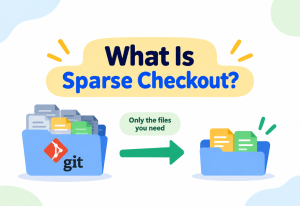
Techniques that reduce how much repository data needs to be transferred and stored, covered fully in related guides on packfiles, shallow clones, and partial clones.
Workflow Structure
Branching conventions, release branches, and code review practices that keep a large, simultaneous stream of changes organized and safe.
Automation Capacity
Scaling GitHub Actions, runners, and jobs to handle a high volume of simultaneous automated checks without becoming a bottleneck.
Governance & Security
Access controls, branch protection, and security scanning that provide structure and safety appropriate for a much larger, more diverse group of contributors.
Each of these four pillars is largely independent — a team can, and often does, invest in them separately and incrementally — but real, lasting scale requires progress across all four together, since a bottleneck in any single pillar can undermine the benefits gained in the others.
data, workflow, automation, governance
they must work together within
when addressed together
4Internal Working: How Data-Efficiency Techniques Combine
flowchart LR
    A["Repository grows large over years of history"] --> B["Packfiles compress similar objects via delta encoding"]
    B --> C["Shallow clones limit history depth for automation"]
    C --> D["Partial clones defer file content until genuinely needed"]
    D --> E["Combined: fast, lightweight access for most tasks"]
    E --> F["Full, complete clones remain available when genuinely required"]
Step by step, in plain language: first, as a repository’s history grows over years of active development, the sheer number of objects and their total size would, left unaddressed, make every clone and fetch operation progressively slower. Second, packfiles, covered in a related guide, compress this growing history efficiently, storing similar objects as compact deltas rather than full, independent copies. Third, for tasks — especially automated ones — that only need the current, latest code, shallow clones limit how much of that history is even requested in the first place. Fourth, for tasks needing full historical awareness but not necessarily every historical file’s content upfront, partial clones defer that content until it’s genuinely requested. Fifth, combining these techniques means the overwhelming majority of day-to-day operations across a large team — automated builds, quick developer clones, casual inspection — become fast and lightweight. Finally, genuinely complete, full clones remain fully available and correct for the smaller number of situations — audits, deep historical investigation, canonical archival copies — that truly require them.
None of these techniques replace or compete with each other — they’re complementary layers, each addressing a slightly different aspect of the same underlying problem, and a mature, well-scaled organization typically uses several of them simultaneously, applied deliberately to different tasks based on genuine need.
5Data Flow & Lifecycle: A Single Change Moving Through a Large-Team Workflow
The Developer Starts Work
A developer creates a feature branch from an efficiently maintained, well-packed repository, quickly cloned or already present locally.
Automated Checks Run on Every Push
As commits are pushed, GitHub Actions workflows automatically trigger — testing, code scanning, and other checks — running on appropriately scaled runner infrastructure.
A Structured Pull Request Enters Review
The change is submitted as a pull request, following branch-protection rules that require passing checks and a specific number of approving reviews before it can merge.
Code Review Happens at Scale
Automatic reviewer assignment, based on which part of a large codebase the change touches, routes it to the right, specific team rather than requiring manual triage.
The Change Merges Into a Protected Branch
Once approved and passing, the change merges into the main branch, itself protected by rules preventing direct, unreviewed pushes.
A Release Branch Carries It Toward Production
The change eventually flows into a release branch, following the stabilization process covered in a related guide, before reaching real users.
Notice that at every single stage of this journey, a specific scaling technique — data efficiency, automated checks, structured review, protected branches, release management — is doing real, necessary work that simply wasn’t needed at a small team’s much simpler, more informal scale.
6Monorepo vs. Many Repositories: A Foundational Scaling Decision
Monorepo (One Large, Shared Repository)
- Simplifies sharing code and coordinating changes across many projects at once
- Gives everyone visibility into the entire codebase’s history
- Requires heavy investment in data-efficiency techniques as it grows
- Needs careful access and review governance at scale
Polyrepo (Many Smaller, Focused Repositories)
- Keeps each individual repository’s history and size naturally smaller
- Allows different teams more independence over their own workflows
- Makes coordinating a change spanning multiple repositories more complex
- Can lead to duplicated tooling and inconsistent practices across teams
Neither approach is universally “correct” — large, successful organizations exist with both strategies, and some use a hybrid of the two. What matters for scaling purposes is that whichever structure is chosen, it’s paired with the appropriate data-efficiency and governance techniques for that specific structure’s particular challenges.
7Advanced Topic: Scaling Automated Checks Without Bottlenecking Everyone
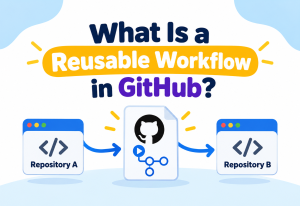
A small team might comfortably run a full test suite sequentially on a single runner for every change. A large team, with dozens or hundreds of pull requests active simultaneously, needs genuine parallelism: splitting checks into independent, simultaneously running jobs, covered in a related guide, and provisioning enough runner capacity, covered in another related guide, to handle many of these parallel workflows running at the exact same time without long queues forming.
Scaling a Test Suite Across Many Parallel Jobs
An organization whose test suite once took a comfortable few minutes finds that as their codebase has grown, running that same suite sequentially now takes well over an hour — an unacceptable delay for every single pull request. They restructure their testing into many independent jobs, each covering a specific portion of the test suite, running in parallel across many runners simultaneously, bringing the effective wait time back down to a few minutes despite the underlying suite itself having grown substantially larger.
8Advanced Topic: Scaling Code Review Without Losing Its Value
At a small scale, informally asking “can someone take a look at this?” works fine. At a large scale, this informal approach breaks down — reviewers become inconsistently available, some pull requests wait far too long for attention, and no one has full context on every part of an enormous, sprawling codebase. Large teams address this by structuring review responsibility deliberately: automatically routing a given change to whichever specific team or individuals genuinely own that part of the codebase, based on the files it touches, rather than relying on any one person to informally know who’s the right reviewer for every possible change.
Scaling code review isn’t about reviewing less carefully — it’s about ensuring the right, genuinely knowledgeable person sees a given change quickly and reliably, rather than review quality or speed depending on informal, ad hoc awareness that simply can’t scale to a large, complex organization.
9Very Advanced Topic: Trunk-Based Development at Scale
Some of the largest, most active engineering organizations have found that long-lived feature branches — where a change stays isolated from the main codebase for weeks before merging — become genuinely difficult to manage at scale, since the longer a branch diverges from everyone else’s ongoing work, the more painful and conflict-prone reconciling it eventually becomes. Trunk-based development is a workflow philosophy that responds to this specifically: contributors merge small, frequent changes directly into the main branch very quickly, often multiple times a day, relying heavily on techniques like feature flags — a way of hiding unfinished functionality from users without needing a separate, long-lived branch to isolate it — rather than isolation through branching itself.
This is a direct, large-scale response to a genuine problem: the larger and more active an organization becomes, the more expensive long-lived divergence between branches gets, since more people are simultaneously changing the same shared codebase underneath any given long-running branch. Trunk-based development trades some of the isolation a long-lived branch provides for dramatically reduced integration pain at very high contributor counts.
10Very Advanced Topic: Governance, Access Control & Organizational Structure
A ten-person team can often operate on simple, informal trust — everyone knows everyone, and mistakes are caught through casual, ambient awareness. A two-thousand-person organization cannot rely on this at all. Structured access control — deciding precisely who can push directly to which branches, who can approve changes to sensitive areas of the codebase, and who can modify critical infrastructure like automated workflow configurations — becomes a genuine necessity, not an optional nicety.
This governance layer often includes formally defined ownership — mapping specific parts of a large codebase to the specific teams responsible for them — combined with branch protection rules, covered in a related guide on release branches, requiring review and passing checks before anything reaches genuinely important, shared branches. At sufficient scale, this structure isn’t bureaucratic overhead for its own sake; it’s the direct replacement for the informal trust and awareness that simply cannot function correctly once an organization is too large for everyone to personally know and monitor everyone else’s work.
11Complex Concept: Security Scaling — From Individual Vigilance to Systematic Coverage
At a small scale, a handful of careful, security-conscious developers can plausibly catch most obvious security issues through manual review alone. At a large scale, this simply isn’t statistically reliable — with enough contributors and enough daily changes, some genuinely dangerous pattern will eventually slip past manual review alone, purely as a matter of volume and probability. This is precisely why automated code scanning, covered in a related guide, becomes not just helpful but essential at scale: it applies the exact same, tireless, consistent level of scrutiny to every single change, regardless of how large the volume of daily activity has grown.
An organization that scales its contributor count and commit volume without correspondingly scaling its automated security coverage is taking on real, growing risk — the statistical odds of a dangerous pattern slipping through purely manual review only get worse as volume increases, never better, without deliberate investment in systematic, automated detection.
12Advantages, Disadvantages & Trade-offs
| Aspect | Advantage | Trade-off / Cost |
|---|---|---|
| Speed | Keeps clones, checks, and reviews fast even as activity grows dramatically | Requires real, ongoing engineering investment in the underlying infrastructure and tooling |
| Reliability | Structured governance and automated checks catch problems that manual, informal processes would miss at scale | Adds process and structure that can feel like friction compared to a smaller team’s informal simplicity |
| Security | Systematic, automated coverage scales with volume, unlike manual vigilance alone | Automated tooling requires configuration, tuning, and ongoing maintenance to stay genuinely effective |
| Organizational clarity | Formal ownership and access control replace unreliable informal trust | Requires deliberate, ongoing maintenance as team structure and responsibilities evolve |
| Flexibility | Data-efficiency techniques let different tasks use exactly the depth and content they genuinely need | Requires understanding several distinct, individually nuanced techniques rather than one simple, universal setting |
The core trade-off to internalize: scaling Git for a large team trades the comfortable simplicity of a small team’s informal processes for the deliberate structure and investment genuinely required to keep that same speed, reliability, and trustworthiness intact once informal approaches simply stop working at scale.
13Performance & Scalability Considerations
Each individual technique covered in this guide — packfile compression, shallow and partial cloning, parallel automated jobs, scaled runner capacity, structured review routing — addresses one specific performance dimension on its own. Combined together across an entire organization’s workflow, their effects compound: a developer’s daily clone is fast because of data-efficiency techniques, their automated checks return quickly because of parallelized jobs and adequate runner capacity, and their pull request gets timely, genuinely relevant review because of structured ownership and routing — each stage of the process benefiting from its own, appropriately matched scaling technique.
working together
across an entire workflow
even as team size grows
Organizations that only address one dimension — say, aggressively optimizing repository size while leaving code review entirely informal — often find their overall workflow speed still bottlenecked, simply shifted to whichever dimension remains unaddressed. Genuine, lasting scalability requires attention across the full breadth of these interconnected concerns, not just the one that happens to be most visible or most technically interesting at any given moment.
14Security Considerations
A larger contributor base inherently means a larger attack surface — more individual accounts that could be compromised, more automated workflow configurations that could be tampered with, and more surface area for a mistake or a malicious action to cause genuine harm. Scaling an organization’s contributor count without correspondingly scaling its access controls, branch protections, and automated security scanning is a genuine, growing risk, not a neutral trade-off.
Runner infrastructure, covered in a related guide, deserves particular attention at scale — a large organization running substantial self-hosted runner capacity needs careful, deliberate segmentation, ensuring runners with access to sensitive internal systems remain isolated from repositories or workflows with lower trust levels, exactly as covered in that guide’s discussion of runner groups.
It’s also worth remembering that scaling doesn’t change any of the fundamental security guarantees or responsibilities covered in related guides — content hashing’s integrity guarantees, the importance of rotating exposed credentials, careful handling of history rewriting — it simply means these principles now need to be applied systematically and automatically, at a volume and consistency that manual, individual vigilance alone cannot realistically provide.
15Design Patterns & Anti-Patterns
The Incremental Investment Pattern addresses scaling challenges proactively and incrementally, as specific pain points genuinely emerge — adopting shallow clones for automation once clone time becomes noticeable, introducing structured review ownership once informal review starts breaking down — rather than waiting for a full, painful crisis before acting.
The Four-Pillar Balance Pattern deliberately tracks investment across all four scaling pillars from Chapter 3 together, recognizing that neglecting any single one — even while excelling at the others — still leaves a genuine, limiting bottleneck somewhere in the overall workflow.
The Situation
A growing organization postpones investing in data-efficiency techniques, structured review, and automated security coverage, reasoning that their current, informal approach has always worked fine so far.
Why This Becomes a Problem
As covered throughout this guide, growth stresses several distinct dimensions simultaneously, and these problems tend to compound rather than announce themselves gradually — an organization can go from “manageable” to “genuinely painful across multiple fronts at once” surprisingly quickly once contributor count and activity volume cross certain thresholds.
The Better Pattern
Watch for early, specific signals — growing clone times, review requests going unanswered for days, automated checks queuing up — and address each pillar proactively as those signals appear, rather than waiting for a full-blown, organization-wide crisis to force reactive, rushed changes.
Common anti-patterns to avoid: the Crisis-Driven Scaling pattern described above; the Single-Pillar Obsession (investing heavily in one scaling dimension, like repository data efficiency, while leaving code review or security scanning entirely informal and under-scaled); and the Copy-Paste Scaling anti-pattern (adopting another large organization’s specific scaling choices wholesale, without genuinely considering whether that organization’s monorepo-versus-polyrepo decision, review structure, or automation strategy actually fits one’s own team’s genuine needs and constraints).
16Best Practices & Common Mistakes
Monitor Leading Indicators, Not Just Crises
Track clone times, review turnaround, and automated-check queue times as early signals, addressing each pillar before it becomes a genuine bottleneck.
Match Data-Efficiency Techniques to Genuine Task Needs
Use shallow and partial clones for automation, and reserve full clones for tasks that genuinely require complete historical access, as covered in related guides.
Replace Informal Trust With Deliberate Structure Early
Introduce formal code ownership and branch protection before informal review coordination genuinely breaks down, not after.
Scale Security Coverage Alongside Contributor Count
Invest in automated code scanning and access controls proportionally as the team and its attack surface genuinely grow.
Invest Across All Four Pillars Together
Avoid neglecting any single pillar from Chapter 3 — a bottleneck in one area can undermine genuine progress made in the others.
Common mistakes beginners make: assuming scaling is purely a technical, repository-size problem while ignoring the equally important workflow and governance dimensions; waiting until a genuine, painful crisis forces reactive scaling decisions rather than addressing early warning signals proactively; and adopting another organization’s specific scaling choices without genuinely evaluating whether they fit one’s own team’s actual structure and needs.
17Real-World & Industry Examples
A Rapidly Growing Technology Company
A company that grew from fifty to fifteen hundred engineers over a few years invested, in roughly that order, in structured code ownership and review routing as informal coordination broke down first, followed by parallelized automated testing as commit volume grew, and finally in data-efficiency techniques as their repository’s accumulated history began meaningfully slowing everyday clones.
A Massive, Long-Running Open-Source Project
A widely used open-source project with thousands of contributors worldwide relies heavily on automated code scanning and structured, clearly documented contribution guidelines specifically because no small group of maintainers could realistically manually vet every incoming change from such a large, globally distributed, and only partially known set of contributors.
An Enterprise With Multiple, Interdependent Product Teams
A large enterprise running several interdependent product teams within one large repository relies on formal code ownership mapping specific directories to specific teams, combined with branch protection rules requiring the correct team’s review before any change to their area can merge, replacing what would otherwise be an unmanageable, informal free-for-all across so many simultaneous, interdependent contributors.
A High-Frequency Deployment Organization
An organization deploying to production many times a day relies heavily on trunk-based development and feature flags, covered in Chapter 9, specifically because their scale and deployment frequency make long-lived, isolated feature branches genuinely impractical to maintain and eventually merge without significant, repeated integration pain.
18Frequently Asked Questions
19Summary and Key Takeaways
What to Remember
- Scaling Git for large teams is not one single technique, but a combination of data-efficiency, workflow-structure, automation-capacity, and governance-and-security practices, working together across four distinct pillars.
- Growth stresses several genuinely distinct dimensions at once — repository size, contributor count, commit frequency, and organizational complexity — each requiring its own, specifically matched solution.
- Data-efficiency techniques like packfiles, shallow clones, and partial clones combine and layer together, rather than replacing one another, to keep everyday operations fast even as a repository’s true history grows enormous.
- Code review, automated checks, and security scanning all need structured, systematic scaling — informal, individual vigilance that works fine at a small scale simply cannot reliably cover a much larger volume of simultaneous activity.
- Formal governance — access control, code ownership, branch protection — replaces the informal trust that naturally exists in a small team but cannot realistically scale to a much larger, more diverse organization.
- Neglecting any single scaling pillar still leaves a genuine bottleneck, even if every other pillar has been addressed well — lasting scalability requires attention across the full, interconnected breadth of these concerns.
- The most effective approach is proactive and incremental — watching for early, specific signals of strain and addressing each pillar as genuine need emerges, rather than waiting for a full-blown crisis to force reactive change.