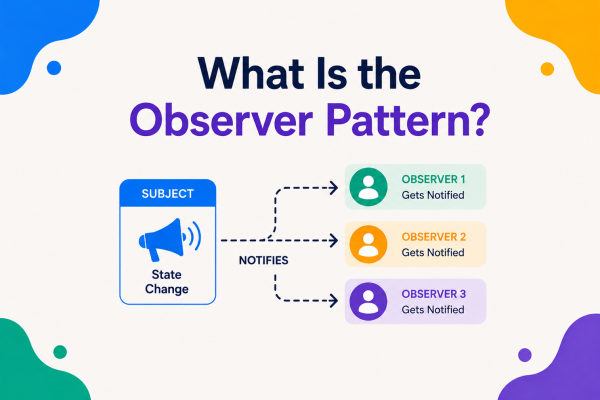
What Is the Observer Pattern?
A complete guide to the Observer pattern: what it is, how it works, its four roles, push vs pull, real-world use cases, differences from Pub/Sub, common pitfalls, and the trade-offs every engineer should know.
Easy Learn
A complete guide to the Observer pattern: what it is, how it works, its four roles, push vs pull, real-world use cases, differences from Pub/Sub, common pitfalls, and the trade-offs every engineer should know.
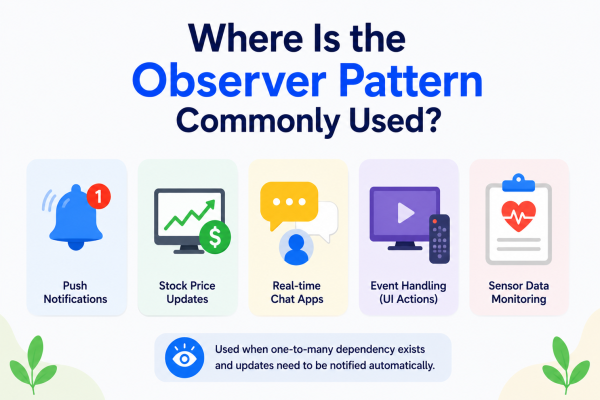
From the moment you unlock your phone to the moment a stock ticker flashes red, something is quietly watching, waiting, and reacting. This fourteen-chapter tour walks through exactly where the Observer pattern hides in plain sight across modern software — GUIs and frontend frameworks, MVC/MVVM architectures, game development, real-time financial…
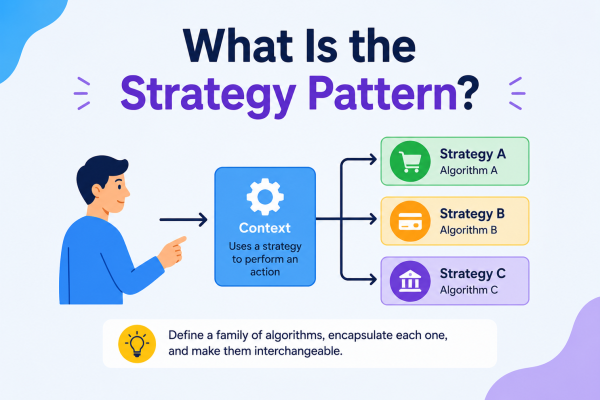
A GPS app can route you by car, by bike, or on foot — same destination, completely different method. The Strategy pattern gives your code that same freedom to swap how something gets done, without touching what it is trying to achieve. This fourteen-chapter guide unpacks the formal Gang-of-Four definition,…
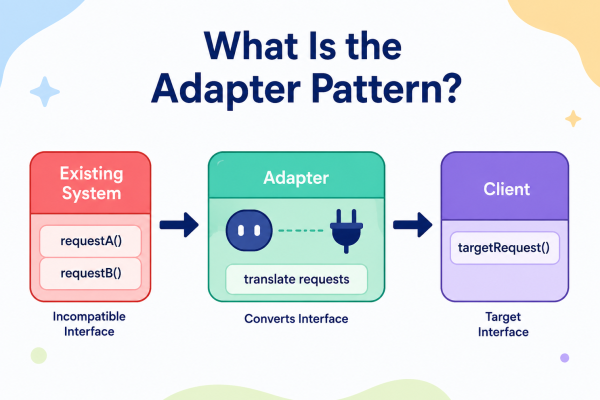
A travel plug adapter does not rebuild your charger or rewire the foreign wall socket — it simply sits between the two, translating one shape into the other. The Adapter pattern gives your code that same quiet superpower. This thirteen-chapter guide unpacks the formal Gang-of-Four definition, a little history, why…
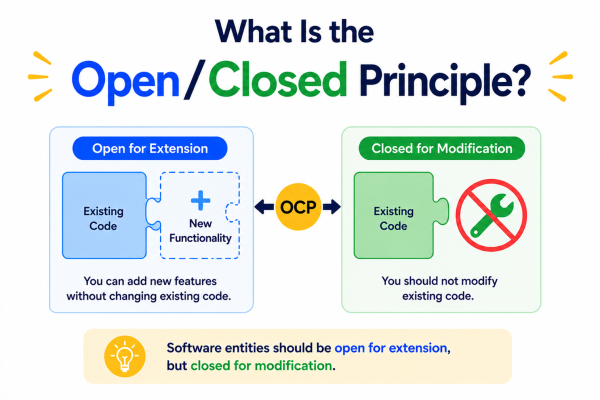
Add new behaviour without touching what already works. That is the whole promise of the Open/Closed Principle — the “O” in SOLID. This thirteen-chapter guide unpacks the formal definition from Bertrand Meyer, what “open” and “closed” each really mean, why it matters, four reliable warning signs of a violation, a…
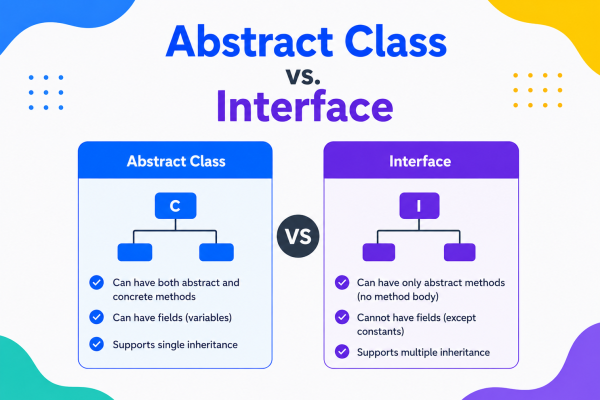
Both promise a set of actions before any details are filled in. Both stop you from creating an object directly from them. So why do object-oriented languages bother offering both? This thirteen-chapter guide unpacks what each one really is, five side-by-side differences, a small Vehicles-and-Rechargeable code example, whether a class…
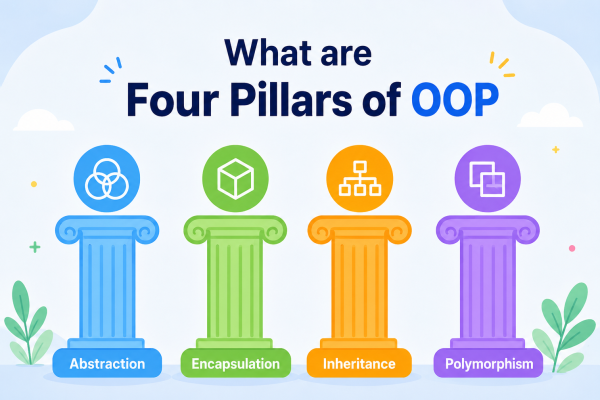
Four ideas hold up almost every large piece of software you have ever used — encapsulation, abstraction, inheritance, and polymorphism. They sound technical, but underneath, they are just clever ways of organising things. This twelve-chapter guide walks through what OOP itself really is, the difference between classes and objects, each…
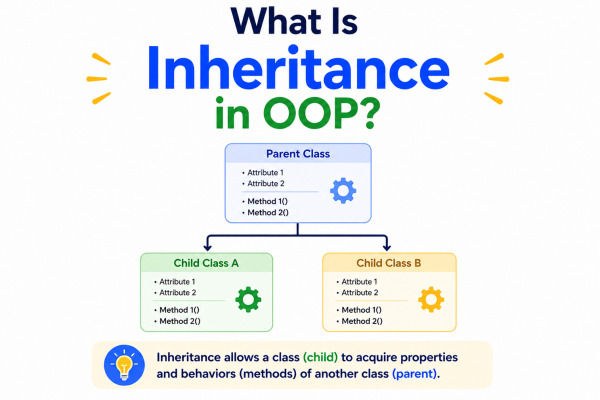
Why write the same thing twice when one class can simply borrow it from another? Inheritance lets related pieces of code share what they have in common — while each one still keeps what makes it special. This thirteen-chapter guide walks through what inheritance really is, the “is-a” relationship, how…
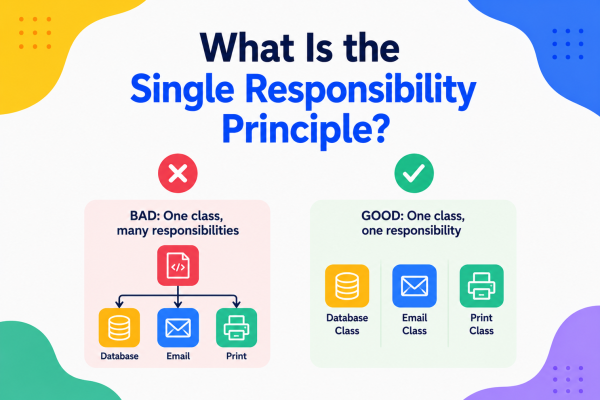
One class, one job, one reason to change. It sounds almost too simple to matter — until you see what happens to a codebase when nobody bothers to follow it. This thirteen-chapter guide takes a deep dive into the “S” in SOLID: the formal definition from Robert C. Martin, what…
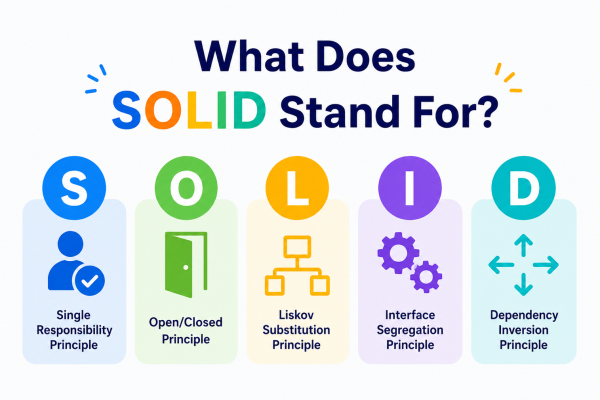
Five short letters — S, O, L, I, D — five simple habits, and decades of hard-won wisdom about writing code that does not fall apart the moment it needs to grow. This thirteen-chapter guide walks through what each letter really means in plain language: Single Responsibility, Open/Closed, Liskov Substitution,…